
Ah, swim shads. Is there a more practical, user-friendly fishing lure in the game? With their integrated weights, pre-rigged hooks, realistic profiles, and versatility from boat to beach, these soft-bodied swimbaits have built a reputation as proven fish producers since they hit the scene 25 years ago. It didn’t take long for them to become staples in the ever-growing quiver of lures used by striped bass fishermen.
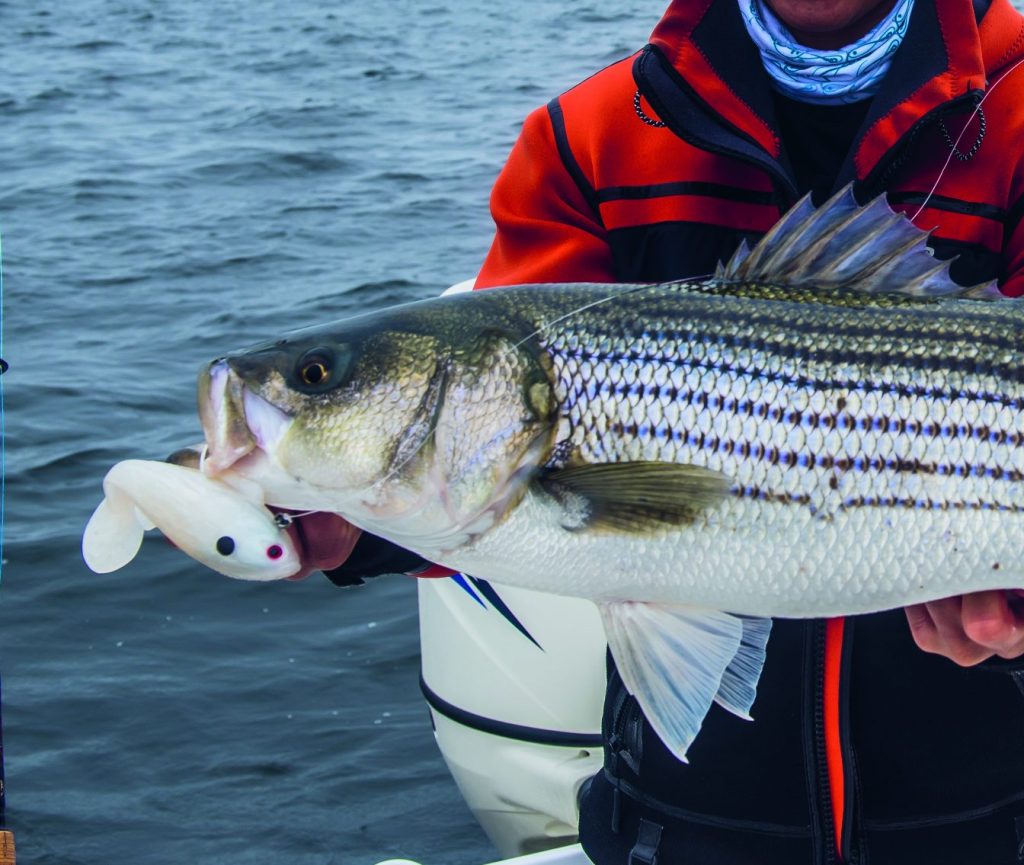
The first swim shad to reach tackle shop shelves arrived around the year 2000, when Steve Gibson, a product engineer for Storm Lures, recognized a gap in the market between affordable but disposable soft-plastic paddletails and high-end custom swimbaits. The former were rigged on jigheads to be fished at variable depths. While effective, they left much to be desired in terms of durability and, in turn, longevity. Standard soft-plastic swimbaits tended to tear away from the hooks with ease, so Gibson and the team at Storm sought to mitigate that by offering baits that were ready to fish right out of the package without putting a major dent in fishermen’s wallets.
(Note: On The Water is reader-supported. When you buy through links on our site, we may earn an affiliate commission.)
A swim shad has a few defining characteristics. Its soft-plastic body is molded around a hook, and most are forward-weighted, which provides casting distance and allows the lure to sink quickly. The tail is shaped like a boot or wedge which, with a steady retrieve, generates a natural kicking action that sends out vibrations to nearby gamefish. Striped bass use their lateral line to track and locate those vibrations, and when they do, the lure’s lifelike profile and swimming action seals the deal. Since 2000, swim shads have been adapted and enhanced by a number of tackle manufacturers, and they are offered in a wide range of weights, sizes, and colors for every application possible.
Next to Storm Shads, Tsunami Swim Shads are a longstanding favorite among striper fishermen. When schools of peanut bunker flood the beaches of New Jersey each fall, bunker-patterned and bone-white Tsunami shads and Storm WildEye Shads become so valuable that they could be used as currency among shore-based striped bass fishermen. Likewise, when adult menhaden are flushed out of the bays each spring, larger, heavier models of those same lures are essential to the success of boat-based anglers targeting stripers beneath the bunker schools.
More tackle companies jumped on the swim shad train over the years and modified the early styles to resemble specific baitfish, such as mullet, herring, and even silversides. Many of the new kids on the block boast unique enhancements designed to improve their appearance and presentation. The Vudu Shad by Egret Baits has a mesh-jointed paddletail that produces a fluid kicking action. Z-Man—known for its durable and stretchy ElaZtech material—offers a swim shad called the HerculeZ Swimmer, which is a fine herring and peanut bunker imitation built to withstand repeated abuse from stripers, weakfish, and even bluefish. Features like realistic scale and gill patterns, fins, and a belly-oriented eyelet, which allows for the addition of a second hook or spinner blade for vibration and flash, broaden the lure’s appeal.
Popular Swim Shads for 2025
When selecting a swim shad, consider the depth, current, and predominant baitfish in the area you’re fishing. There are a wide range of swim shad sizes and styles to choose from. Here are some of the most popular among Northeast anglers.
Storm WildEye Shad

Sizes: 4-inch (7/16 oz.), 5-inch (5/8 oz.), 6-inch (7/8 oz.)
Best Colors: Shiner Chartreuse Silver
Z-Man HerculeZ Swimmer

Sizes: 5-inch (5/8 oz.), 6-inch (1 oz.)
Best Colors: Gold Rush, Shiner, Pearl
Tsunami Deep Shad
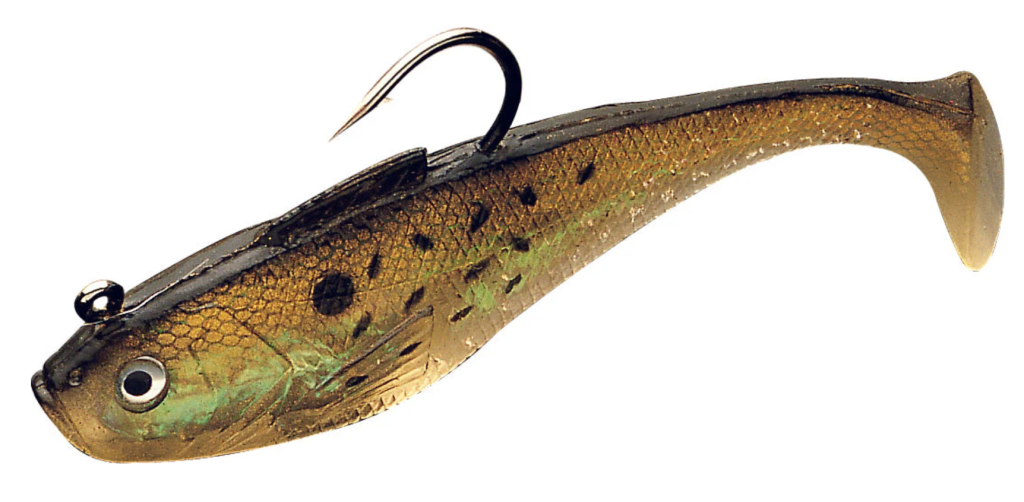
Size: 6½-inch (4.25 oz.)
Color: Golden Bunker, Opaque White, Pearl Spot, Opaque Chartruese
Tsunami Swim Shad
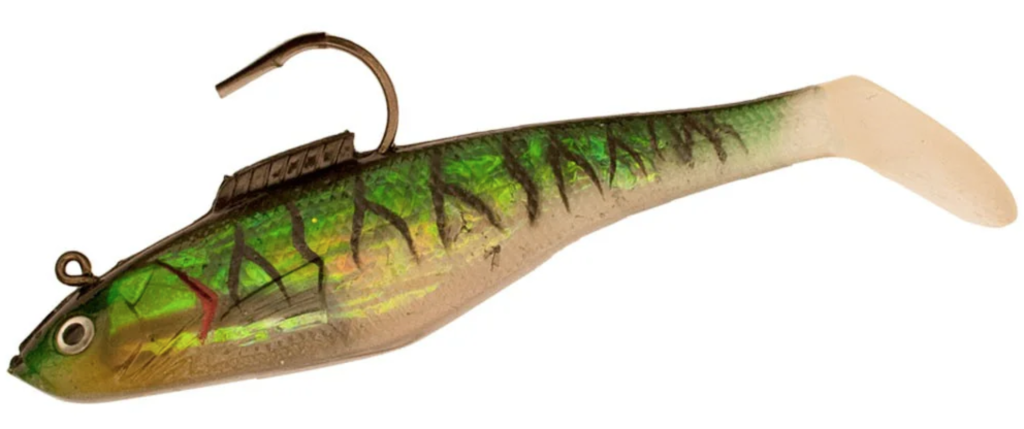
Sizes: 5-inch (1-3/8 oz.), 6-inch (2-3/8 oz.)
Best Colors: Pearl Spot, Golden Bunker, Opaque White, Green Mackerel
Egret Baits Vudu Shad
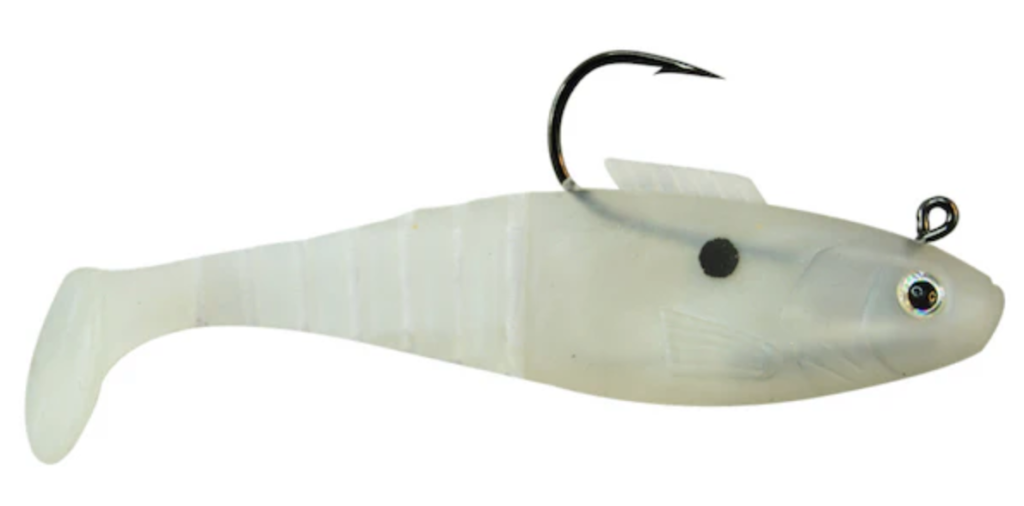
Sizes: 5-inch (¾ oz.), 6-inch (1 oz.)
Best Colors: White Pearl, Greenback
To get the most out of a swim shad, surf fishermen cast it out, let it sink to the desired depth, and begin a steady retrieve. This foolproof method is simple and effective, but the occasional pause or jolt of the rod can help trigger strikes from curious fish following close behind. In deeper environs, like ocean inlets, back-bay channels, or canals, swim shads can be jigged over bottom structure. The rising and falling motion, combined with a kicking tail, entices stripers while keeping the lure free of snags. Much like jigging a bucktail, bites tend to come as the lure is falling or as it swims over structure.
From a boat or kayak, the same process of cast, let sink, and retrieve does the trick; however, in areas of sticky bottom, cast, let sink, and proceed with a lift-and-drop retrieve until the lure is almost directly beneath the vessel.
Related Content
Does Color Really Matter for Striper Lures?
Fishing Glidebaits for Striped Bass