
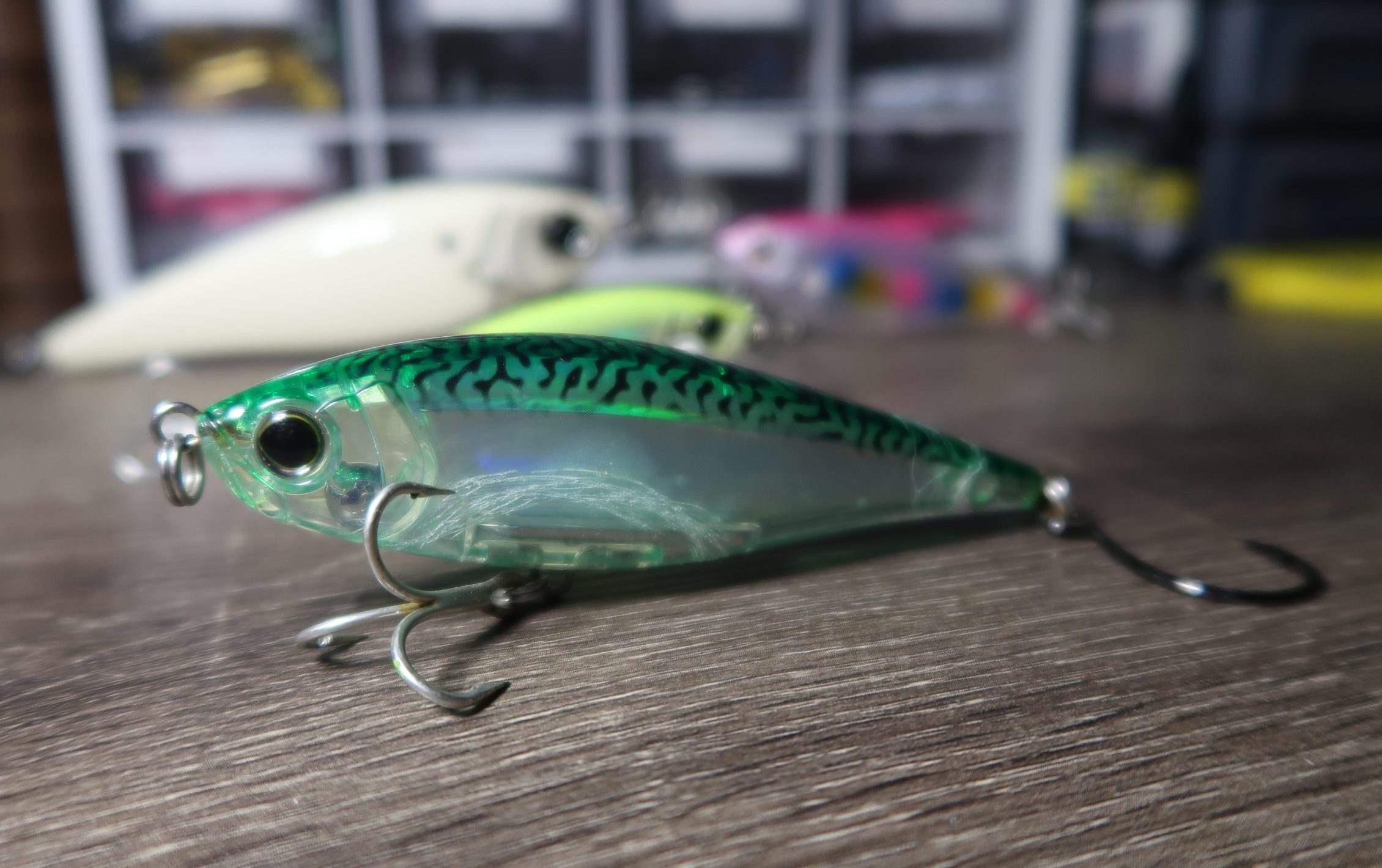
Under the massive umbrella of striped bass lures, there are endless bait categories, many of which are named for their actions. Poppers pop, darters dart, and twitchbaits, you guessed it, twitch.
Twitchbaits are relatively new to the Northeast. From the Southeast to the Gulf Coast of Texas, however, they have a decades-long history of success among backwater redfish and speckled trout fishermen.
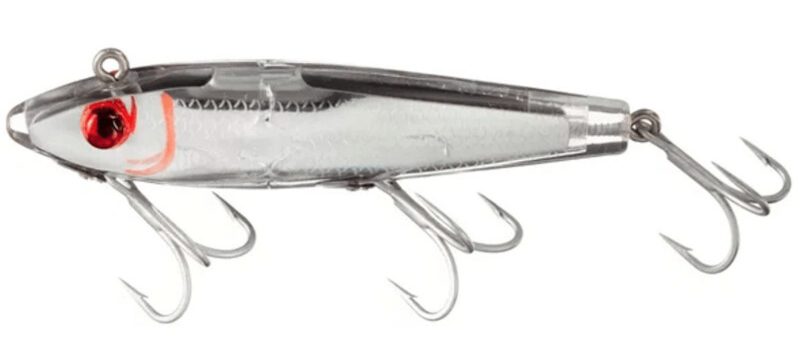
Harold LeMaster, founder of L&S Bait Company out of Florida, created the original twitchbait in the early 1950s. The MirrOLure 52M was, and still is, a sinking stickbait with a mirrored insert that flashes when retrieved, and it quickly became one of the hottest saltwater lures on the market. It has an erratic subsurface darting and zig-zagging action, sinks 1-foot-per-second when paused, and mimics a struggling or wounded baitfish that trout, drum, and striped bass find irresistible.
Twitchbaits remained unchanged until the 1970s when Paul Brown—a fisherman who frequented Gulf waters from Galveston to the expansive flats of Lower Laguna Madre—created a suspending soft-plastic twitchbait called the Corky. Brown designed the bait to be fished with a twitch-pause retrieve, and its ability to hang in the water column made it a game-changing baitfish imitation in skinny marshes, creeks, and over shallow flats.
Eventually, L&S Bait Company absorbed Paul Brown Original Lures, and they continue to produce his Original Corky to this day. Together, the MirrOLure 52M and Original Corky set the stage for a whole new bait category.
By the late 2010s, international tackle manufacturers such as Yo-Zuri, Rapala, Berkley, and Tsunami were hopping on the still-growing twitchbait trend. They incorporated advantageous features such as beefed-up terminal tackle, reflective foils, and unique fixed-weight systems for balanced presentations. So, finally, striper fishermen are learning what southern and Gulf anglers have known for half a century—twitchbaits are essential inshore presentations.
Twitchbait Anatomy
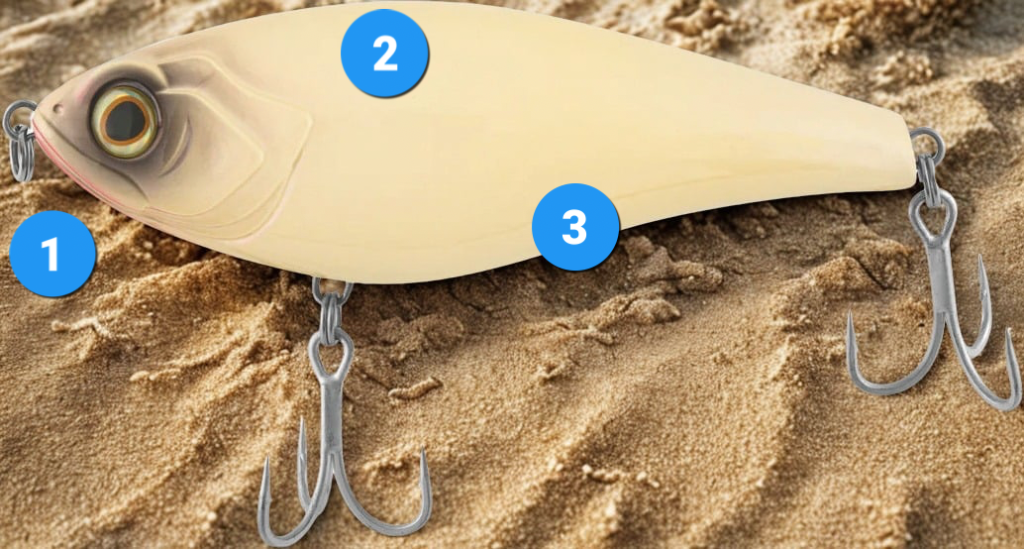
1. Lipless
In addition to a fixed, balanced weight system, lipless construction helps a twitchbait maintain a level position rather than diving, which makes for a natural presentation in areas with low current.
2. Deep-bodied
Twitchbaits have a broad profile that narrows toward the tail to imitate larger-bodied baitfish like herring, bunker, croakers, and mullet.
3. Flat or Rounded Flanks
Twitchbaits with slightly rounded sides have a subtle, natural swimming action, which can be beneficial in clear water or when fish are pressured.
Flat-sided twitchbaits create more resistance and heavier vibrations when retrieved, which leads to a pronounced darting and gliding action. They are more likely to incite a reaction strike from fish that are territorial or aggressively feeding.
4. Construction
Twitchbaits may be made of ABS plastic, resin, or soft plastic, all of which will effect the lures sink rate. Slow-sinking or suspending twitchbaits are the most common, and most productive, but floating twitchbaits, like the Berkley Stick Shadd have proven to be very effective on striped bass.
Twitchbaits for Striped Bass
MirrOlure Classic Series 52M (3-5/8 inches, ½ oz.) – Sinking

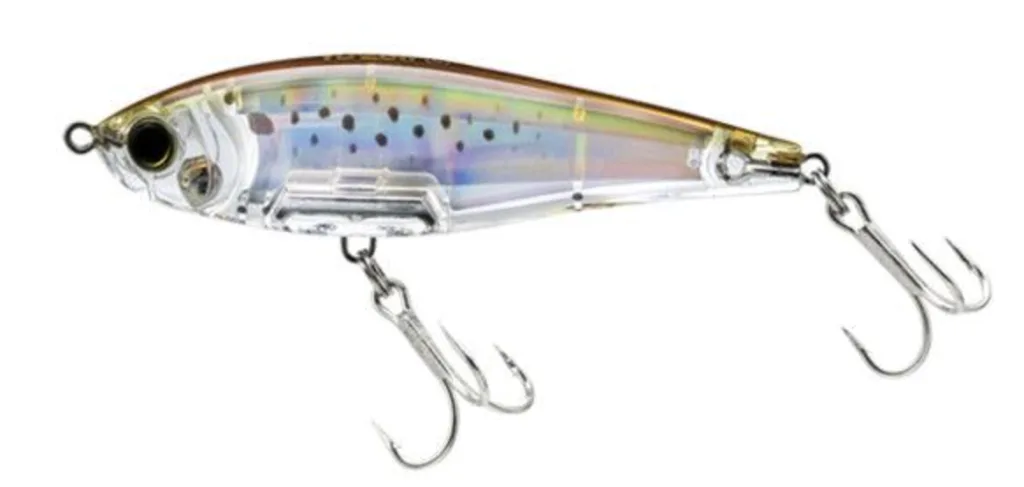
Yo-Zuri 3D Inshore Twitchbait (5-1/4 inches, 1-3/4 oz.) – Slow sinking

Rapala X-Rap Twitchin’ Mullet (3-1/8 inches, 7/16 oz.) – Slow sinking

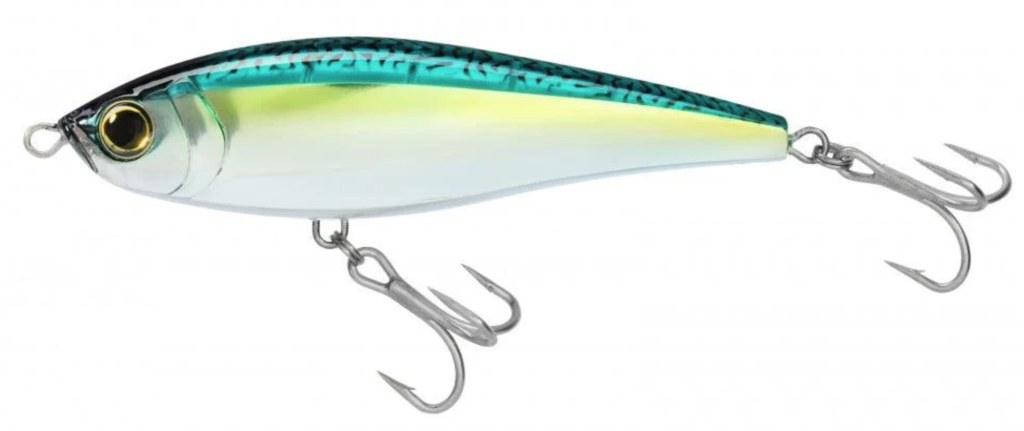
Berkley Stick Shadd SW 114 (4½-inches, 1 oz.) – Floating

Yo Zuri Hydro Twitchbait (6 inches, 2-7/8 oz.) – Sinking


How to Fish a Twitchbait for Striped Bass
Spring Scenario
You’re casting from a sod bank into a shallow, muddy creek that connects a marsh to a bay. It’s a bright, mid-May morning with ninety minutes until low tide. The current is crawling from right to left, emptying into the bay, and the softly sloping channel is no deeper than 3 feet. The sunlight brought your topwater bite to an abrupt halt, but the bass are still there. Despite the cloudy water, you can see 20- to 28-inch fish grubbing on mummichogs and spearing on the opposite sod bank. It’s time to break out a slow-sinking or suspending twitchbait.
Lure: Yo-Zuri 3D Inshore Twitchbait 90 SS (slow-sinking) – 3½ inches, 9/16 ounce
Approach: Cast up current from the fish and allow the lure to sink and drift into their wheelhouse. When the bait is level with the fish, begin your retrieve.
Retrieve: Start with a twitch-twitch-pause retrieve, imparting action with short, sharp taps of the rod and experimenting with the length of each pause. The bait should be darting side to side when twitched. The fish are wary, but interested, so reel slowly to maintain contact and try longer pauses to avoid pulling the bait away from followers.
Summer Strategy
It is now late July, and while most stripers are stationed on nearshore reefs and rips, a few low-30-inch fish are creeping over a knee-deep sandbar behind an inlet. The afternoon’s incoming tide is slowing, but the current is still moving left to right. It’s a bit breezy but otherwise sunny and flat calm. In these conditions, the fish are easy to spook. But every few minutes, they corral and demolish small groups of finger mullet that are traversing the flat. Tie on a light leader and bust out a suspending twitchbait with a matching profile.
Lure: Rapala X-Rap Twitchin’ Mullet (slow sinking) – 3-1/8 inches, 7/16 ounce
Approach: Keep a comfortable distance and focus on the directional movements of the fish as they use the gentle current to their advantage. Position yourself to make a long, up current cast beyond the school, and work the bait as it swings toward the fish.
Retrieve: Make contact with the lure and begin a slow twitch-pause retrieve, reeling in the slack before each twitch. Twitches should be firm and pronounced, but not too aggressive. Long pauses will help convince followers to eat. Try a straight retrieve for a more subtle side-to-side swimming action.
Last Ditch Twitch
It’s early November and building onshore winds have just pushed a school of bunker into a rocky cove. It’s slack tide with dusk fast approaching, the water is crystal clear, and stripers to 15 pounds are intermittently crashing the beach and retreating to a boulder garden just 25 yards from shore. Even in these gusty conditions, casting distance should not be an issue. The fish are close and have pinned 6- to 10-inch bunker at your feet. This calls for a larger, flat-sided twitchbait to match their profile and generate a more frantic swimming action.
Lure: Yo-Zuri Hydro Twitchbait (sinking) – 6 inches, 2-7/8 ounces
Approach: Cast beyond the bait and into the white water just before the stretch of boulders. Allow the bait to sink briefly to avoid snagging rocks or bubbleweed, especially during slack tide when there is much less sweep.
Retrieve: Let it sink and begin a semi-rapid retrieve with an occasional twitch or pause to mimic the panicked bunker. Bites can come at any time, from the initial sink at the end of your cast to right on the beach lip.
—
Whether stripers are too picky for topwater or all-out blitzing on the beach, the twitchbait’s sub-surface walking, darting, and zig-zagging action is tough to pass up. If twitchbaits have one pitfall, it’s that they do not provide the angler with as much feedback as a metal lip or bottle plug. Instead, the feedback comes in the form of sharp, committed reaction strikes, even from skittish and highly pressured fish.
So, this fall—when stripers corral bunker tight to the beach in New Jersey and New York, or pin horse mackerel to the Cape Cod Canal’s riprap at slack tide—tuck away the minnow plugs and poppers and instead, toss a twitchbait.
READ MORE


Nice to see the stick shad back…. formerly Sebile, great lure with great action for stripers any size…Tight lines!