

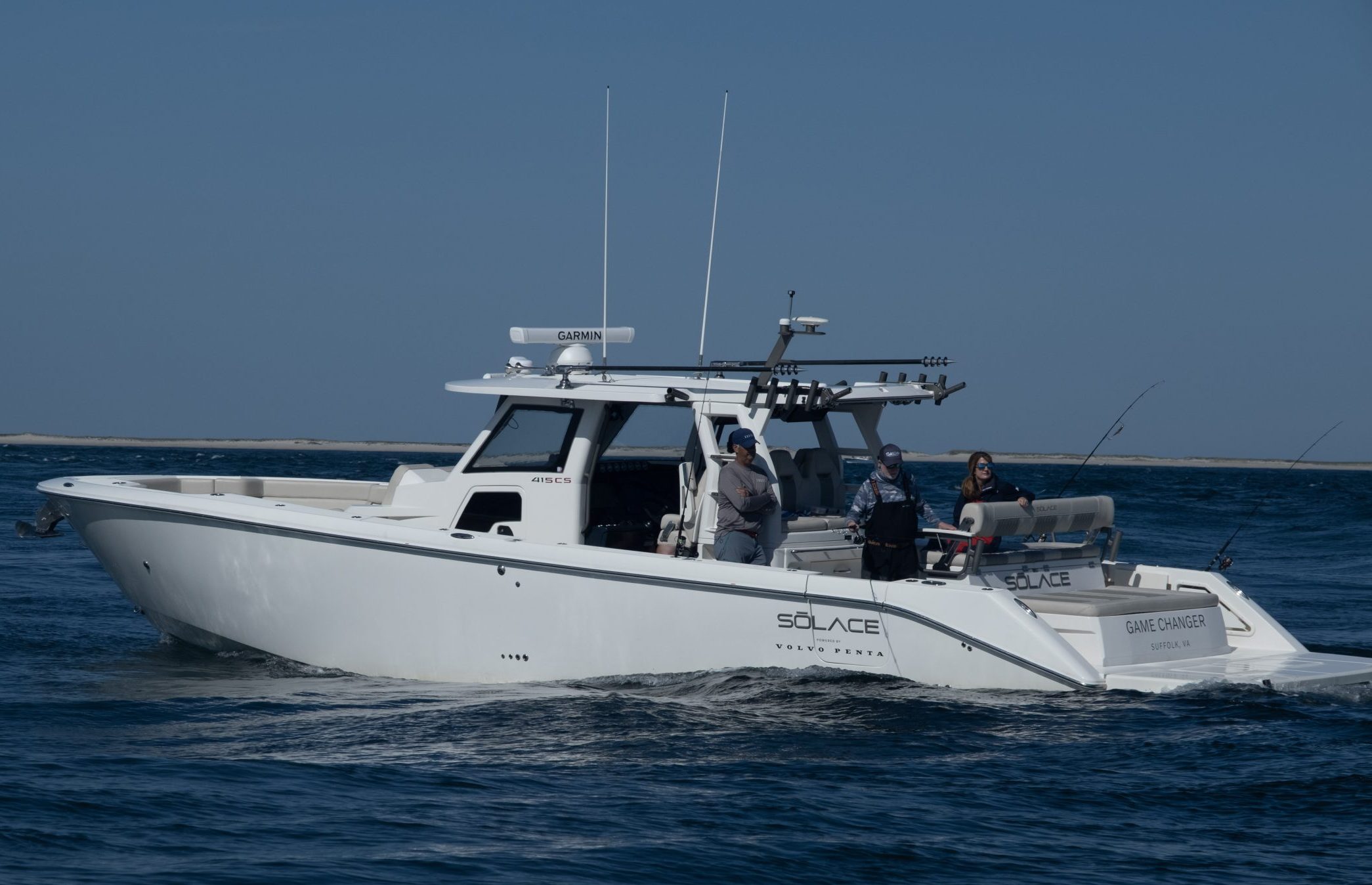
For many boaters, the idea of diesel inboard/outboard power still carries some outdated baggage—noise, smoke, complexity, or the sense that it belongs to another era. But spending time around a modern diesel I/O setup quickly challenges those assumptions. What stands out isn’t raw performance or top-end speed, but how much easier and more confidence-inspiring it makes everyday boating.
Here are five ways modern diesel I/O power quietly changes the on-water experience for the better.
1. The Props Are Out of the Way—and That Matters More Than You Think
One of the first things you notice has nothing to do with gauges or throttles. With an I/O setup, the stern is simply cleaner and safer. There’s no cluster of exposed props sitting right at water level, which makes a real difference for families, swimmers, divers, and anyone who spends time entering or exiting the water from the stern.
Whether you’re floating at anchor, helping someone climb back aboard, or gearing up for a dive, not having spinning hardware immediately behind the swim platform adds a layer of peace of mind that’s hard to overstate.
2. Diesel Safety Is a Feature You Don’t Have to Think About
Gasoline safety has improved dramatically over the years, but diesel still carries an inherent advantage that many boaters overlook: it’s far less flammable. That translates into quieter confidence at the fuel dock, in the engine room, and when cruising with family or friends aboard.
It’s not the kind of feature you actively notice while underway, but it’s one that can subtly change how relaxed you feel on the boat, especially on longer trips or overnight outings.

3. Docking Without the White Knuckles
Ask most boaters where stress peaks during a day on the water, and the answer is usually the same: docking. Tight marinas, crosswinds, short-handed crews—it all adds up. Modern diesel I/O systems, paired with joystick control and low-speed, low-torque maneuverability, dramatically flatten the learning curve.
Instead of overcorrecting with bursts of power, the boat responds smoothly and predictably at idle speeds. That means fewer rushed decisions, easier close-quarters handling, and more confidence for boaters who don’t want docking to be the most memorable part of their day.
4. Range That Changes How You Use the Boat
Fuel efficiency isn’t just about saving money—it’s about freedom. Modern diesel I/O setups are remarkably efficient, allowing boats to cover serious distance on less fuel. That extra range can change how you plan a day on the water, opening up longer runs, fewer fuel stops, and less anxiety about watching the gauge creep down.
Instead of building trips around fuel availability, you start building them around where you actually want to go.
5. Cleaner, Quieter, and Nothing Like the Diesel You Remember
One of the biggest surprises for many boaters is how clean and quiet modern diesel power has become. Today’s systems run with low emissions and minimal smoke or odor, turning long-held assumptions about diesel on their head.
At speed, soundproofing and the naturally lower-frequency tone of diesel engines mean much of what you hear is water noise, not mechanical clatter. Conversations are easier, fatigue is reduced, and the boat simply feels calmer underway.

Rethinking What Diesel I/O Really Is
Modern diesel I/O power isn’t about going back in time—it’s about removing friction from boating. Less stress at the dock, more confidence around the stern, longer range, and a quieter, cleaner ride all add up to something many boaters value more than raw speed: an easier, safer day on the water.