

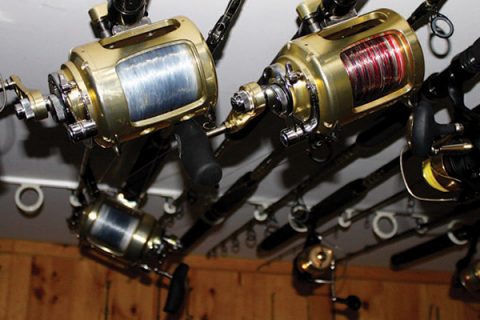
Take care of your equipment now to enjoy hassle-free fishing next spring.
When the fishing season winds down, it’s easy to toss the gear aside with little thought. Some anglers are eager to switch out their reels for shotguns and head into the woods. Some procrastinate, and others simply don’t know what to do. How you store your gear during the winter has a direct effect on how it will function the following season. Waders that were perfectly watertight could develop a leak if stored improperly, giving you an unpleasantly cold surprise when you don them in spring waters. Reels that were smooth in November could have sticky drags and grinding gears in April if a few simple steps aren’t taken before putting them away. Winter maintenance of your gear will extend its life and your enjoyment, then when the weather warms and the fishing resumes, you will be ready to go with minimal start-up work. Best of all, most of it can be done while watching football right in the living room.
Though it’s tough to say goodbye to another fishing season, taking care of your gear and tying up the loose ends in the early winter will ensure that it is in ship-shape to welcome the fish back next spring.

Don’t wait for spring to clean up your reels. Rinse and dry them now so they will be ready to go with little fuss when the fish return.
If you’ve been fishing in saltwater, the first thing you’ll want to do is rinse the reel with freshwater. This is something you should be doing after every trip in the salt, but it’s especially important if you are putting the reel away for a few months.
Use a fine spray over the reel. Do not use the jet spray setting on your hose nozzle, otherwise you’ll risk driving salt and sand inside the reel where they can do some serious damage. Remove the spool and rinse it along with the exposed pinion, then allow the reel to air dry. It’s certainly not critical to store the reel with the spool attached, but if you do, be sure to back the drag all the way down. Storing a reel with the drag set tight can compress the drag washers and make the drag “sticky.”

Give your rods a good rinse in freshwater and store them in a rod rack. Leaning the rods against the wall for the winter can damage the guides and give the rods permanent curves. Before putting them away, take a cotton swab and run it along the inside of each guide to check for cracks or chips. The cotton will snag on any broken parts of the guide insert. Check the rod tip to make sure it is firmly glued in place and not spinning.
If your rod needs any work, whether it is a replacement guide or new grip, take it to your local tackle shop for repairs now, and you will have it in plenty of time for the spring.
The life of your waders can be extended by properly storing them during the off season. Before putting them away for the winter, it’s wise to wash them and check them for leaks. The best way to find leaks in breathable waders is to turn the waders inside out and spray the general area of the leak with rubbing alcohol. Rub the alcohol along the waders and then turn them right side out and look for a dark spot, which will be the leak.

In neoprene waders, one way to find the leak is to roll down the tops of the waders, trapping air inside. Then, submerge the waders in a bathtub full of water and continue rolling the waders down from the top. The trapped air will eventually escape the waders through the leak, sending up a stream of bubbles.
Repair any pinholes in your waders now so you don’t have to worry about them next spring.
Washing waders will remove dirt, salt and fish slime. This can be done by hand in a tub with cold water and powder detergent. Stockingfoot waders, believe it or not, can even be washed in a washing machine. Use a gentle wash cycle, once again with cold water and powder detergent. Straps should be tucked into a wader pocket or a Ziploc bag so they don’t get caught up anywhere in the washing machine.
After you’ve washed the waders, it’s imperative that you dry them, both inside and out. The best way to dry waders is to hang them up by the shoulder straps.
When the outside of the waders has dried, turn them inside out and hang them again. If waders are stored wet, they will develop mold. Mold in itself isn’t damaging, but the moisture and mold will cause the tape over the seams to separate from the wader, allowing water to leak through the seams, which is difficult, if not impossible, to repair on your own.
For long-term wader storage, store them out of direct light and heat. This is especially important for neoprene waders, which will dry and crack if exposed to direct sunlight for extended periods. Storing them flat under a bed or hanging them in a closet will work best. Folding waders will create creases and weak spots in the material that will be prone to leaking.

When putting away your kayak for the winter, the first thing you’ll want to do is clean it to remove any salt, dirt or fish scales. This will also help you find any issues that need attention such as cracks, flat spots or broken straps. Allow the kayak to air dry before storing it. Remove the drain plug and allow any water to drain. Open the hatches to make sure that all the water has drained out. Standing water inside a kayak can freeze and expand over the winter, which can crack the hull. Leave the plug out the entire time the kayak is in storage to allow for changes in pressure.
Kayaks are best stored on their sides, standing up or upside down. Leaving a kayak on the ground or on a rack rightside up for a long period of time can deform the hull.
Depending on the model, sunlight may or may not be an issue. Hobies, for example, are made with ultraviolet inhibitors, so they resist damage from the sun. For most kayaks, however, the sun will weaken the plastic, making it prone to cracking, so it’s a good idea to cover them.
Also be sure to remove any accessories such as the seat and leashes. Wash and dry them, and store them in one place. A large storage tub is a great place to keep all your kayak accessories for the winter.

As with all other gear, clean wading boots and dry them out. Storing them wet in freezing temperatures will damage them. To dry wading boots, hang them by the laces. Also keep them out of direct sunlight. The basement or a closet is a good place to store fishing boots for the winter.
It’s also a good idea to change out the laces at this time of year so you don’t have to make a detour next spring when the worn laces break as you go to tie them.
Foul weather gear also needs to be washed and dried. Follow the manufacturer’s instructions on the label of your garment. Most PVC-coated rain gear, like Grundens Bibs or jackets can be washed with a sponge dunked in warm soapy water.
To really wash your PVC-coated rain gear, scrub it with a soft-bristled brush before soaking it in a mild beach solution for 10 to 15 minutes. After soaking, rinse it down with warm, clean water, and hang it on a heavy-duty hanger to air dry.
Gore-Tex outerwear can be washed in a washing machine with warm water and powder or liquid detergent. Do not use fabric softener or bleach as these will damage the garment. Putting Gore-Tex outerwear in the dryer on tumble dry warm will reactivate some of the water repellency. A topical water repellant treatmen can be applied to the gear as well. Wash-in water repellant treatments are not recommended for Gore-Tex outerwear as they may block the breathability of the garment. Wash-in water repellant treatments would be fine for non-breathable outerwear.

Lures, both fresh and saltwater, should be rinsed off and dried. Then take the time to separate out the lures with hooks that need to be changed. Even freshwater hooks get rusty or dull and need to be switched. Go through your tackle box and throw out the ripped Senkos, the bluefish-shortened plastics, and the dried-up Berkley Gulp and Uncle Josh Pork Rinds.
Storing your lures properly is very important. Try to arrange them in a way so that the treble hooks don’t “mate” and leave you with a disastrous tangle of plugs. Plus you’ll be able to assess what holes you need to fill when doing your winter shopping. Soft-plastic baits should be stored in tackle trays that will not “melt” when in contact with the softplastic for an extended period of time. Plano and Flambeau tackle trays are both compatible with soft plastics. Also, store plastics with baits of the same color. Soft baits have a tendency to “bleed” their colors into one another. At the very least, keep pearl or white soft plastics away from other colors.
Bait fishing rigs should be untangled and stored in Ziploc baggies or harvested for parts if they are damaged beyond repair. Weights should be removed from the rigs and stored in one place. Make sure there is no leftover bait on any of the hooks. Bits of nightcrawlers, squid or crab can be especially difficult to remove on the water, and tend to get left on hooks. Get rid of these now and avoid any unpleasant surprises next spring.
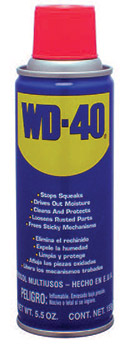
Pliers, lip grippers, knives and other fishing tools will all benefit from a good wash in warm soapy water after the season ends. Hitting pliers with some penetrating oil like WD-40 will keep them operating smoothly. Boga Grips will benefit from a drop or two of light machine oil or silicone on the trigger pin, prong pin and connecting rivets. Air dry any fishing tools before storing to prevent corrosion.
Looking closely at your tackle now will help you assess what you need to buy at the winter tackle shop sales, flea markets and sportsmans shows. Order hooks and split rings for your battle-worn lures now and send in anything that needs repair. Tackle shops and reel service centers see a huge influx of broken gear just before the fishing season resumes, and long turnaround times could leave you without your favorite piece of equipment when it’s time to get back on the water. Sending in your broken gear now will ensure you have it in hand well before the fishing season starts.
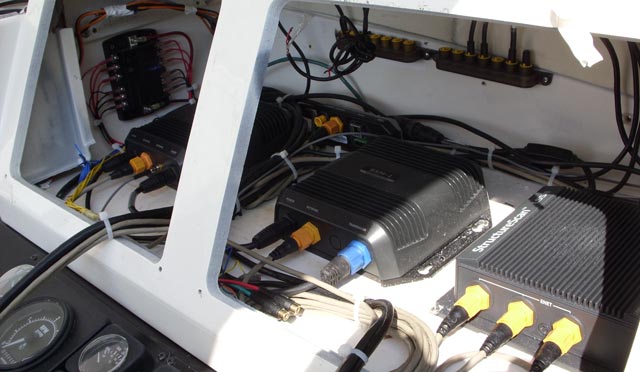 Offseason Boat Maintenance
You rely on your boat’s electrical system to run lights, electronics, appliances, pumps and gauges – and to start the engine – so annual servicing is critical.
One think that is better than WD40 for lubing up your pliers and stuff like that is bones skate cream. It is better than WD40 because WD40 attracts dirt, and the cream doesn’t.
WD 40 is a great drier and cleaner but it’s not a lubricant . I agree clean the tools (but for god sakes not your reels) with WD40 but lube then afterword.