
by Captain Bruce Sweet

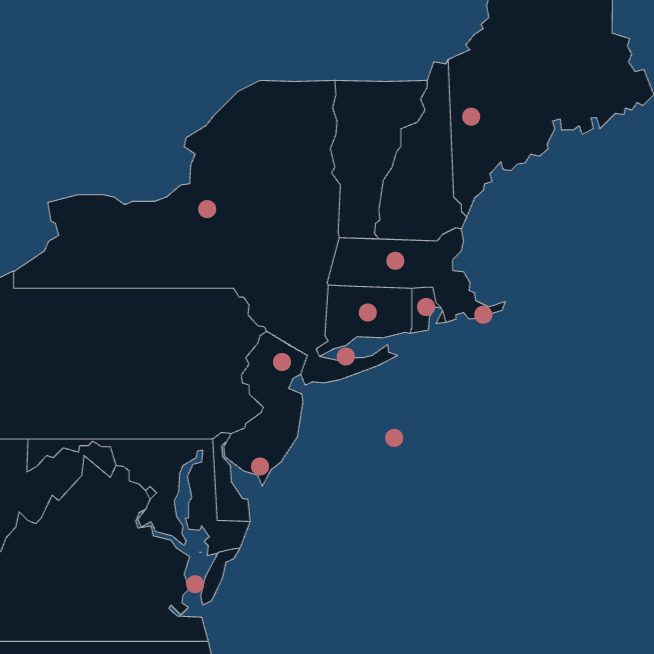
If you take a look at a nautical map, it’s easy to see why Cape Ann is a hub of New England groundfishing. With the prime fishing grounds of Jeffreys Ledge to the north, Tillies Bank to the east and Stellwagen Bank to the south, the waters are rife with potential hot spots. As fall approaches, I start to get excited for the return of cod, haddock and pollock to these offshore banks and ledges.
As a captain, my job is to put the boat over fish, and my biggest decision on any given day is deciding which of these three grounds to fish. Furthermore, I have to choose what specific areas to target. How far east should we steam? What water depth should we target? Should we fish the flats, edges or tops of structure? Should we fish soft or hard bottom? To best answer these questions, a captain must consider the time of year, the weather forecast for the day, the capability of his boat and crew, the tides, and the availability of bait and fish on the grounds. Knowledge and past experience will ultimately guide the way, and in this article, I hope to impart some of mine to get you started on forming your own groundfishing game plan.
Follow The Tides
When we’re leaving Cape Ann Marina and heading down the Annisquam River in the Sweet Dream III, my crew will often ask me, “Where are we heading?” If I say, “I don’t know,” then I am probably lying. The first rule of fishing is to always have a game plan.
One of the first pieces of information you should incorporate into your game plan is the timing of the tide changes and the size of the tides. Experience has taught me that the fish bite better when the water is moving, and therefore I plan to have lines in the water during the more productive times. During slack tide, I will be running the boat. The largest tides come on new and full moons, and in our region, where there are two tide cycles a day, the current moves the fastest during the middle two hours of the six-hour change of a tide. Large tides mean heavy current. It will be tougher to fish deeper water, and it might be impossible to tend bottom when the tide is running in the middle third of a new or full moon tide, unless you’re in shallower water. Knowing and understanding this information will help you pick where and when to fish. On most days, the bite turns on for an hour or two during a tide. You will catch 80 percent of your fish during that time, so it’s key to have your boat in the right spot at the right time. Rare are the days when the fish bite continuously, but they do happen occasionally, so enjoy and appreciate them when they occur.
Use Your Electronics
Later in the season, I enjoy fishing Tillies Bank if the tides are not too big to make tending bottom difficult. Tillies does not see the crowds of Stellwagen Bank, and while it is more difficult to fish, I find I can consistently produce good numbers of cod and haddock in the fall. There is no shallow water like on Stellwagen and Jeffreys; the highest spots rise to about 190 feet and the drop-offs can plunge to more than 450 feet. Tillies features mostly sand bottom, although there are some hard areas. The bottom textures and sometimes extreme changes in water depth create the structure that attracts bait and groundfish.
Modern chartplotters and fishfinders make finding this bottom structure far simpler than in the past. But before you turn on your chartplotter and run 25 nautical miles east, start the old-fashioned way: by studying a bathymetric fishing chart. Locate the high spots and the canyons. Note places where the contour lines are close together, which indicates a rapid change in water depth. These charts will also specify the bottom composition, whether it is rock, shells, clay, sand or mud. With this information in hand, you can move to your chartplotter and mark likely targets to explore. Depending on the age and capability of your chartplotter, you could have a wealth of information at your fingertips, such as two-dimensional depth contours and three-dimensional bathymetric views. Start at the low zoom levels to find the major banks and ledges, and then zoom in to find smaller, more subtle bottom features.
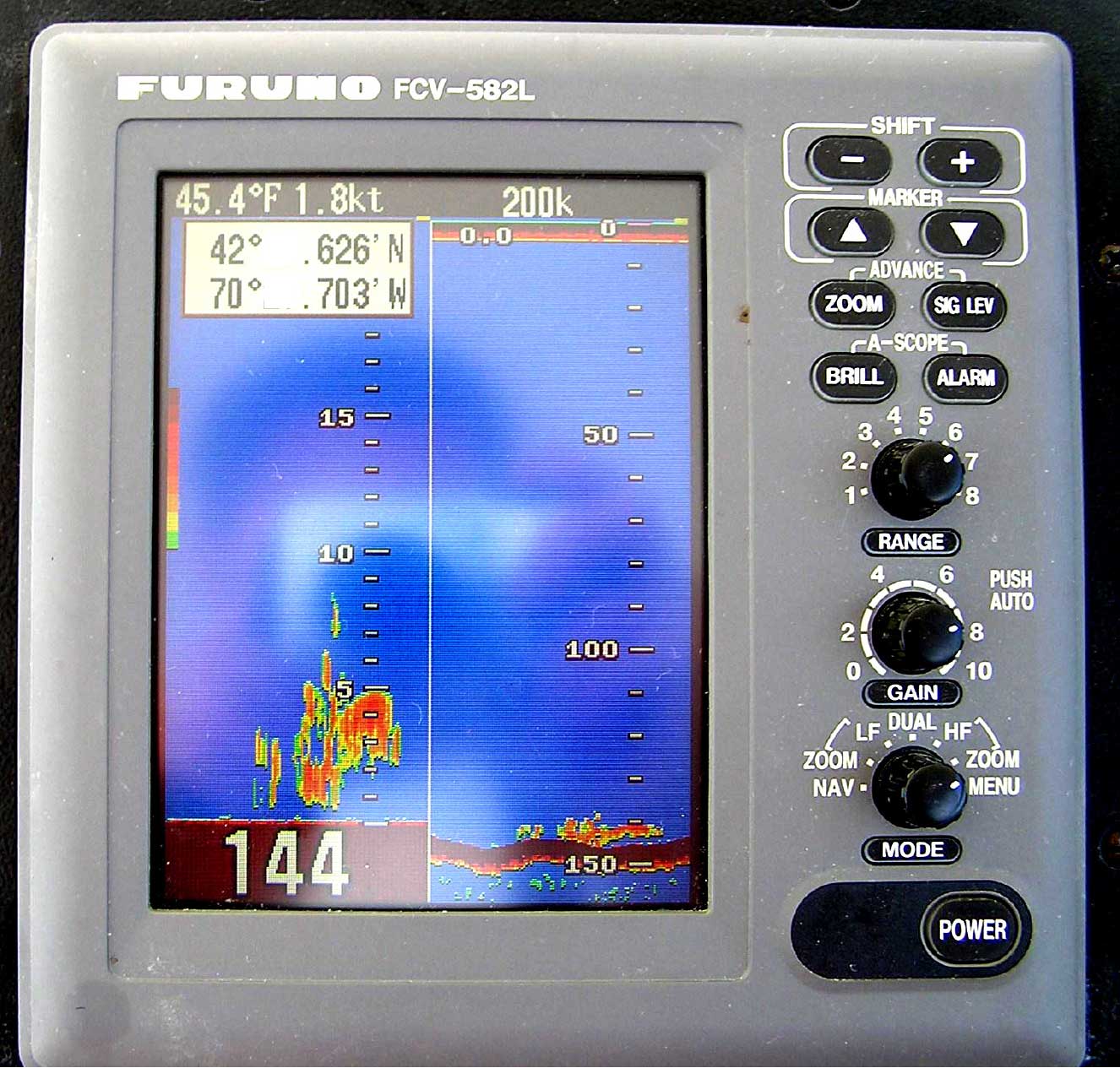
When you’re out on the fishing grounds, locating these subtle bottom features requires a combination of your chartplotter and sounder. Remember, even though these chartplotter chips have great data, they cannot capture every nuance of the bottom. That is why a quality color sounder is your most valuable tool for locating productive bottoms. Most sounders have automated fishing modes, which you will want to couple with their bottom zoom capability. I like to split my screen between a view of the entire water column and a zoom of the lower 20 feet of the water column on the narrower beam of the 200khtz frequency. With this setup, you can see the major trends in the bottom contour as well as the texture of the bottom itself, including its nooks and crannies and any bait or fish. A good sounder with a well-mounted transducer will allow you to view the major features of the bottom while you’re running at cruising speed. When you see something interesting, you can slow down and make a few passes through the area to view the details.

On a color sounder, soft bottoms like mud and sand will show up as a thinner and smoother red bottom echo. Hard bottoms with rocks and ledges will show up as a thicker, deep-crimson bottom echo with small jagged spikes on the zoom. Marks up off the bottom are fish, while small, blotchy red marks and clouds are bait. Green, yellow and red lines or arches are fish. Cod and haddock in 200 to 300 feet of water will appear more subtle and different than stripers and bluefish in 50 feet of water. One thing to keep in mind is that it’s more important to find bottom with the right texture than to mark actual fish. Often I will drop on a good edge with the right texture and catch fish without ever marking them.
Don’t limit yourself to discovering groundfishing hot spots only when you are actually targeting them. For example, I cover a great deal of water and structure when I am chasing tuna in the summer and fall, and I’ll keep an eye on my sounder while trolling and make notes of good-looking bottoms when I go over them. Even though these spots may not hold be holding groundfish in July, they could be a sure thing later in the season..
Know Your Quarry
Decide how deep to fish and what bottom types to target by considering your quarry. As a general rule, haddock prefer a soft mud bottom while cod prefer hard rock and ledge. Both species, however, can be found over a sand bottom when good bait like sand eels and herring are present. The hard-bottom areas also attract cusk and wolffish. You will often find hard bottoms on the pinnacle of a hill or a rise in the general surrounding water depth, sometimes as little as 5 or 10 feet higher than the surrounding area. I know that Tillies has a couple such hard-bottom spots, which I refer to as “cusk hotels.” There are always nice-sized cusk present in these areas, and on a good day, I’ll find a number of keeper-sized cod in the mix. Find a few spots like that, and you are well on your way to a successful day!

As for water depth, cod tend to prefer shallower water, while haddock usually prefer deeper. In general, look for cod in 90 to 200 feet of water and haddock in 220 to 260 feet. Having said that, we do catch haddock in the 95-foot shoal water on Stellwagen Bank in the spring when bait is plentiful. So as before, there are no ironclad rules. The more you fish, the more you will be able to identify the small signs that can turn a day of fishing into a day of catching. Find a hard, deep bottom around 300 feet with what looks like clouds of smaller fish over it, and you may have found a great redfish spot. Redfish are bright orange, well-armored bottom dwellers that run 12 to 18 inches long, and they make great eating when pan-fried. Be very careful when handling them, as their fins have sharp spines and their eye sockets and gill areas are protected by sharp, sawtooth-like barbs.
When locating groundfish, also take into account the season, time of year and water temperature. When the water is colder (generally early and late season), the fish tend to be in shallower water. During summer months, when the water is warmer, look for fish in deeper water.
Know When To Hold

Another consideration is whether to hold a position by anchoring. I far prefer drifting when the conditions allow, meaning fair winds and tide. Drifting allows you to cover more bottom and depths, helping you locate where the fish are holding on a given day. Once you find fish, you can go back uptide and repeat the drift. You can also look for similar conditions nearby. Sometimes, however, even a light breeze with the current flowing in the same direction can make tending bottom impossible while drifting. On these days, one option is to “motor drift,” which entails turning the stern into the wind and bumping the boat in and out of gear to stem the drift of the boat. This action should only be performed when it is safe to do so and the crew is capable of keeping their lines clear of the running gear. Failing this, or if you find fish holding tight over a particular bottom, it’s time to get the anchor out and position the boat over the structure. When anchored, you’ll find that bait generally outfish jigs. Having a number of bait rigs in the water acts as a small chum slick that calls the fish to the boat. You can really get the haddock going this way.
Anyone can get lucky once in a while or follow the crowd to a groundfish bonanza, and even the best and most experienced captains will have days when the groundfish seem to have lockjaw. But day in and day out, if you learn from what has been shared here, you will know how to answer the question, “Where should we fish today?” The result will be more consistent cod and haddock fishing and the opportunity to enjoy delicious fillets well into the winter months ahead.
Fish