
by Karen Moore Dourdeville & Robert Prescott | MassAudubon Wellfleet Bay Wildlife Sanctuary
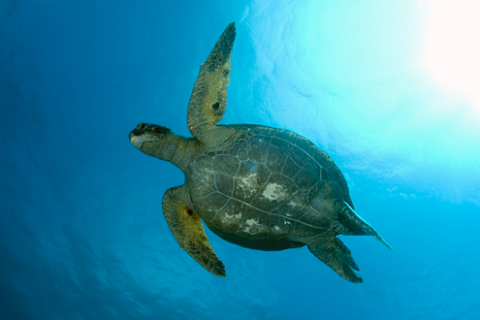
“I saw what I thought was a dinghy ‘turned turtle’ in the middle of Vineyard Sound…but when we got closer it put its huge head up and looked at us and I realized it was
a turtle! Its head looked about the size of a soccer ball!”
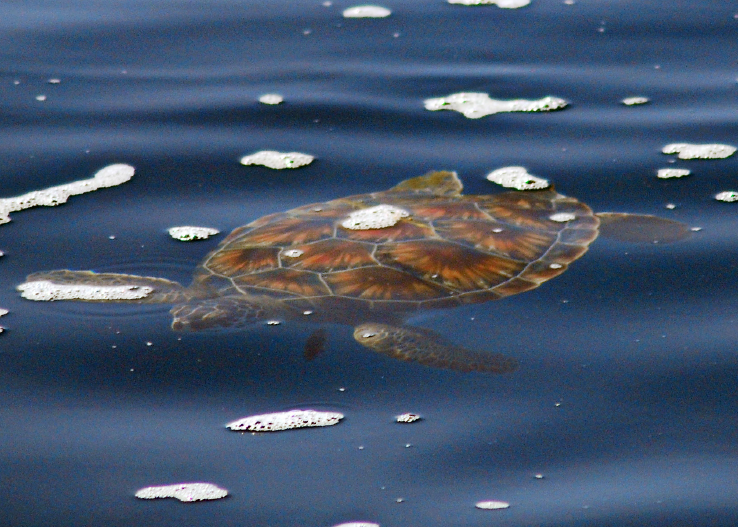
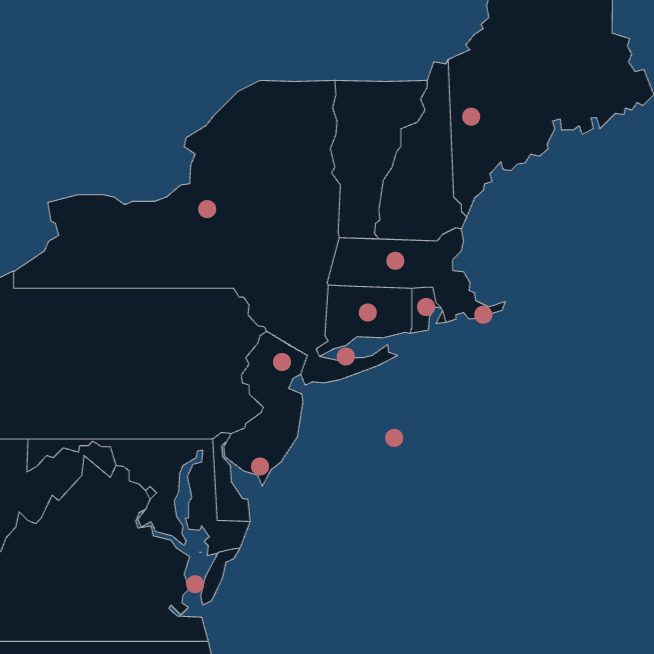
This message from an excited fisherman is typical of the hundreds of calls that have come into the Sea Turtle Sighting Hotline since MassAudubon Wellfleet Bay Wildlife Sanctuary began the program in 2003. For many years, sea turtle research was focused on nesting beaches in tropical and subtropical parts of the world, where conservation efforts were being made to reduce the harvest of eggs and turtles and to minimize disruption to the beaches. Here in New England, sea turtles do not nest on our beaches. However, through aerial surveys, ongoing studies of dead and cold-stunned sea turtles stranded on shore, and satellite telemetry work, researchers have learned that the waters off southern New England are critical foraging habitats for three, possibly four, North Atlantic sea turtle species. These waters also serve as nursery grounds for at least two species. Scientists agree that more in-water knowledge of sea turtles is needed if we are to keep these iconic species from the tragedy of extinction. This is where recreational boaters and fishermen in southern New England can play an important role.
In 2006, MassAudubon partnered with On The Water to advertise the Sea Turtle Sighting Hotline. Since then, recreational fishermen have become increasingly active sea turtle reporters, greatly increasing the sightings database.


It’s a natural connection. Successful fishermen make good use of their senses—constantly looking for diving birds, surface disturbances and color changes in the water, listening for anything breaking the surface, and even smelling schools of baitfish such as menhaden. Fishermen notice things, and sometimes they see sea turtles surfacing to breathe, basking at or just below the surface, or actively swimming at the surface. Most fishermen are naturally curious about the ocean, have the desire to learn more about its creatures and want to protect its bounty and health.
When you see a sea turtle, please report it to the MassAudubon Sea Turtle Sighting Hotline by either calling a toll-free phone number (1-888-SEA-TURT) or going online to www.seaturtlesightings.org. Provide details about the turtle sighting, including date, location (GPS when available), time, approximate size, color and any other observations. Photos can be very helpful for species confirmation. Each reporter is given the option to request a call from a hotline staff member to discuss the sighting or to answer questions about sea turtles. Many reporters take advantage of this option, and we on the staff always enjoy talking about sea turtles and hearing fishermen’s stories.
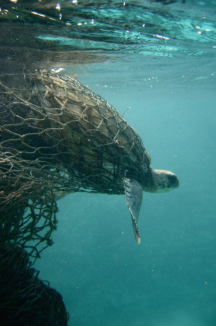
The hotline is designed for sightings of free-swimming sea turtles. Unfortunately, sea turtles do fall victim to boat strikes and entanglement in fixed lobstering and fishing gear. On the hotline’s recorded phone message and the website, the reporting party is instructed that if the turtle is injured or entangled and needs immediate assistance, to instead call the Provincetown Center for Coastal Studies (1-800-900-3622). PCCS has the responsibility and the equipment to disentangle endangered marine species off Massachusetts and southern New England, both sea turtles and marine mammals. If the animal is out of PCCS’s response range, the Center will contact the appropriate response team, such as Mystic Aquarium in Connecticut or New England Aquarium and NOAA/ National Marine Fisheries Service.
Sea turtle sightings reported to the MassAudubon hotline are calibrated for accuracy of species identification and location, then entered into a detailed database. All the narrative observations from the reporting party are included.
We also enter sightings on maps that can be viewed by year, month or species on our website. These sightings represent purely opportunistic data, meaning they are not collected systematically. However, good information about habitat use and population trends can be gathered from large opportunistic databases. So far, the MassAudubon Sea Turtle Sighting Hotline for Boaters has generated over 700 sightings.
Besides collecting information about where and when sea turtle sightings are occurring, the hotline has a second important goal: alerting southern New England boaters that sea turtles are here in the late spring, summer and fall. Knowing that an endangered sea turtle might appear and having an idea of what it might look like can help boaters both see and avoid striking them.
my wife found 2 hatchlings at pauls beach in old bridge nj. I think they were green turtles. is anyone aware of them nesting there.