


Like many life-altering moments, you may remember where you were when you heard the news that a river herring moratorium was enacted in your state. In Massachusetts, we herring-obsessed fishermen thought we would never recover when the Commonwealth’s herring moratorium passed in 2006. Begrudgingly, we knew it was overdue. The evidence was at our very feet, as each year produced a less-prolific return and many herring runs were being ransacked by anglers who seemed to have little guilt over taking every last herring, regardless of the method or law.
For legions of linesider lovers who enjoyed live-lining to hungry herring run stripers, there were two striper seasons– the spring herring season, and everything else. But the edict ended up being a serendipitous one because where herring numbers have increased, striped bass have taken notice. Healthy herring runs that cross paths with migrating striped bass now make for some explosive spring angling opportunities for shore-bound anglers, and those who have adapted consider that seismic shift among the best things that ever could have happened to spring striper fishing.
The reality is that our dependence on live herring had turned many of us into one-trick ponies. Lures of any sort were scoffed at because we knew you couldn’t beat the real thing. There was a learning curve for many anglers once the herring faucet was shut off, but ultimately it made us more versatile and proficient because many of the same wares and methods that we learned to use on linesiders hot on herring could be applied to fishing for stripers in other environments. After all, it’s the same fish!
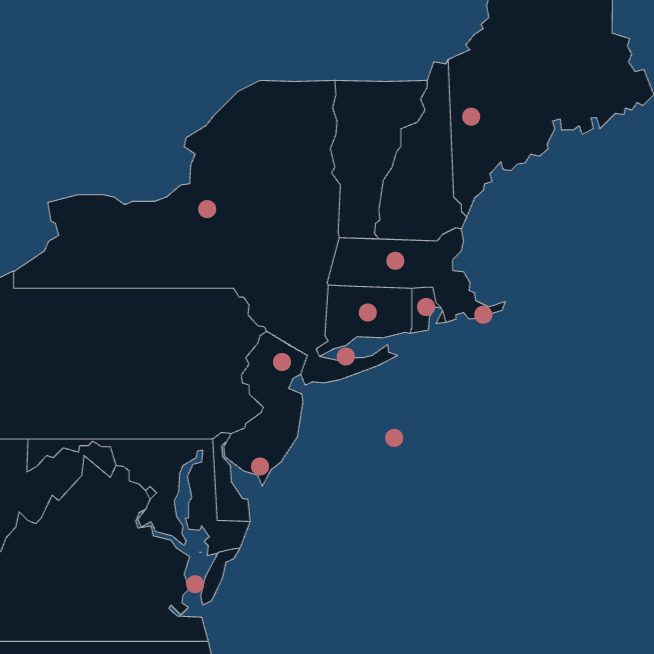
There are about 100 herring runs in Massachusetts, according to the Massachusetts Department of Marine Fisheries, with her-ring returns in each run varying from thou- sands to millions. The fun begins as soon as the first few scouts surge from the sea into their natal watersheds. Now, I’m not suggesting that there will be migrating stripers willing to make a meal out of those first few alewives, which often arrive in April and sometimes even in late March. Rather, the sudden appearance of this substantial food source is often a catalyst that awakens holdover stripers. Take it from a guy who haunts holdovers from November through March—there are a lot of striped bass from Connecticut to the North Shore of Massachusetts that never leave the vicinity of herring runs.
While that incipient wave of alewives (and later bluebacks) may begin coursing riparian highways in early spring, the main bodies of river herring do not move in force until late in April. Most runs will peter out by early June, but back in the day, I would net fall-back herring (adults returning to the ocean after spawning) as late as July, and there would still be linesiders lurking nearby. Considering that the spring-spawned young-of-year herring begin tumbling back into the sea as early as late August and will often linger into November, there is almost no part of the season when you should ignore herring runs. River herring are definitely a gift from the gods that keeps giving.
While daytime may be okay, as with most sorts of striper fishing the bite is usually better at dark. This is especially true in the skinny water that holds the herring. It never ceases to amaze me how little water volume is needed to shelter some very big bass, as long as there is the sanctity of darkness. The absolute best alchemy of events is when nighttime coincides with a rainstorm. Give me a May downpour and I will clear my schedule to fish a river that holds herring that night.

If a river is tidal, the first major structure that stems the tide, whether it is a bridge, dam, island, reef or spillway, can be pure magic. Time your trip so it coincides with a flooding tide at night or first light so that you are casting your offering at the base of structure not yet breached by the rising tide. It is at that edge where the herring stack up, often with bass right on their tails. Do a little planning and strategizing so that when the herring move upstream from one spot, you can move to another farther upstream where other obstacles thwart their escape.
Having observed herring movements over the years, I’ve noticed that while they will migrate in open water, they prefer navigating with one side tight to structure.
Limiting attack lanes from predators just makes good survival sense. Look for river herring to be swimming right next to bridge abutments, pilings, piers, wharfs, locks and any other object that makes them feel more secure.
Other structures that might not be obvious are shadow lines and shorelines. Where light casts a shadow next to a bridge or dam, the herring will often swim just at the edge of the shadow line. Shorelines are often viewed by herring as far less risky than open water. If you stand back a bit from the shoreline, you’ll often see the tell-tale wakes left by coursing herring in mere inches of water. Sometimes you can call it; inevitably, when that shoreline veers closer to deeper water, bass will blast the bait.
The challenge here is that it often takes pinpoint casts to be successful. The bass lose when they give chase to the herring but succeed when they can ambush. One lock that I’m familiar with will produce a good bite if you can pitch your lure right against the wall, while 18 inches outside of it will result in nothing. A dam that I frequent is a tumbling torrent of white water, and a well-placed cast into the washing machine pays off, while a miss just short of the mark is not rewarded.
As is the case with most striper fishing, you want to select a lure that will get noticed. At night, especially in the maelstrom of a river, a striper will detect a lure primarily by vibration so the profile is more important than color. A lure that is substantial in form, like a herring, will far out-fish smaller stuff.

I opt for lures from 6 inches to 8 inches in size, and in the black of night I choose brown, green, gold and sometimes white or silver. When false dawn is at hand, I prefer brightening the color palette a bit and opt for chartreuse, yellow, glow or parrot. If I had to pick one type of lure to fish the herring runs, it would have to be a jerk-type bait. Lunker City Fin-S Fish, Berkley Gulp Jerk Shads and Sebile Soft Magic Swimmers are all deadly in herring runs. If the current is really cooking, then the Berkley Gulp Jerk Shad is king. The Gulp is stiffer than a soft plastic and will not bend or tumble in the wash, instead tracking true just like a live herring. I rig the Fin-S Fish or Gulp Jerk Shad on a plain jighead between 1⁄2 and 1 ounce. Lighter is better, since it’ll keep the bait in the fish’s field of vision for a longer time, but if the current is rip-roaring I go heavier. I’ve used the Sebile Soft Magic Swimmer when the bass are stacked nose to a spillway or other structure, and they will belt it as soon as it hits the water, and the lure’s snag-proof rigging is beneficial when you’re working it through a minefield of structure.
I have also done well with surface lures in luminescent finishes, such the Big Fish Blitz Seeker in parrot or yellow and the pink-headed Yo-Zuri Mag Popper, especially around dawn when the bright finishes makes these lures pop. And, of course, there is no better thrill than having a bass crash a surface lure, thrash the skinny water with its broom tail, and maybe even clear the water in head- shaking hysteria.
If your interest in herring runs post-moratorium went the way of your herring basket, it may be time to reconsider. And the timing couldn’t be better. There is a concerted effort among the DMF in Massachusetts and agencies in other states to improve spawning access for herring and to awaken long-dormant runs. This is good news for herring, stripers, and fishermen.
River Herring Identification
Two species of fish in the Northeast are collectively referred to as river herring: the alewife and the blueback. They are similar in appearance and both species are anadromous, mean- ing they are born in freshwater, spend the majority of their lives in the ocean, and return to freshwater to spawn. Mature river herring undertake an upriver spawning migration in the spring. Alewives spawn in late March to mid-May, when water temperature reaches about 51oF. Blueback herring spawn later in the spring (late April through June), when water temperature reaches about 57F.

Blueback herring (Alosa aestivalis)
Blue-black to blue-green dorsal color, eye width equal to distance from front of eye to tip of snout, dark spot behind gill cover is less distinct, lining of body cavity is dark colored, belly sharp (saw-toothed). Grows to 15 inches, generally smaller than alewives.
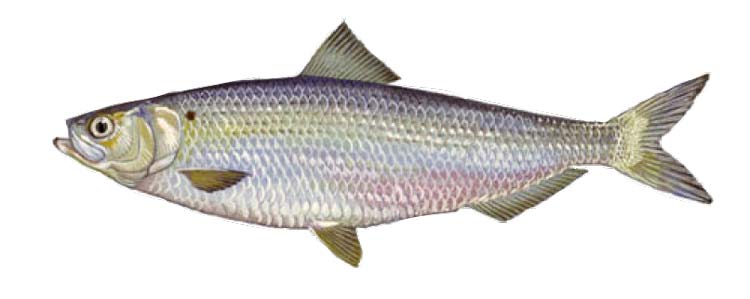
Alewife (Alosa pseudoharengus)
Gray to gray-green dorsal color, eye width greater than distance from front of eye to tip of snout, distinct round dark spot behind gill cover, lining of body cavity is light colored, belly sharp (saw-toothed). Grows to 15 inches, generally larger than bluebacks.
I’m often curious as to why “herring” color plugs are light blue, pink and white when those colors do not match the actual colors of these guys
Thank you, Ron! GREAT article.
Which run in the Merrimack River? Great article!
Have you used any Hogy products to imitate Herring?
I’ve had great success with the white Hogy 10″ Double wide when fishing for bass that are on herring.
Sp Minnows by diawa and tsunami 6 ” swim shad paddle tail (they come in the 4 pack) are killer in river while herring are running. And this is a awesome year so far. River is loaded with herring. Good to see numbers rising .
Ah the locks at the Charlestown dam. A very nice spot to pursue bass chasing herring. Good to note that if you cast into the locks, the likely hood of being yelled at by a dam operator or state police is pretty good.
Another great article by you guys over there…thank you!!
How about atlantic herring? They made a pretty strong run through salem harbor last year around June 1st.