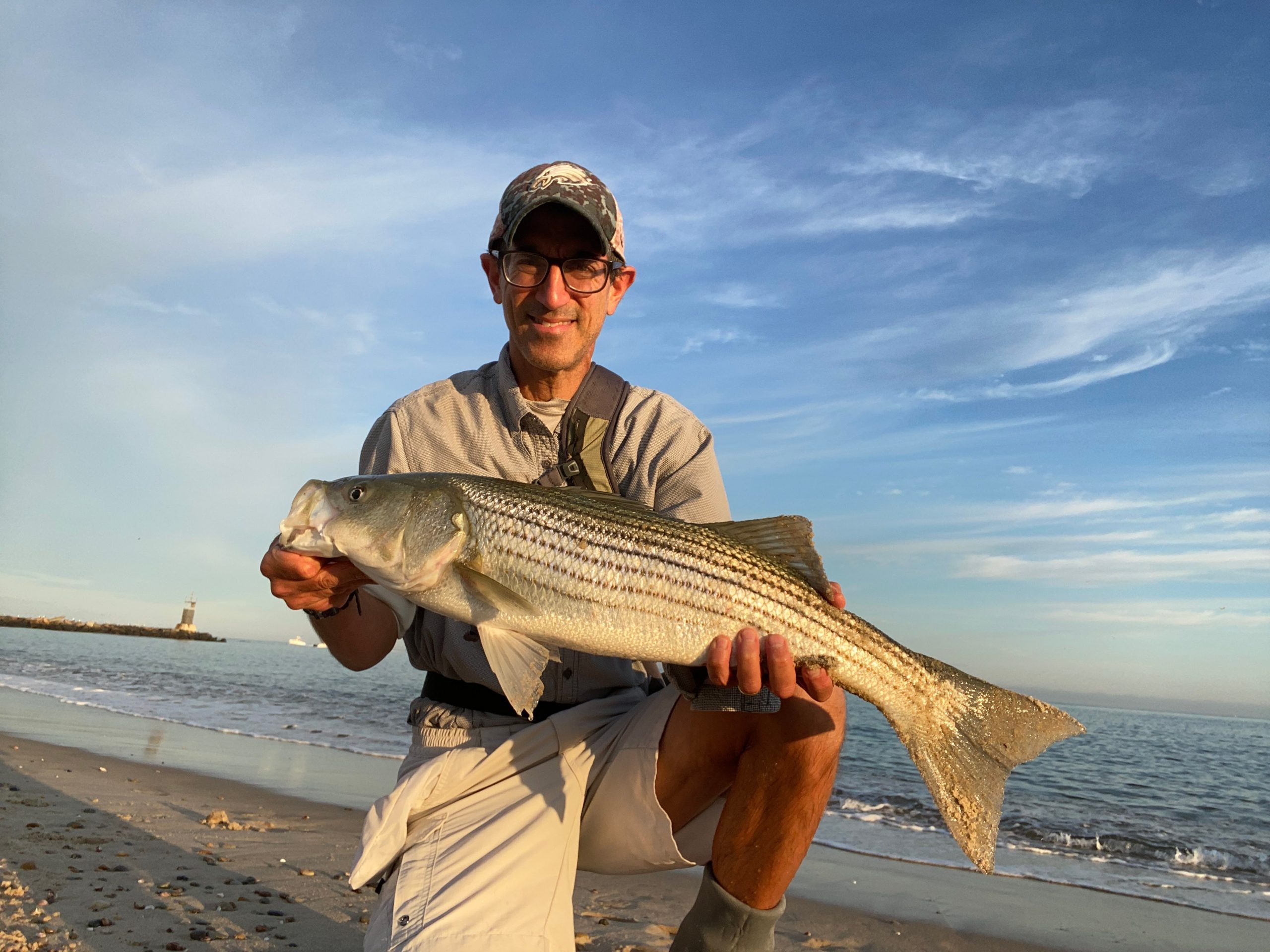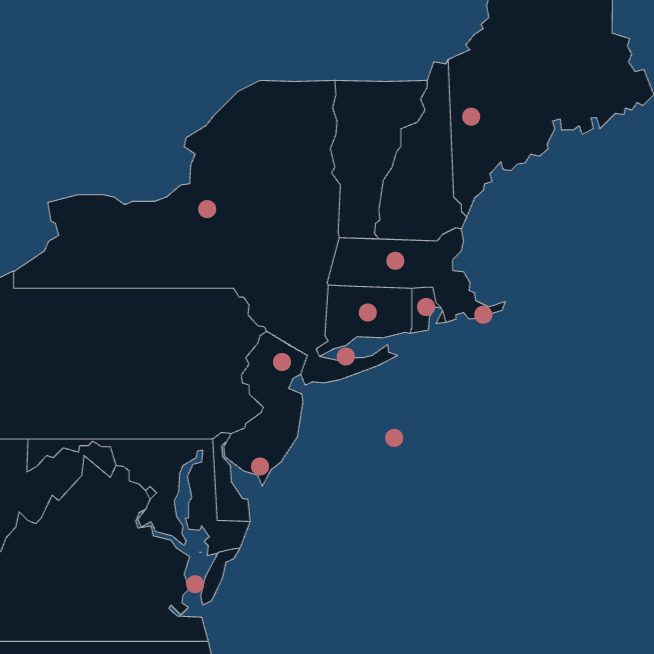

One unavoidable reality of surf angling, as with most any pursuit, is that you can be in only one place at a time. The challenge of being where the fish are at the right moment is amplified by the fact that reaching productive water means trudging long distances over soft sand or rocky shoreline, burning up both precious time and fishing opportunity. A 4×4 vehicle can ease this dilemma, but some beaches are physically off-limits or legally closed to vehicles altogether. If only there was something that filled the void between motoring via beach buggy and putting one foot in front of the other.
Fortunately, there is: a fat-tire bicycle. I’ve recently incorporated one into some of my surf-fishing adventures. It helps me efficiently and quickly search for new spots over greater distances and has cut down the time it takes me to move between some of my more isolated (and remote) favorite spots. Plus, it’s an excellent way to get in some cardio, even on days when fishing isn’t on my dance card.
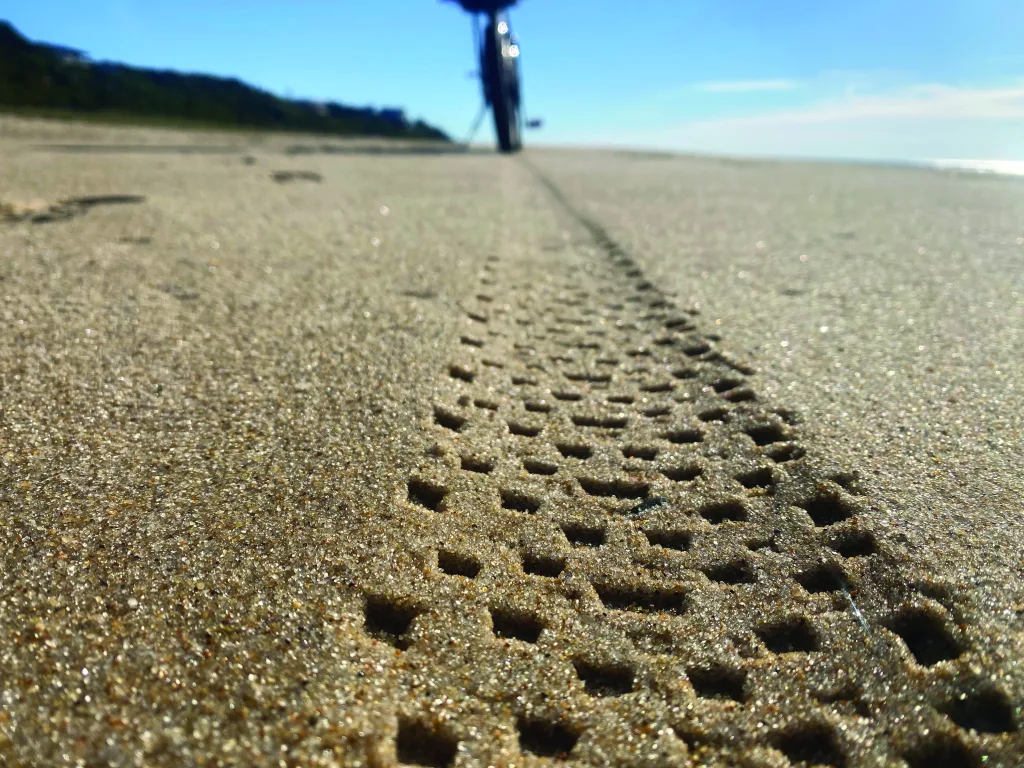
It’s generally agreed that today’s fat-tire bicycles trace their roots to the late 1980s, when ingenious riders set out to pedal across Alaska’s snow and ice or New Mexico’s sandy dunes and seasonally dry rocky riverbeds. There were earlier prototypes, but these were more often walked rather than ridden over the dicier bits of terrain. Common to all the designs was increased tire “contact patch”, or in layman’s terms, the area where the tire rubber meets the road.
A large contact patch provides improved grip on loose, soft surfaces like snow or sand. Wide tires were constructed by welding conventional rims side to side and hand-stitching standard tires together. Custom one-of-a-kind bike frames and forks were fashioned to accommodate the improvised fat tires. The contact patch was further expanded by extremely low tire pressure. These bikes went where no other bikes were ridden before. Furthermore, they could safely be ridden during any season.
Fat-tire bikes remained a novelty until Surly Bikes, in 2005, released the Pugsley kit to the broader recreational cycling market. The blueprint of the Pugsley was an amalgam of the innovative Alaskan and New Mexican designs. Surly expanded over the next two decades, and other bicycle manufacturers added fat-tire bikes to their product lines. Early on, their large (almost comically balloonish) tires drew curious stares. Today, they are a common sight along sandy beaches and snowy trails; they rarely turn heads.
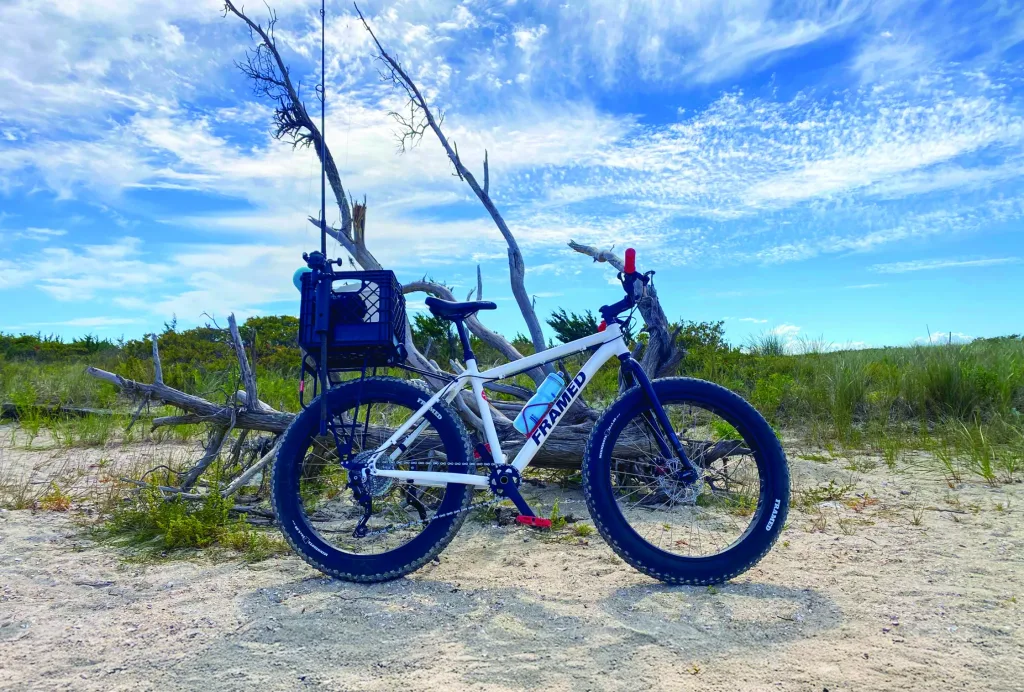
Fat-tire bicycles are broadly categorized into three tiers: entry-level, mid-range, and high-performance. Retail prices range from $500 for entry-level models to well over $5,000 for high-performance bikes. Riders frequently upgrade stock components, so the tiering is more continuous than strictly discrete. Case in point, my bike has a 6061 aluminum alloy frame and fork, 1×10 drivetrain, mechanical 160mm disc brakes, 26″ x 4″ 120 TPI tires, and hydraulic dropper post; its feature mix places it somewhere on the spectrum between entry-level and mid-range. I picked it up second-hand for $550, a solid deal, even considering that the manufacturer had exited the bicycle market in late 2023.
Before outfitting the bike specifically for surf fishing, I first assessed whether I was truly up for the challenge of pedaling beaches by riding along the ocean and bay shores of Long Island’s South Fork. Initially I rode very conservatively, and even so, I had several gravity-induced close calls and a few actual falls, once from turning too sharply in deep, soft sand and another from a poor line choice across a field of small boulders. After sustaining a few cuts and bruises to both body and ego, I soon became very comfortable, almost aggressive, at navigating the many obstacles unique to beach riding.
The Lessons
Seek firm ground and steer clear, as much as possible, of deep and loose patches.
Maintain momentum and resist sharp turns in soft sand, rock fields, or shell beds.
Tackle slopes head-on at right angles.
Upshift and pedal smoothly to avoid spin-outs; keep pedals level through rocky terrain to maximize clearance.
Expect to work the legs almost continuously since coasting is rarely an option.
After each ride, thoroughly rinse drivetrain, rims, hubs, fork, and tires with fresh water to flush away corrosive salt and gritty sand.
Since short metal studs are screwed into the pedal body to provide traction, shoes are required.
Be prepared to lift and walk the bike over downed trees, large boulder fields, and saltwater creeks.
That last lesson eliminated any consideration I had of getting an electronic fat-tire bike. At over 70 pounds, they weigh more than twice as much as my self-propelled ride. Furthermore, eBikes are more expensive to purchase and maintain, tend to require heavy-duty hitch-mount platform car racks, and are harder to pedal if their battery runs dry.
Equipping the Bike

To equip the bike for surf fishing, I added a rear bike rack wide enough to accommodate the fat-tire bike’s extra-wide seat and chain stay spacing.
To that, I mounted a 16-quart heavy-duty plastic milk crate that holds all my gear and supplies for a day of exploring and fishing.
I hung a tubular rod holder with a slotted chokepoint from the outside of the crate. I placed the tube as high as possible to ensure ground clearance for the extended butt sections typical of surf rods.
I attached a rear-mounted, adjustable kickstand, choosing it over a center-mount version as it provides better stability and ground clearance.
For organization, I zip-tied a section of 3.25-inch-diameter pool noodle to the back rim of the crate to hang lures within easy reach.
I cut a scrap piece of plywood that stows neatly inside the crate; it serves as a kickstand puck that also doubles as a cutting board.
The total cost of all the parts came to less than $120.
The Results
Based on data from my activity tracking app, my walking pace on beaches averages just under 3 mph, compared to about 9 mph on the bike. That threefold increase in speed means I can cover far more ground in a day, maximizing time spent fishing in productive spots rather than traveling between them. Beyond efficiency, the bike has brought a renewed sense of excitement and discovery. I have no doubt that it’s helped me catch more fish and explore additional remote and secluded stretches of shoreline. Success on the beaches has me wondering how to outfit my bike to pull my ice-fishing sled to reach far-off and isolated hard water, but that is a project for another day.
READ MORE