
If you haven’t made it out yet, this is what you’ve been waiting for: that first cast of May Madness, and with it, the possibility of your first ocean-earned meal of the season.
Cooking your catch is the final step in that story.
My name is Logan McGraw, and I am excited to be writing my first article for OTW. I am a Brooklyn native, an avid surfcaster, and a trained chef.
Recently, I have worked in a variety of roles at Txikito, Saint Julivert, and La Vara, restaurants owned by husband-wife team Alex Raij and Eder Montero. When I’m not chasing fish, I create content for my Instagram (@tide2table.nyc), where I feature personal adventures and plates.
Growing up in New York City, I was constantly in awe of the stark contrast between the manmade jungle of the city and the presence of Mother Nature in my backyard. With my father’s guidance in teaching me to work a rod at the age of 2 and my first cast having been in Brooklyn’s Gowanus Canal (If you know, you know), I was destined to become an urban angler.

The waters of New York Harbor and the surrounding New York Bight are home to great migrations of fish, two of the most notorious species in May being the striped bass and summer flounder. Come May, striped bass are well into their post-spawn push north out of the estuaries and rivers of the Chesapeake Bay, Raritan Bay, and the Hudson River. Large fluke are also migrating to warmer, shallower waters from their deep winter spawning grounds of the Atlantic. Other than late November, this is my favorite time of year to throw on the waders and walk the New York City beaches.
As a fisherman, I’ve always loved having my feet in the water, fully within the ecosystem. In a city that never sleeps, my fishing sessions are where I find peace. When targeting striped bass, I enjoy working small bucktails and plugs from shore, steadily studying troughs, reading water movement, and observing bait trends. I enjoy the puzzle of mapping shifting beach structure or using the details of the wind, moon, tide, and air pressure to dial in the bite.
When targeting fluke, I enjoy the same kind of finesse fishing. Light setups, constant contact with the jig, and belief in technique. I have even found myself casting small metal lures to fluke blitzing on spearing in some of my favorite spots in Brooklyn.
This past season, I was able to get my hands on some fresh bunker and spot out of Jamaica Bay—doormats will never pass up a fresh chunk!
I am always mindful of what produce or market goods are prevalent and vibrant at this time of year. I encourage you to explore your local produce markets, where food becomes something more than you consume; it becomes something you understand. Knowing where it was grown, by whom, and when it was harvested furthers our connection to what sustains us, encouraging more intentional ways of living.
After carefully dispatching my catch through a direct brain spike and proper bleeding method, I ensure that it’s immediately kept cold. When working with both striped bass and fluke, I prefer to delay filleting until I am ready to cook, which is another way to extend the quality of meat on your catch. Exposing fillets too quickly to oxygen or UV light can be the deciding factor in maintaining high-quality meat.
Both striped bass and fluke are generous in a way some fish aren’t. The fillets give you clean, sweet meat, imparted by their diets of crustaceans,shellfish, invertebrates, and fish.
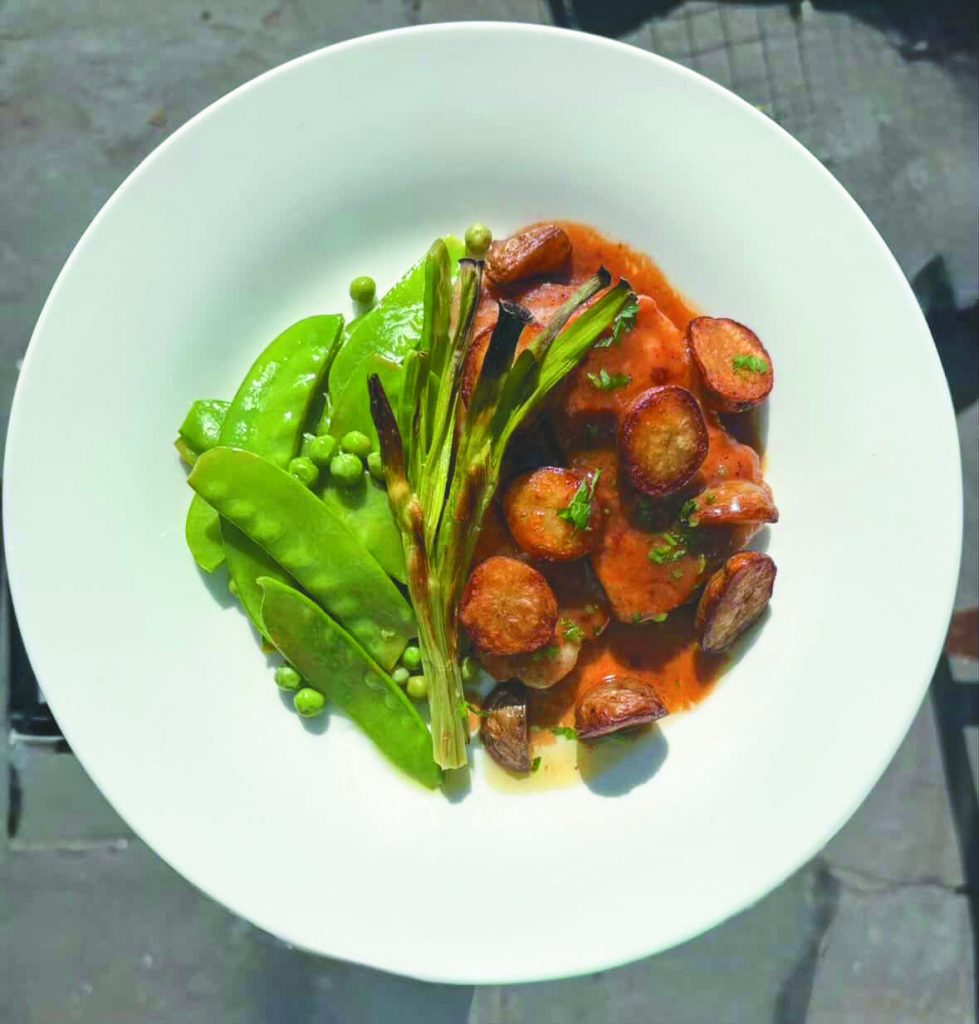
The fish heads will give you everything else: body, richness, and the sort of flavor that can take your dish to the next level. In and around NYC during May, we are met with a wide range of vibrant spring produce. Nothing reminds me of a “spring plate” more than a seared fillet with a flavorful pan sauce, accompanied by fresh market snap peas and charred scallions. Here’s how to approach the dish:
Ingredients:
- 1 whole fluke, filleted, head reserved (gills removed)
- fillets, skin on
- Fish head, split if possible
- 2 tbsp neutral oil (grapeseed or canola)
- 1 tbsp butter
- 2 scallions, cut into 2-inch pieces
- 2 cloves garlic, lightly crushed
- ½ cup dry white wine
- 1½ cups water
- 1 small handful of parsley stems
- 1 strip lemon peel
- Salt
Vegetables:
- 1 cup fresh Snap Peas, shelled
- 1 bunch scallions
- Olive oil
- Lemon juice
Step 1: Process Fish Heads
Pat the head dry and salt lightly, split if possible. Heat a saucepan to medium and add aromatics: for this dish, I’m using parsley stems, garlic, chili flakes, and scallions.
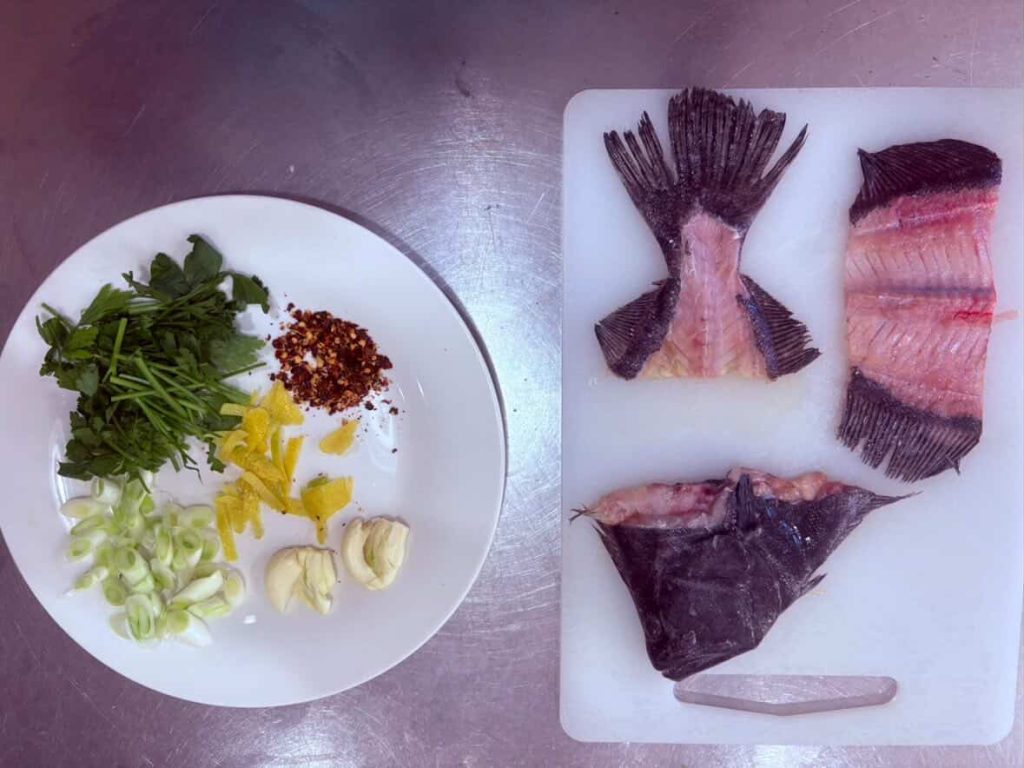
Place the head in and brown to develop flavor. Deglaze with an acid like white wine, add lemon peel, and cover with water to gently simmer for 20 to 30 minutes. It is in this process that the gelatin and flavor from the head are released.
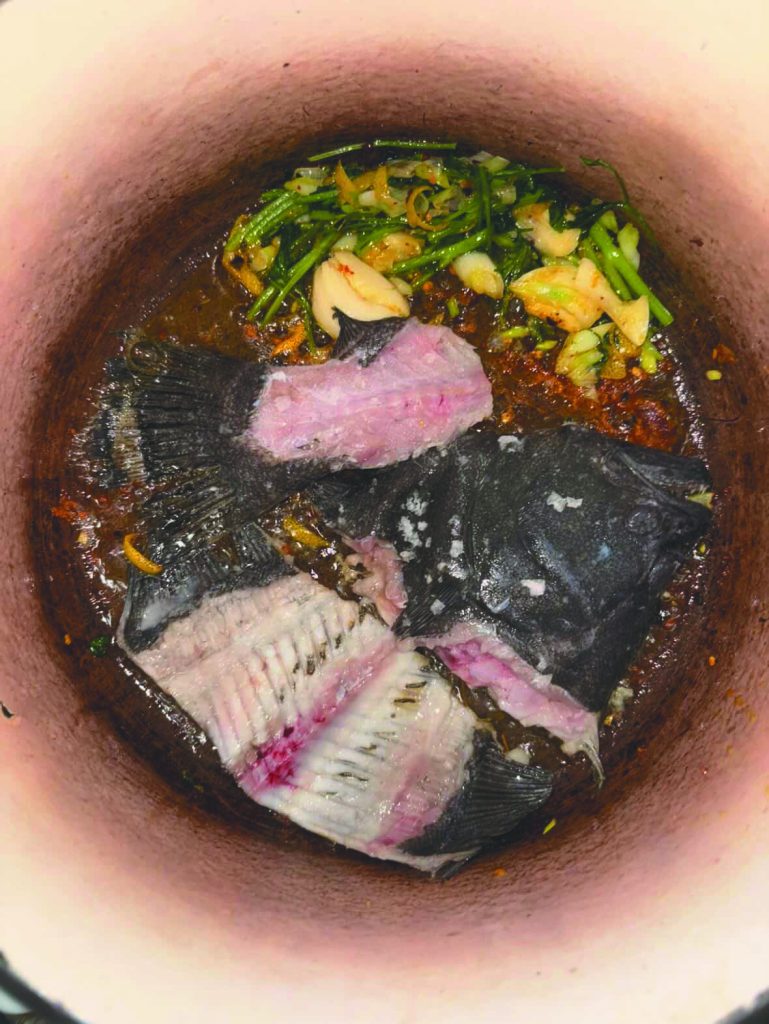
Finish cooking and strain. Now, we’re ready to make our pan sauce.
Step 2: Cook Your Vegetables and/or Starch

Blanch sugar snap peas in salted boiling water for 45 seconds to preserve their crunch.
Immediately chill in ice water and toss with lemon juice and olive oil.
Char whole scallions in a hot pan or over flame until softened and blistered. Cut into 2-inch pieces.
Step 3: Build Your Sauce and Plate
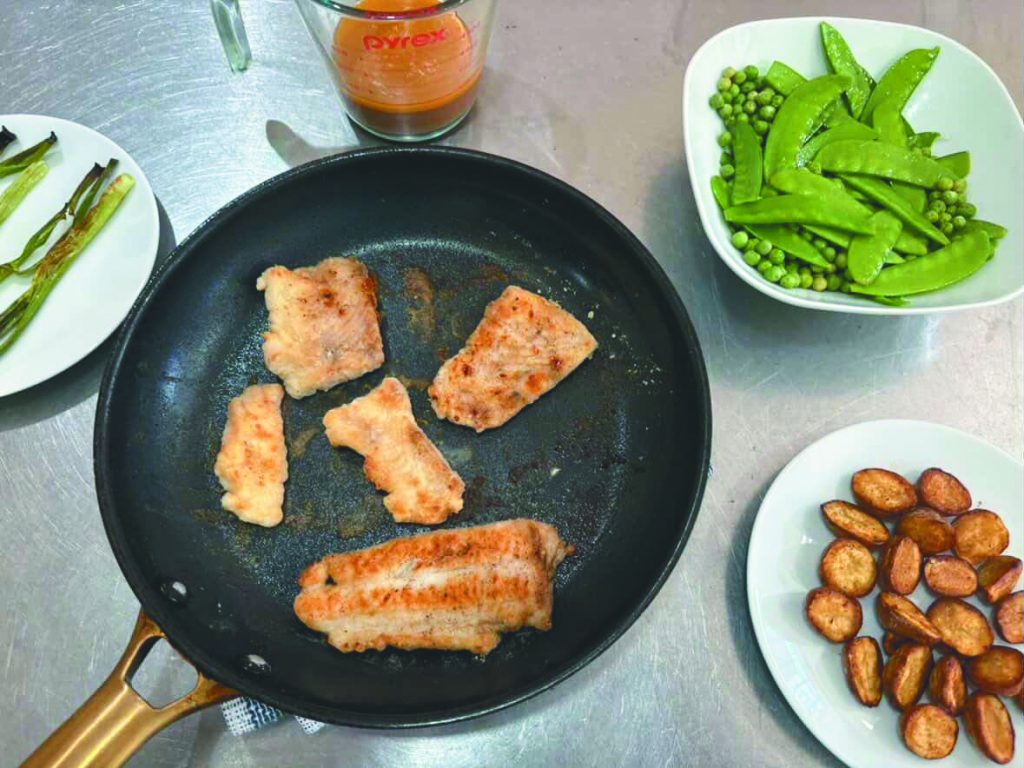
After searing your fillet of choice, you will ideally have built up a fond in the pan, which is gold. Take your simmered broth and add ¾ cup back into the pan, letting it reduce by half. Swirl in a pad of cold butter and adjust to taste with lemon juice and salt. You now have a flavorful, nutrient-dense sauce that is both clean and savory to accompany your fillet, vegetables, and/or starch.
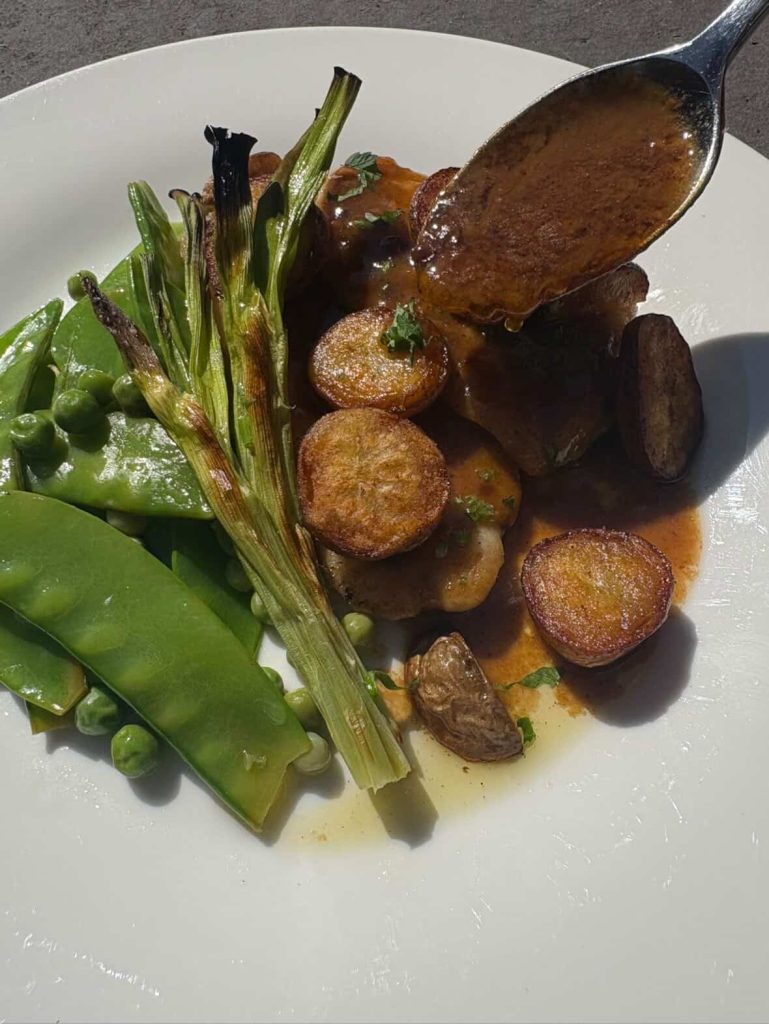
For those lucky enough to dine in a fine French Restaurant, you may encounter this sauce on the menu by the name ‘Beurre blanc’. There are many variations of this sauce, and I encourage you to get creative; simply vary the acid and aromatics.
Throughout the cooking and eating process, I am constantly reminded of what it means to be a steward of our oceans. I believe that cooking your catch is the final, essential step in the fishing story and can continue to drive stewardship to maintain healthy fisheries. The early-morning adventures (and uncrustables), the patience, the restraint – it all culminates through the cooking process. It is in the kitchen where the fish becomes something personal.
When you break down your fish yourself and simmer the head for a dish, watching it give back everything it has, you understand that fish and its environment in a way no market transaction can replicate. There’s no anonymity left. It is you, the fish, and the silent accountability that comes with having taken a life from a shared resource. With this in mind, while fishing, you might start to notice migrational spawning cycles, varying fish size, and species abundance, or the lack of it. The entire process of walking the beach, landing your fish, and processing it from the water to your plate further invests us in protecting the conditions that allowed its existence in the first place.