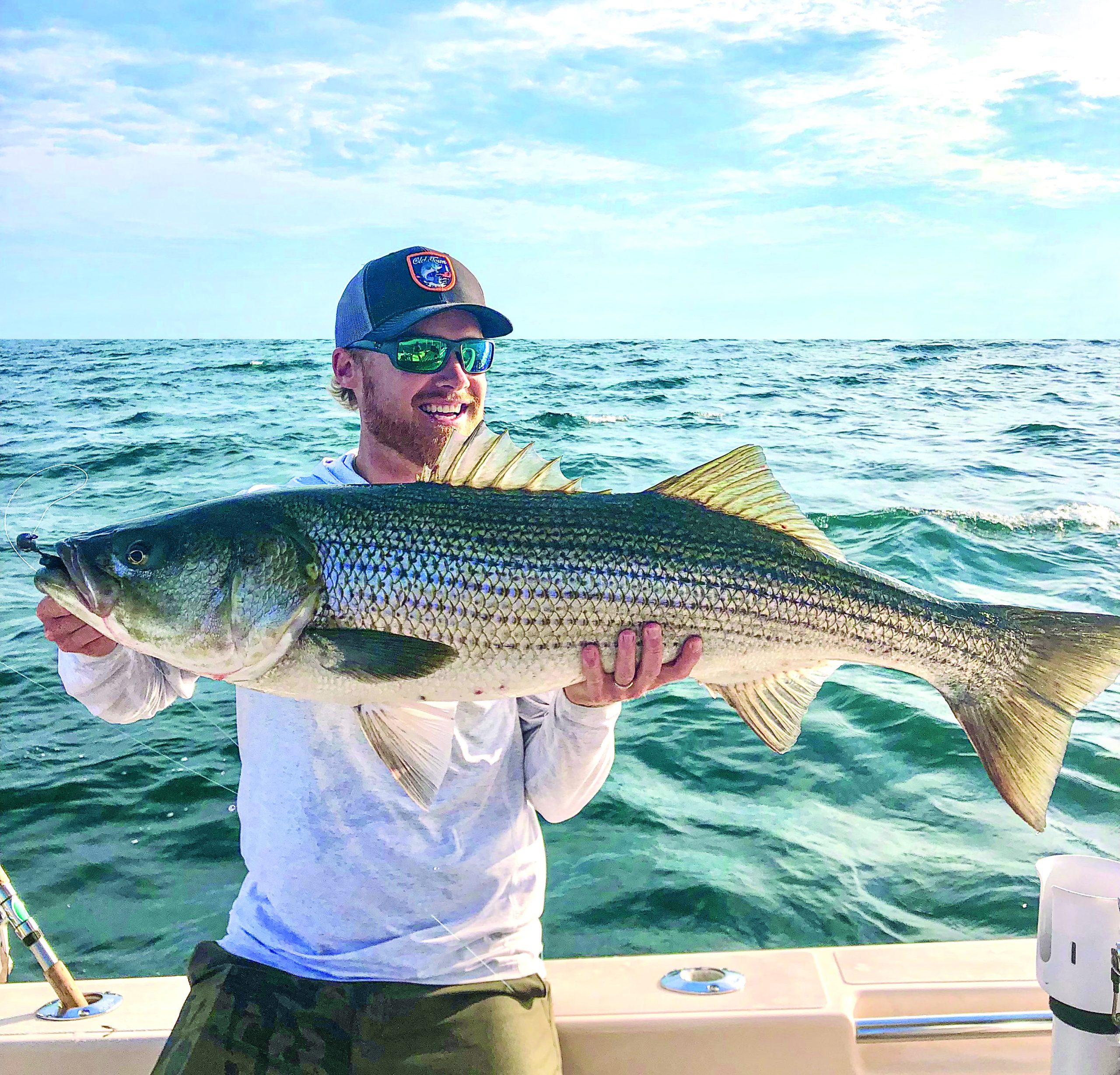

Taking advantage of your fishing style is a major key to success. As a kayak fisherman, this means maximizing your opportunities where neither boats nor surfcasters are fishing efficiently. Of course, there will be scenarios when the best place you can be is out with the boats or tight to shore within casting range of the rocks or beach. In general, though, try to think of ways to use your kayak to your advantage. This could mean getting tight to structure where boats will be too shy to get snug, or fishing dead-calm nights when surfcasters are catching up on sleep. The same can be said for the baits/plugs that you throw. Kayaks have their own “genre” of presentations that fish effectively compared to boat or surf fishermen. Big soft plastics are one of those baits that when combined with the advantages of kayak fishing become even more effective.
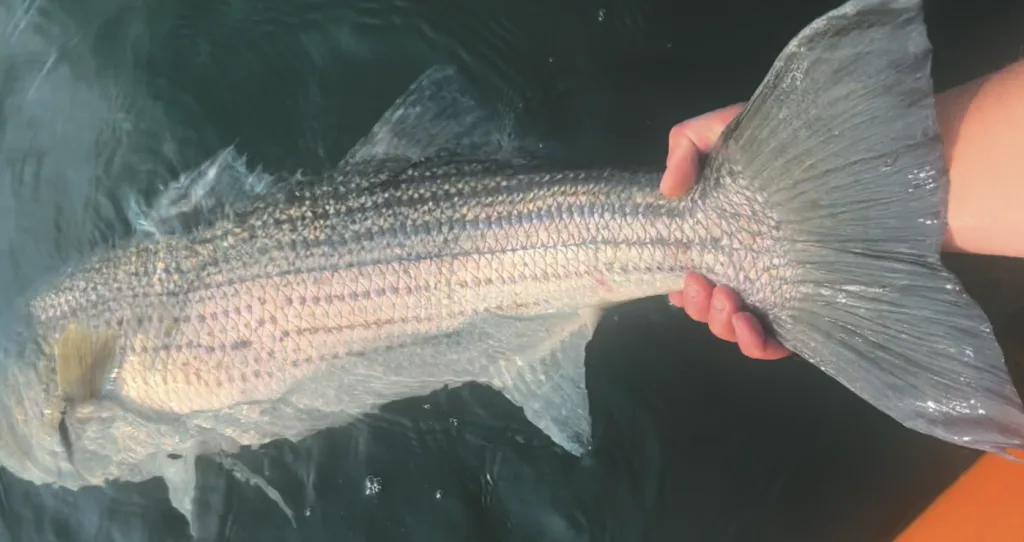
The big soft plastic eel-style baits are especially deadly at night. Not that they won’t work during the day in some scenarios, but in general, you’ll have more success after dark.
Whether you’re drifting over a flat or picking apart a piece of structure, the kayak is the best tool for the job. You can get as shallow as possible while making very little noise or disturbance. You can also control your drift speed more easily than in a boat, easily slowing down by pedaling into the current. I believe this is a major factor in why soft plastic eels are so effective from a kayak. Rather than being forced to use more weight or drifting through a fishy zone too quickly, a kayaker can slow down, use lighter weights for more natural presentations, put in extra casts each drift, and really pick apart the spot.
Soft Plastic Eels for Big Striped Bass
Soft-plastic stickbaits have a long history of success among striped bass anglers in the Northeast. Since their inception in the late 1980s, when Herb Reed of Lunker City in Connecticut released the original Slug-Go, their popularity has exploded among surfcasters, kayak fishermen, and boat fishermen.
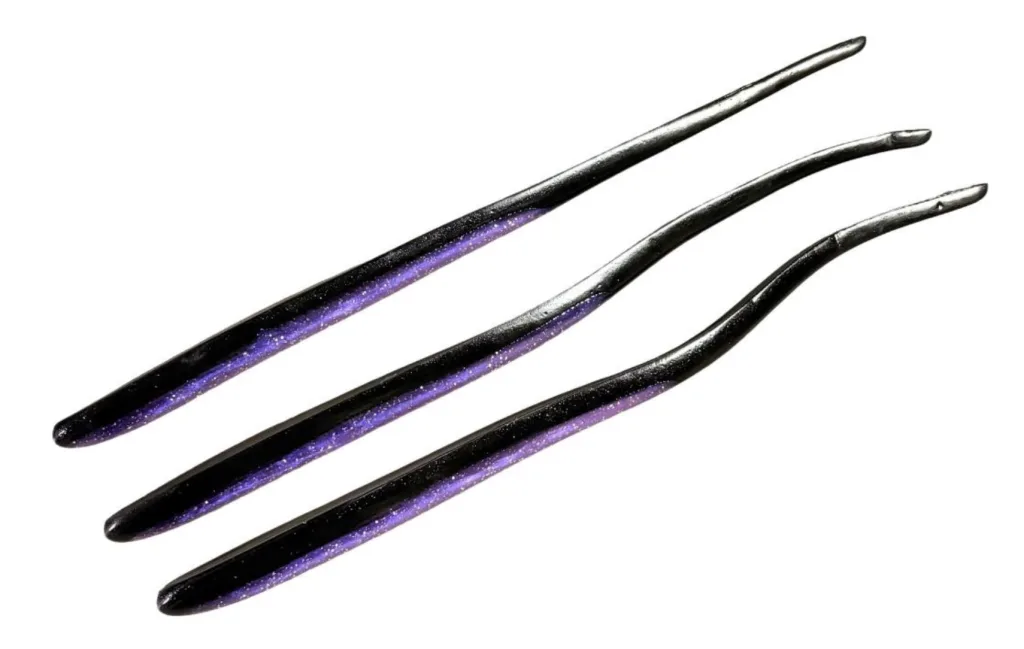
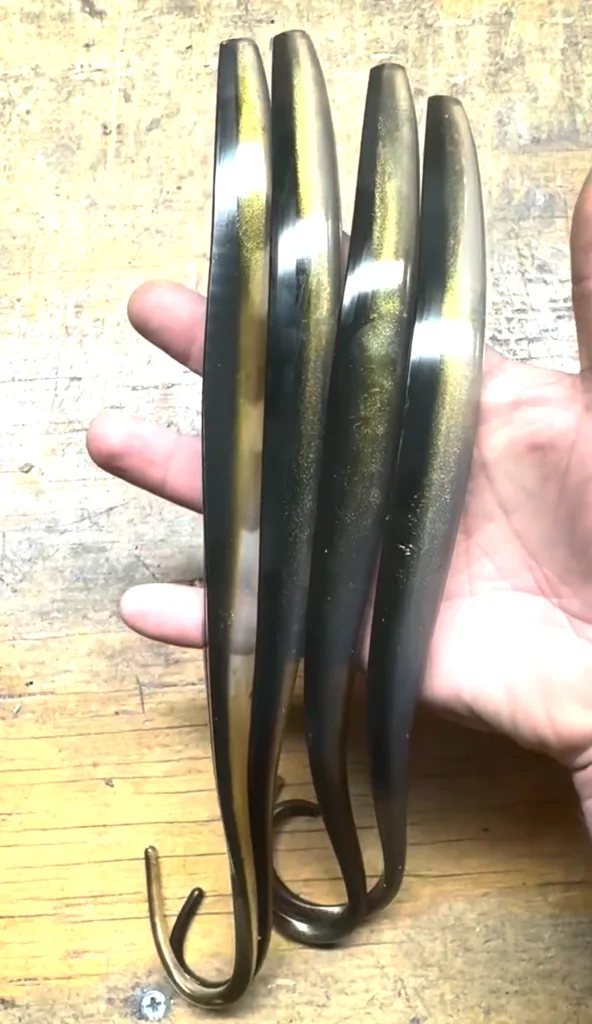
Today, soft plastic eel-style stickbaits are in higher demand than ever before, which has led a long list of tackle manufacturers, small and large, to develop their own unique variations, all of which have produced trophy stripers from Chesapeake Bay to Maine. Here are a few you might find on tackle shop shelves.


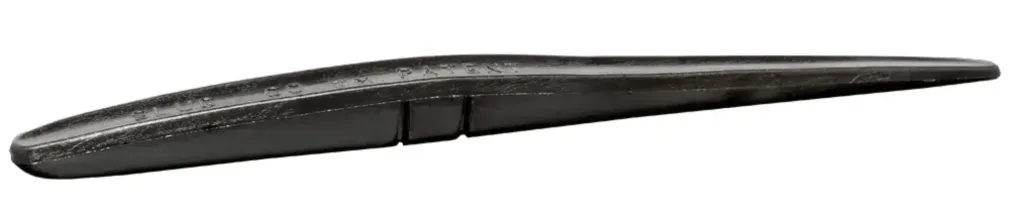
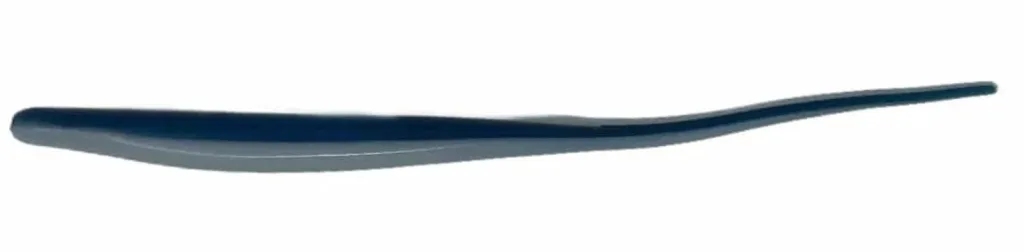
Big Water Baits 14″ Silent Partner

Joe Baggs 14.5″ Block Island Eel


Soft Plastic Kayak Tactics
There are several eel-style soft plastics available with slight differences but the same idea: a long, slender profile with subtle action. I don’t consider them the most versatile baits ever, but there are a handful of ways to fish them from the kayak, and they catch many, many big bass every year.
Weightless
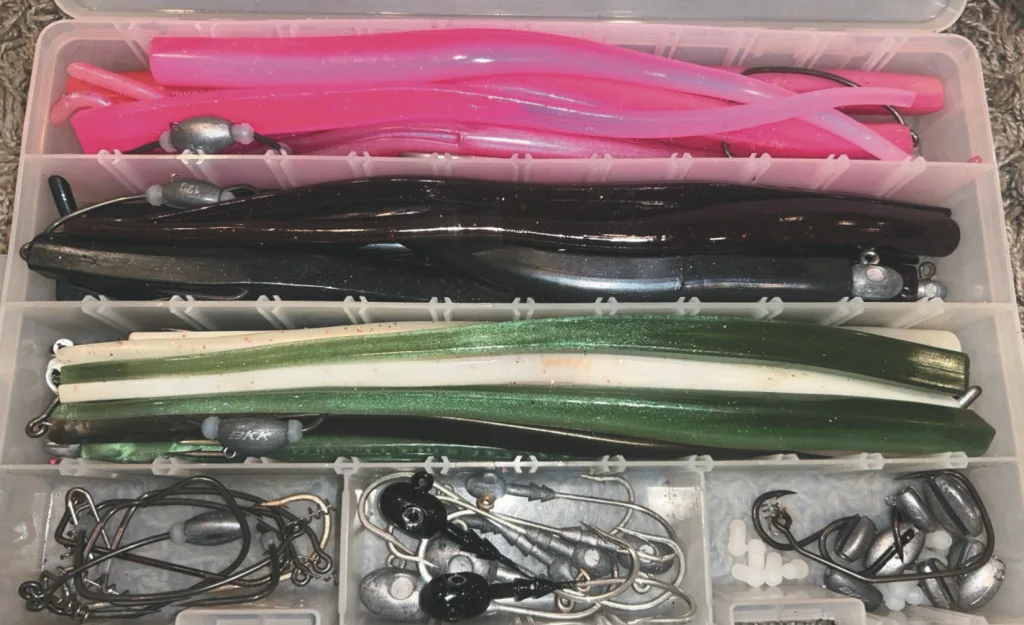
The first technique is casting and retrieving them weightless. It won’t always be the right conditions, but on calm nights, it can be deadly. It’s a great choice for shallow flats, whether you’re casting blind or using electronics to locate the fish. It will also work when there is big bait present on the surface and the bass are looking up. The beauty of the eel/snake style bait is that you get a whole lot of profile without the weight, noise, and disruption that comes with other big-profile presentations. That’s why, on a calm night when there is big bait present on the surface like pogies, herring, mackerel, squid, etc., a big weightless soft plastic can crack the code.
The best retrieve will depend on how the fish are reacting. I tend to start with a painfully slow retrieve with a twitch of the rod tip every three to four cranks. That’s usually my starting cadence, but it’s not always going to match the mood of the bass. I had one night in particular when I was covered in fish in very shallow water, but I couldn’t get them to eat. I made a bad cast and quickly reeled it in to make another with the bait skipping across the surface. And that’s when I got my first eat of the night. From there, it was game on. Ever since, I like to mix in some fast retrieves, almost like how you’d work a pencil popper, and get that weightless plastic to skip across the surface. If you aren’t getting eats with the big plastics, try changing the how before you change the what, especially if you’re using electronics and you know there are fish.
Jigheads and Weighted Swimbait Hooks
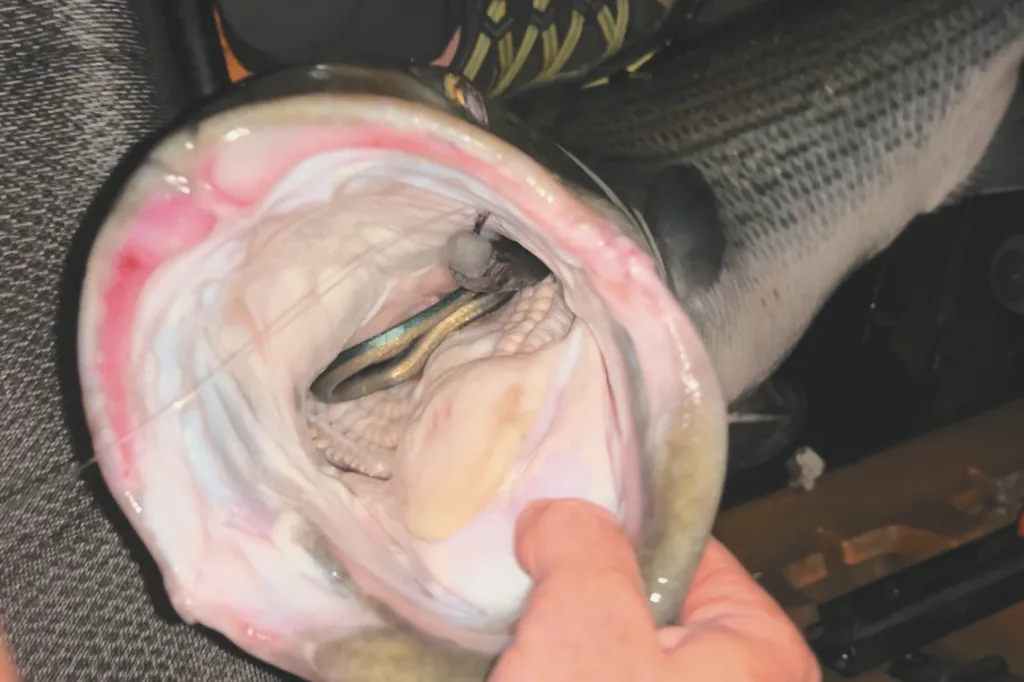
These baits are also effectively fished on or near bottom or throughout the water column on jigheads or weighted swimbait-style hooks. The conditions will dictate how I’m getting down to the fish. It also depends on the depth, because depths over about 30 feet become difficult to fish with a weighted swimbait hook, and jigheads fish better.
To generalize, jigheads shine in rougher conditions, and on calm nights weighted swimbait hooks work better. Matching your presentation to the conditions can be key. It all comes down to feel. If you can feel your plastic and you know where it is in the water column, you’re doing it right. Otherwise, you need to switch something up, and as the current and conditions change, you may need to adjust your presentation multiple times throughout a single tide.
The biggest bass will often be sitting right on the bottom or within a few feet. I like to retrieve super slow, and every five turns or so, stop reeling, lower the rod tip, and let the bait settle on the bottom. This is mostly so I know that I’m still in the bottom of the water column, but it’s amazing how many bass will follow and then strike on that pause.
I try to throw the lightest weight that I can get away with and still have good feel. At slow points in the tide, I’m usually throwing a light swimbait-style hook. When the tide is cranking, it’ll be either a jighead or a heavily weighted swimbait hook.
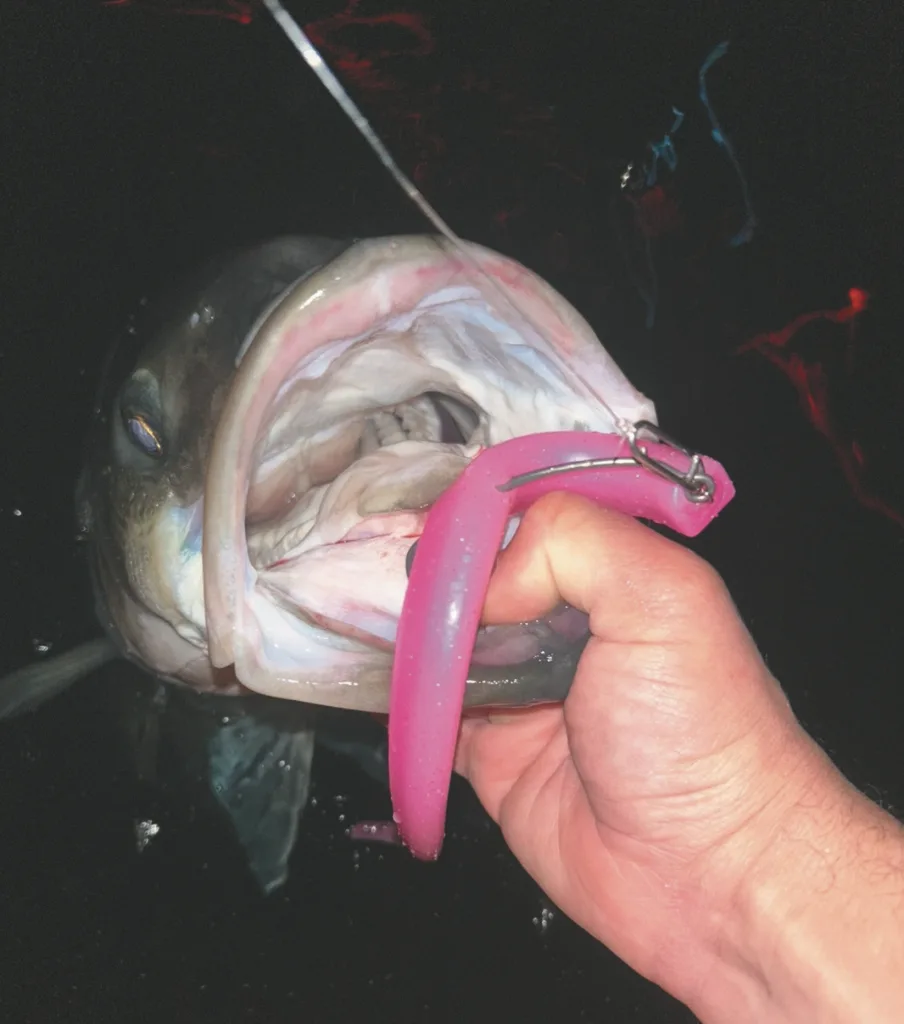
With the wind it’s the same idea. When you throw a jighead, your leader is tied directly to the weight, and that’s why it gives you the best feel in rougher conditions. You don’t want to be unnecessarily dredging bottom, but you also don’t want to be aimlessly floating around in the water column. If you can get comfortable and confident throwing big plastics on both jigheads and weighted swimbait hooks, you’ll increase the number of nights you’re successful. The differences in style can be subtle, but the key is feel. That will build your confidence in the baits and ultimately lead to more big bass in your lap.
» Follow Tyler Richman on Instagram @ties.by.ty
READ MORE