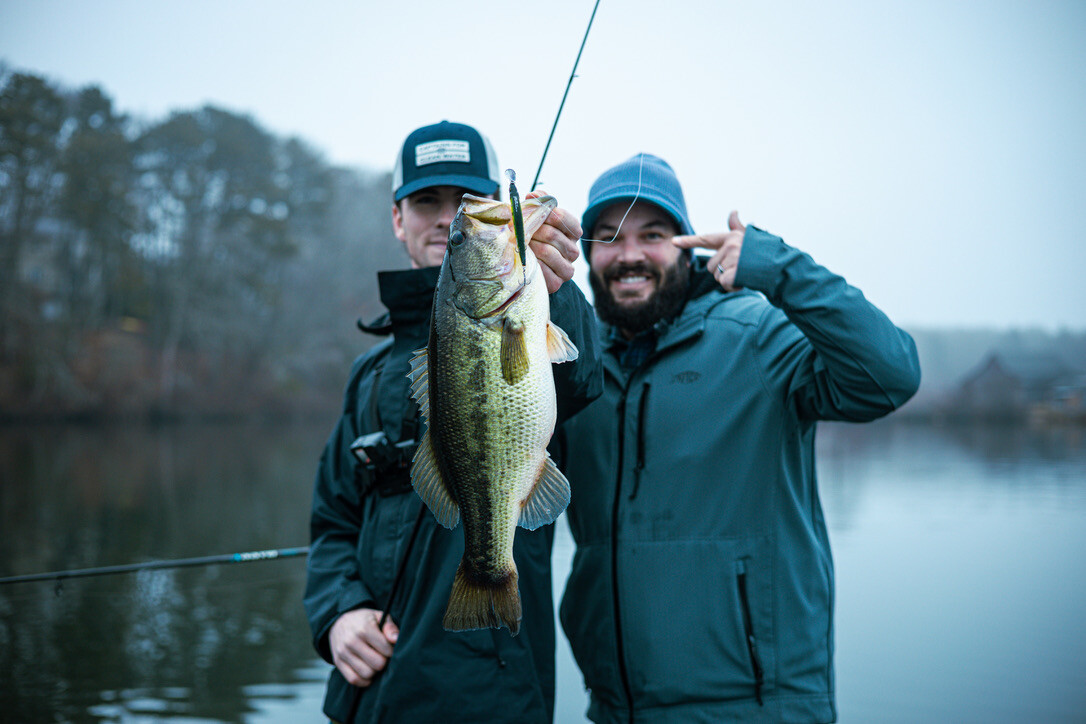
The suspending jerkbait is one of the most effective cold water largemouth baits on the market. Its ability to draw reaction strikes when ripped, but remain stationary in the water column when paused makes it a deadly pre-spawn bait. While these are great baits out of the box, many do not truly suspend, which requires anglers to modify the bait to achieve the desired action. Fortunately, this can be as simple as changing the split rings on the lure.
Most of my early spring fishing is done in small, shallow bog ponds. These areas warm up faster than deeper lakes and reservoirs and I find they are often easier to locate fish in as they are confined to a smaller space. In areas like these, I prefer jerkbaits with a slow-rise, which keeps the bait elevated off the shallow, weedy bottom. In deeper bodies of water, however, especially when water temperatures are low, a slow-sinking bait is often more productive. By changing the split rings, I can use the same jerkbaits for both of these scenarios.
Before changing any of my lure’s hardware, I first have to test its rate of fall or rise. It’s important to test this with the bait tied onto your line as the line itself will have an effect on the lure’s buoyancy. Braid and mono float, while fluorocarbon sinks. Once I determine whether a bait floats, sinks, or suspends, I can adjust the presentation.
Use Saltwater Split Rings to Add Weight
If I have a slow rising bait, and I want it to be suspend or slowly sink, I will replace the stock split rings with slightly heavier ones. Typically, a small saltwater split ring on one of the two front hook hangers will turn a slow rise into a suspending or slow sink. Be sure to replace either of the two split rings closest to the head when doing so, as most jerkbaits sit slightly nose- down in the water. You can also add a split ring to your line tie if the bait doesn’t already come with one or replace the stock one with a heavier one. Repeat this until the bait is to your liking.

Use Braided Split Rings to Reduce Weight
The process is slightly different when converting a slow sink into a slow rise. Most baits come stock with very small split rings so going to even smaller ones may not make much of a difference while increasing the likelihood of one bending out. You can solve this issue by removing the split ring on the baits line tie. If that doesn’t work or if the bait doesn’t have one I resort to a braided split ring.
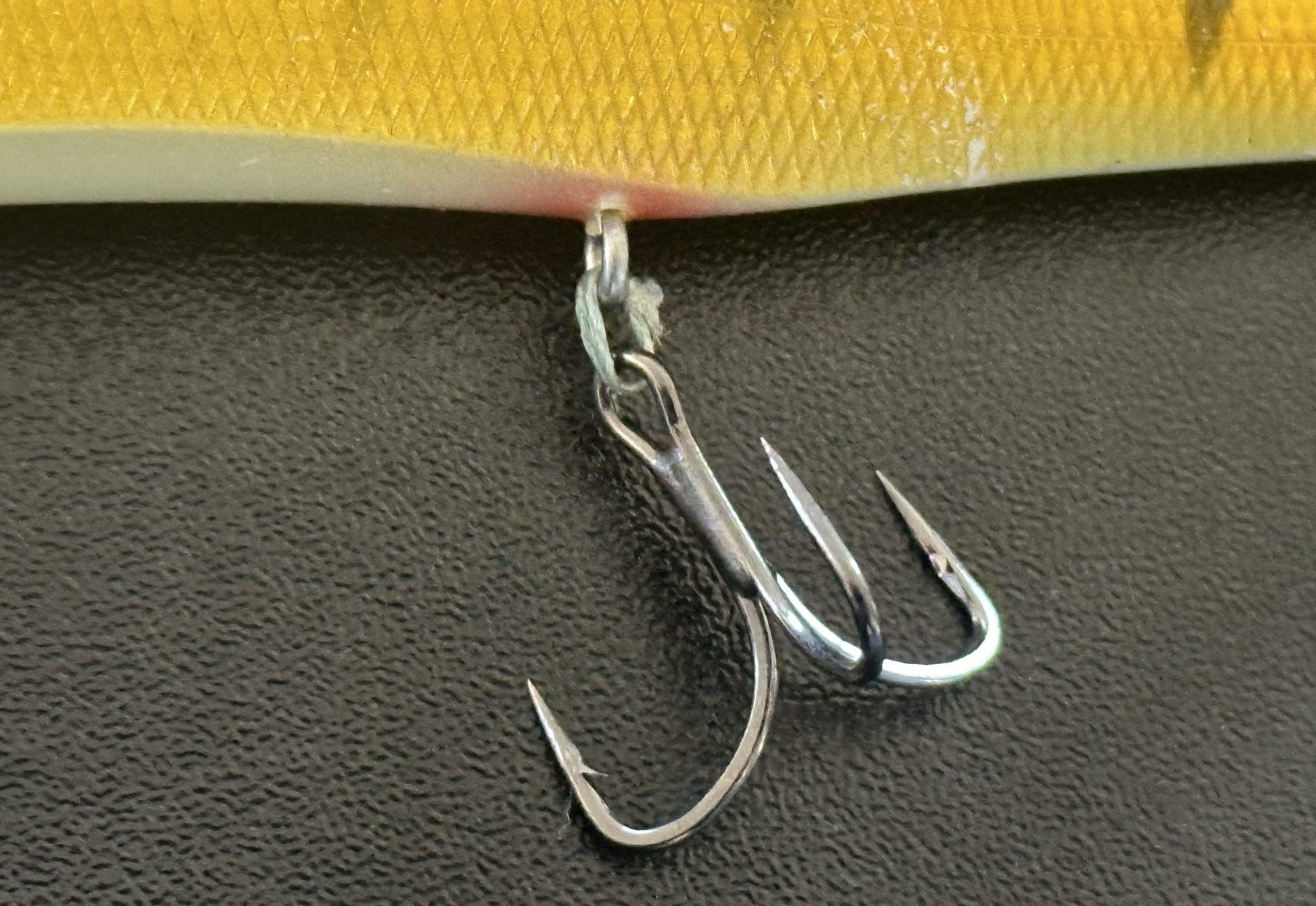
A braided split ring is exactly what it sounds like, a piece of braided line tied to connect a treble hook to your bait. When using them to alter a bait’s buoyancy it’s almost the same as mentioned previously. Instead of replacing the front split ring I replace the tail or the middle to keep the bait nose heavy.
Additional Advantages of Braided Split Rings
A braided split has additional benefits beyond reducing weight. They also reduce the sound made by silent hardbaits, making a more natural presentation, which can be a difference maker on pressured or lethargic fish. Perhaps the biggest advantage to a braided split ring is its ability to twist similarly to the way a swivel hook hanger does. This gives the fish far less leverage, resulting in fewer pulled hooks and lost fish.
This upcoming spring I look forward to fishing braided split rings on jerkbaits and other small hardbaits, as well as on larger wakebaits and glidebaits, which are notorious for hook pulls.
To learn how to make your own braided split rings, check out this video from Bass Pro, Ott Defoe: