

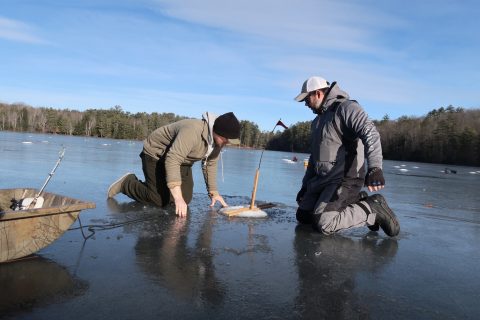
“Once we have sustained cold weather to form good ice, ice fishing can be safe and a lot of fun,” said Vermont Fish & Wildlife Commissioner Louis Porter. “But when we go onto the ice, we need to use good judgment and observe several ice fishing safety precautions.”
(Note: On The Water is reader-supported. When you buy through links on our site, we may earn an affiliate commission.)
Ice Fishing Safety: Essential Tips & Gear
1. Leave your car on shore.
Every year several motor vehicles go through the ice on Vermont lakes, and some people have drowned as a result. Instead of driving your gear onto the ice, pack a utility sled with your ice fishing gear to make fewer trips to and from the parking lot.
2. Share your plans.
Leave information with a family member or friend including where you intend to fish and when you expect to return. Within range of cell-phone reception, you can even drop a pin to share where you parked or entered the ice in the event of an emergency.
3. Wear a float suit or PFD and don’t fish alone.
In the event of an incident, a personal flotation device (PFD) or float suit will keep your head above water until help arrives—which is another reason why you should always ice fish with a friend or group.

Avoid wearing an inflatable PFD on the ice, as extreme cold temperatures can inhibit the vest’s CO2 cartridge from inflating the PFD, rendering it useless in an emergency. Float suits like the Norfin Element Plus are insulated and packed with a buoyant foam material to keep you afloat.
4. Always carry an ice spud or chisel.
Ice varies in thickness and condition. One side of the lake or pond may receive more direct sunlight, or vary in ice thickness due to changes in depth. As you proceed, use the ice spud or chisel to test the thickness of the ice, so you don’t have to. A few hard jabs of the chisel will reveal the thickness of the ice before you step.
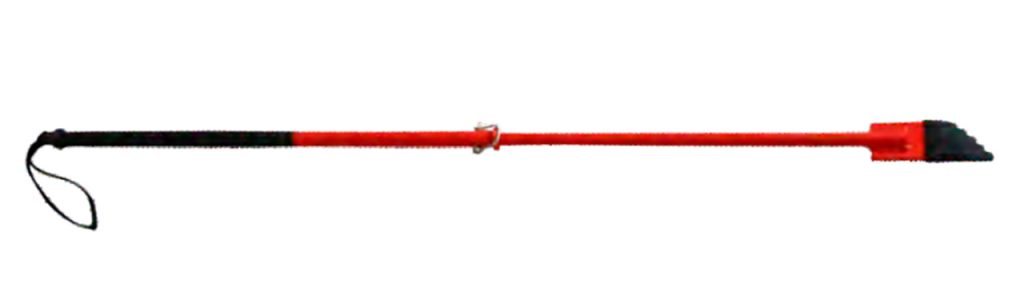
5. Ice spikes are a must-have item.
Carry a set of ice picks to help you work your way out onto the surface of the ice if you go through. Holding one in each hand, you can alternately punch them into the ice and pull yourself up and out.

You can also make these at home, using large nails, or you can purchase them in an ice safety kit. Just be sure to wear your hand picks in an accessible location, or attach them to a lanyard.
6. Use extreme caution near moving water.
Be extremely cautious crossing ice near river mouths, points of land, bridges, islands, and over reefs and springs. Current almost always causes ice to be thinner over these areas.
7. Melted ice? Keep off.
Avoid going onto the ice if it has melted away from the shore. This indicates melting is already underway, and ice can shift position as wind direction changes.

8. Open water = pack it up.
If you can see open water in the lake and the wind picks up, get off as soon as possible. Waves from open water can quickly break up large areas of ice, putting anglers at risk in a matter of minutes.
9. Always carry a safety line.
A safety line or some sort of throw rope can be tossed to someone who has gone through the ice. They are an essential ice fishing safety item, especially if the person is not carrying ice spikes.
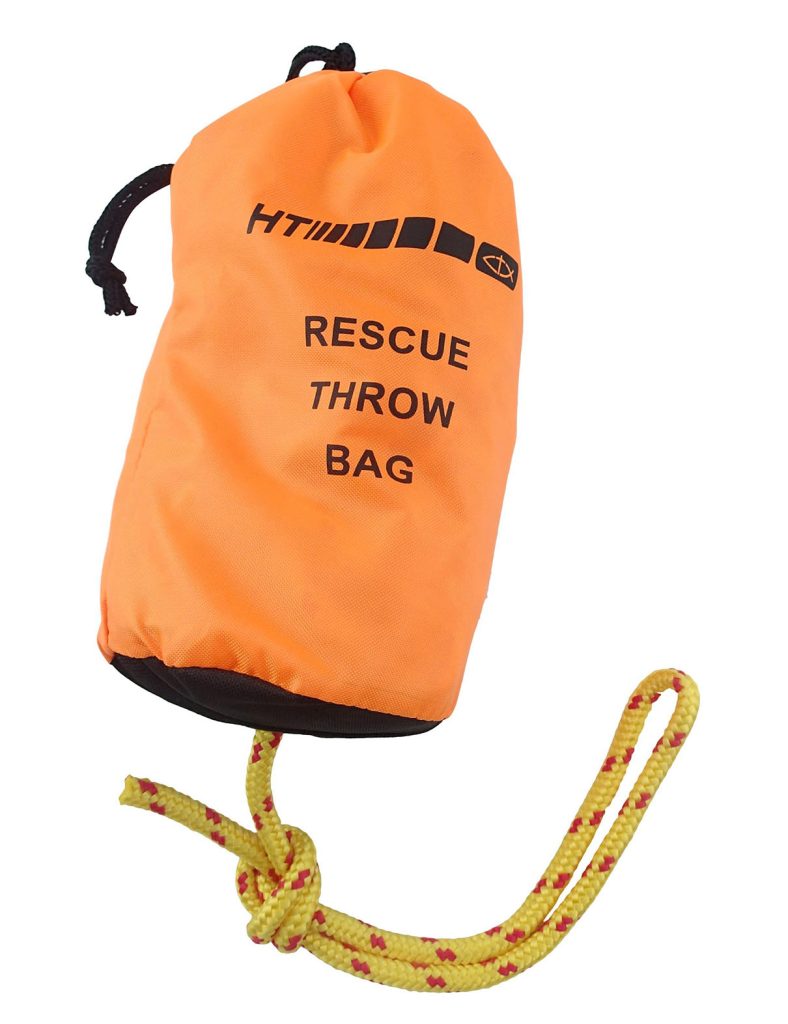
HT Enterprises is a reliable manufacturer of ice fishing safety equipment and tackle; their rescue throw bag includes 100 feet of rope, allowing anglers to carry out rescue efforts from a safe distance on compromised ice.
10. Heat your fishing hut with care.
Heated fishing shanties must have good ventilation to prevent deadly carbon monoxide poisoning. Open a window or the door part way to allow in fresh air, and avoid using matches or lighters inside the hut.

And last, but certainly not least important of ice fishing safety: bring your fully-charged cell phone with you. Many of today’s smartphones allow you to contact emergency services or send an SOS signal with the click of a button.
READ MORE
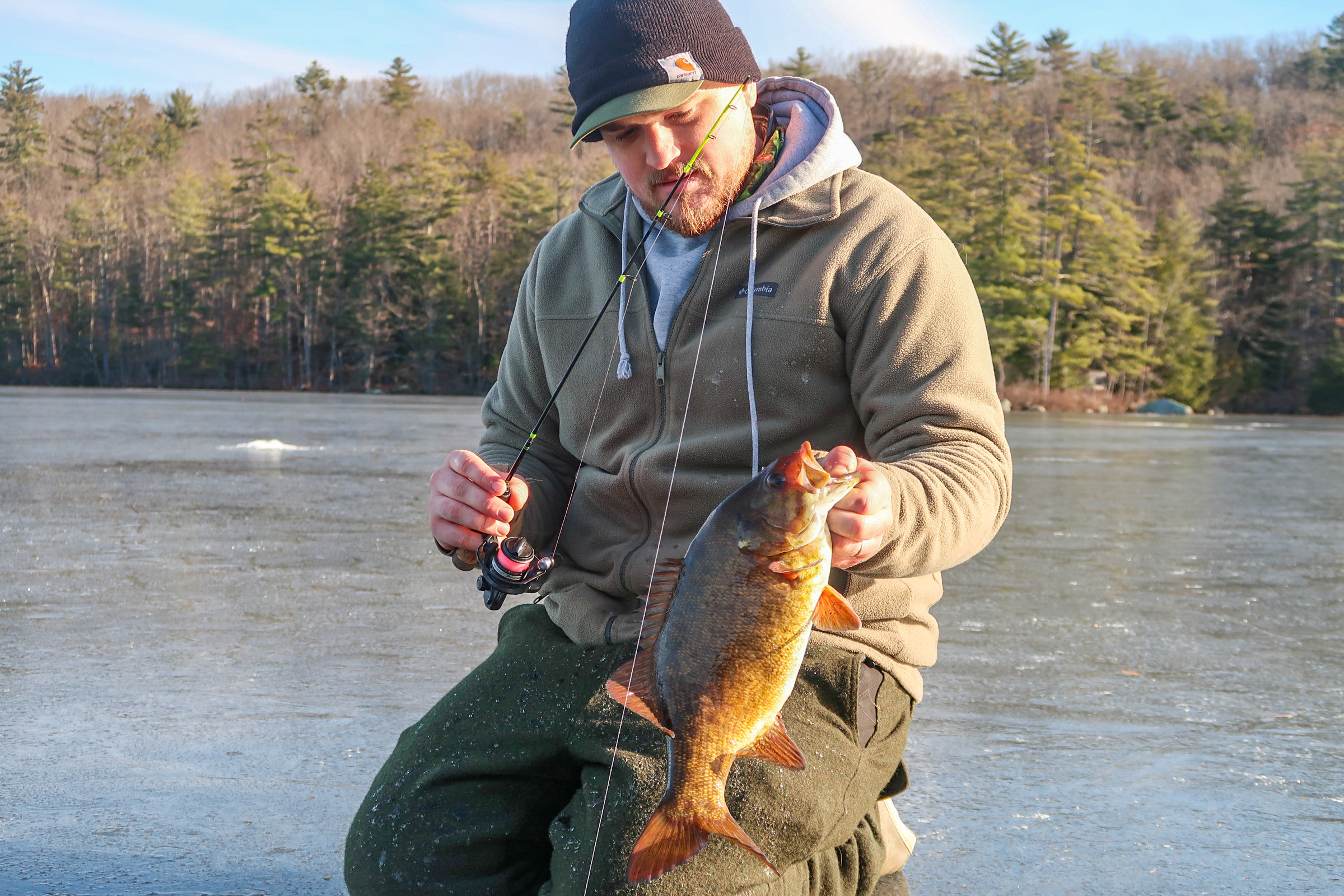


Don’t try to be the first person ice fishing this season. Usually all that gets you is a cold dunk in the lake. Four inches of good clear ice is necessary so your next of kin doesn’t inherit your insurnace and fishing tackle.
Wonderful info! Thanks!
Amazing! how can people fish in so cold weather, I am not good with cold weather.
My husband loves ice fishing and is wanting to find the right place to go. Thank you for pointing out that he should make sure and leave his plans with me so I can make sure he’s safe. I’ll have to help him find the best shelter to go to. https://wildernessportsinc.com/collections/ice-shack
Great article I love ice fishing!
This is exactly what my buddy told me, he sure LOVES ice fishing!!!!