

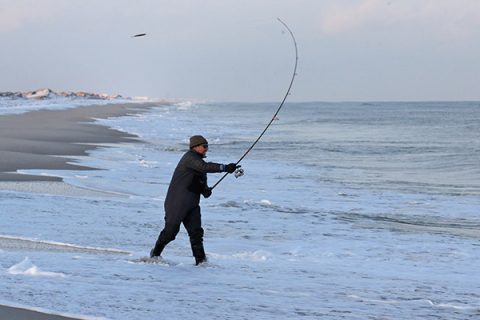
Regardless of size, late-season stripers are a joy to catch—provided you’re dressed appropriately.
Walking through the tall grass in the marsh, I could see my breath plume out in front of me. My face tingled in the cold, and I wiped my continually running nose on the sleeve of my jacket. The bay had a fine mist over it, the result of the 30-degree air temperature and the 50-degree water. The biggest bass of the year had already departed, but this trip wasn’t about trophies—it was about connecting with a few more stripers before the surf rods would take a 5-month nap on their rack in the garage. Through the mist, I saw a ring form on the flat surface of the bay as a striper reduced the local spearing population by one. Confident that my striper season was not yet over, I waded in and prepared to cast my plug-and-teaser combo.

Regardless of size, late-season stripers are a joy to catch—provided you’re dressed appropriately. Air temperatures cool much faster than the water, meaning that the ocean will still be warm enough to hold bass even when the air is cold enough to freeze the puddles lining the road on the way to your favorite spot.

The first line of defense between a surf-fisherman and the Thanksgiving-to-Christmas surf is a pair of waders. Years ago, I would swap my breathable waders for neoprenes around Halloween. The thicker neoprene was warmer and seemed the logical choice. But, neoprene is cumbersome and uncomfortable and often too hot, even on cold days. Breathable waders, while providing very little warmth of their own, have a loose enough fit that fishermen can easily add layers inside, allowing them to be warm and comfortable.
Under the waders, the most important item is a pair of socks. Choose a pair that is warm, but not overly thick. Heavy socks could make your boots fit too tight which will make you uncomfortable and cold anyway. Merino wool is best for keeping feet warm and wicking away moisture that can lead to cold feet, but several synthetic materials make for good cold-weather socks as well. Steer clear of cotton socks.
For pants under waders, jeans are rarely the warmest or most comfortable option. A high-end option is a pair of specialized wading pants like the Simms RiverTek Bottoms, which provide warmth, wicking, and stirrups that keep them from bunching at the ankles. A pair of long johns and pajama pants or sweatpants also work under waders, but avoid bulky or restrictive pants so you can still walk a long way in tracking down the season’s last stripers.
On top, I again like a few thin layers rather than a bulky top layer. While a hooded sweatshirt is still a favorite for spring and early fall, when the mercury drops below freezing, layer up with a base made from merino wool or polyester, which will wick moisture while remaining comfortable. Next, an insulating layer, like a fleece shirt, will trap heat. Lastly, a waterproof shell made from Gore-Tex or neoprene, worn over your waders, will protect you from wind and water, whether it’s the spray from pounding surf or a cold November rain.
Leave the lucky fishing hat at home in winter, unless of course that lucky hat is a warm wool cap to cover your head and ears, retaining heat. On cold, windy days, a mask like the Storm Buff keeps your face warm and protected from the elements.

Cold hands will end a fishing trip before it begins. Nothing is worse than trying to tie a knot with numb fingers when a late-season blitz is churning the surf at your feet. In temperatures just above freezing, fingerless gloves can provide warmth while allowing you to tie knots and unhook fish. When the temperature drops below freezing, you’ll want a full glove to keep your hands as warm as possible. One trick old-timers use to keep hands warm is to wear a pair of latex gloves under another pair of gloves for an additional waterproof layer.
Once properly dressed, you can take your mind off staying warm and focus on tracking down the stragglers of the striped bass migration. Most years, the fishermen quit long before the fish do, so layer up this fall and you can be on the beach to watch the last striper go south.
On the sock note, if you spray your feet with antiperspirant they’ll sweat less. Less sweat=warmer feet. I know it sounds weird but try it before you knock it. I prefer right guard odorless spray on deodorant.