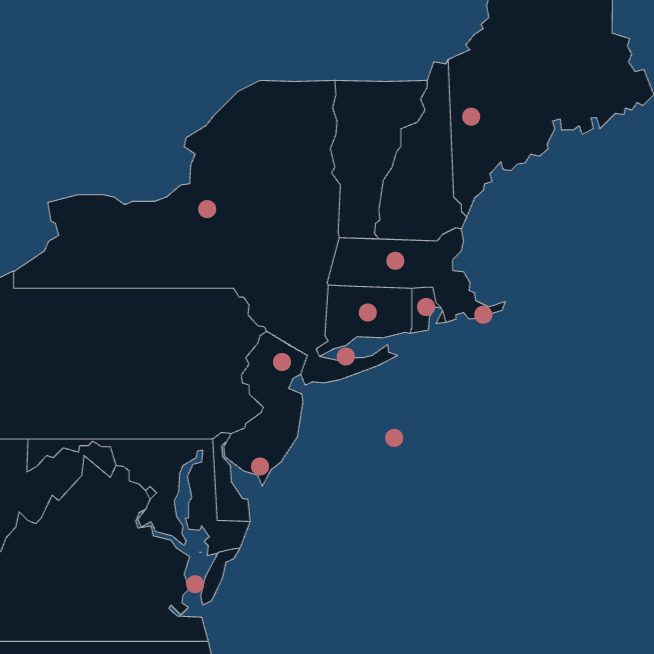

As the chaos of Long Island’s fall run begins to wind down, November and December usher in a final, yet still exhilarating chapter for anglers willing to brave the chill. As we slide into November, the days are shorter, the cool air has a bite, and the beaches grow quiet. But the fishing? It’s far from over. From stripers chasing sand eels in the surf, to blackfish lurking in their rocky strongholds, and tuna roaming offshore—these months offer a last shot at glory before Old Man Winter tightens his grip on us. Here’s a bit of guidance to help you close out the 2025 season with a bang.
(Note: On The Water is reader-supported. When you buy through links on our site, we may earn an affiliate commission.)
Blackfish: Dueling in the Deep Water

Blackfish are a late-season obsession, especially for North Shore anglers. These bulldogs demand precision and patience, but the payoff (both on the rod and on the dinner plate) is unmatched. As water temperatures drop, tog slide out from shallow reefs to deeper haunts, necessitating a tactical shift to dropping crabs and heavy lead for bottom fishermen.
Key Areas
The Sound is prime for tautog, with boulder fields and reefs from Oyster Bay to Orient potentially loaded with fish. Early November keeps them in 30- to 50-foot depths off most of the North Shore’s rocky points. By late November, your focus should shift to structure in the 50- to 90-foot range.
Tactics and Gear
Early November allows for a little continuation of light-tackle fun; a ¾- to 2-ounce tog jig (tipped with green crab) on light spinning gear with 20-pound-test braid is a perfect setup. Hook the crab through a leg joint, drop tight to the structure, and wait for the telltale crunch of a tog before setting the hook hard. As fish transition to deeper structure, switch to conventional rigs. I keep it simple and prefer a single-hook rig with a 3/0 to 5/0 octopus hook, with lead heavy enough to hold bottom; in some places, that could require as much as 16 ounces.
Pro Tip
Positioning is everything, so anchor precisely over the structure or employ a GPS trolling motor with “spot-lock” technology, which has made anchor-free fishing very efficient in recent years.
Stripers & Sand Eels Steal the Show
Late fall is synonymous with sand eels on Long Island’s South Shore, and where there are sand eels, there are usually bigger fish. These slender, eel-like baitfish draw interest from schoolies to 40-pound cows and create a reliable, often very active bite that can last into December. Many years ago in mid-November, I fished a desolate stretch of an east end sand beach in the dark. While standing near the high-water mark and getting my gear situated, I briefly shined my headlamp down and saw marooned sand eels lying there. My numb fingertips instinctively pulled a needlefish out of my bag, and a couple of casts later, I was tight to a 20 pounder that inhaled my plug. The action didn’t stop there—I picked away at decent fish on almost every other cast. Nights like that remind me why I don’t pack it up when the calendar flips and the air gets a little less than comfortable.
For those of us who haven’t winterized the boats yet (which many people do far too early), we get to enjoy the open-ocean action as large schools of fish migrate through the area. While a lot of this fishing is mid-water, when sand eels get pushed up, surface boils are not uncommon.
Where to Go
The western South Shore is usually best as the season wears on. Fire Island to Long Beach tends to host the hottest action as stripers push west on their migration, but the east end also has its moments that the locals take advantage of through November. The Robert Moses beaches offer easy access, as do many of the other state and county beaches. You just have to look around to find good beach structure this time of year. Deep troughs and cuts in sandbars often hold fish.
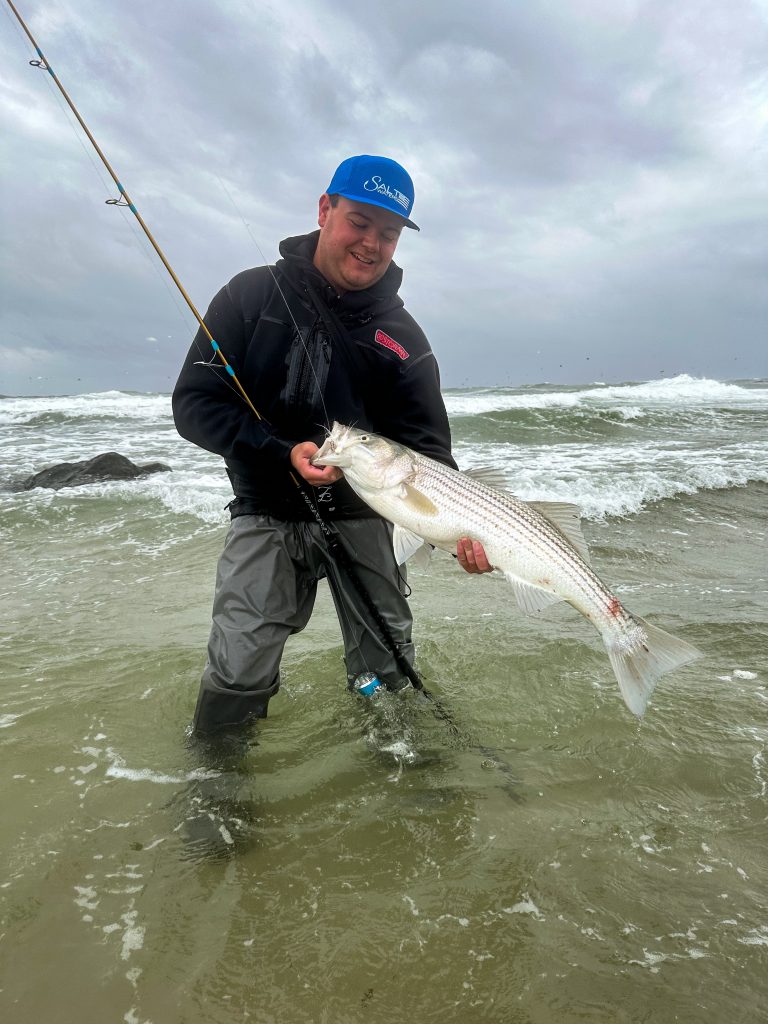
Out east, Montauk’s south side still may still have fish in November, especially if we get a fabled herring run. The Sound offers its own rewards as well: boulder fields and pebbly beaches that extend all the way westward harbor late-season bass that are often found feeding on peanut bunker, white bait, and larger fish that live among the rocks.
For South Shore boat guys, look for fish in 30 to 70 feet of water along the western half of the island. The stretch from Jones Inlet to Rockaway is a hot spot as December nears, with schools stacking up there to feed before heading south down the coast.
Tactics and Gear
Diamond jigs are a mainstay for surfcasters during the sand-eel bite. Cast one beyond the breakers, let it drop a little, and crank steadily. Slim-profile lures like SP Minnows, Super Strike Needlefish, Tsunami Sand Eels, or Bill Hurley CC Sand Eels also mimic the bait very well and can sometimes outshine the ol’ tin & tube. Bucktails always have their place when tipped with soft-plastic trailers or pork rinds, especially if we get some of those peanut-bunker-fueled blitzes in the first half of November. Also worth noting: when there are many sand eels around, there are often hickory shad feeding on them, too. Big bass won’t pass up the substantial meal that a shad offers among the sand eels. Sometimes, it’s worth clipping on a larger plug like a metal lip (or a darter (after dark) to imitate those shad.
For the boat crowd, this is pretty simple fishing. Drop a 2- to 4-ounce Ava-style diamond jig to the bottom among schools of migrating bass, reel it up slowly, and hang on. Stripers hammer these jigs with conviction. Keep a light 7- to 8-foot spinning rod rigged with a soft plastic, like a 6-inch RonZ, and be ready to cast when fish come up rolling on the surface. Fly anglers can join the fray with a 9-weight and sinking line, tossing sand-eel patterns or sparse Clousers in white or olive. The North Shore also offers some good late-season bass blitzes on anchovies and peanut bunker.
Pro Tip
Night tides are your friend if you’re interested in bigger bass and, for surfcasters, fewer crowds. Although it’s even colder after the sun sets, a bite from a big fish will quickly warm you right up.
Late-Season Tunas: Keep the Chunks Flowing!
While inshore fishing keeps me tethered to the coast, the offshore scene in November and December is a siren’s call for the bold. We’ve had a darn good tuna season so far, and the midshore chunk bite for bluefins (and sometimes yellowfins) in the first half of November should hold strong in the late part of the season. It can happen anywhere from 15 to 50 miles off the South Shore, and sometimes even closer. Commercial dragger boats amplify the action, as their discards create natural chum slicks that pull in tuna so tight they will actually follow the draggers around. Just maintain a respectful distance to play it safe and avoid interfering with their work.
Typical canyon fishing can still be excellent through November for the large-boat guys, with chunking also a deadly technique for yellowfins and bigeyes (and a chance for swords at night). As December looms, the bluefin bite shifts toward the canyons, where giants often pass by on their migration as groundfish species slide off toward the continental shelf.
Where to Go
Use AIS (global ship-tracking software) for dragger activity in 25 to 50 fathoms. Look for clusters of them, and tuna will likely be there. There is no “spot”—it all depends on where the bait is set up. If the draggers aren’t out, look for birds, marine mammals, or surface activity to clue you in.
Tactics and Gear
Chunking rules: use 30- to 50-pound gear for midshore tuna and scale up to 80- to 130-pound-class rods for canyon giants in December. For light chunking, fluorocarbon leaders in the 40- to 100-pound-test range are a necessity, and 5/0 to 7/0 circle hooks baited with butterfish or sardines will do the trick. Float some baits mid-water (at different depths) under balloons. It doesn’t hurt to put a down-rod near the bottom, too. Jigging with 120- to 200-gram jigs also works well, and it’s worth keeping a popping rod ready in the event of surface action. For giants, pack heavy tackle—130-class setups with 150- to 200-pound fluorocarbon and live bluefish or bunker are key.
Pro Tip
Keep the chunks flowing and don’t be stingy. Consistency draws fish and holds them in your slick. If draggers are nearby, set up near the path they’re dragging to intercept tuna feeding on their discards. Check weather forecasts obsessively because late-season windows can be very tight.
November Green: Last Licks for Albies
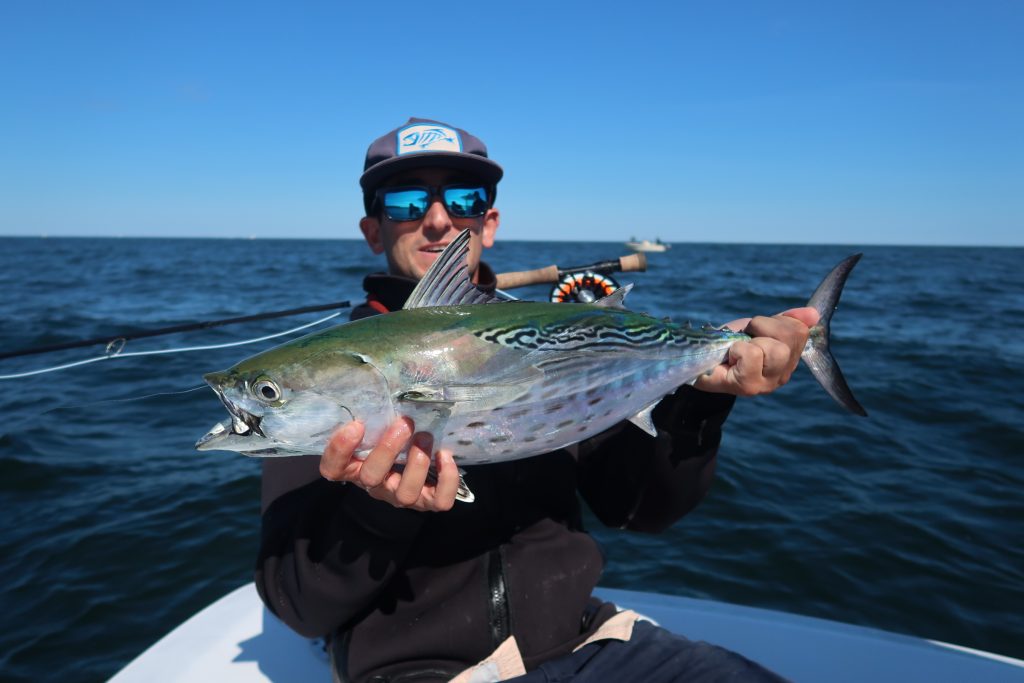
There’s no green on the trees, but there’s still some green in the seas! Long Island Sound can deliver our beloved green-backed inshore tunas into mid-November, especially along the North Fork. Even Montauk had some last year in the first week of November (and they were pretty big ones, too). These late-season albie blitzes are fleeting, but ferocious. It’s definitely worth going out to look for them when the weather allows. Or, at the very least keep a 9-weight fly rod or light spinning setup at the ready while blackfishing. You’ll kick yourself if a pod of late-season albies starts raging and you’re not ready for them.
Make It Count
November and December are Long Island’s last call for 2025. It’s the final window to chase stripers, outsmart tog, and battle with tunas of all varieties before winter shuts the door on another saltwater season. The cold air and icy sea spray may sting, but the bites sting harder and always help move some warmth back into your fingertips. Every fish now is a story for the long months ahead. Bundle up, make every cast count, and savor our season’s final act.
READ MORE


Great article JEFF when I read your articles it reminds me of the days when we tied flies