

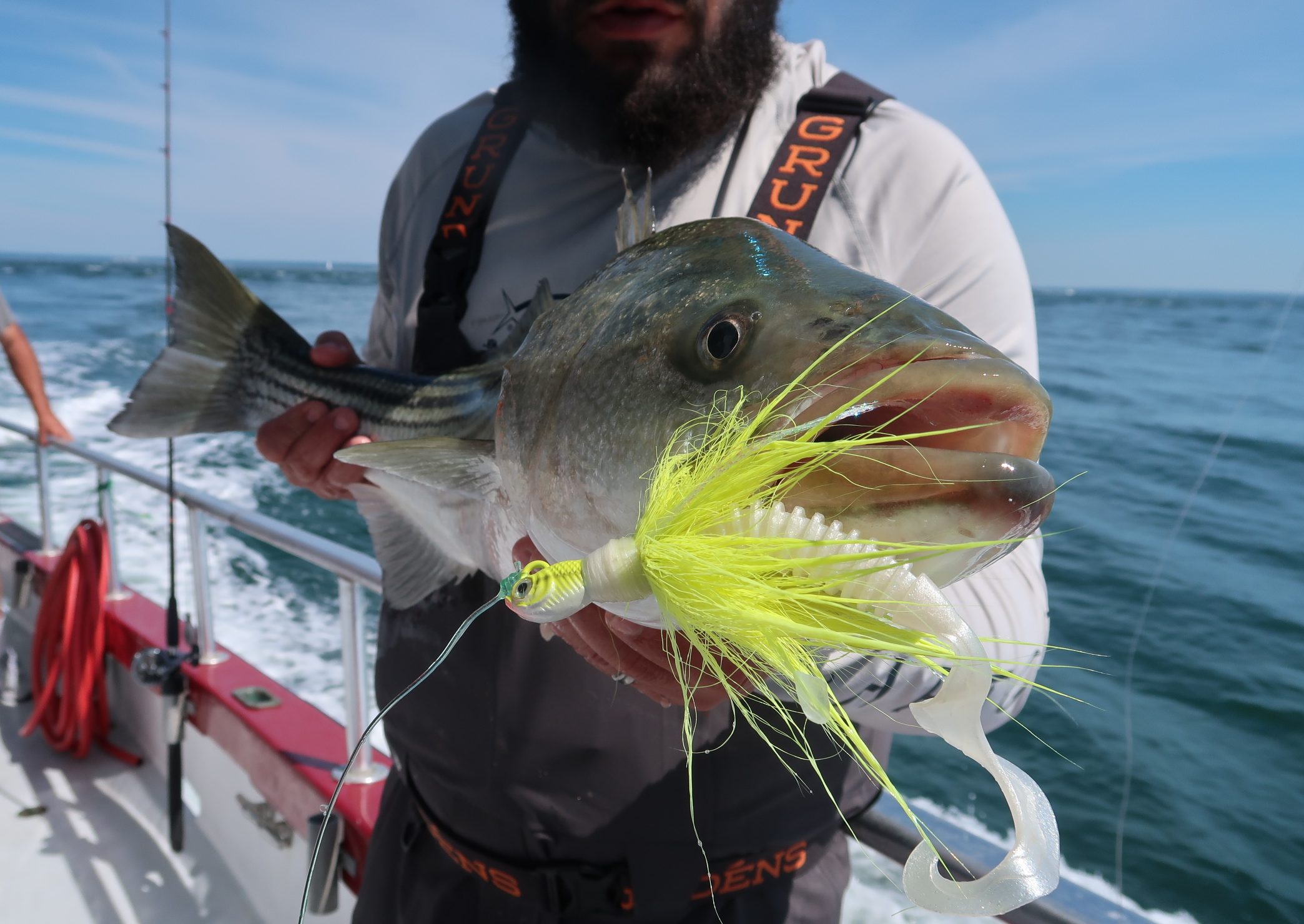
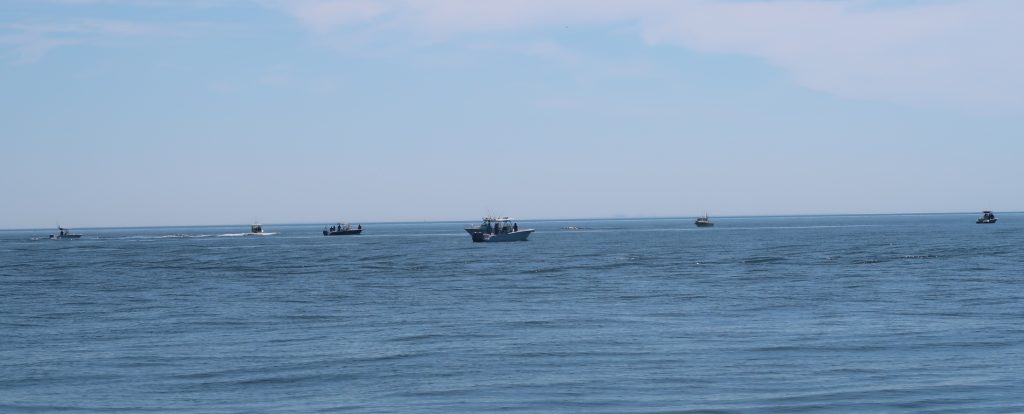
If you’ve ever pointed your bow toward the eastern tip of Long Island’s North Fork, you’ve likely felt the pull of Plum Gut. This narrow channel, ripping between Orient Point and Plum Island, isn’t just a passage, it’s a portal to the past, a testament to nature’s fury, and one of the premier fishing grounds on the East Coast. For generations, anglers have navigated its treacherous tides, drawn by the promise of big fish. But to catch them, you’ll have to contend with five-knot currents with a wall of water at the end, Cross Sound Ferries with massive wakes, and the much smaller Plum Island Freight Ferry—the only wake that has ever crashed clean over my bow and soaked my Dad and I through our jeans.
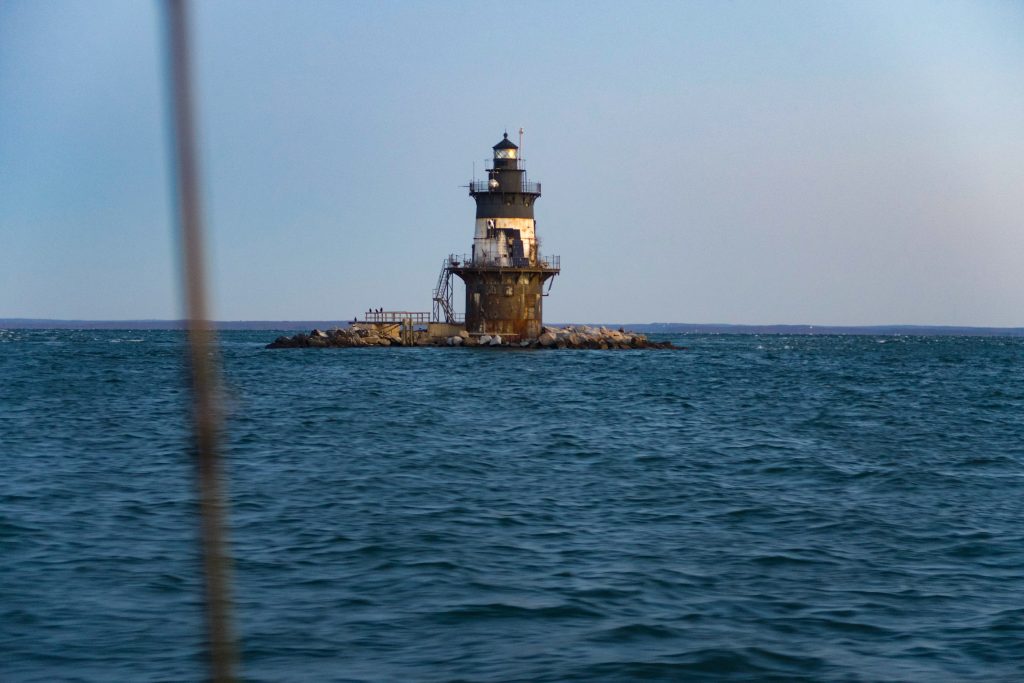
This hectic and historic waterway is sandwiched between the Orient Point Lighthouse (nicknamed “The Coffee Pot”) and Plum Island, a restricted place most recently dedicated to science, yet it’s the science fiction that intrigues people the most. The half-mile-wide channel that we call Plum Gut is rich in history, and history continues to be made here every year. It’s the place where fisherman come to catch trophy striped bass, gator blues, and delicious dinnerfare like sea bass and porgies. But to truly appreciate Plum Gut, you have to go deep below the surface chop. Its story begins not with lighthouses or science labs, but with the ice ages that sculpted the seabed beneath your hull.
Long Island Sound, including Plum Gut, owes its existence to the dramatic retreat of the Laurentide Ice Sheet between 9,000 and 18,000 years ago. During the peak of the last Ice Age, a gigantic glacial lake, sometimes called Glacial Lake Connecticut, filled the basin that is now Long Island Sound. The basin was dammed at its eastern end by a “terminal moraine” (the rocks deposited by the glaciers) that ran from Orient Point to Plum Island, across to Fishers Island. When the climate warmed and the ice margin retreated northward, that natural dam began to fail at its weakest points. Massive torrents of meltwater burst through, carving deep spillways straight to the Atlantic. Two of those spillways became Plum Gut and The Race. As the ice vanished entirely and global sea levels rose more than 300 feet, the entire basin flooded with saltwater, turning Glacial Lake Connecticut into Long Island Sound, and those ancient glacial spillways into two of the wildest, fishiest pieces of water on the East Coast.
The ice turned to water, but the fury remains. Every tide brings more erosion scouring the bottom, carving new ledges and valleys. With a full or new moon, water screams through at over 5 knots, upwelling baitfish and creating standing waves that can swamp an unprepared boat. The bottom is at once a fisherman’s dream and nightmare. Kelp clings to glacial erratics, those massive rocks dumped by retreating ice, forming sticky structure that’ll punish you for dragging your 3-way bucktail rig along the bottom for too long. From drifting rigs to speed jigging, from trophy striped bass to porgies, no matter the method or the species, there are two absolutes here: Don’t’ anchor anywhere near the middle of the channel, and don’t let your offering sit at the bottom.

The human history of this glacial canvas started long before European settlers arrived. The Pequot tribe called Plum Island the “Manittuwond,” meaning “the island to which we go to plant corn.” The Pequot knew these waters intimately, fishing the Gut’s bounty with nets, spears, and bone hooks from dugout canoes carved from single trees. Not exactly the vessel of choice by today’s standards.
By the 17th century, English colonists had claimed the area, naming Plum Island for the wild beach plums that grew thick along its shores. They used the land as open grazing for hogs, cattle, and horses, and used the marshes for collecting salt and hay.
In 1775, the island saw one of the earliest amphibious attacks of the Revolutionary War. Under direct orders from George Washington, General David Wooster led 120 Continental troops in whaleboats across the Gut from Oysterponds (today’s Orient Point) to deny livestock to British raiders. They landed near what would later become the lighthouse site. A small Loyalist garrison opened fire from the bluffs; the Americans returned fire and withdrew across the water. With no casualties on either side, the skirmish was brief and bloodless, yet it signaled that the war had reached Long Island’s shores.
In 1827, a modest 35-foot stone tower rose on Plum Island’s western tip, its whale-oil lamps guiding mariners through the Gut’s treacherous rips. In 1869 a sturdy granite replacement took its place; the lonely lighthouse that still stands watch today. Automation silenced its keepers in 1978, when a steel tower nearby assumed the duty.
In the late 1800’s, President Grover Cleveland, an avid angler, was a frequent visitor of the island, using his friends yacht Oneida to chase bluefish in the Gut’s rips, proving that even commanders-in-chief couldn’t resist its allure.
But it was the strategic chokepoint of Plum Gut that drew military eyes. During the Spanish-American War in 1898, Fort Terry was established on Plum Island as a coastal defense outpost, its guns trained on the channel to repel potential invaders. The fort saw expansions through World Wars I and II, housing artillery batteries and even serving as a submarine base.
Then came the shift that shrouded Plum Island in secrecy. In 1954, the U.S. Department of Agriculture took over, establishing the Plum Island Animal Disease Center to research foreign animal diseases like foot-and-mouth. This high-security lab, with its biocontainment facilities, became a breeding ground for rumors. Conspiracy theorists whispered of germ warfare experiments, escaped pathogens, and even ties to Lyme disease—claims fueled by a 2004 book, Lab 257, which alleged lab accidents and cover-ups.
In 2003, oversight shifted to Homeland Security, amplifying the “forbidden island” aura, along with the lack of public access, armed patrols, and a freight ferry that’s the only link to the mainland.
Adding to the area’s mystique is the legends that have been passed down. A personal favorite is the history surrounding Captain Kidd and his buried treasure. Captain William Kidd began his career as a legally commissioned privateer for the English Crown, tasked with hunting pirates and protecting commerce, he sailed the waters of Long Island Sound near Plum Island. Over time, he exceeded his authority, capturing ships deemed illegal prizes and committing murder aboard his vessel, which led to his conviction for piracy and murder. Hanged in 1701, Kidd’s name became entwined with local folklore, with persistent rumors that he hid treasure on Plum Island and Gardiners Island. Historically, a cache of gold, silver, and jewels was recovered on Gardiners Island in 1699, but no treasure was ever found on Plum Island.
Guarding the Gut’s western side is the “The Coffee Pot.” Built in 1899 on Oyster Point Reef after years of wrecks in the Gut’s rips, it was one of the first “sparkplug” lighthouses, designed to withstand pounding waves. By 1970, automation threatened demolition, but public outcry saved it, landing it on the National Register of Historic Places. These days it’s just a daymark to most, but when that light flashes every five seconds on a black night, you remember why it was built in the first place.
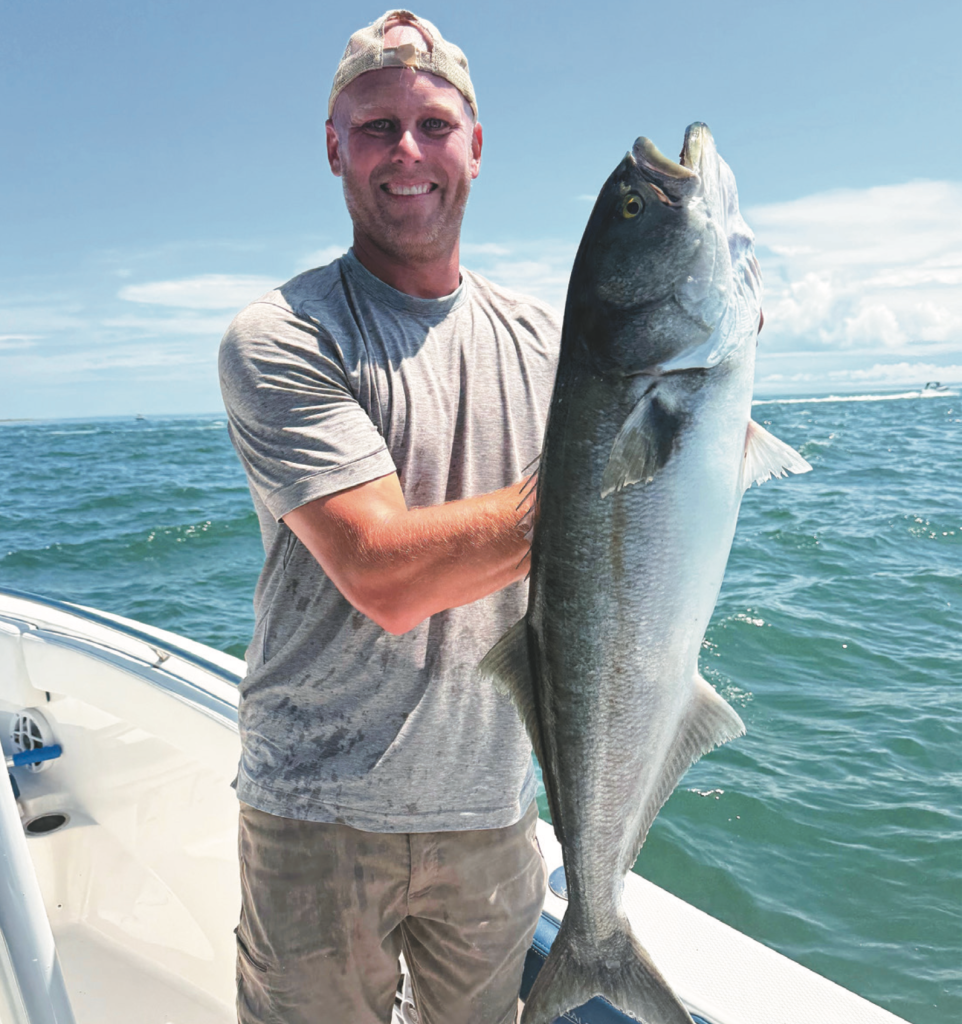
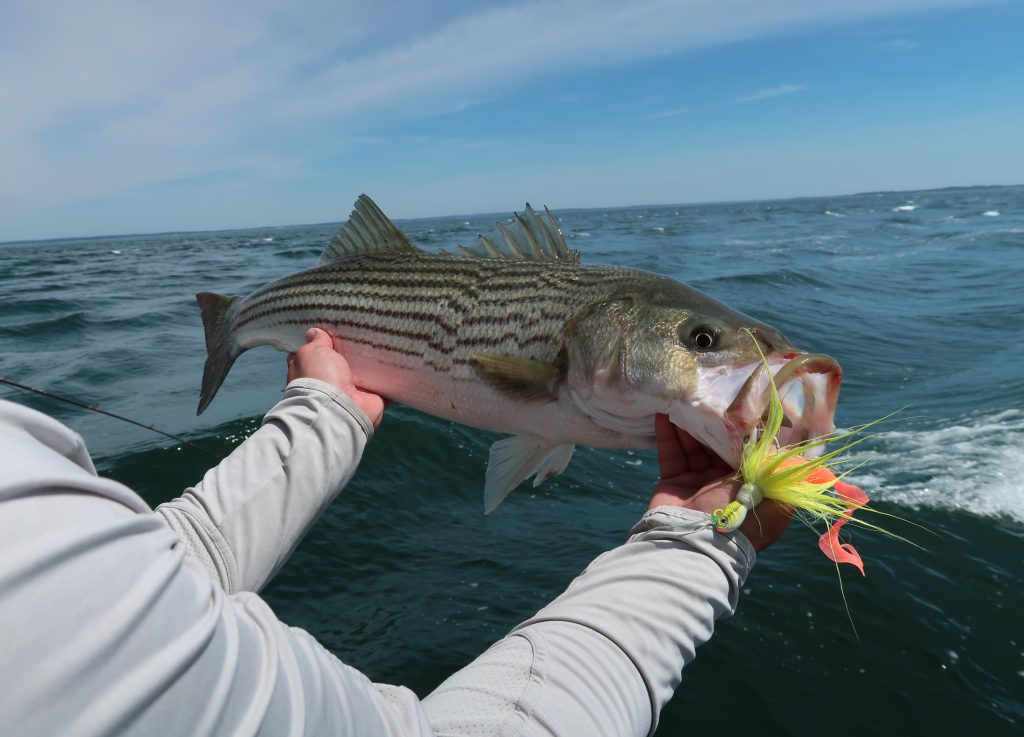
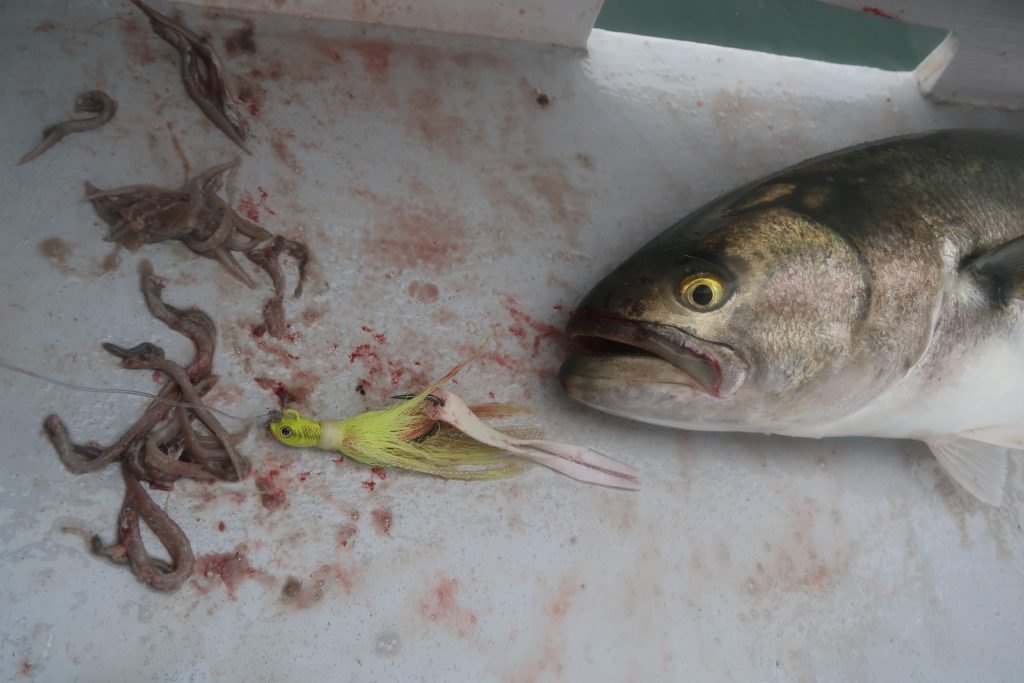
For anglers, Plum Gut’s uniqueness shines in its fishing. The glacial structure and tidal fury concentrate bait, drawing migratory species year-round. Spring opens with schoolie stripers slashing baitfish like bunker and spearing, giving way to slot fish and then genuine cows by June. Chopper bluefish join the show shortly after the first stripers arrive, and once the 15-pound-plus gator blues appear in late summer/early fall the place turns into a war zone. They hit like freight trains and fight like they’re out to hurt you. Sometimes the surface erupts in white water, other times they’re crushing diamond jigs or 3-way bucktail jigs that bounce off the bottom. A couple of quick cranks off the snags and hang on, those runs will smoke 50-pound braid and test all your gear.
When the tide finally slacks and the giants take a breather, the dinner species come out to play. Drop a small high-low rig with clam or squid and the porgies swarm. The sea bass move in as well with some of the bigger ones hanging around as the tide picks up. It’s not uncommon to see one bite a jig nearly the size of its body length. Come fall, the blackfish turn on hard. Dangle green crabs along the rocks under the Coffee Pot or off Plum Island’s northwest tip and the rod tip thumps like a jackhammer.
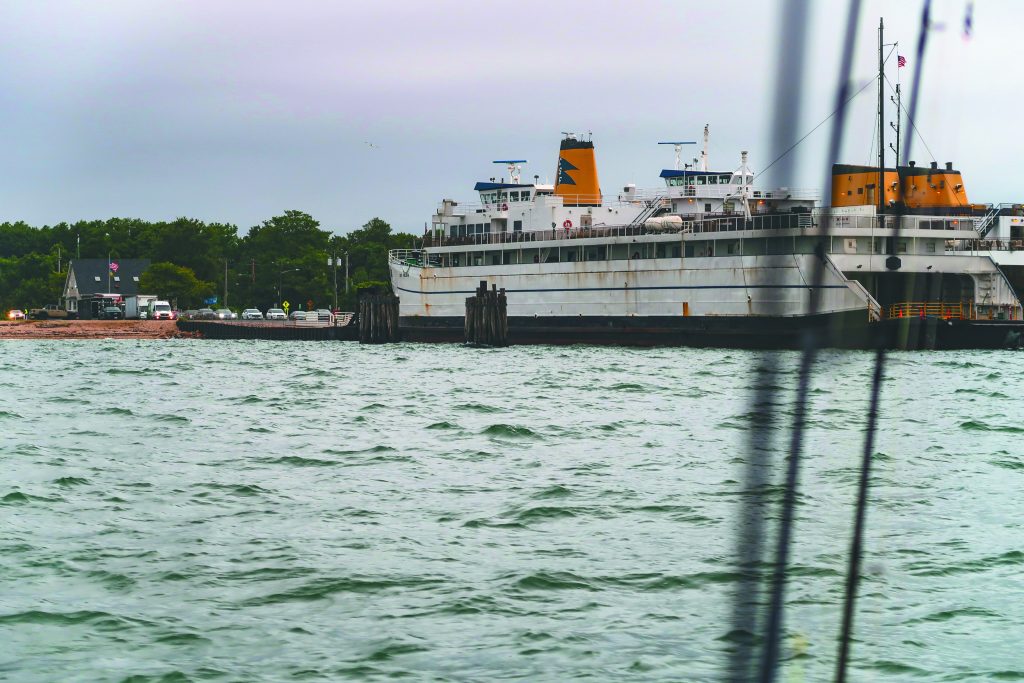
Today, the Gut remains a chaotic crossroads. Cross Sound Ferries shuttle thousands daily with grace, navigating tough conditions with precision. The Plum Island freight ferry barrels through the same water like it’s late for a shift change, daring you to get in its way. Boaters from everywhere, of all sizes and types cross the water daily. For some it’s a passageway, for fisherman it’s a destination.
Yet change is coming; the lab on Plum Island is slated to shut its doors and move to Kansas by 2026. For the first time in 70 years, the future of this forbidden island is truly up in the air. Could it ever open to the public? Will I finally walk that off-limits ground and climb the spiral stairs inside the lonely 1869 lighthouse that’s watched my every drift? Plum Island stands at another turning of the tide. Whatever washes in next, I’ll be watching from the helm, rod in hand, ready for the next chapter.
READ MORE


