
No, not that March Madness—the NCAA tournament is great and all, but my bracket usually collapses faster than a dropping tide on a full moon. I’m talking about my own March Madness: the annual hunt for my first striped bass of the year.
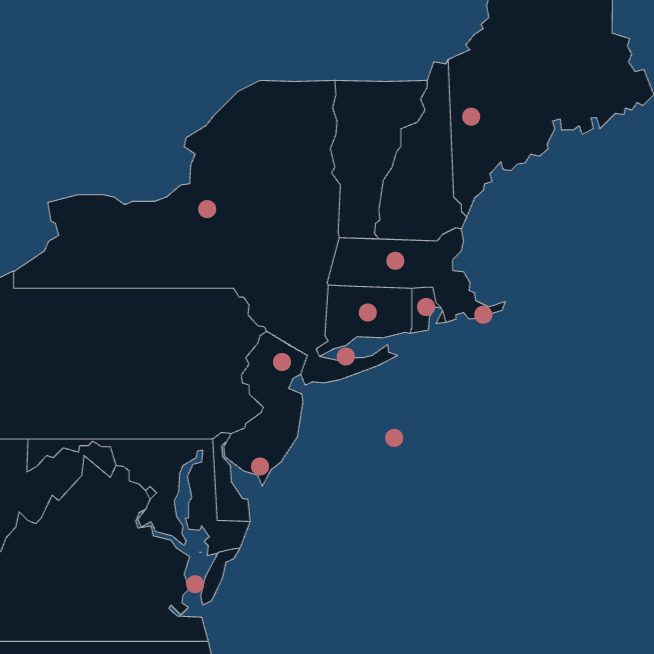
For at least a decade, it feels like holdover stripers have become increasingly common in early March. A few decades ago, catching striped bass in Western Long Island Sound outside the Housatonic or the warmwater outflows of the power plants would’ve been considered lunacy. Even today, most anglers don’t expect to hear much about western Sound bass before April—unless it’s from those same predictable winter spots I just mentioned.
Something is happing with the striped bass. It seems our winters are starting later and becoming milder than a decade ago—although this past winter may be an exception. As a result, it seems the fall runs of bass in the Sound are starting later. I have a hypothesis that perhaps this is resulting in more fish becoming holdovers or “residents”.
In recent years, I’ve become convinced that this early bite in March is driven by the same bass responding to late fall bait patterns. With bait hanging around into December, as results of our warmer falls and milder winters, I believe more stripers are holding into the deeper portions of the Sound instead of partaking in the full fall migration. When March arrives and water temps creep into the low 40s, these holdovers slide up onto the shallow, dark-bottom shorelines where life is just beginning to wake. Again, this is just a hypothesis; I have not seen any studies validating this fact. However, some angler observations and reports seem to validate.
Back to catching. In 2025, that magic day was March 12th. The two days prior had been warmer than usual for early March in Connecticut—highs in the 50s, lows in the mid-30s. With a mid-morning high tide, I planned to fish the first two hours of the outgoing, letting the dark mud radiate whatever warmth it had absorbed. In very early spring, a cold front can shut down the bite completely, and it usually takes two or three warm days to bring the shallows back to life. So, I waited for that third warm day in a row before making my first cast of the spring (or last cast of late winter).

Pre-Season Striper Gear
I picked a classic March spot in western Connecticut: a small river spilling into the Sound, bordered by mud flats that sit exposed at low tide and hold four to five feet of water at high tide. This time of year, I throw small soft plastics, bucktails, or plugs on a light 7-foot rod with 10-pound-test line. If the water is clear—as it often is before warmer water algae blooms—I’ll drop to a 15-pound-test leader. And if I can, I always choose a shoreline with the wind at my back.
I’m never entirely sure what the bass are feeding on this early, but on calm days I often see a small pod or two of micro bait dimpling the surface along with a few spearing. I suspect those, plus whatever the bass forage off the bottom, make up most of their spring diet until larger bait arrives in the early spring.
The tackle bag stays light. I’m usually not wading, but do wear hip boots while fishing from shore as the incoming tide floods the flats. March isn’t about throwing the whole tackle shop—it’s about confidence baits that match the small baits that are present in early spring.
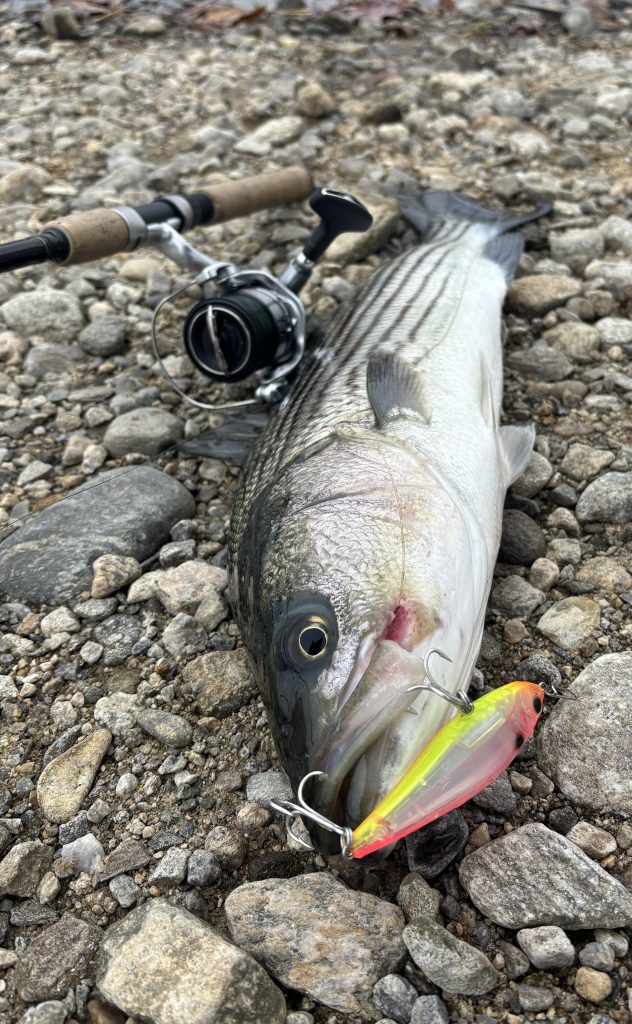
During the day, my go-to is a 3-inch NLBN paddletail on a 3/8- or 1/2-ounce jighead. It casts like a rocket on light tackle, and its wider body helps to keep it off the bottom. I carry a couple of 3- and 4-inch Berkley shads in bunker or white, a few smaller SP Minnows (size 13) in school bus yellow or chrome, a 1/2-ounce bucktail, a small glide bait or twitchbait, and the time-proven Cotton Cordell Red Fin. I also keep a small container of bunker or shrimp-scented Pro Cure that I always apply in the early spring.
Early Season Action
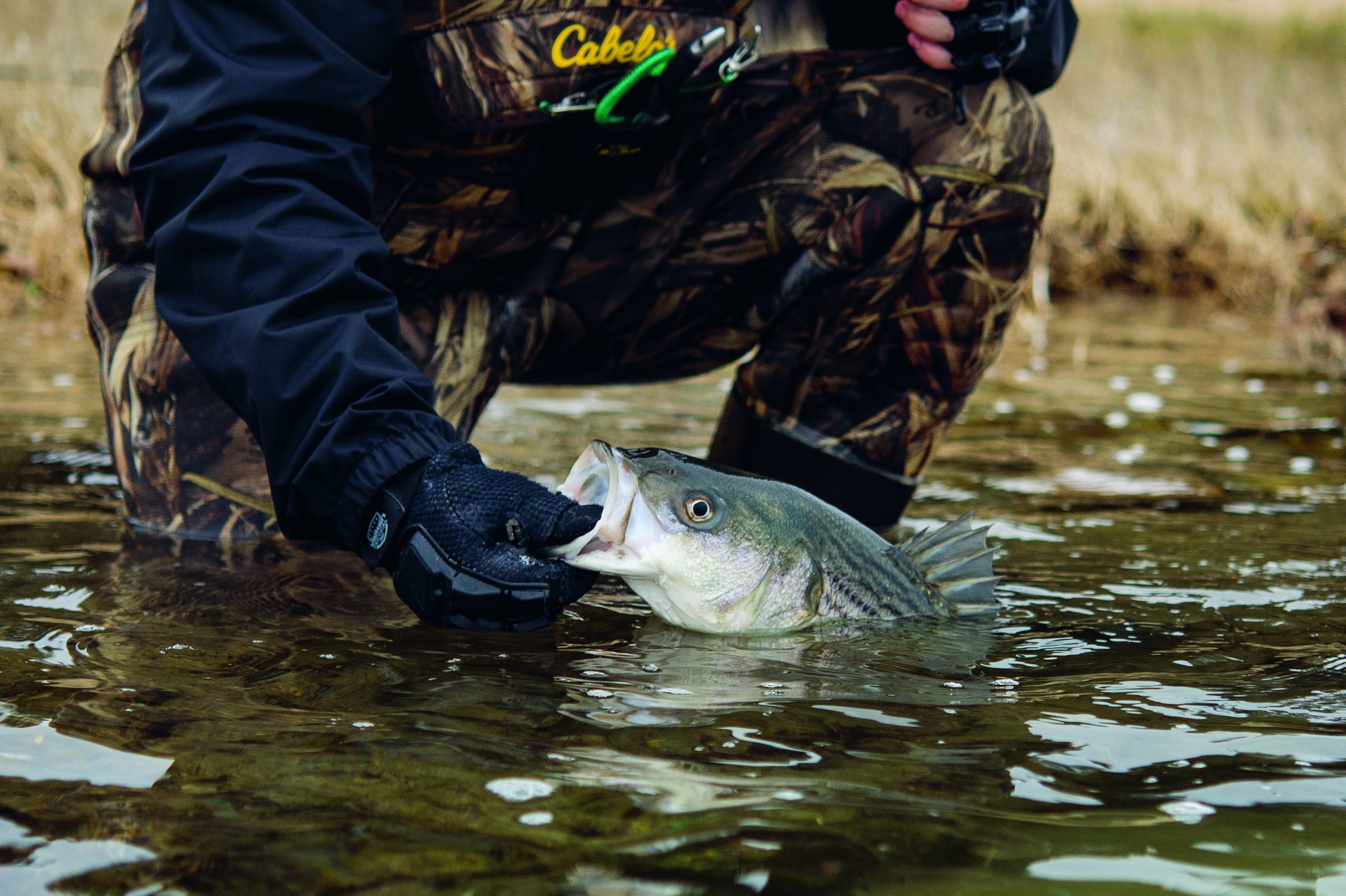
The first half hour was dead. My mind bounced between “It’s too early” and “No, they were here last year.” Then, after a few lure changes, a bass darted up to the shoreline chasing my lure only to turn when the bait was lifted from the water. It gave me instant hope, and over the next 45 minutes, the bite turned on. Four school‑size bass pushing right up against the slot size were slid up on the shore only to be photographed and released. Then, as the water dropped off the flats the bite didn’t just slow… it died.
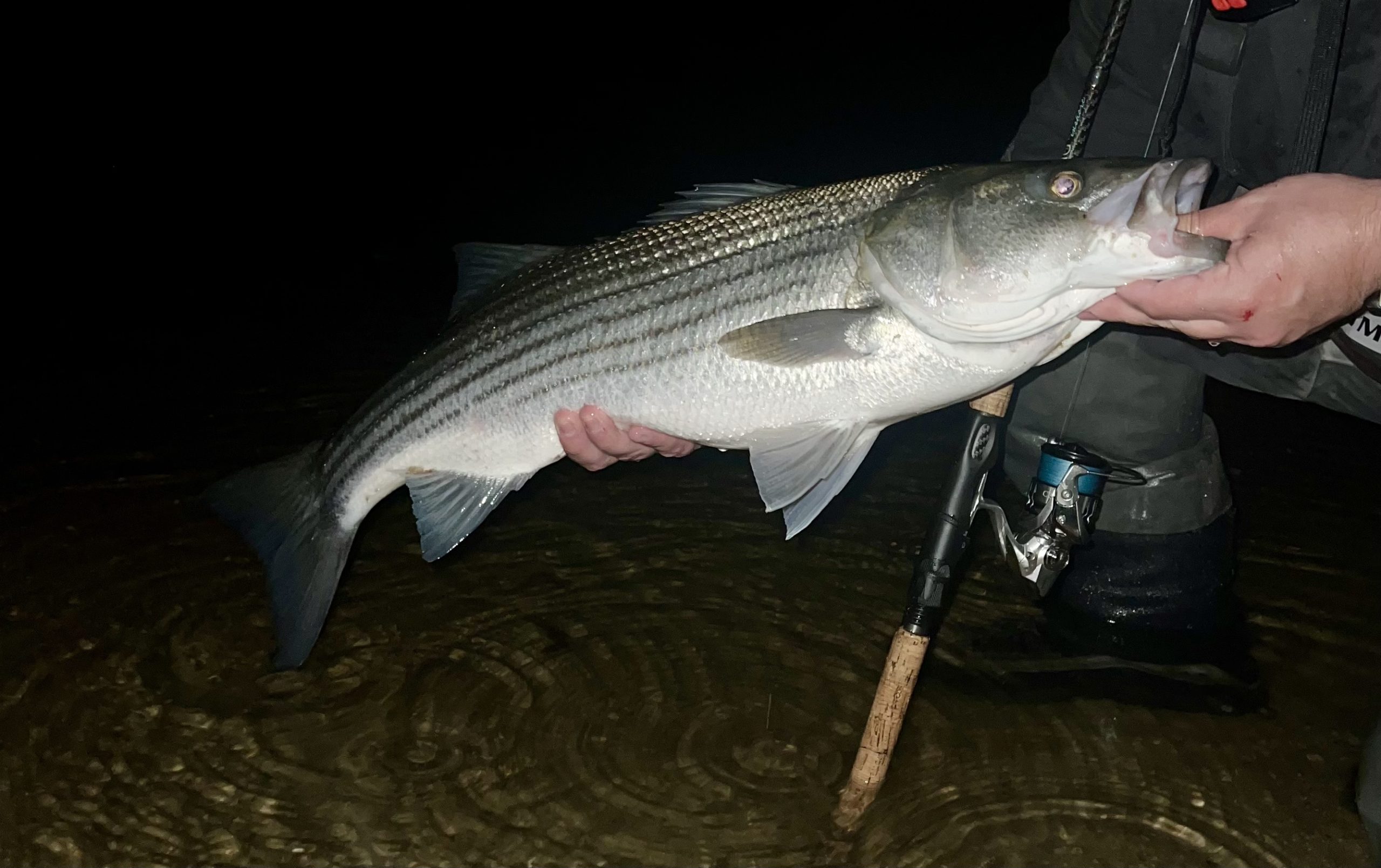
A couple of days later, I returned at night on the incoming tide. Same mud flat, now holding the warmth of the day. My expectation was larger fish. My nighttime lineup is slightly larger: 6- and 7.5-inch inch Slug-gos in black or white with a couple of other soft eel imitations, 5-inch paddletails, SP Minnows, and the reliable Cotton Cordell Minnow. It sounds like a lot, but it’s barely a dozen lures in a small shoulder bag. The key to fishing these lures is to use a painfully slow retrieve. In shallow water, I fish these plastics weightless or with a small nail weight. At night, I always use scent—too many times it’s been the difference maker when fishing beside a buddy who is not using scent.
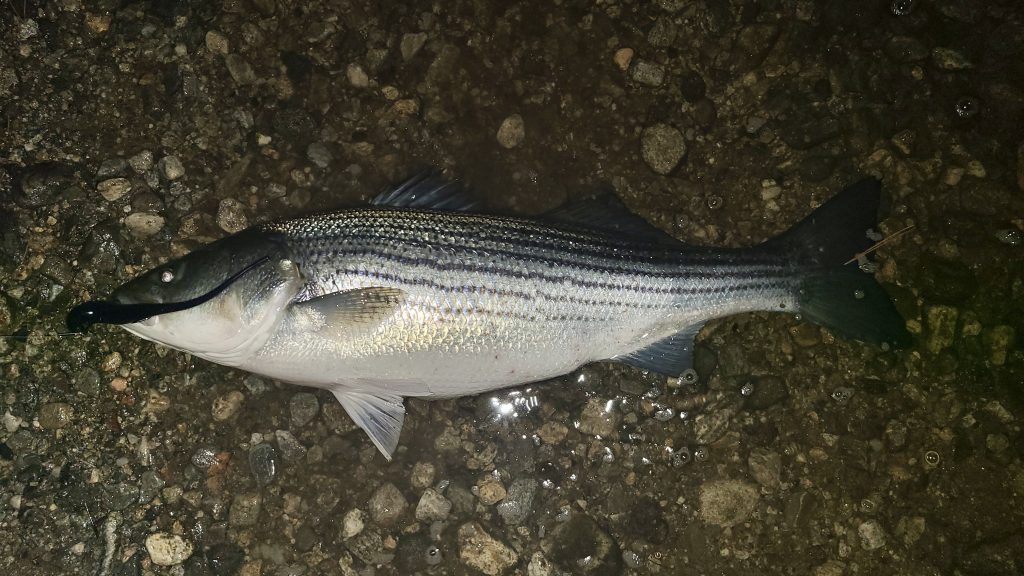
The wind was calm, and micro bait dimples shimmered in my headlamp. My first cast brought a solid bump and a bent rod. I landed two bass—one slot, one below—and missed a few more in just a couple of hours and packed it in.
Great fishing? No. But for March, I was ecstatic. I felt that with two successful trips under my belt, I had finally crossed over to a new season. I learned something important about March striper techniques: it’s not madness if it works… and even if it doesn’t, I’ll be back next March again.
I suspect this early-season pattern is happening elsewhere along the striper coast. Every so often, in a mild January or February, you’ll see a report that mentions “a few holdover schoolies.” There’s an old saying: don’t wait to chase reports—make them. If winter turns mild and you feel that March madness creeping in, check your local salt ponds, back bays, and harbors. You might be surprised by what’s already awake.
Captain Jim Christensen operates Rod and Reel Charters out of Norwalk, CT. Visit rodandreelcharters.com for contact information to book a trip.
READ MORE