
It was March of 2017, and I was talking with popular bass pro Brandon Palaniuk at the Bassmaster Classic Expo. He had missed the cut to fish the final day and was working the booth of one of his sponsors.
“What are you going to do if you ever win a Classic?” I asked.
“I’ll probably retire and travel around the country breaking state records,” he said—and he was serious.
“You should start with the Massachusetts largemouth,” I replied, every bit as serious and knowing that he’d never leave the Bay State if a new record largemouth was his only way out.
A Shocking Catch
February is chilly in the Bay State, and February 13, 1975, was chillier than usual. The high temperature was several degrees below freezing, and the low was just 13°F. The wind blew at almost 20 miles per hour, and it was coming straight out of the north. As you’d expect, the lakes were frozen, and the weather kept all but a few anglers off the ice.
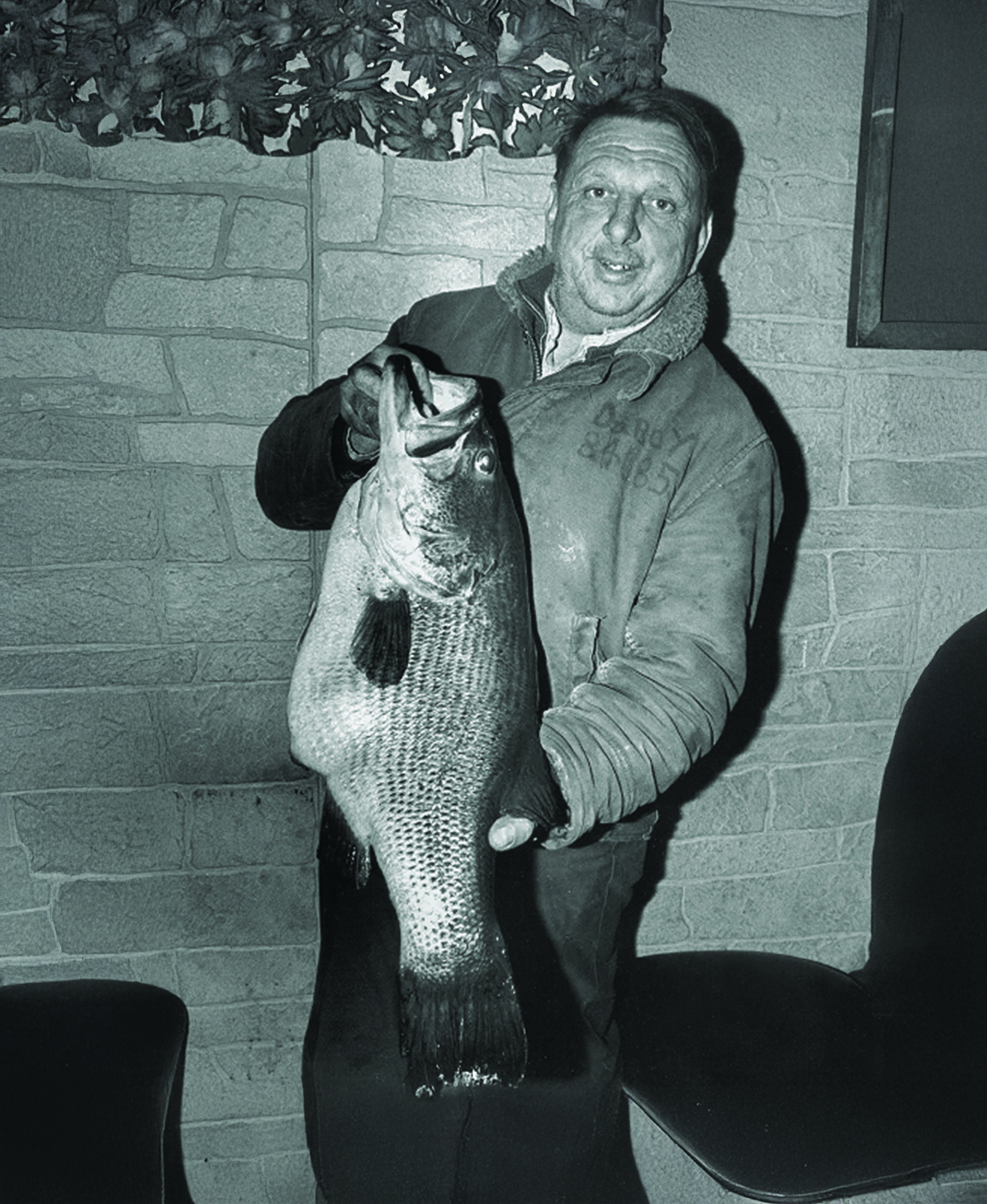
Walter Bolonis of Brockton was one of those diehards. He was a 33-year-old house painter with the day off and a minnow bucket full of large, golden shiners. He decided to put them to use on Sampson Pond … or thereabouts.
Bolonis, an avid angler, drilled a few holes in the ice and set up several tip-ups around the lake. He had been fishing about three hours without a bite when he got the strike.
“Call it intuition if you want, but I decided to cut a bigger-than-usual hole in the ice that day,” he told a reporter. His intuition paid off. He immediately realized he was hooked up with something big.
“My body temperature shot up like a rocket when I first got a look at the bass,” Bolonis recalled shortly after the catch. “By the time I pulled it onto the ice, I was actually sweating.”
Bolonis’ reaction was understandable. The bass he pulled through the ice was enormous by any standard: 28 inches long, 23 inches in girth, and 15½ pounds in weight. It surpassed the existing Massachusetts record largemouth by more than three pounds and was more than two pounds heavier that the biggest ever taken in New England. It was the fish of many lifetimes, and it had come from a most unlikely part of the country.
Scale samples taken by the Massachusetts Division of Fish & Game estimated the fish at 14 years old—a lengthy lifespan and a remarkable growth rate for Massachusetts.
At the time of the catch, Bolonis’s bass was the fifth-largest state-record largemouth in the country. Only Georgia (22 pounds, 4 ounces), California (20 pounds, 15 ounces), Florida (19 pounds), and South Carolina (16 pounds, 2 ounces) were larger. Today, it ranks 14th, and all the states ahead of it have one thing in common: the waters that produced the records all had Florida-strain bass either naturally or through stocking programs.
Problem was, there was no record of any state-authorized stocking of Florida bass in Massachusetts, not at Sampson Pond or anywhere else. In fact, conventional wisdom at the time held that Florida bass could not survive the tough New England winters.
Every record catch is an outlier, but Bolonis’ bass was so much bigger than previous records—so surprising to have come in the dead of winter and so impressive to have come on ice gear that it naturally drew controversy and questions.
So Many Questions
Was Bolonis’s fish a Florida bass? And if it was, how did it get to Massachusetts?
Was a “bucket biologist” to blame? Had someone stocked one or more Florida bass in Massachusetts waters without state authorization? If so, when?
Of course, there was also the darker question: had Bolonis or someone else traveled to Florida and brought the fish back in an aerated tank, only to claim it as a state record? After all, there had been no witnesses to his actual catch.
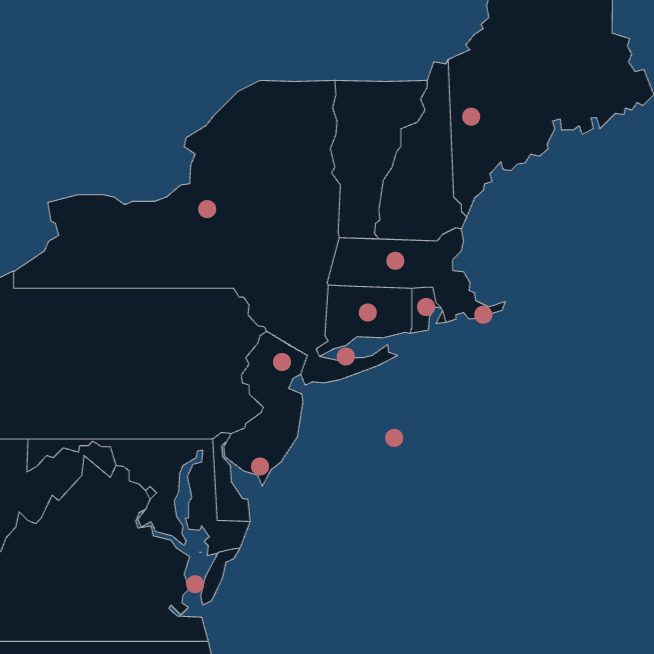
And, did the fish come from Sampson Pond or somewhere else? The pond in Carver, Massachusetts, covers 302 surface acres, with an average depth of eight feet and a maximum depth of 16 feet. It’s a natural pond that was enlarged when a foundry built a dam to inundate more land.
Even the Massachusetts Division of Fish and Wildlife has its doubts about the location of Bolonis’ catch. Until recently, the DFW website described the fishery as follows:
Sampson Pond is not a fertile pond; hence bass and pickerel yields are expected to be low. This pond has a reputation as a good bass producer, however, and numerous large bass have been reported as taken here (including the state record, but numerous reliable reports say it actually came from another pond). Dunham Pond is located nearby.
That’s a strong indictment of the Sampson Pond claim but offers no proof of where the fish was caught. Dunham Pond measures just 45 surface acres and is less than a mile from Sampson Pond.
That sideways glance from DFW gets us no closer to answering the questions about the fish’s genetics, an issue that’s become important in recent years.
Micropterus Mayhem
For more than a century, the largemouth bass was scientifically known as Micropterus salmoides. Within that species, the Florida bass was considered a subspecies of the largemouth, and it was identified as M. salmoides floridanus.
No more.
Recently, the American Fisheries Society has reclassified several of the Micropterus (black bass) clan, including the largemouth and the Florida. Today, they are classified as separate species. The Florida has taken over top-dog status and is now M. salmoides, while the largemouth is now M. nigricans.
What does it matter? Well, for one, the International Game Fish Association has split the two for recordkeeping purposes, even though experienced biologists cannot tell them apart with the naked eye. For another, since it’s well established that Florida bass grow to larger sizes than their largemouth cousins, we now have absolutely no idea how big largemouth bass get!
If Bolonis’ bass was a pure largemouth, it may be the heaviest in history. (The record books are currently in turmoil.) If it’s a pure Florida, how did it get to Massachusetts?
Scale samples taken from the bass offered some evidence of the fish’s age, but DNA testing was not available in 1975, and such testing is at the core of the recent species shakeup in the world of fisheries science. However, Bolonis had a skin mount of his catch made, and there may be viable DNA to be had.
If you know where the skin mount of the Massachusetts record largemouth bass is, you could hold the key to one of bass fishing’s greatest modern mysteries. What was the Bolonis bass, and where did it come from? We may find the answer if we can find the fish.
Walter Bolonis died in 1990 at the age of 68. If he knew the answer to any of those questions, he took them to his grave