
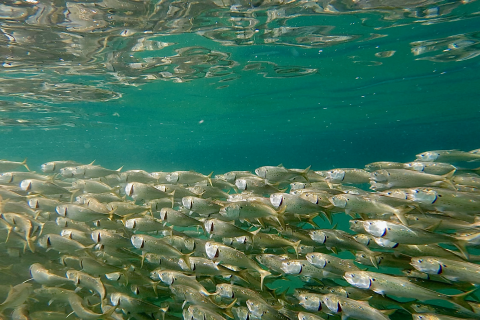
(Photo by Tim Regan @southforksalt)
A new stock assessment for Atlantic menhaden indicates that current commercial harvest levels may be too high to sustain healthy striped bass populations, according to a report released this week by the Theodore Roosevelt Conservation Partnership (TRCP.org).
The 2025 menhaden assessment, developed through the Atlantic States Marine Fisheries Commission (ASMFC), incorporates ecosystem-based reference points that account for the forage needs of predators like striped bass. The update indicates that the coastwide menhaden biomass is lower than previously estimated, and resulting projections now suggest that slashing the coastwide catch limit by more than 50 percent may be necessary to ensure sufficient forage for striped bass rebuilding.
If we catch this many menhaden, what happens to the predators that rely on them?
A Shift Toward Ecosystem Management
For decades, menhaden management focused solely on the species’ own population numbers. The new approach recognizes that menhaden are a critical link in the marine food chain — a high-energy prey source for striped bass, bluefish, weakfish, ospreys, and whales.
Under the proposed Ecological Reference Points (ERPs), the ASMFC would tie allowable menhaden harvest directly to the forage needs of these predators. Early modeling suggests that maintaining a “balanced ecosystem” could require a reduction in commercial menhaden harvest by 50 percent or more from current levels.

That decision now rests with the Menhaden Management Board, which meets October 28 to consider adopting the new ERPs and setting the 2026–2028 total allowable catch.
What It Means for Striped Bass Anglers
The assessment’s findings underscore what many striped bass fishermen already know: a healthy forage base is essential for rebuilding the striper population. Even as anglers face tighter harvest restrictions and slot limits, the recovery of the species could stall if the baitfish they depend on continues to be over-exploited.
If the board adopts the new ecological limits, commercial reduction fisheries — primarily operating in the Chesapeake Bay and off Virginia — could face significant catch cuts beginning in 2026. For anglers, that would mean more bunker in the water, better feeding opportunities for gamefish, and potentially a faster rebound for striped bass.
What’s Next
The ASMFC’s fall meeting runs October 27–30, and public comment is being accepted on the new reference points and harvest options. Anglers and conservation groups are urging striped bass fishermen to follow the discussions and voice their support for a forage-focused approach that keeps enough menhaden in the water to sustain healthy predator populations.
For the full release and technical details, visit TRCP.org.