
Update, July 2: Bacteria levels along the Merrimack continue to worsen. The latest sampling data from the Merrimack River Watershed Council (MRWC) shows 6 of 7 test sites now registering unsafe fecal bacteria levels — up from 3 of 7 on Monday and 5 of 7 on Tuesday. One site in Haverhill is testing at more than 15 times the EPA safety limit for E. coli. MRWC says unsafe conditions will likely extend through the July 4th weekend.
If you fish the Merrimack River for striped bass, you need to know about this before you launch this week.
A 50-year-old, 42-inch concrete sewer main failed in Haverhill on the evening of Friday, June 26, during a heavy rainstorm, and it’s been hemorrhaging raw sewage into the river ever since. As of Tuesday, June 30, the City of Haverhill estimates roughly 8 million gallons of untreated wastewater are entering the Merrimack every single day. A second break was discovered several hundred feet upstream from the first, complicating repairs. Officials now hope a temporary bypass pipe will be operational by Wednesday night, which would stop the active discharge, but water quality recovery will take additional time after that.
Massachusetts Environmental Police Statement
The Massachusetts Environmental Police issued the following advisory directly to commercial and recreational fishermen:
The bottom line: fishing the Merrimack, its estuaries, and beaches is not prohibited — but MEP is urging anglers to be aware of current conditions and use caution.
How Bad Is It?
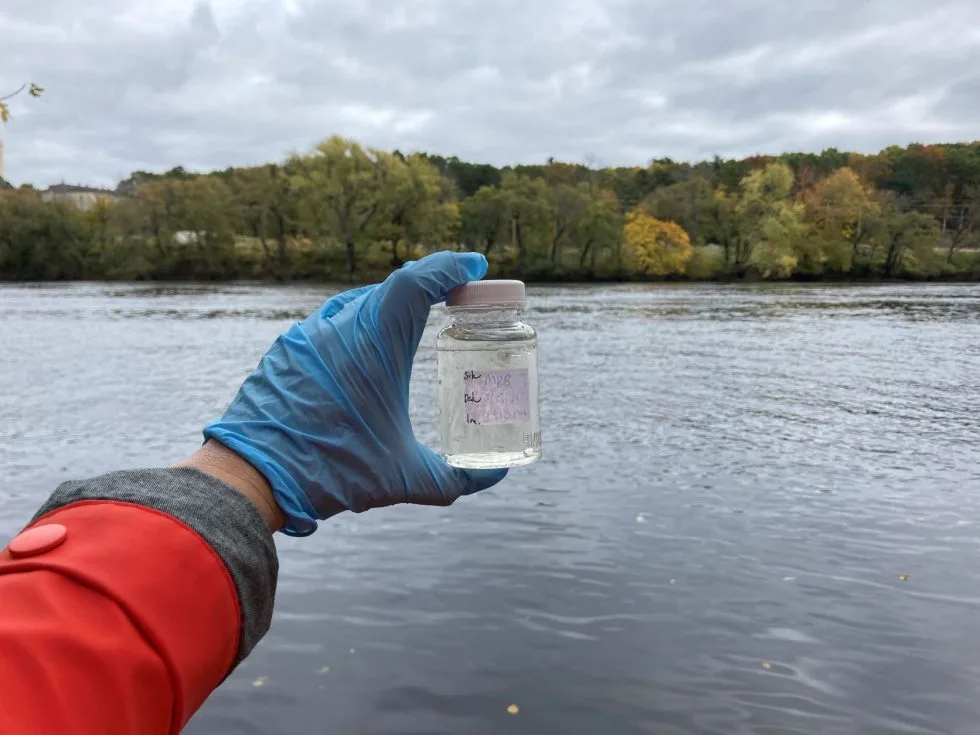
According to MRWC, which has been testing seven sites daily from Haverhill to the river’s mouth since Monday, June 29, bacteria levels have worsened with each successive round of sampling:
- Monday, June 30: 3 of 7 sites unsafe; Ferry Park in West Newbury above 40x the EPA E. coli limit
- Tuesday, July 1: 5 of 7 sites unsafe
- Wednesday, July 2: 6 of 7 sites unsafe; Haverhill site above 15x the EPA E. coli limit
MRWC cautions that results shift quickly — Wednesday’s numbers reflect Wednesday’s sampling and may not represent conditions today. Results are posted online within 24 hours of collection due to incubation and lab processing time. Check merrimack.org for the latest.
To put the scale of this discharge in perspective: Haverhill averages 35 combined sewer overflow events per year, with a large one releasing roughly 10 million gallons. But those events are diluted with stormwater and typically clear up within three days, affecting only the stretch down to the Artichoke River in West Newbury. This spill is 100% raw sewage — undiluted — and it has been flowing continuously for nearly a week. The impact area is significantly larger and the bacteria levels significantly higher than a typical overflow event.
What’s Closed
The Massachusetts Division of Marine Fisheries has issued an emergency shellfishing closure covering growing areas from Salisbury to Gloucester. Swimming is banned at more than a dozen beaches in Newburyport, Newbury (Plum Island), Salisbury, Ipswich, and Essex. Gov. Maura Healey confirmed Tuesday that boating and other non-contact activities on the river and beaches are not restricted, but swimming advisories remain in effect.
Lawmakers representing North Shore communities sent a letter to Gov. Healey this week calling the spill “disastrous” for commercial and recreational fisheries and requesting consideration of economic relief for commercial fishing and shellfishing businesses.
What About Ocean Beaches?
So far, ocean-facing beaches have tested safe — but that may not hold through the holiday weekend. MRWC notes that the river sites it monitors extend only to where the river meets the ocean, and that bacteria tends to hug the coastline as it works its way downstream. State beach testing is ongoing, and MRWC is urging continued monitoring through July 4th. For state beach testing results, check the Massachusetts beach water quality page.
Our Take
Fishing may be technically legal right now, but anglers should think carefully before keeping fish caught in affected stretches of the river this week. Fecal bacteria contamination can be present in fish tissue — particularly in bottom-feeders — though striped bass are predatory fish and the risk profile is different from shellfish. Still, we’d encourage catch-and-release if you do head out, and wash your hands and gear thoroughly after any contact with the water.
Check the MRWC’s daily test results at merrimack.org before you go. Results are posted within 24 hours of testing.
We will update this post as the situation develops.