
Midday Mousing
It was a typical early spring day at a central Connecticut Trout Management Area. I bumped around a few of my favorite spots, fishing streamers and catching some trout. I started to fish a run filled with brook trout and rainbows, and to my surprise, they completely ignored the streamer during its jigging, dancing drift. Yet, when the fly rose toward the surface at the end of the drift…WHAM! The fish clearly wanted the fly skating and waking right on the surface.

That got me thinking. I had a couple of mouse flies in my box, and wondered if these trout would take a mouse. The idea flew against everything I had been taught about fishing for trout with mice in the Northeast, which was supposed to be a nighttime game for big wild and holdover browns. The odds were slim, I had been told, that trout would eat a mouse during the day in Connecticut.
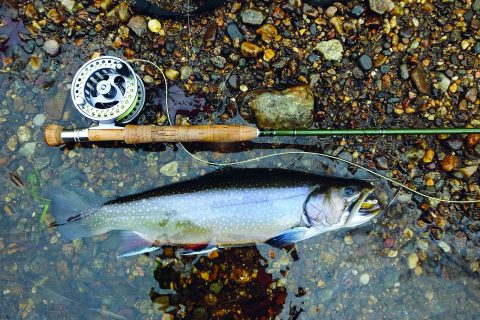
It took just one cast to get a take. A brook trout came up and drowned the Morrish Mouse I had tied on. Three casts later, I caught him. There I was, holding a hefty brook trout with a big mouse fly buried in his lip…in the middle of the day. It was as if I had unlocked a little bit of Labrador right there in southern New England. And, the action didn’t stop then—by the end of my outing, other anglers were asking what I was using. My answer resulted in some raised eyebrows.
Topwater fly selection for daytime trout differs some from the selection used at night, but not by much. You can eliminate the largest patterns for daytime fishing. You might get takes on a 5-inch mouse pattern with a stinger hook, but sticking to patterns like the Morrish Mouse and the Master Splinter will result in more action. These flies, tied on size 2 or size 4 hooks, are perfect for daylight mousing.
And, trout don’t limit their topwater takes to rodents. A Gartside Gurgler in green and yellow imitates a frog and makes the kind of surface commotion that grabs a trout’s attention. Tying it with marabou instead of saddle hackle tail makes a great profile and cuts down on short strikes. Large steelhead or salmon dry flies like Waller’s Waker and Paulson’s Titanic are also fun to fish and are very effective on stocked trout.
These flies can be fished with 5- and 6-weight rods, and simple 6-foot, two-piece leaders (10 to 15 pound) are all that is needed. When trout are striking topwater flies, they aren’t particularly line shy.

Spin-fishermen can get in on the fun by throwing small poppers of 1/8-ounce or 1 ½ inches. Don’t give the lure a hard pop, just swing it across the current, imparting a little action with the rod tip every second or two.
The most effective retrieve can vary from day to day. I like to get myself into a casting position upstream from the holding water that allows me to hang my fly over the lies for as long as possible, popping and twitching it constantly. This may trigger the fish to strike, but they may spurn a fly hanging still above them for one that is being swung or stripped down and across current. Larger brown trout occasionally strike at a nearly dead drifted mouse or gurgler when gentle twitches are imparted as the fly float over likely holding spots.

In the days following a stocking, the fish are often aggressive enough to violently strike a topwater fly cast straight upstream and stripped fast. It’s thrilling to have a large brook trout leap clear out of the water to take a fast-moving mouse or gurgler.
Fish preference sometimes varies between pools. If the trout aren’t hitting a slow, swinging retrieve, don’t automatically assume that the fly needs to be changed or that the fish aren’t in the mood for a large surface presentation. Switch presentations and switch them often.
Throughout the Northeast, trout are stocked in the spring and fall, with the spring stockings being larger and more frequent. Since the likelihood of trout being willing to these hit big surface flies or lures decreases with the amount of time the fish have been in the river, it is helpful to have a good understanding of when and where the rivers you are fishing are stocked. If you are lucky enough to get onto a pod of fish that were planted that morning, hold on tight! It’s not “wild,” it’s not exactly “pure,” but catching these fish on big topwater bugs is unquestionably more fun than catching them on nymphs or streamers.

Flows and river structure have a significant impact on whether a trout will take a topwater fly as well. When a river is high and stained or muddy, mice may not be effective. Relatively clear rivers flowing at a moderate speed with deep riffles, runs, and pocket water are my preference. Pools as deep as 8 or 9 feet with turbulent surface currents and floating foam are often productive. Slow-moving flat water is often better left unfished, even though it can be excellent when nighttime fishing these same flies for wild and holdover trout.
Something I’ve come to learn, and something I don’t completely understand, is that trout do not take mouse flies in every river. Some rivers where I’ve tried these techniques seem to be completely devoid of trout willing to even glance at a mouse or gurgler despite the fish having been recently stocked. Fish were visible, and I easily caught them on nymphs, but they were completely disinterested in big topwater flies. So, don’t let a lack of success on one body of water turn you away from the technique. Try it in a few different rivers at different times and eventually the mouse eaters will be revealed.
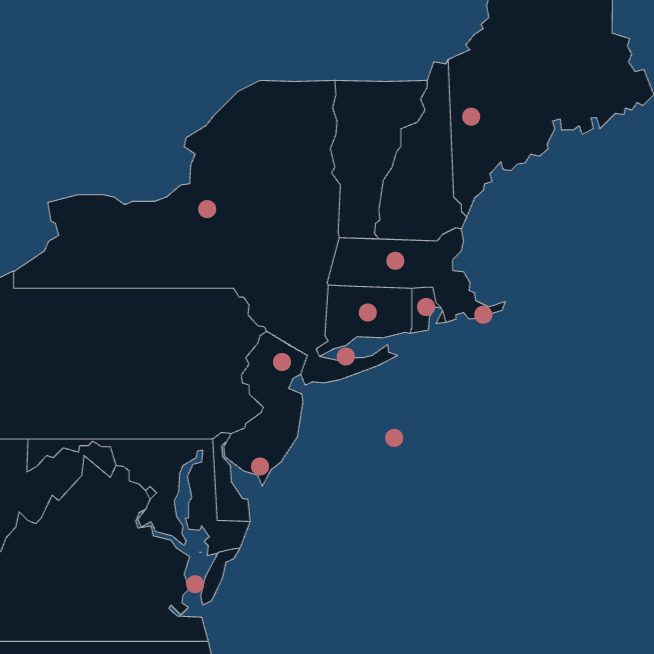
In Massachusetts, the Westfield, Millers, and Deerfield have water and stocking conducive to good daytime mousing. In Connecticut, try the Mianus, Farmington, and Salmon. Maine and New Hampshire streams stocked with large brook trout are likely to be very productive when fished with gurglers, skaters, and mice.

In early spring 2016, before the Connecticut trout season opened, daytime mousing really proved its effectiveness for me on the Salmon River Trout Management Area. For two weeks before the opener—and two more after—I caught many large trout fishing with a variation of Joe Cermele’s Master Splinter. The only real change I made was adding a stinger, which proved helpful for fish that nipped at the tail of the fly instead of taking aggressively. On one particularly good day, after catching several solid rainbows on nymphs, I headed to a run that looked perfect for mouse flies. It was primarily two to three feet deep with a moderate current, and it had some great pockets and seams. Within a few casts of swinging the mouse out of a deep slick into the middle of the run, a big rainbow revealed itself, following the fly out of the slick and swiping at it as it came into the fast water. I stuck with it, putting the mouse as close as I could to that fish’s lie until he noticed it again, followed it downstream, and engaged with it. I slowed the retrieve as the mouse came into the fast water this time. I gave it a couple twitches and he committed. The hefty rainbow trout took the fly every bit as aggressively as a striped bass or smallmouth.
It was a far cry from a wild Alaskan leopard rainbow, and the large brook trout I caught in a different run just a half-hour later was not a wild Labrador brook trout, but catching large trout on big rodents is fun no matter where you are fishing. Even if you can’t make it to those far-flung destinations, you can still experience something similar right here in the Northeast. And, boy, is it fun!
noice brookie chief
Hi,
I’m From Kenya, professional in tying House mouse,mice and shew patterns which I’m interested in tying your orders.
Hooks: mustartd, dai-riki
Price: US$ 2.05 per piece.
Fright is inclusive of freight above 100 pieces per week
I do use weed guard on all my patterns 40- pound monofilament.
You can whats-app me the patterns you would like me and my partners to produce for you.
mail: joyworld4 at gmail dot com
Thankyou
Bwahahaha!@@@@????????