
The young-of-year striped bass index in the Chesapeake Bay has seen some of its lowest numbers on record in recent years, and while many are quick to blame increased fishing pressure, a number of adverse factors contribute to poor recruitment—one of which is invasive blue catfish. Now, state and federal agencies are exploring new ways to minimize the ecological threats associated with an abundance of blue cats.
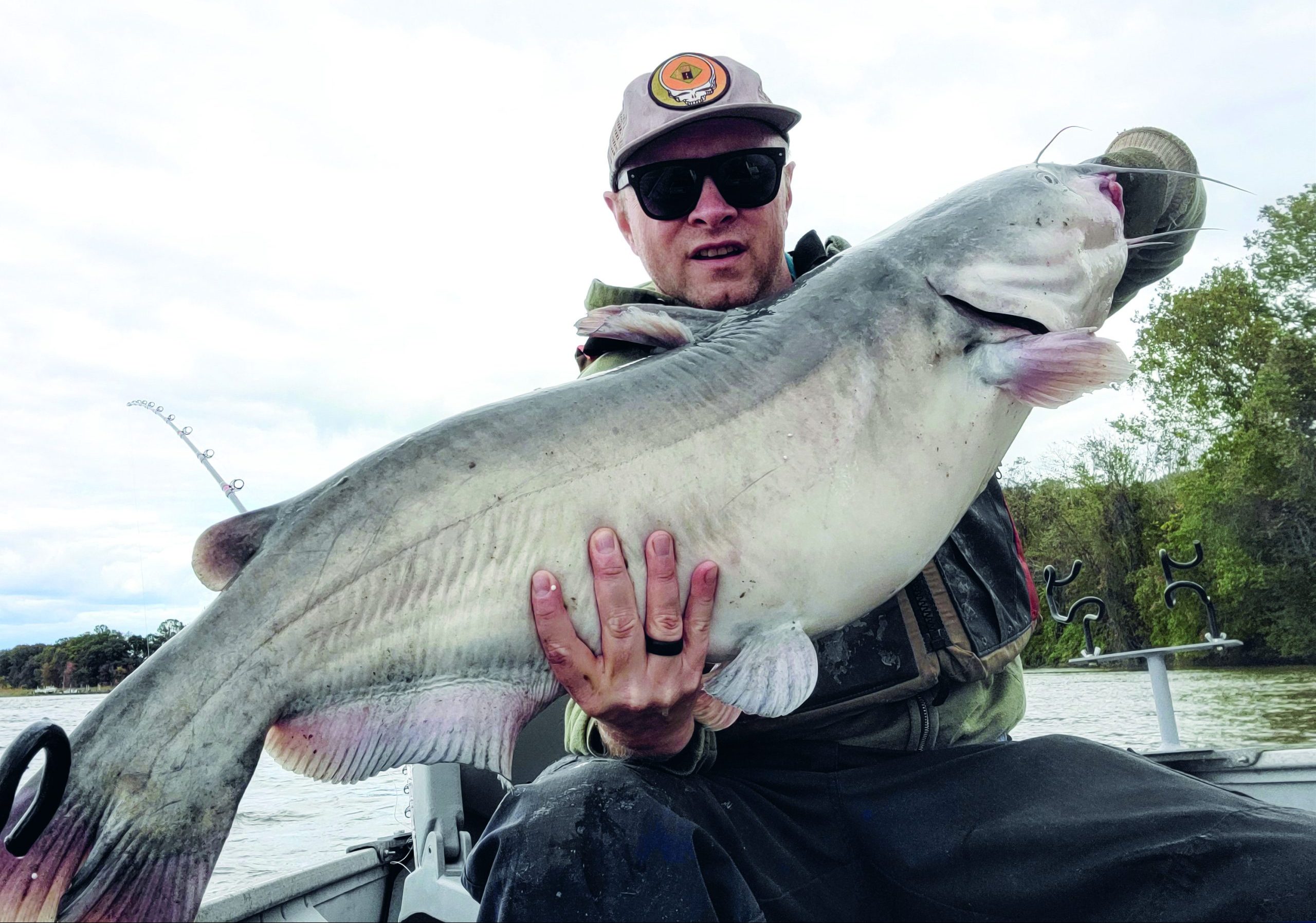
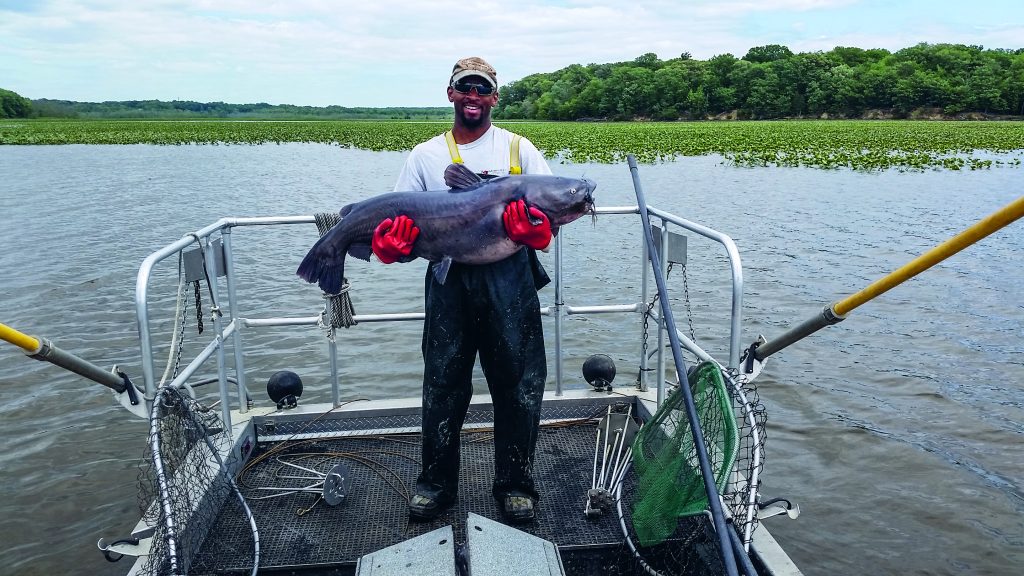
Blue catfish are native to the Mississippi River but were introduced in 1974 to Virginia’s James and Rappahannock rivers by the Virginia Department of Wildlife Resources (DWR) in an effort to establish a recreational trophy fishery. While a recreational fishery has since been established, other fisheries have been negatively affected. These large predators can grow up to 100 pounds and eat 10% of their body weight daily, wreaking havoc on native species like striped bass, menhaden, blue crabs, and oysters.
This struggle has sparked a long debate on how to manage them. There have been efforts to develop a market for blue cats, as they offer a tasty white and flaky meat. However, according to Rep. Sarah Elfreth of Maryland, blue catfish over 25 pounds cannot be processed for human consumption, which leaves tens of millions of fish ranging from 25 to 85 pounds ineligible for market.”Fortunately,” said Elfreth during her address of the U.S. House of Representatives last Monday, “they are completely safe for inclusion in the pet food industry.”
The House of Representatives has since passed the Mitigation Action & Watermen Support (MAWS) Act to fund the use of blue catfish of any size for pet and animal food. This will begin with a two-year pilot program with the National Oceanic and Atmospheric Administration. The bill will provide grants for animal food manufacturers to buy blue catfish directly from commercial fishermen and seafood processors in an attempt to manage their population in the Chesapeake Bay Watershed.
While this bill may not bring the poor young-of-year striped bass index back up to average, it is a step in the right direction. Among anglers, the hope is for the MAWS Act to limit predation of blue catfish on juvenile striped bass, minimize competition for food between the two, and provide a sustainable source of income for the watermen of Chesapeake Bay that directly addresses overpopulation concerns.
READ MORE