
Striped Bass, Sea Bass, and Bluefin Finale
Although colder temperatures and brisk winds have set in, the months of November and December can bring some of New Jersey’s finest saltwater angling opportunities. A myriad of coastal species are heading to their wintering grounds, with some seeking warmer water and others looking for comfortable offshore depths. Tautog, striped bass, sea bass, and bluefin tuna are all in play at different times during the coveted fall run. If you plan to intercept some of these, it’s best to start in the bay during the early part of November; however, by December, the best action is reserved to the ocean.
Daytime temperatures can start in the mid-20s and reach the upper 40s, so dress for the weather, layer up, and be prepared for hours of rod-bending action. Sometimes, the conditions are not ideal for fair-weather fishermen, but angry seas often give way to epic blitzes, so trade in the mahi-colored fishing shirts for some cold-weather gear and get out there.
(Note: On The Water is reader-supported. When you buy through links on our site, we may earn an affiliate commission.)
Bay, Inlet, and Ocean Striper Success
Our estuaries and bays will light up first as back-bay striped bass feed on migrating peanut bunker, spot, and any other baitfish that will fit in their mouths. Once ocean temperatures fall to the sweet spot for stripers, back-bay bites will primarily occur on the incoming tides and shut down on dropping tides. Live spot, mid-sized bunker, clams, eels, and even bloodworms can be excellent live baits for bay-based stripers. A simple rig consisting of a circle hook, sliding weight, and 25-pound fluorocarbon leader accompanied by a 1- to 3-ounce bank sinker is the easiest way to hook up. Anglers drifting a variety of drop-offs, rips, points, and flats can find stripers feeding during flood tides. Stripers prefer fast-moving currents, so pay attention to your drift speed or, from land, the current speed, to put more fish on the line. Early morning and late-afternoon bites tend to produce the best action for anglers casting artificials like swimming plugs, poppers, and twitchbaits. Locations can vary, but ambush points—whether it’s a tidal creek entrance or a wind-blown sod bank—are great places to start. If the topwater bite isn’t happening, subsurface soft plastics such as BKDs, Hogys, or pre-rigged Tsunami Swim Shads will usually entice a few surface-wary bass.

Inlets are also fantastic spots for both boat and shore-based anglers. Early morning and nighttime are highly regarded as prime hours for plugging among Jersey sharpies. It can be very effective, especially when bass have schools of baitfish pinned against the inlet jetties. Darker plugs are favored in low-light conditions, while white or school-bus yellow plugs work better once the sun has risen. If you can hit an early incoming tide with east or northeast winds and cloudy skies, you stand to encounter a fantastic fall bite. By the end of November, the best chance of encountering migrating schools of striped bass is off the beaches by jigging metals, like Ava-style diamond jigs, or Tsunami and Storm swim shads.
Tog Time of Year

Even though tautog season has been open with a one-fish limit since August, mid-November, when anglers are allowed to keep up to five fish over 15 inches, brings increased attention to the fishery. Anyone that fishes tog understands that they love crabs—green, hermit, and especially Jonah crabs (also known as white leggers). White-legger crabs tend to produce more keepers throughout most of the winter tog season. Inlets and rock piles will produce better bites when the water is warmer, and as temperatures drop, so will the depths where tautog can be found.
By December, larger numbers of keeper tautog begin to occupy deeper wreck and reef sites in 80 to 100 feet of water. Recently, they have seen an increase in fishing pressure because this once tough fishery that often required anglers to double anchor has been made available to those with GPS units and trolling motors that can hold position. Tautog grow incredibly slowly, so it’s good practice to release fish that are 8 pounds and above—especially the females. Male tautog have the telltale “white chin” with a two-tone colorization pattern (white bottom).
Tautog can be caught with either rigs or jigs, but anglers should have both setups on the vessel since one technique will produce better than the other on some days. Both techniques require the angler to keep the bait perfectly still and wait through nibbles for the right thump. Anglers who remain focused will outfish others on party boats, charters, and recreational vessels. Jig fishermen should aim to use the lightest jig possible that can still get down to the structure and hold bottom. The beginning of the season offers quick bites, but as the water gets colder, the ability to connect on “scratchier” bites will separate experienced toggers from novice anglers.
December Sea Bassing
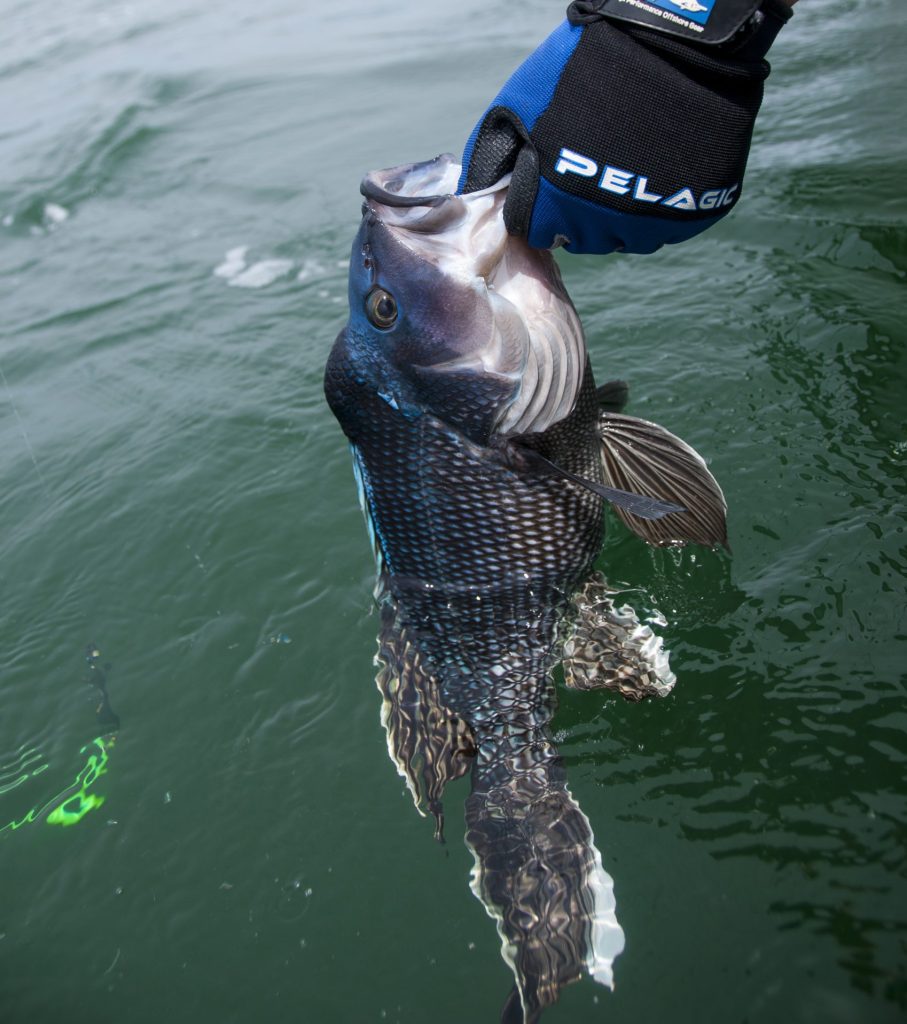
The offshore sea bass season kicks into high gear during the latter stages of late fall when migrating sea bass arrive from New England on our 60- to 80-mile offshore wrecks. These humpheads are big, fat, and tasty, and they winter over on wrecks due to the deep, warmer water. Productive depths can range from 150 to 250 feet, but available space on wrecks and rock piles is limited by the presence of headboats on overnight trips. Most private boats are finished for the season, so if you have the opportunity to jump on an overnight headboat, give it a try; it’s a blast. I recommend bringing two heavy-duty conventional setups that can handle 14 to 22 ounces of lead. Ocean swells can be a factor, but current speed plays a much larger role in sinker weight selection. With the strongest currents occurring at or around the full and new moons, break out the lunar calendar to time a successful sea bass trip. Most of the time, it’s drop-and-reel fishing, with many boats securing limits. Don’t be surprised if some pool-winning cod or blueline tilefish come over the rail.
Last Shot at Bluefin
Our “ghostly” inshore bluefin tuna are beginning to migrate to southern waters and usually stay within 15 miles from shore. In fact, last season, a host of large bluefin were seen and caught as close as a half mile off the beach, where they were feeding on schools of sand eels and bunker. Often, these fish are quickly up and down, only to resurface a half mile away, and they are extremely hard to hook, especially on the surface. Seasons can close overnight, so be sure to carry an NMFS (National Marine Fisheries Service) permit and adhere to the most recent regulations.
Trolling ballyhoo on Joe Shute or Wolfpack heads can be quite effective. Anglers equipped with tuna popping rods and soft plastics, such as NLBN paddle tails and straight tails, can produce adrenaline-pumping hookups and long-lasting fights. Hooking up is challenging enough but, sometimes, the hardest part about ghost hunting is being prepared to battle these fish when they show up.
READ MORE


