
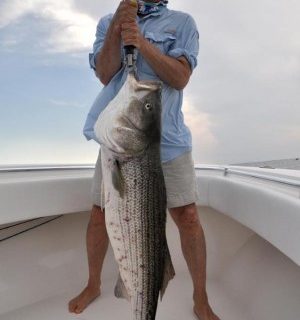
This season, we’ve noticed a large number of striped bass with red sores or lesions, usually on the white part of their undersides. Many readers have also submitted photos and asked questions about these sores and lesions. We have been forwarding this information to Massachusetts state fisheries biologists, who responded with this advisory:

July 18, 2012
MarineFisheries Advisory
Occurrence of skin lesions on striped bass
MarineFisheries has recently received reports of skin lesions on striped bass. The general condition reported has been red spotting visible along the sides of the fish. Lesions such as these can be indicative of the presence of the disease Mycobacteriosis, which is common in southern waters, especially Chesapeake Bay, but has not been documented in Massachusetts waters. The information available at this time indicates a slightly elevated occurrence of skin lesions on striped bass, likely of viral or bacterial origin, but not clearly associated with the disease organism Mycobacterium.
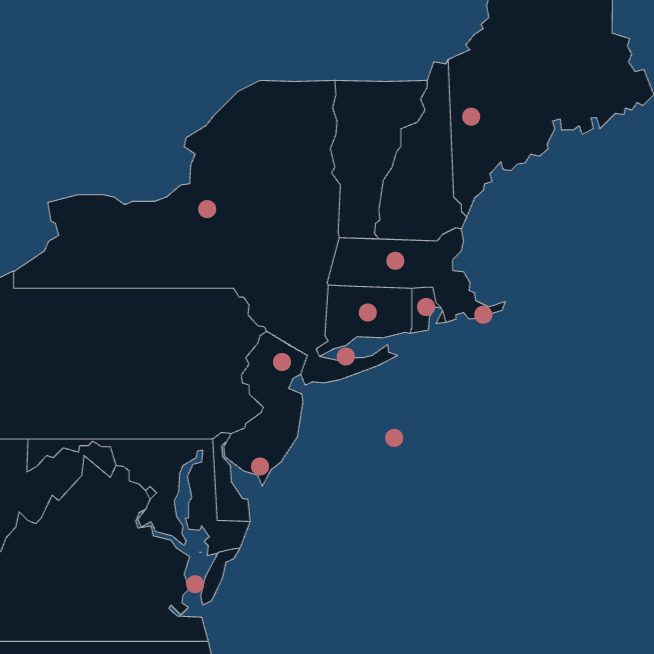
MarineFisheries staff has been collecting information from anglers on the prevalence and geographic distribution of the skin lesions. At present the prevalence appears to be low (<5%) coastwide but higher in fish from southern Massachusetts, primarily Buzzards Bay and the Cape Cod Canal. Internal and external examination of afflicted fish has not indicated that these lesions are associated with Mycobacteriosis. The examination of several dozen randomly collected striped bass showed no signs of abnormalities in their spleens, the hallmark indicator of the disease.
Lesions on the skin of striped bass are a relatively common occurrence and have many causative agents. The elevated prevalence seen in some areas this year may be the result of anomalously high spring and summer water temperatures seen in Massachusetts and more southerly waters. Fish with mild skin lesions are safe to handle and consume.
Some common-sense fish handling guidelines should be followed:
- Wear heavy gloves to avoid puncture wounds from fish spines
- If cuts, scrapes or other open or inflamed areas of your skin are present, cover hands and wrists with an impermeable barrier like a rubber or vinyl glove
- Wash hands thoroughly with an antibacterial soap after handling fish
- Wash off all cutting boards, surfaces, knives and other utensils used to process raw fish with warm soapy water
- Discard fish with large open lesions or darkened patches in the fillets
- Persons who exhibit signs of infection on their hands after handling fish should contact their physician immediately
MarineFisheries will continue to monitor the recreational and commercial harvests for increased prevalence of skin lesions. We encourage fishermen who observe lesions to contact us at marine.fish@state.ma.us and report the geographic location.

- photo credit Greg Myerson
[…] be spreading north. Several anglers have turned up photos from the Northeast, like this one from On The Water Magazine, showing potential evidence of the bacteria. The Massachusetts Department of Marine Fisheries […]
I have noticed numerous amounts of bass affected with this at block island in the past couple weeks.
Stripers in the San Joaquin Delta (California) are having the same open sores…
I caught a bluefish the first week of july at Lucas shoal while fishing flounder that was covered with red sores all over. The bluefish spit the hook at the side of the boat, so I never had to touch it. My fishing buddy works for DNR and said they have been seeing this with the blues.
Interesting. Haven’t heard of any other bluefish with these types of lesions.
Any correlation between explosion of non native seals and marine mammals in the ne area?
Should fish be released that have spots or culled to reduce spread of the malady? Will the bacteria kill the fish infected?
There is no evidence the infection is contagious or lethal – no reason to cull the stripers from the population. There is a good chance they will heal and recover.
Just got back from southwest reef. Caught a 32 with soars a clean 36 and a 50 covered with a rash.
I have been seeing these sores on 90% of bass in “some parts” of Boston Harbor. Yesterday (07/23/12) I fished a different area and only saw one “minor case” out of over a dozen fish. Therefore, I conclude this is prevelant in “groups of fish” that are associating with given areas…..and then they swim!
Someone suggested that sea lice could be aiding the spread of the disease-I have no ideas there other that “it’s possible”.
JC
I’ve heard that mycobacteriosis will eventually be fatal and if that is what we are seeing then we should kill 100% of the infected fish (regardless of size) and we should release 100% of the uneffected fish. This way we will encourage survival of the “resistant individuals” and the surviving stock will become resistant overall…..JC
Jason – there is no evidence yet that these sores are mycobacteriosis or that they are fatal, so no reason to cull these fish out of the population. Hopefully they can heal and recover from this and go on to lead productive lives.
I meant “yesterday, 7/24″….
This morning I caught a good sized (28″) striper off my father-in-laws dock in Avalon, NJ. We cooked and ate it this morning between 5 people. Tonight, after talking to out neighbor, we herd about this desease the Striper are getting. I took pictures this morning, and sure enough our fish had three visible red marks on its side. I figured they were marks from transporting it in a bucket. Now, a little worried. What do I look for, and how long to simpsons take to show?
[…] Good news from the Massachusetts Division of Marine Fisheries, updating the story reported here. […]
Iv caught a few out here in nor cal with these marks In a few of the sloughs. usually only one soar.thought it was from a parasite so they were immediately discarded.
Starting last Week the fall run bass from Fairfield to Darien Connecticut all have red spots on them
Could it be that the waters are polluted with radiation from fukushima nuclear meltdown with is still leaking radiation into the ocean
It could be parasite exiting the fish… In the spring run in CA. You don’t see a lot of the red spot on them but in the summer time in warmer part of the river, you would see a few. Caught a few striper in the spring run too that has worms on the striper back. Red worms type. Skinny and about 3 to 4 inches long. But im not a fish bio so I might not know what I am talking about… But recently I been catching more of the type of disease these striper has on their bone that got stuck and the fish tint to tilt… They seem to have a smelly on them.
We have seen the same red spot in river bass down in Maryland for the last few years some fish with a few spots some infested could it be the runoff from farmers by any chance
Just pulled some fish out of Poppy inlet covered in red spots like this
I got a big bass tonight in CT and looks just like this pic. Should I contact someone?