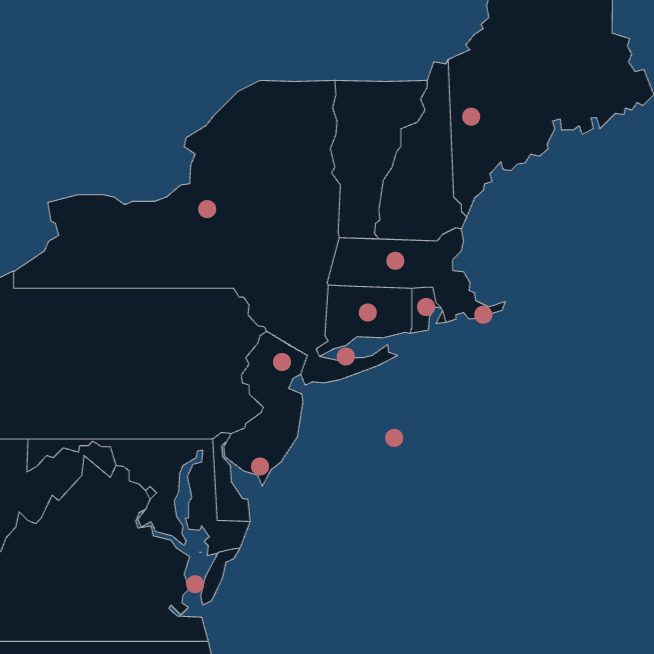


In more than 25 years of surfcasting, I’d never lost a striped bass to a shark until 2022. By then, we’d been seeing a growing number of anglers reporting shark-bitten stripers, especially between Montauk and Cape Cod. In 2023, there were more reports of striper fishermen encountering sharks, and for the second season in a row, I had a hooked striper claimed by a sandbar (brown) shark in the Massachusetts surf.

While this is a relatively recent development in the Northeast, for anglers from North Carolina to Florida, it’s become a major problem, with anglers losing a large percentage of their catch to “the taxman” as they look for fish to keep and eat themselves. This has become enough of an issue that the House of Representatives passed a bill called the SHARKED Act to study the impact of shark depredation on fishermen and fisheries.
This press release from the American Sportfishing Association sums up the bill:
Sportfishing Industry Applauds Passage of SHARKED Act
February 6, 2024

Alexandria, Va. – Yesterday, the House of Representatives passed the Supporting the Health of Aquatic Systems through Research, Knowledge, and Enhanced Dialogue (SHARKED) Act (H.R. 4051). The bipartisan SHARKED Act, introduced by Representatives Rob Wittman (R-VA.), Darren Soto (D-FL.), Garret Graves (R-LA) and Marc Veasey (D-TX), cleared the chamber by unanimous vote.
“Today’s action by the U.S. House of Representatives to unanimously pass the SHARKED Act is a demonstration of the breadth of support for this important bill,” said Mike Leonard, the American Sportfishing Association’s Vice President of Government Affairs. “Saltwater recreational fishing is a huge part of the nation’s economy, contributing $73.8 billion in sales impacts and supporting 487,000 U.S. jobs. We are grateful to Reps. Wittman, Soto, and the other bill sponsors for advancing the SHARKED Act, which will help develop thoughtful and meaningful ways to mitigate this complicated challenge.”
Once passed by the Senate and signed into law by President Biden, the SHARKED Act directs NOAA to create a task force to study shark depredation, which is the consumption of a fishing catch by a shark before it is retrieved by a fisherman.
These interactions, becoming more common for saltwater anglers, can result in damage to or loss of fish, bait and gear. Additionally, there are concerns that increased shark depredation on hooked fish and scavenging of released fish are reducing fish survival, negatively impacting fisheries.
Recognizing the multilayered nature in which federal and state agencies, as well as international treaties, govern the management of shark populations, ASA released a proposed framework in 2022 that incorporates four pillars we hope the task force will use to guide their work: Education, Management, Policy, and Research.
Another monumental waste of taxpayer dollars. Let the sharks eat too. I don’t need a study to tell me I have to reduce my fishing days, or harvest or both to protect the poor sharks.
It’s only a matter of time till we have sharks munching on swimmers ?♀️ on the New England coast
What a waste
Congress should look into the seal population also. They grab the fish too and follow you along the beaches. There are to many around and overly protected now.
Seals next?
What a stupid waste of taxpayer $$$
You guys saying that this is a waste of money are missing the point. The research is bigger than simply “are you having sharks eat your fish??” That’s not just what it’s about. And to say that more research into just how something affects an at-risk fishery is a waste of time or money is insane and dumb. Don’t argue against broadening our knowledge in some topic. It’s not a good look