
Update 06/12/2025 – NOAA Has Adjusted the Bluefin Tuna Limits
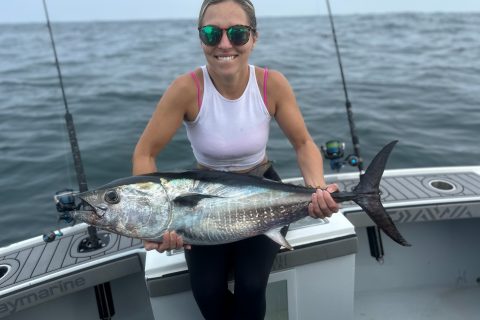
(photo courtesy of Tall Tailz Charters)
Is it worth the time—and the fuel bill—to run offshore to the tuna grounds if the most your crew can bring home is one small bluefin tuna? That’s the question recreational anglers will be asking following NOAA’s announcement, which reduces the allowable bluefin tuna catch for private vessels.
Effective June 3, 2025, private boats targeting Atlantic bluefin tuna will be limited to retaining just one “school” bluefin between 27 and 47 inches. Charter and headboats will be allowed slightly more flexibility, with a limit of two school-sized bluefin in the same size range.
The change, part of NOAA’s adjustment to the 2025 bluefin tuna retention limits, has drawn sharp criticism from anglers and sportfishing organizations who argue that the cuts are out of step with the health of the fishery.

“We’re disappointed in NOAA’s revised 2025 retention limits for the bluefin tuna Angling category because of its associated negative economic impacts,” said Glenn Hughes, president of the American Sportfishing Association (ASA). “These restrictions threaten revenue, jobs, and fishing opportunities for the sportfishing industry — affecting anglers, charter operators, and coastal businesses.”
Reports from the 2024 season paint a picture of a thriving fishery, with abundant bluefin catches across the Northeast. Anglers noted large numbers of sub-50-inch tuna on grounds south of Montauk, Block Island, and Martha’s Vineyard—a boom attributed to improved international management and years of rebuilding efforts.
Ironically, that abundance appears to be the driving factor behind the new restrictions. According to NOAA’s 2024 Large Pelagic Survey (LPS) estimates, recreational anglers exceeded their quota due to what appears to be an unprecedented level of success on the water.
But, the accuracy of those survey results is under scrutiny.
ASA has called for a transparent, formal review of the 2024 LPS data through NOAA’s Highly Migratory Species Advisory Panel, raising concerns that flawed estimates could lead to overly restrictive regulations. That call was echoed in a May 27, 2025 letter to NOAA from the Stellwagen Bank Charter Boat Association (SBCBA), which stated:
“We recommend the recreational angler catch data for 2024 be further reviewed to assess any outliers and avoid a regulatory response that could unnecessarily restrict U.S. fishing opportunity… Given the uncertainty surrounding the angling category catch, we strongly urge NOAA to decertify and initiate a review of the 2024 recreational BFT harvest estimates. This would be a responsible and appropriate approach and preserves the opportunity to present updated harvest estimates.”
If recreational landings did surge due to a genuine increase in bluefin abundance and availability, some argue that the U.S. should be advocating for a quota increase at the International Commission for the Conservation of Atlantic Tunas (ICCAT).
“As the bluefin tuna stock rebuilds, securing additional access is reasonable and necessary to reflect improved stock health and to maximize the fishery’s value to America’s sportfishing economy,” said Hughes.