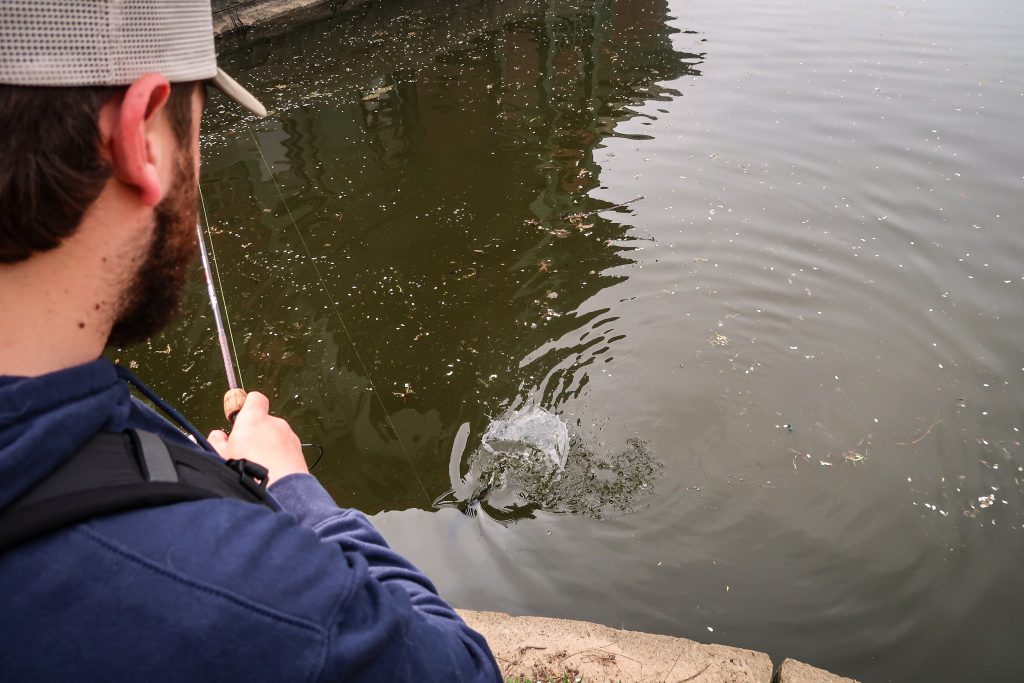
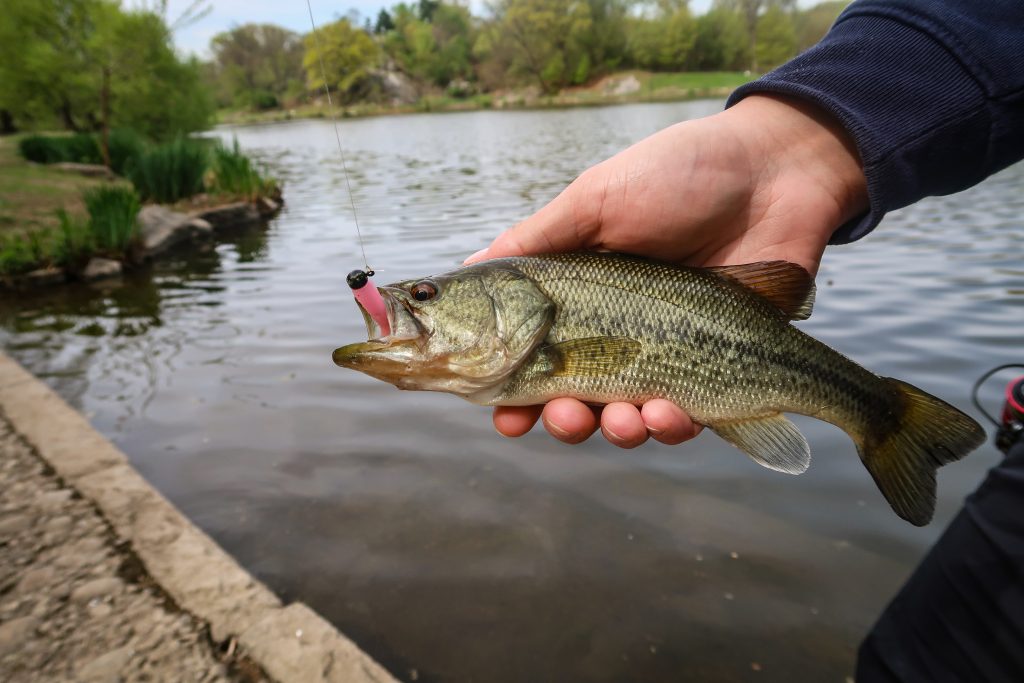
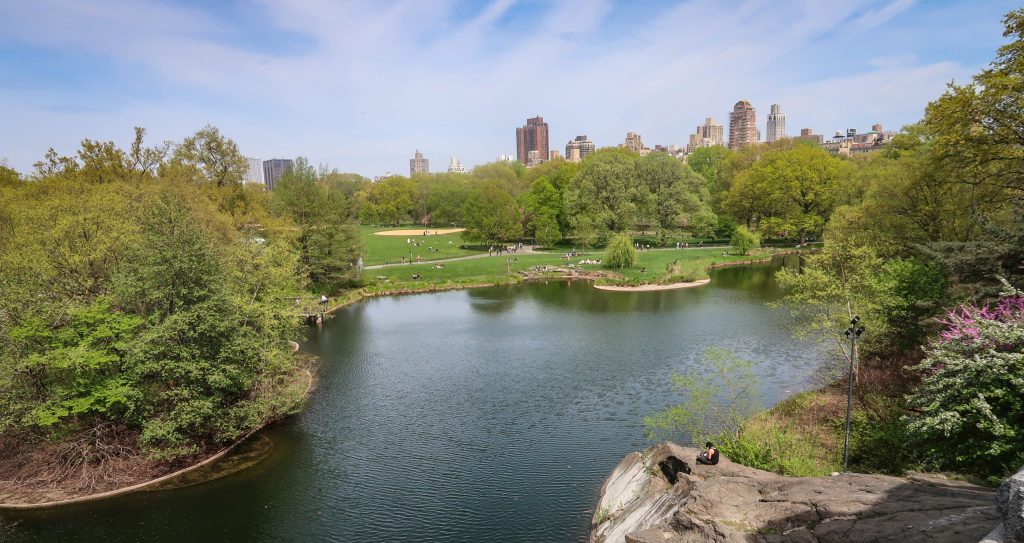
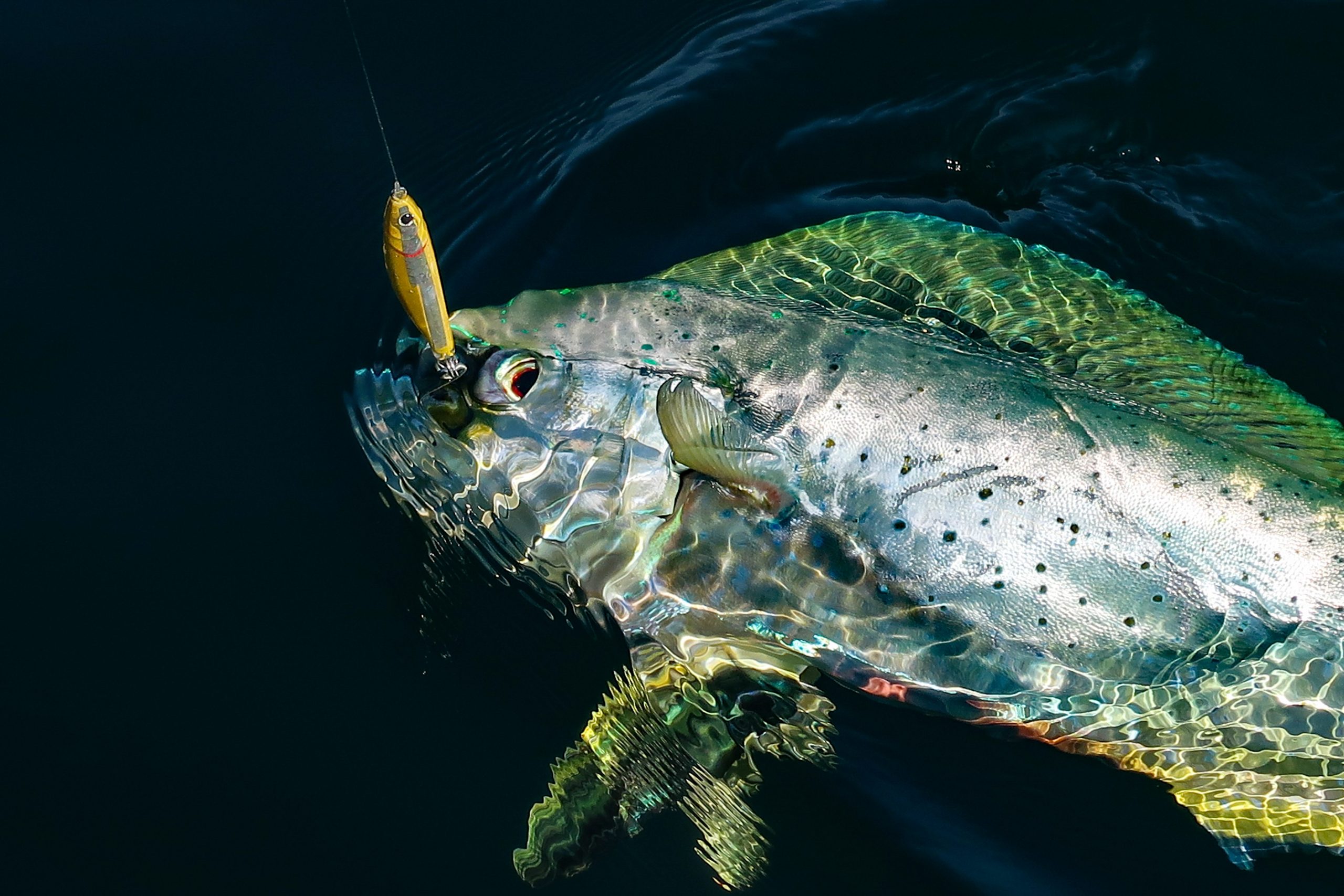
Nick Cancelliere pulled this bass from Harlem Meer after sarcastically pitching his bait into a pile of pond scum and litter.
“Stand clear of the closing doors, please.” Bing Bong.
The packed, uptown-bound 3 train rolled out of Penn Station.Through a herd of morning commuters, I grinned at Nick Cancelliere, with anticipation for the day’s exploratory mission. It had been nearly seven years since my last cast in Central Park, but this late April excursion was Nick’s first venture into Big Apple bass fishing. Our morale was as high as the buildings that loom over the city’s urban ponds because if we timed it correctly, the bucket-mouth bass of Harlem Meer would be tacking on a few extra pounds before setting up to spawn in its shallow corners.
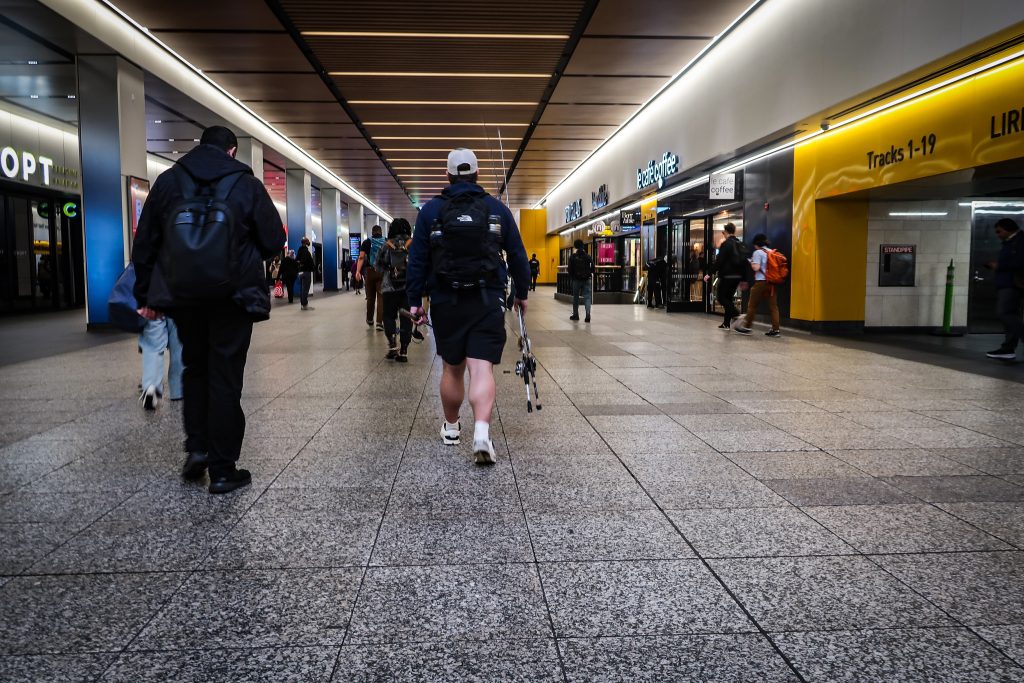
There is plenty of fishable water in Central Park; however, Nick and I—rods in hand and clad in outfits far from the corporate 9-to-5 dress code—still managed a few curious side eyes from passengers on the Long Island Railroad and subway. The inquisitive glances were understandable. Our cohorts were headed for their computers and cubicles while we were just minutes from Zen along the Meer’s crowded banks.
Commuters are more likely to encounter street musicians and performers than anglers in the LIRR terminal of Penn Station.
Like a steel serpent, our train slithered beneath the city streets and hissed to a halt at the Central Park North station. We emerged from underground to a bright and bustling 110th Street and, there, across a river of traffic, the stained-green waters of Harlem Meer welcomed us with a warm reflection of the early spring sun. “We made it, buddy,” I said to Nick. “Let’s get to work.”
Tip: The ride from Penn Station to 110th St. at Harlem Meer is quick, so have your rods rigged and ready to fish. In New York, time is the second most valuable currency.
From MTA to New PB
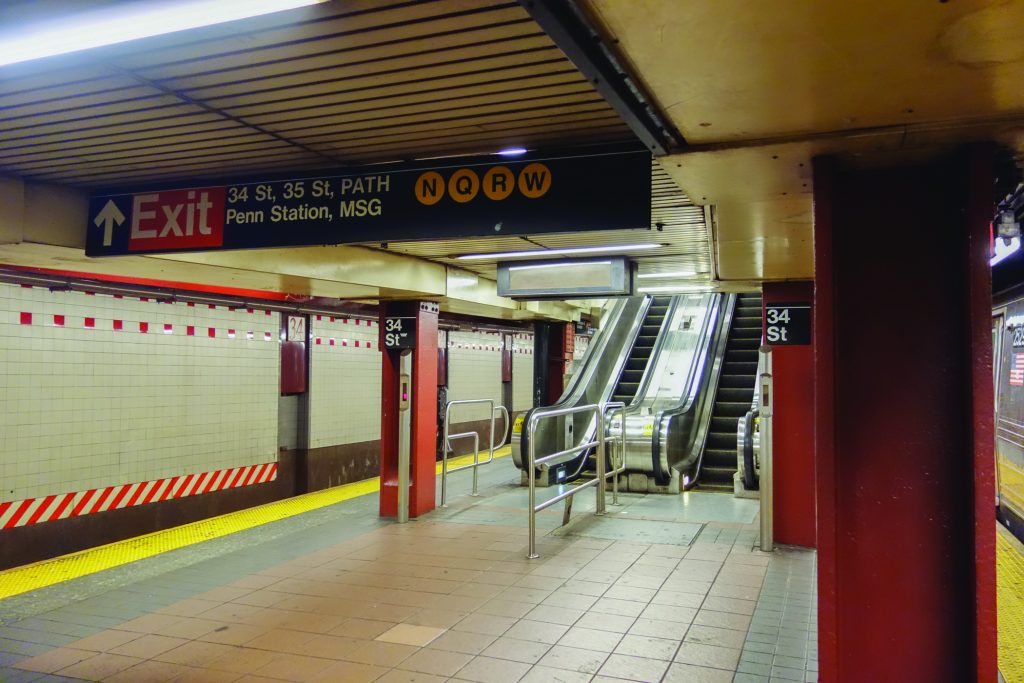
To truly walk in the shoes of an urban bass fisherman, take the subway from Herald Square, Grand Central, or Penn Station to different parts of Central Park.
Penn Station to Harlem Meer
Take an uptown 2 or 3 train to Central Park North (110 St., Malcom X Plaza).
Grand Central Station to Harlem Meer
Take an uptown 6 train to 110th and Lexington Avenue. Then, walk west across Park, Madison and 5th Avenues to reach the Meer.
34th St. Herald Square to The Pond
Make a short walk from Penn Station, also on 34th Street, to Herald Square Station and take an uptown N or W train to 5th Avenue/59th Street stop.
The People of the Park
Of the five boroughs that comprise “the city that never sleeps”, the 14,600-acre island of Manhattan is not the largest, but with an estimated 1.7 million inhabitants who share a mere 23-square-mile plot of land, it is the most densely populated. In today’s world of social media, one can only imagine how challenging it is to find and maintain a secret fishing spot in the concrete jungle, not to mention the hundreds of high-rise windows from which any hawkeyed fisherman within a couple blocks can mooch another’s prized shore location. Still, despite the crowds and lack of privacy, the culture of New York’s urban fishing community is not as cutthroat as you might expect.
Anglers who frequent Harlem Meer—which is in view of high-rise office and apartment buildings—are not the least bit concerned with “spot burning”.
City-slickers are far from the background-blurring bass fishermen of more rural and suburban locales, although their hustle is all the same. Urban bass fishermen recognize how feeble an attempt it would be to safeguard a juicy spot; instead, they welcome the exchange of intel. Recent reports, photos, and tidbits of information are shared in passing or, more likely, on a park bench, with tackle trays wide open and a joint in rotation.
“Yesterday morning, there was a hot Senko bite at the west corner of the Meer; I got a 3.4 and a 5 on the 6-inch watermelon flake … wacky-rigged.”
“Bet, I’ll have to scope that out. Until this week, I was catching all my big fish at dusk on a hollow-bodied rat by Fort Clinton.”
For every 50 friendly interactions in Central Park, there’s one strange or flat-out crazy encounter. Anglers often attract the latter. One moment, you’re chatting with a young father of two who enjoys fishing on weekends. He’s been watching from a nearby bench and is just excited to see if you catch anything before his wife calls to ask how long it takes to push a stroller around the block. Moments later, a disheveled woman rolls up, dismounts a dilapidated scooter, and loudly, repeatedly insists that “fishing is evil.” You cease casting, and she lingers for a moment before flicking her cigarette butt into the pond she’s trying to protect and cruising off. To an outsider, the people of New York can, at times, be very eccentric and brash, but they’re part of what makes Central Park a unique setting for a bass fishery.
The Hunt for Bass
Nick and I split up to scan for signs of life on the north side of the Meer and, in short order, we concluded our search. Small sunfish, black crappie, and more painted turtles than I’d ever seen in one place flanked the Charles A. Dana Discovery Center. Through the murky water, I spotted a large blaze-orange and white koi cruising lazily along the bank before it was spooked by my shadow.
“Let’s start here,” I said to Nick. “Then, we’ll work our way around the southern edge and up toward the island. I’ve had good luck along that far bank.” We plopped down our backpacks, discussed what to throw, and decided it was best to fish with drastically different presentations. Nick tied on a pink Tiny TicklerZ from Z-Man. The 1.75-inch micro plastic, he felt, would get the skunk off sooner than the larger, noisier Chatterbait I had chosen. He was right.
We covered the entire northwestern bank and were ready to move when the 3-inch Megabass Hazedong Shad, which was rigged on my lighter spinning outfit, received a short strike tight to the submerged brick walls of the Discovery Center. The next cast was met by another short strike. Nick, recognizing my frustration, moseyed over and jokingly said, “No, no, no. You’ve got to cast into the trash, not around it.” His soft plastic had barely disappeared into a soup of litter, pond scum, and detritus when his line went tight and a slimy boil appeared 5 feet from the bank. We couldn’t help but laugh at the absurdity of the situation—the collection of trash indeed harbored a bass, and like the Babe Ruth of Harlem Meer, Nick had called his shot. A few moments later, after maneuvering around fallen tree branches, he landed our first largemouth of the day. Passersby stopped and investigated Nick’s catch as I snapped photos of his first-ever bass within the city limits. By Central Park standards, it was a decent fish, but not the jumbo we wanted.
Prior to and during the spawning season, largemouth bass closely relate to rigid shoreline structure, building their beds adjacent to concrete walls and rock piles.
The New York State Department of Environmental Conservation (NYSDEC) indicates that, of the city’s many ponds, the Meer holds the greatest potential for trophy-size largemouth bass. A boat-based electrofishing survey performed by the DEC in 2021 yielded 37 largemouth bass that measured 15 inches or more, along with 78 that were 12 to less than 15 inches, and 102 that were 8 to 12 inches. Nick’s fish was right around the 15-inch mark, the upper echelon of Harlem Meer’s bass population.
A 2021 electrofishing survey performed by the NYSDEC indicates that most of Harlem Meer’s bass measure between 8 and 12 inches long, like this one.
Because the Meer is flat-out dirty, the bass that live there get a bad rap. The pond is inevitably subject to pollution and runoff, and it experiences regular algal blooms of cyanobacteria—which produces toxins harmful to humans and animals—during the summer months. Despite the surroundings and the unfavorable conditions they create, Harlem Meer is a healthy, self-sustaining bass fishery.
The Meer’s bass are true Manhattanites. They are hardy, cautious, suspicious of their surroundings, and aggressive if you get on their nerves. Nick’s finesse-style bait had done just that. The pink plastic triggered a reaction strike from a smaller male that, unbeknownst to us, was already guarding a bed. However, our day was about to get tougher.
Pressure in the Park
Central Park receives between 100,000 and 300,000 visitors daily, depending on the season. Dog walkers, joggers, sightseers, and cyclists vastly outnumber the fishermen, but even 15 anglers plying the same body of water each day puts immense pressure on the park’s finned inhabitants.
The footpath around Harlem Meer affords fishermen easy access. There’s not an inch of the manmade lake’s perimeter that goes uncovered and, due to a lack of natural structure, the bass have few places to hide. As a result, one can assume that the Meer’s largemouth have seen just about every artificial bait in the book. Coupled with the relentless, disruptive noise—such as rumbling subway cars—of the most populous city in the country, constant fishing pressure creates a cocktail of adverse factors that require anglers to apply creative techniques and presentations. When the bass move in shallow to spawn, they become visible to any fishermen along the bank, and the challenge in convincing one to eat increases tenfold. Acute focus on rigging, retrieve speed, cadence, bait size, and profile are imperative to a New York bass fisherman’s success, regardless of time of year.
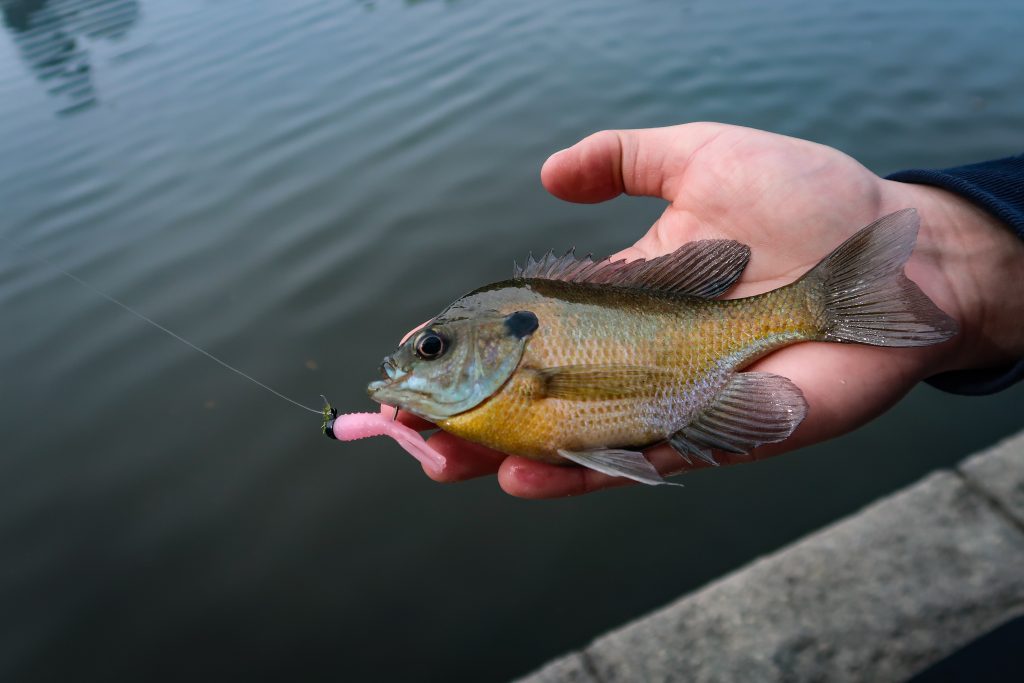
After hooking a few bluegills, crappies, micro bass, and one turtle that (thankfully) dropped the barbless hook, Nick and I headed for the eastern edge of the Meer along 5th Avenue. There, the footpath was set further back from the water’s edge. Native wetland plants like Blue Flag Iris were beginning to blossom, creating a lush wreath of green around the Meer’s marshy southeast bank. It would have been easy to forget we were in New York City had it not been for the droning hum of air traffic and incessant taxi horns.
Native wetland plants bloom along the eastern bank of Harlem Meer each spring, which provides bedding bass with some shelter from passing fishermen.
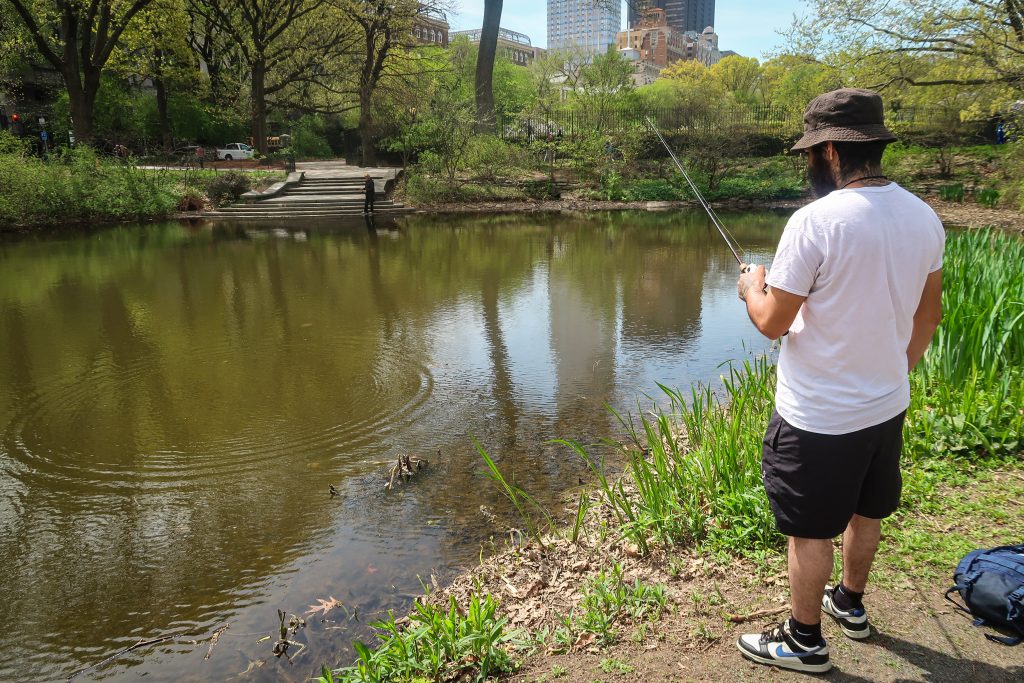
As I tiptoed through the soft grass that was saturated by recent spring rains, a roughly 4-pound bass revealed itself after chasing off a bluegill in defense of its spawning territory. I yelled to Nick, “I’ve got a nice bass on a bed over here.” We tempted it with everything in our arsenal, to no avail, so we pressed on in search of more active fish. Just a few yards from the previous bed, a pair of even bigger bass hugged a small rock pile and warded off another pack of voracious bluegills. Again, they showed no interest in our lures but took issue with any sunny that pressed them. The unfortunate pattern carried us into a narrow cove by the Conservatory Garden, where two other anglers were tossing bobber-and-worm rigs for the panfish Nick and I had deemed a nuisance. Then, just across the way, we noticed a third angler intently pitching a jig toward a submerged branch and decided to chat him up for some intel.
Know Your Regs
Don’t go fishing in Central Park without reviewing their mandatory freshwater fishing regulations.
1. Per the NYSDEC, New York City fishing regulations require anglers to use barbless hooks or hooks with crushed barbs. Note: The use of traps (of any kind) to catch fish is prohibited.
2. The use of non-lead weights and sinkers is required, so dig out those “brand new” 3-year-old tungsten jigs from the bottom of your tackle chest.
3. In the interest of angler safety and preservation of delicate habitat, wading is not permitted in any ponds in Central Park.
4. NYSDEC regulations state that in all 5 boroughs, recreational freshwater fishing is catch-and-release only year-round for all species. That means catching and live-lining sunfish for bass is prohibited.
5. Visiting anglers age 16 and older are required to have an active freshwater fishing license issued by the NYSDEC.
First-Timer Tips:
Watch Your Backcast
Fishermen are not the only ones enjoying Central Park’s recreation areas. Check your surroundings before making a cast—because hooking even a small sunfish is better than hooking a birdwatcher or street musician.
Dispose of Fishing Line Properly
Leave No Trace principles apply here just as they do on a remote woodland pond. When trash cans are always in the immediate vicinity, there’s no excuse to leave discarded line or bait packaging behind.
Don’t Feed the Wildlife
Avoid feeding waterfowl and turtles. Processed human foods like breads and crackers can be harmful to the digestive systems of animals.
Listen to the Locals
Bryan Ruiz fishes the Harlem Meer—along with other NYC bass ponds like Van Cortlandt Lake in the Bronx—religiously from the spring into fall. The rest of the season, he and his group of friends, called the “Pond Bombers,” target striped bass in the churning waters of the East River and beyond. Even though it was late April and the spring run of migratory stripers was underway just a few blocks west in the Hudson River, Ruiz couldn’t turn his attention away from the big green bass of Central Park. He was magnetized by the Meer. With trophy-size largemouth sitting in plain sight, I couldn’t blame him. He shared stories with us of late-night topwater bites at the Meer and even revealed some of his most productive lures.
The footpath around Harlem Meer grants anglers easy access. While Bryan Ruiz pitched baits to a pair of bedding but active bass, a fisherman across the cove casted nightcrawlers beneath a bobber to abundant bluegills.
Prop-style topwaters, like the River2Sea Whopper Plopper, and variations of those disruptive baits that imitate unsuspecting forage—like rats—yield steady results for Ruiz in the warmer months. Wacky-rigged worms, swim jigs, crankbaits, and paddletail swimbaits also account for some of Ruiz’s notable catches throughout the bass-fishing season. I can attest to the penchant that NYC’s largemouth hold for portly soft plastics. Rigged weedless on a belly-weighted wide-gap swimbait hook, a 4-inch Keitech Fat Swing Impact can be retrieved slowly and naturally through (or over) sticky structure like fallen branches, dense weeds, and illegally discarded Citi bikes. Back in 2020, that simple rig yielded me a hefty bass from a grass-choked channel in Prospect Park Lake in Brooklyn. Two years earlier, it had coaxed a long, but skinny largemouth to eat as I crept it low along a shadow line on the southern bank of Harlem Meer. The same paddletail swimbait rigged on a weightless wide-gap swimbait hook and retrieved steadily on the surface can also be used as a stealthy wakebait during low-light hours. When your tackle storage is limited to a backpack, keeping a selection of versatile baits, as Ruiz noted, is an essential practice. It forces anglers to think outside of the box and pack only what is absolutely necessary.
The author with his first ever Central Park bass, caught in Harlem Meer during a hot summer day in 2018.
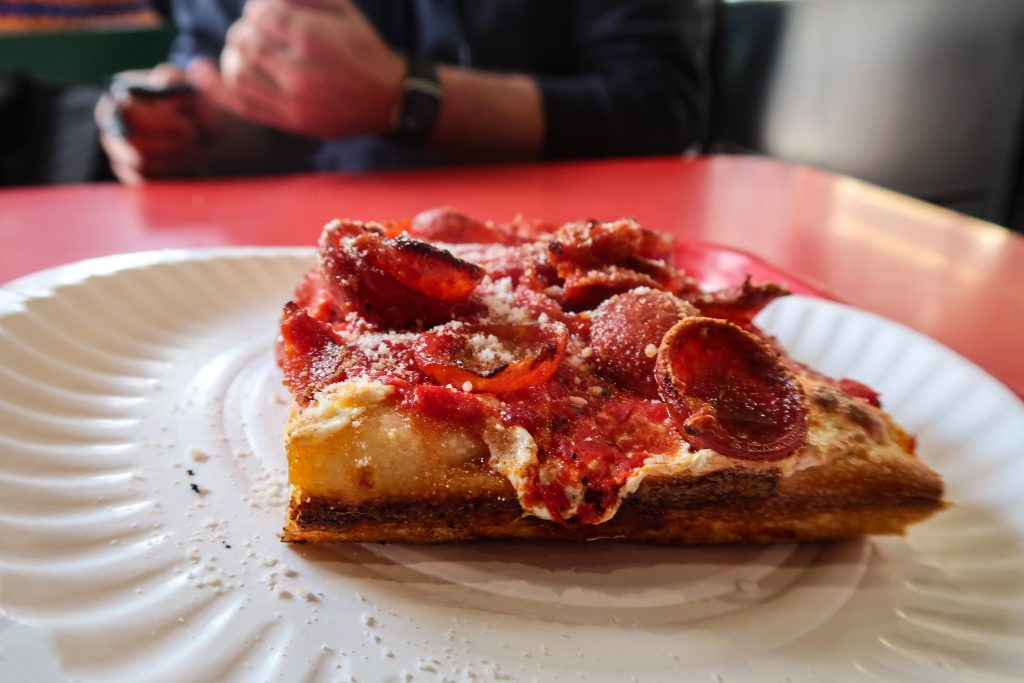
We fished with Bryan along the Meer’s southern bank for about an hour after spotting and spooking two more pairs of bedding bass. As the sun climbed above Harlem’s high rises, the fish had grown more wary and wised up to our presentations. Nick and I thanked Bryan for his insight, dapped him up, and headed to the corner of East 97th and Madison for a slice at Famous Famiglia Pizzeria. Many folks claim that New Haven, Connecticut, is the pizza hub of the Northeast, but I maintain that New York City holds the title. Talk to me when you can walk into a New Haven pizza joint and spend only $2 for a regular slice that averages a 7/10 score on Portnoy’s “One Bite” scale.
When given the choice, always opt for pepperoni cups over a standard pepperoni slice.
Exploring New Territory
Reinvigorated by pepperoni cups and molten cheese, we headed back to the park to explore Turtle Pond, a roughly 2-acre lake at the base of Belvedere Castle. Of the seven bodies of water in Central Park, only four of them hold largemouth bass and are open to fishing. Turtle Pond is said to hold smallmouth bass, but according to the Central Park Conservancy, fishing is strictly prohibited and enforced by Central Park rangers. Nick and I didn’t even need to make a cast to confirm the rumors were true. Just a few feet in front of us, on a concrete bank covered in sand and gravel, a 2-pound smallmouth meandered in the comparatively clear water of Turtle Pond. Not far from there, clusters of yellow perch cruised around craggy outcroppings. The setting was entirely different than that of the Meer; it offered a glimpse into the original landscape of Central Park’s rocky terrain before much of the landscape was leveled and developed in the mid- to late 1800s.
Central Park’s construction was a massive undertaking, but designers Frederick Law Olmsted and Calvert Vaux sought to maintain the area’s history and build upon existing topographic features like The Ramble and The Lake. Soon after construction began in 1858, The Lake—formerly a stream-fed swamp that was dammed as part of Olmsted and Vaux’s Greensward Plan—became the first area to open to the public. Today, it remains one of Central Park’s most historic and popular attractions for birdwatchers, leisure boaters, and recreational fishermen.
Central Park Bass Ponds
The view of Turtle Pond from atop Belvedere Castle—Central Park’s second-highest point. Here, visitors can get a sense of the park’s original landscape, which consisted of rocky hills and swamplands.
In the heart of New York, the 843-acre Central Park and its seven ponds are, like the surrounding city, bustling with life. Anglers can encounter not only largemouth bass, but yellow perch, black crappie, brown bullhead, bluegill, pumpkinseed, green sunfish, various species of carp (and big ones at that), and more painted turtles than you knew existed on the island of Manhattan.
According to a series of catch-rate surveys conducted between 2019 and 2022 by the NYSDEC, which included 10 ponds in different boroughs, Harlem Meer was the top producer of largemouth bass in excess of 15 inches; however, that doesn’t mean you should count out the other ponds.
Harlem Meer
9.98 acres
Average Depth: 5-7 feet
Fish Species: Largemouth bass, black crappie, bluegill, pumpkinseed, green sunfish, brown bullhead, common carp and golden shiner.
The Lake (Loeb Lake)
18 acres
Average Depth: 4-6 feet
Fish Species: Largemouth bass, black crappie, yellow perch, bluegill, pumpkinseed, common carp, brown bullhead, and golden shiner.
The Pond
3.8 acres
Average Depth: Unknown
Fish Species: Largemouth bass, bluegill, golden shiner.
The Pool
1.6 Acres
Average Depth: 2-3 feet
Fish Species: Largemouth bass, bluegill, pumpkinseed, black crappie, brown bullhead, and golden shiner.
Per the Central Park Conservancy’s guidelines, catch-and-release fishing is allowed only in the Meer, The Lake, and The Pond. However, NYSDEC suggests that The Pool on 100th Street is loaded with small, stunted largemouth bass. Turtle Pond also harbors some quality smallmouth bass, although the Conservancy notes that fishing in Turtle Pond, along with Jacqueline Kennedy Onassis Reservoir, is forbidden and strictly enforced.
Despite the many marked trails and pathways, it’s easy to get lost in Central Park’s manufactured yet natural beauty. We had fished Harlem Meer in its entirety, caught a handful of bass and sunfish, explored the banks of Turtle Pond, and left a lot of fishable water uncovered, which gave us more reason to return.
Back on the LIRR, we shared a combined sense of accomplishment and defeat. The few bass we hooked were not of the caliber we anticipated. Our visit was untimely. “It was still a good day, man. The lake and the pond will just have to wait until next time,” I said. “There’s no way I’ll let another seven years pass before our next visit, which will be either well before or long after the late-April spawning season.”
At that moment, as if we were being taunted by the deities of bass fishing, an Instagram message came from Bryan Ruiz. It was a photo of him with a 3-pound bass directly across from the Charles A. Dana Discovery Center, right where we had left him pitching baits to big, pressured, bed-guarding bass. “If commute time wasn’t a factor,” I thought, “it could have been one of us holding that fish.” I’ll admit, at that moment I was jealous, but I embraced the same friendly attitude Bryan met us with, and we congratulated our fellow bank beater on finally convincing a fish to eat.
Bass fishermen—especially those who frequent city ponds—understand that even with meticulous preparation and planning, success is never guaranteed. In fact, for the New York City bass fisherman, the only guarantee is ending the day with touristy photos, a better understanding of the pressure urban largemouth experience, and a bomb slice of pizza.
READ MORE
Fly Fishing for Carp in Boston
From muddy ponds to slow-moving rivers and deep reservoirs, fly fishing for carp in Boston is an accessible challenge for urban anglers.
Mahi Fishing Out of New York City
Sight-fishing for mahi-mahi on light tackle is more than a day-saver for tuna “wishermen”.
Live-Lining for Striped Bass with Lady Liberty
Striper fishing in the shadow of New York City’s most iconic landmarks is a bucket-list experience for any striped bass angler.
Matt Haeffner grew up on Long Island, NY, where he fished on party boats, his kayak, and the South Shore & North Fork beaches for bluefish, striped bass, fluke, and more. With a decade of experience as a kayak instructor, fishing retail specialist, and editor, he is well-versed in the tackle and techniques that apply to the Northeast's fisheries. For 12 months a year, he enjoys surfcasting, wading, and kayak fishing on Cape Cod, MA, and beyond.