
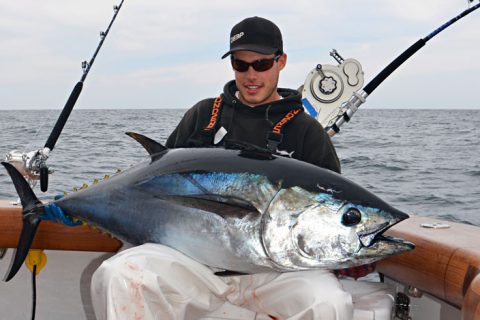
As the harvest moon rises in October, it’s likely that more than a few restless souls will be brimming with anticipation of what’s to come. While the younger crowd might have Halloween on their minds, for those of us afflicted with Thunnus fever, it’s all about the bluefin. October is one of the best months of the year to pursue bluefin tuna, and come first light, we will be chasing fish on the offshore banks and ledges. In October, shut-eye is in short supply.
Earlier in the year, the school tuna season unfolds much like our other prized migratory game fish, the striped bass and bluefish. June brings a strong tuna bite, followed by fickle summer action, and then the bite is reinvigorated in the fall. Just like striped bass and bluefish, these speedy pelagics eat voraciously in the fall to prepare for their southerly migration, but unlike the stripers and blues, the tuna party is just getting started in October – it seems that Mother Nature saves her best for last.
Many Northeastern anglers, myself included, consider bluefin tuna to be the piscatorial version of a world-champion professional sport team; this fish boasts a size, speed and power that rivals any other sport fish in the world. And thanks to modern equipment and techniques, you don’t need a professional athlete’s salary to chase these fish. All you need to do is gain some knowledge of their habits, target their feeding grounds, and outfit yourself with gear that cuts the mustard.
Setting Sail
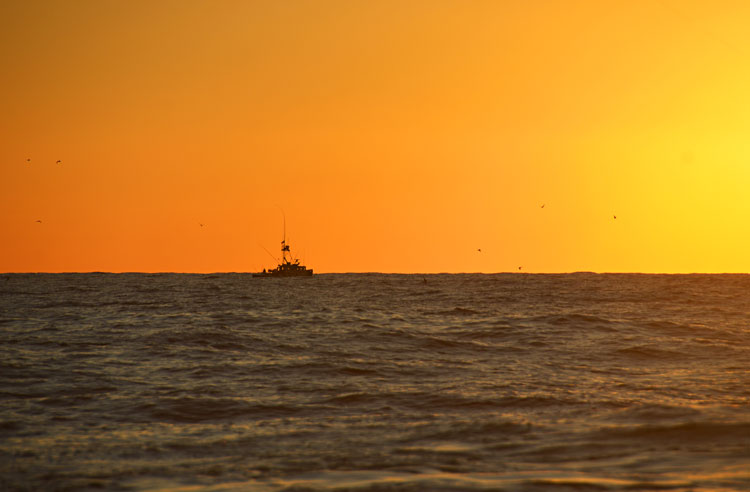
First thing’s first when tuna fishing: Resist hitting the snooze button, and make sure you’re out on the tuna grounds by first light. The transition between darkness and light is ideal for tuna fishing, and I cannot emphasize enough how important it is to be out there from false dawn to just past dawn. I’m not saying that tuna cannot be taken in the middle of the day – they can, and plenty are – but your chances are exponentially better before the big sun hits the sky. Tuna spend the twilight hours chasing squid, and as dawn approaches, they move to deep-water contour lines and forage-rich shelves. If you’re searching for tuna in 120- and 180-foot depths, you have it just about right.
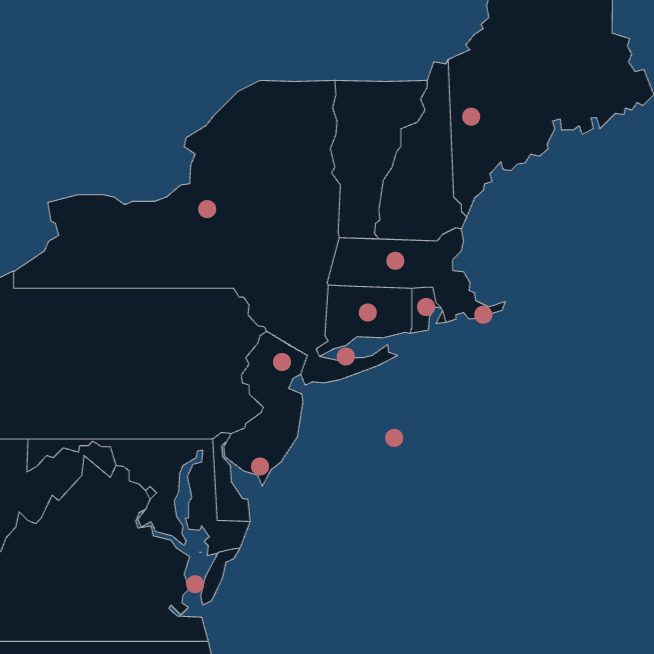
The two principal tuna territories off our coast are Jeffreys Ledge and Stellwagen Bank, the latter of which generally gets the nod due to its abundance of sand eels. The odds can easily shift toward Jeffreys if a mass of baitfish livens it up, however. Bait and tackle shops generally have their finger on the pulse of tuna comings and goings, so they’re a great first step when deciding where to go. These guys do all the homework for you, and they will steer you in the right direction with regard to tackle, methods and location.

You can fish effectively by either trolling or casting, and you can even try “dead-sticking,” which entails casting out a lure, letting it freefall, and sticking the rod butt in a rod holder. Dead-sticking can be an unexpected trip-saver when you’re Butterfly jigging – but more on that later. Base your decision on whether to troll or cast by observing the behavior of the fish. If the tuna are balled up on bait, you should cast, and if they are roaming and spread out, it’s time to go for a troll.
If you are an established bass/bluefish blitz chaser but have no experience with tuna, then I suggest you forget everything you know about chasing fish. While creeping up to avoid spooking the school is the preferred strategy for bluefish/bass blitzes, you are afforded no such luxury with these speedsters. Busting bluefin can be 100 yards away in the blink of an eye, so you really have to gun it and pounce on any opportunity to get your casts in.
Oftentimes, the tuna that you see busting on the surface are just the tip of the iceberg; to get an indication where the rest of the school is, look for subtle signs, such as a hovering shearwater just ahead of or behind the porpoising tuna. That way, you can intercept the leading edge of the school before the main body, or you might have the luxury to just sit and wait for them to cruise through.
A set of binoculars is an essential part of the game, and if you develop an educated eye, you’ll eventually be able to determine where the fish are headed by focusing on which direction they are pointing. All bets are off, however, when a school of tuna is gorging on a big school of bunched up bait. When tuna appear to be gunning from all directions toward a focal point, it’ll behoove you to motor to the edge of the school and fire away.
As soon as you leave the dock, be on the lookout for tuna, especially when peanut bunker are plentiful; these prized baitfish will often draw the tuna closer to shore. Peanuts aside, this month the bluefin will be binging on a host of additional forage such as sand eels, sea herring, mackerel, northern halfbeaks, krill and squid. Pay attention to the type of bait the fish are feeding on, as it will dictate the choice of lures you should have on hand.
Soft-Plastic Baits
Stellwagen Bank often hosts a huge volume of sand eels, and when tuna are preying on these tiny forage offerings, 8- to 10-inch soft-plastic stickbaits such as Slug-Gos and RonZs are the way to go, especially in lighter colors such as white, pearl and Arkansas shiner. Rig your Slug-Go with an Owner bullet-type jighead, and choose the heavy-duty 1 ½-ounce version with the 3X-strong, size 7/0 hook. Pre-rigged RonZ tuna baits are already equipped with industrial-gauge hooks on their jigheads and are capable of handing the strain of a tuna.

When casting soft plastics, your retrieve should be quick-paced. Let your bait sink to the bottom on the initial drop, and then impart it with a series of twitches as you crank the bait back up to the boat. Fast-retrieve ratio reels have an advantage, as the tuna seem to get excited when a rapidly-moving lure appears to escape.
When trolling soft plastics, keep your trolling speed at approximately 3 ½ knots. A non-weighted Owner Ballyhoo hook is perfect for the troll, and you should be using braided line with a 10-foot fluorocarbon leader. According to Captain Nat Moody of First Light Anglers in Rowley, Massachusetts, you want to “tie to clear the tail,” meaning that your leader should be long enough to prevent the braid from rubbing against the hooked tuna’s sharp caudal peduncle fins. This will also come in handy in case the tuna beats a retreat into the school and comes in close contact with other fish. Fluorocarbon withstands significantly more chaffing than the best of braids, so you want a long leader.
Topwater Time
For much of the season, tuna are perfectly content to sip sand eels on Stellwagen, but when they start crashing pods of larger baitfish and driving them to the surface, the game changes from soft baits to topwaters. Watching a tuna crash a surface plug offers thrills few other situations can rival, but it’s important that your offering is up to the task. Some proven plugs have the mettle to handle the impact of a tuna, and others don’t. The Yo-Zuri Hydro Tiger, Hydro Popper and Hydro Pencil are all tuna-worthy right out of the package, no modifications necessary.

One common mistake anglers make when retrieving on top is retrieving too fast. This may seem counterintuitive, considering how fast tuna can move, but I have found that a retrieve rate somewhere between a bluefish (frantic) and a striper (lumbering) is just about right. When using poppers, I employ a rhythm with four pops followed by a brief pause. When using pencils, I “walk the dog” back to the boat.
Plugging Away
When northern halfbeaks come to town, large swimming plugs get the edge. Northern halfbeaks, a close cousin of the ballyhoo, are not lethargic baitfish and will often take to the air when pursued by bluefin. Tuna delight in this species, often catapulting completely out of the water in pursuit of them. In this situation, your go-to swimmer is a 9-inch Al Gag’s olive Mambo Minnow. I’m not sure if it’s the color, size or action (or maybe a combination of all three), but this swimmer is deadly on tuna when halfbeaks are present.
When trolling a swimmer, keep your speed at about 4 knots and position your offering about 50 feet astern. At times, it works well to troll both the Slug-Go and the Mambo Minnow, with the swimmer positioned just below the soft-plastic bait in the wash. Always have your topwater plugs at the ready because they too can be deadly when halfbeaks are on the menu.
Butterfly Jigs
Butterfly jigging, or speed-jigging, has been practiced in Japan for years, and even though it was imported by Shimano around the year 2000, it didn’t really catch on with East Coast tuna anglers until recently. The timing couldn’t have been better; for some reason, the topwater bite in 2007 was off for much of the season. For anglers who have figured out Butterfly jigging, a whole new world of opportunity has opened up.
Dropping diamond jigs and other bits of metal in front of tuna is certainly nothing new, but the manner in which the Butterfly jig is used and the action it achieves is revolutionary. According to Shimano’s Jordan Paulio, “The Butterfly jigs are weighted disproportionately in the tail section, which causes the jig to plane out horizontally under slack line.” In other words, in the hands of an educated angler, Butterfly-style jigs can dance like a marionette on the strings of a puppet master. This type of jigging is perfect when tuna are targeting bait at mid-depth and can’t be coaxed to the surface, and they will often cajole fish into biting when they are acting passively. Also, because the hooks are tied directly to the line, they boast a higher landing rate.

The standard technique is to drop the jig down to depths where fish are marked, crank the reel a couple of times, give the rod a slight snap, and then briefly pause while the jig “flutters” horizontally. There is nothing complicated about working the jig, and Captain Pete Yukins taught me a slightly different method that is a cinch to learn and incredibly effective. Because these jigs plummet rapidly to the bottom and a fast-retrieve reel can crank it back up in record time, Pete simply drops the jig to the sea bed and then cranks it up rapidly with intermittent twitches of the rod tip. Pete never allows slack in the line, and the tuna love this technique. In fact, on our very first outing we went four for four in about 45 minutes, with the last fish being a tanker with fins that we never could quite control.
Squid Bars

Even though I tend toward minimalism when targeting tuna, I have to admit that there are times when a squid bar is the best way to bust the pelagics, especially in the wee hours of the morning. These high-profile, brightly-colored plastic squids are unrivaled in their ability to attract tuna from near and far. There are a number of spreader bars on the market and available custom-made from tackle shops. Floating squid bars, like those made by RockOn, are a great option for small boat owners who lack outriggers. The RockOn rigs are designed to float, and as a result, they can be attached to a sturdy rod and reel without any additional modifications. There’s no need to have riggers to prevent tangles, and you don’t have to worry about sharp turns causing an impossible tangle of multiple rigs.
Rich Burgess, co-proprietor of RockOn Products, gave me one key tip for trolling with these rigs: Make repeated passes over marked tuna. If you spot fish that don’t seem interested in your offering, don’t be discouraged. Squid bars can provoke tuna into striking after multiple passes. When using squid bars, just remember that you’ll need at least a 50-series conventional setup with 80-pound-test braided line and a top shot of monofilament as a shock leader.
Gearing Up
Having the right gear is essential in the school tuna game, and as I mentioned before, you don’t need a second mortgage to afford this stuff. Tuna outfits begin and end with braided line, which is ideal for its micro-diameter and no-stretch properties. Power Pro has been the standard for a while, and you should spool up with a minimum of 50-pound test, though depending on the size-class of fish, you may have to upgrade to 65.
An alternative to Power Pro is Daiwa Samurai braided line. Although more expensive, the 55-pound-test line is slicker and features a diameter equivalent to 10-pound-test monofilament, making it the thinnest line I know. And as I mentioned earlier, you should top it all off with 10 feet of 55-pound-test fluorocarbon. The crew at First Light Anglers showed me how to tie a “Slim Beauty” knot, and after trying it out, I will never switch back to another braid/leader knot again.

Spinning reel choices range from the affordable and adequate Shimano Baitrunner series to the princely and expensive Shimano Stella. A nice alternative is the Saragosa, which Shimano designed specifically for braided lines and tuna. Combine this with a 7-foot Shimano Tallus Kingfish rod, and you have one sweet tuna spinning setup. Other manufacturers also market quality reels with the guts to handle tuna stress, such as the Daiwa Saltiga and Quantum Cabo.
While spinning reels are preferred when casting to tuna, many anglers stick to conventionals when it’s time to jig. Once again, suitable gear doesn’t have to break the bank. The Shimano Torium 20 and 30 and Tyrnos 12 and 16 are all tuna-grade and very affordable. The Trinidad will set you back more bucks, but the narrow models are better suited to quickly packing line on the reel, thereby reducing slack and allowing better jig control. When combined with a Trevala or Trevala F series rod, you have a high-quality tandem that costs less than many hardcore surfcasting outfits.
Battle’s On
If you’ve never felt a tuna strike your lure before, you might be a tad disappointed; these fish don’t rip the rod from your hands on the initial strike as you might expect. Instead, “they just sort of take it,” as my friend Captain Charlie Lemieux once said. I suppose that if you’re a fish capable of 50-mph speeds, there’s not much chance of your prey escaping, and you don’t feel the need to slam the quarry. Once the tuna realizes it’s been hooked, however, the easy-going’s over, so be prepared for an epic battle.
One of the quickest ways to lose a tuna is to set the hook too early. It is imperative that you wait until you feel the weight of the fish before you make contact. This is easier said than done when a tuna is boiling on your lure and adrenaline is pumping through your veins, but if you hold off on the hookset until you actually feel the fish, your hook-up ratio will definitely improve.
The harvest moon will not be the only thing exerting a powerful pull this October. Some of the best bluefin tuna fishing will be taking place just outside a port near you. Familiarize yourself with the basics of the game, and you’ll be well-equipped to tussle with these fantastic sport fish. Don’t miss a minute of it!
Thanks for all the info. I’ve never fished for TUNA before. 2014 was only my second year to fish beyond the bays, I went out to Jeffreys Ledge a few times. I don’t catch much but why such restrictions on the recreational fisherman ? Very lucky if I can get a legal size fish but most of the releases are taken by seagulls. I’ve sent an E-Mail to NOAA asking what I need (permit) if I did land a tuna and wanted to sell it.
MAMBO MINNOW??? I have a had a striper break one in half
Mambo minnow???lol they are definently on the light side of things as I as well have had fish just ove 30 pounds tear the thru wire rite off the back after breaking the belly hook clean off the body, all I can say is if you do hook a missile with one you might,wanna back your,drag off a bit or,you’ll be,a sad angler with the story of the one that got away,even for cow bass I beef up the hooks and split rings and the plug just doesn’t seem to handle the pressure
Mambo minnow???lol they are definently on the light side of things as I as well have had fish just ove 30 pounds tear the thru wire rite off the back after breaking the belly hook clean off the body, all I can say is if you do hook a missile with one you might,wanna back your,drag off a bit or,you’ll be,a sad angler with the story of the one that got away