

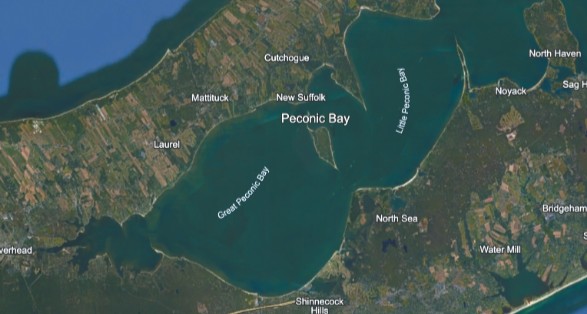
Peconic Bay is a network of shallow, interconnected bays, coves, and tidal rivers, including Great and Little Peconic bays, Shelter Island Sound, and Flanders Bay that open eastward toward Gardiner’s Bay and the Atlantic.
The bay is characterized by wide flats, gently sloping bottoms, and scattered deeper channels carved by tidal flow. Extensive eelgrass beds and soft-bottom flats dominate the interior, creating a fertile estuary where warming spring water and steady tidal exchange make it a natural staging area for migrating striped bass.
The Bait
Alewives & Bunker
As migratory fish slide east on Long Island’s south shore, Peconic Bay becomes a playground for fishermen living on the forks, like Captain Craig Cantelmo. He begins to search for fresh arrivals as early as the last moon in March. “We have two runs of big fish in the spring, and the first one is fueled by alewives, which show up in late March or the first week in April,” he said. Those bass, he believes, may forego spawning and run right up the coast.
“The second wave of migratory fish is when the bite really turns on. They are post-spawn fish that have followed schools of bunker through the locks in Shinnecock Canal and up into the Peconic Bay system.” Cantelmo said the bunker filter around mid-April, but the conditions need to be right, or they will not even enter the inlet. “When the weather is calm and the seas are settled, you can see them pouring in through Shinnecock,” Cantelmo said. “If the east end is hit with an untimely storm, they’ll blow right by us and continue swimming north.”
During an average spring, with no major weather events, he sees pods of migratory bunker in the bay with active fish on them by April 14. However, there are years when the bunker never leave, so the following spring, the bite may begin even earlier. They tend to stick around only if late fall and winter water temperatures are on the mild side. “Last year,” he said, “bunker vacated the bay. But to find them again come spring, all you’ve got to do is look for the ospreys.”

This April wave of bunker-fed bass is not made up of schoolies—they are over-slot fish and bigger. “I find my first migrators staged around basins and coves where fresh water is flowing in,” said Cantelmo. “That’s where the bunker prefer to hang. They like feeder creeks that empty into areas where the water is no more than 6 to 8 feet deep, and there is usually a gradual slope up to a shallow shoreline, which makes them feel comfortable.” Freshwater influence and rising temperatures are the driving forces of plankton blooms, and wherever those occur, Cantelmo insists, bunker will be there.
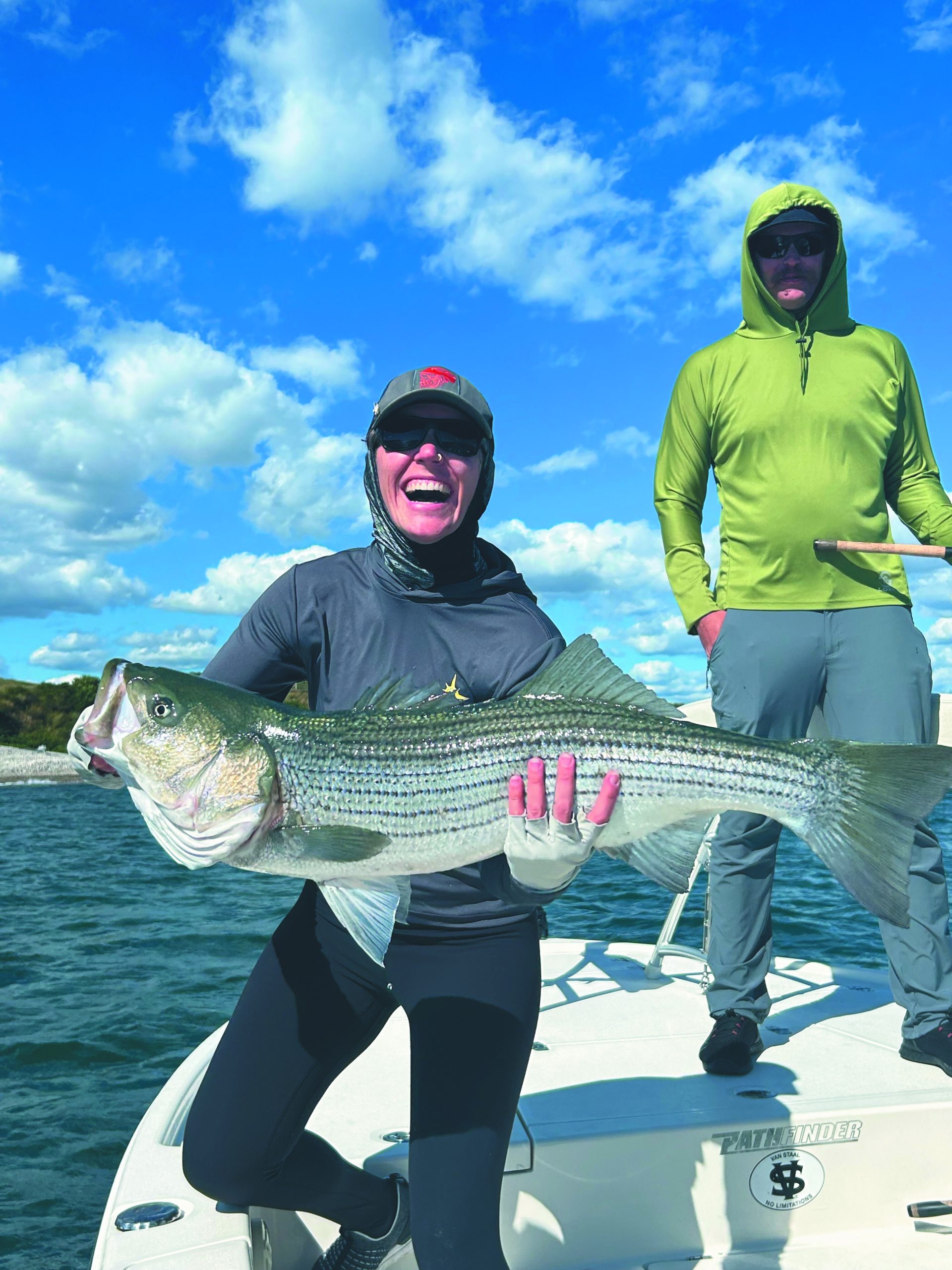
mostly over-slot fish, with a few bruisers in the mix.
Squid Season
Sandwiched between the Peconic’s early run of alewives and the mid-April bunker buffet is the arrival of squid which, in addition to striped bass, attracts a diverse mix of predatory gamefish as the water warms. “If I spot any sea robins, I know the squid are here,” Cantelmo said. By the end of the month, fluke, bluefish, tiderunner weakfish and eventually, porgy, inundate the bay and stick around until the squid are either decimated or have moved on in search of more comfortable conditions.
“Bluefish gorge on squid in late April, and if more bunker don’t immediately follow the initial push, the blues will continue north,” he added. “Guys who start fishing on May 1 tend to miss those first opportunities for quality bass and big blues that came in around April’s new and full moons.” But they aren’t too late for another major springtime event that is unique to greater Peconic Bay.
Mantis Mayhem
“Most years, by May 1, midday water temperatures are about 60 degrees, and it’s only partially due to the bay’s shallow, muddy bottom. Our bay water heats rapidly because the Shinnecock Canal locks allow the ebb tide to flow out but prevent cooler, incoming ocean water from flowing in from the south.” In late May, when water temperatures are hovering near 70 degrees, mantis shrimp emerge from the mud to molt and the stripers, along with Cantelmo, take notice.
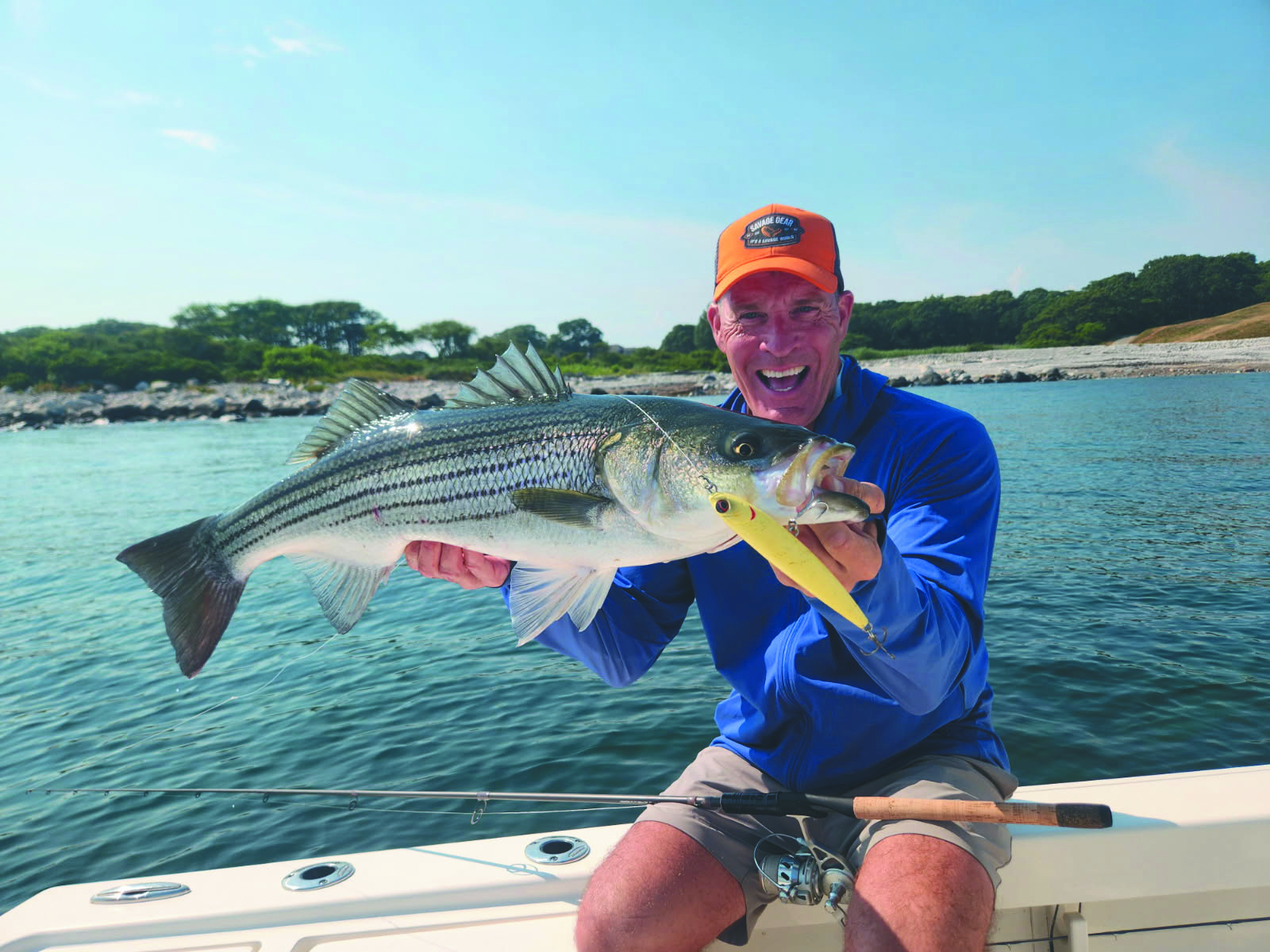
stripers that are feeding on molting mantis shrimp.
“Mantis shrimp are one of, if not the most abundant crustaceans in Peconic Bay and striped bass love them.” The molting period is very dependent on water temperature, so it can happen any time between mid-May and the first week of June. “They drive a lot of my spring striper action, but nobody else seems to key in on them,” he said, admitting that the under-the-radar molting event is easy to miss.
Big stripers are selective, lazy eaters. Even beneath a ceiling of adult bunker, if the bottom is paved with mantis shrimp, they’re more likely to gobble up the low-hanging fruit. “In the past (when I kept fish), I’d find these coves flooded with bunker and bass, and the bass were stuffed with 8-inch-plus mantis shrimp,” Cantelmo continued. “The shrimp are far more vulnerable over shallow, gravel bottom, which is what they prefer after leaving the mud. It’s an easy meal for the bass.”
Sight Fish or Bust
When clean-water conditions and low wind line up with a mantis shrimp molt, Cantelmo will set up to sight fish stripers in the shallows—his favorite approach regardless of the bass’ forage. Surprisingly, he finds that nothing works better than a large, bone-colored spook like the Doc or Lil’ Doc because the shells of newly molted shrimp are a much brighter shade than the ones they’ve just shed. “When mantis shrimp are actively molting,” which, Cantelmo said, occurs around the moons, “they come up to the surface to wriggle free of their shells, and I can spot fish rolling on them.” He then mimics their struggled motions with the lazy, side-to-side walking action of the spook. Poppers, he noted, are overkill. It’s the subtle slide of a walk-the-dog topwater lure that keeps the fish interested. If he’s late to the party, Cantelmo ventures further into the shallows in search of stripers that are rooting around on the bottom for freshly molted shrimp.

in mid-June. Nowadays, Cantelmo insists the best fishing
occurs from late May to early June.
Throughout the spring, his technique doesn’t change much—even when the stripers’ forage, and the average size class of fish, do. “Everything happens much earlier now. The biggest fish still arrive first—last year I caught two over forty pounds in three feet of water before April 21— but now, our spring-run striper action peaks in late May or the first week of June.”
Historically, mid-June was the prime window in Peconic Bay when it came to abundance and variety in average size. “These days, the bay is too warm by then and algae blooms shut down a lot of good fishing,” Cantelmo said. “Come mid-June, the further east you go, away from the bay’s freshwater sources, the better off you are.”
From March through May, when the bay water is clearest, you can find Cantelmo sight-casting flies, plugs, and plastics to stripers along shallow banks and expansive, ever-changing sand flats. “I like to pick out individual fish that are either feeding, digesting, or traversing the flats. They’re aggressive and accessible, and all you need to pursue them is a good pair of sunglasses to cut the glare.”