

When John Muir, widely recognized as the Father of our National Parks, took President Teddy Roosevelt camping in Yosemite Valley in 1903, the modern conservation movement was born. Surrounded by the giant Sequoia trees of the Mariposa Grove, Muir and Roosevelt talked into the night around the campfire, and Roosevelt’s roots for conserving America’s wilderness took hold.
During his time in office, Roosevelt established federal protection for almost 230 million acres of land, including 150 national forests, 51 federal bird reservations, 5 national parks, and 18 national monuments. We owe a debt of gratitude to Roosevelt and Muir not only for preserving much of our natural resources, but more importantly for allowing Americans to enjoy them every day. From hiking and camping to hunting and fishing, outdoorsmen have long benefited from Muir’s vision and Roosevelt’s actions.
One of Roosevelt’s most powerful tools for protecting our natural resources was The Antiquities Act, which he signed into law on June 8, 1906. It gives the President of the United States the authority to, by presidential proclamation, create national monuments from public lands to protect significant natural, cultural or scientific features. Since its passage, the Act has been used over 100 times, often by Presidents on their way out of office looking to leave their own “green footprint” on our country’s landscape.
In 2009, President George W. Bush used The Antiquities Act to set aside over 195,000 square miles of marine habitat in the South Pacific. Fortunately for anglers, President Bush’s proclamations did not limit access for recreational fishermen. In 2014, President Obama expanded the Pacific Remote Islands Marine National Monument to 490,000 square miles, and followed President Bush’s lead in allowing access for recreational fishermen.
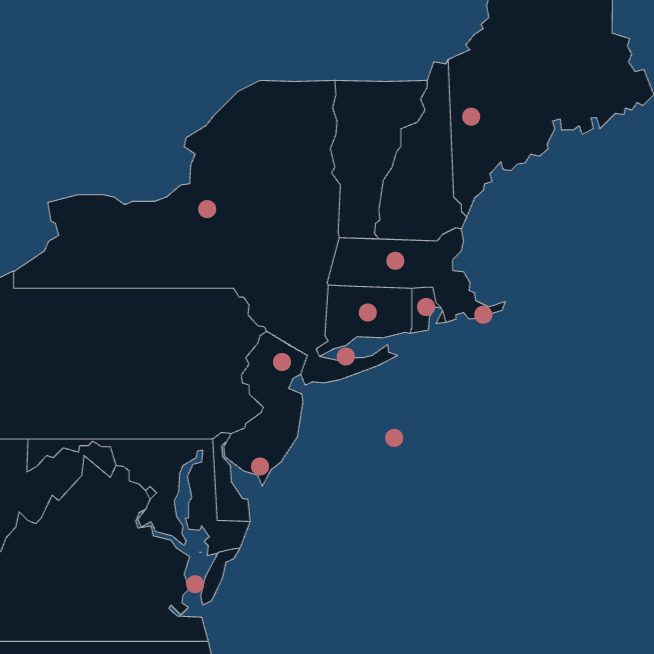
As President Obama enters his final year in office, he will be looking to add to his legacy of environmental protection. His administration has already identified several marine areas for monument status, including three canyons off the New England coast—Oceanographer, Gilbert, and Lydonia—that are popular with offshore tuna and billfish fishermen.
We hope that President Obama follows the model that has been established in the South Pacific and includes language in his proclamation that allows continued access for recreational fishermen. However, there is reason for concern, as anti-fishing organizations are lobbying to designate future marine monuments to be “fully protected,” closing these vast areas to recreational anglers.
Unfortunately, The Antiquities Act does not require any public process, but that does not mean we have to remain quiet. The National Oceanic and Atmospheric Administration is accepting public comment at the email address atlanticconservation@noaa.gov until Friday, September 18, 2015. Click here for more information and a sample email.
If we let them close off these areas completely to fishing, how does this fix anything? The arguments are in favor because only a handful of boats are able to fish out there. Put yourself in their shoes. Let’s say that they closed off your favorite honey hole as a monument because you were disrupting that eco system or somehow disturbing the topography of that ocean floor, how would you feel. I am all for saving the species but it doesn’t always come from shutting down areas. How about smart decision from the organizations watching over the fisheries? (I know that is an oxy moron) For example, they increased the limits of bluefish and pogies/cup and now they realized that we are taking too many. I mean who would not realize that this situation would be a problem down the road. Think about this, if we were to ban any kind of nets, a maximum of 2 hooks on every rod, do you think we would have depleted so many species and not to mention destroyed the bottom topography? We need better people managing our oceans. These people in Washington, do they really know what they are doing or are they puppets?
RBD, to answer your question, “how does this fix anything?” the science generally shows that when you put an area of the ocean off limits to fishing pressure, fish populations increase, benefiting the entire area and anglers who catch the more/bigger fish that result. Whether that will work in this particular case I do not know.
Giving the government control of anything is a bad idea. Letting the government remove natural resources from the benefit of our people is always a bad idea. Eco-Nazis need to be purged.