
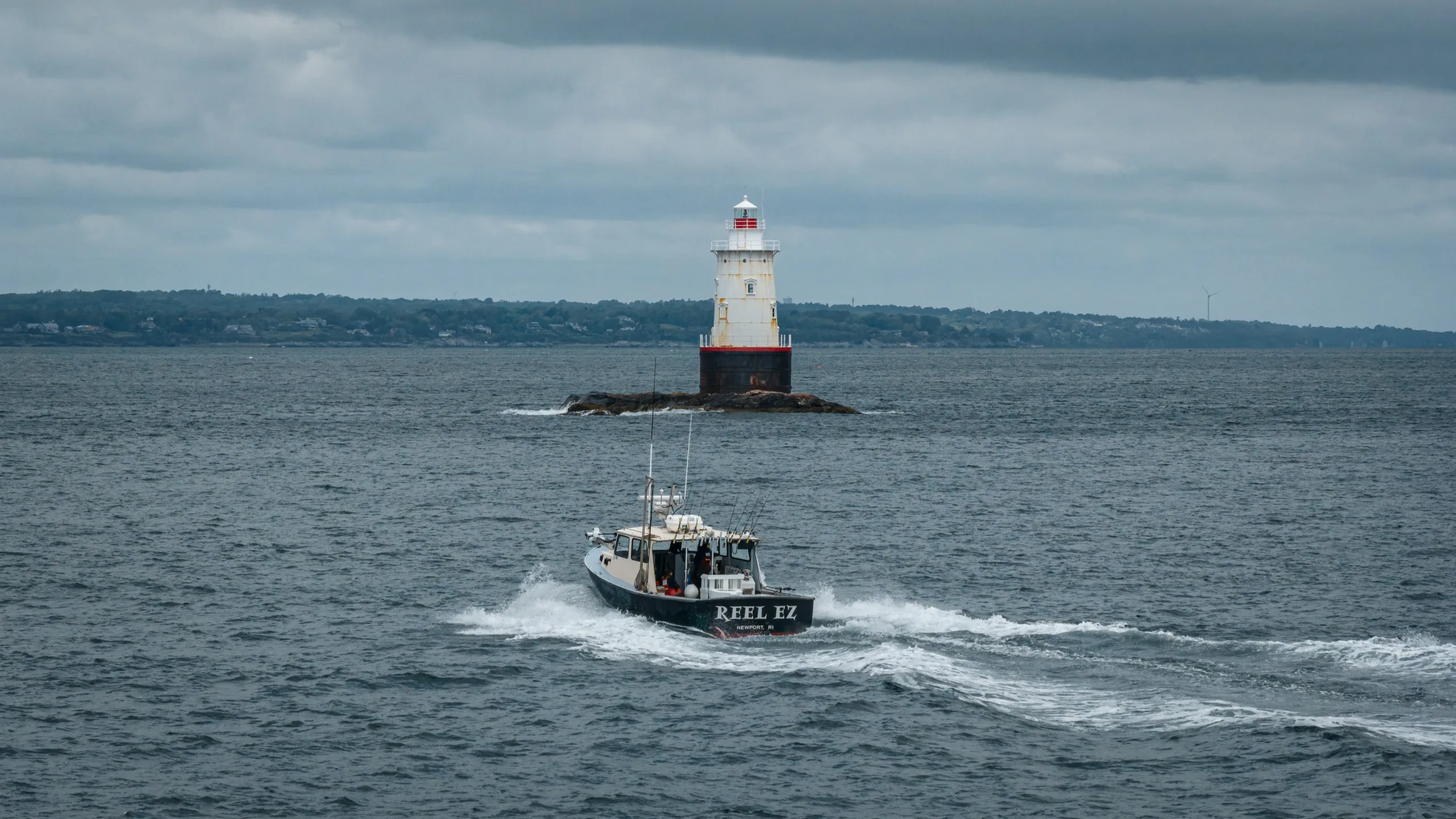
We’re very excited to share our latest video project, a film about my good pal, Captain Rob Taylor, and his passion for fishing. My co-workers, Liam O’Neill and Alex Blackwell, were lucky enough to jump aboard the Reel E-Z several times this summer to capture Rob in his element and tell this story. While you can get an idea for how that went by watching the film, I thought it would be fun to get a behind the scenes, or rather behind the camera, take from the film’s producers. Here’s what they had to say:
Jimmy Fee: How did the idea for this film come about?
Alex Blackwell: With this film, we had the opportunity to slow down and tell a character-driven story instead of building everything around catching fish or a single trip
Our earliest concept was, “The story of a captain shaped by hard conditions.” We wanted the Northeast coast to feel like a force in the film—the cold water, the harsh weather, the rocky shorelines, the salty characters.
But once we started filming, the idea changed. It became less about the Northeast creating a captain, and more about fishing revealing him. Fishing is the proof, not the premise.
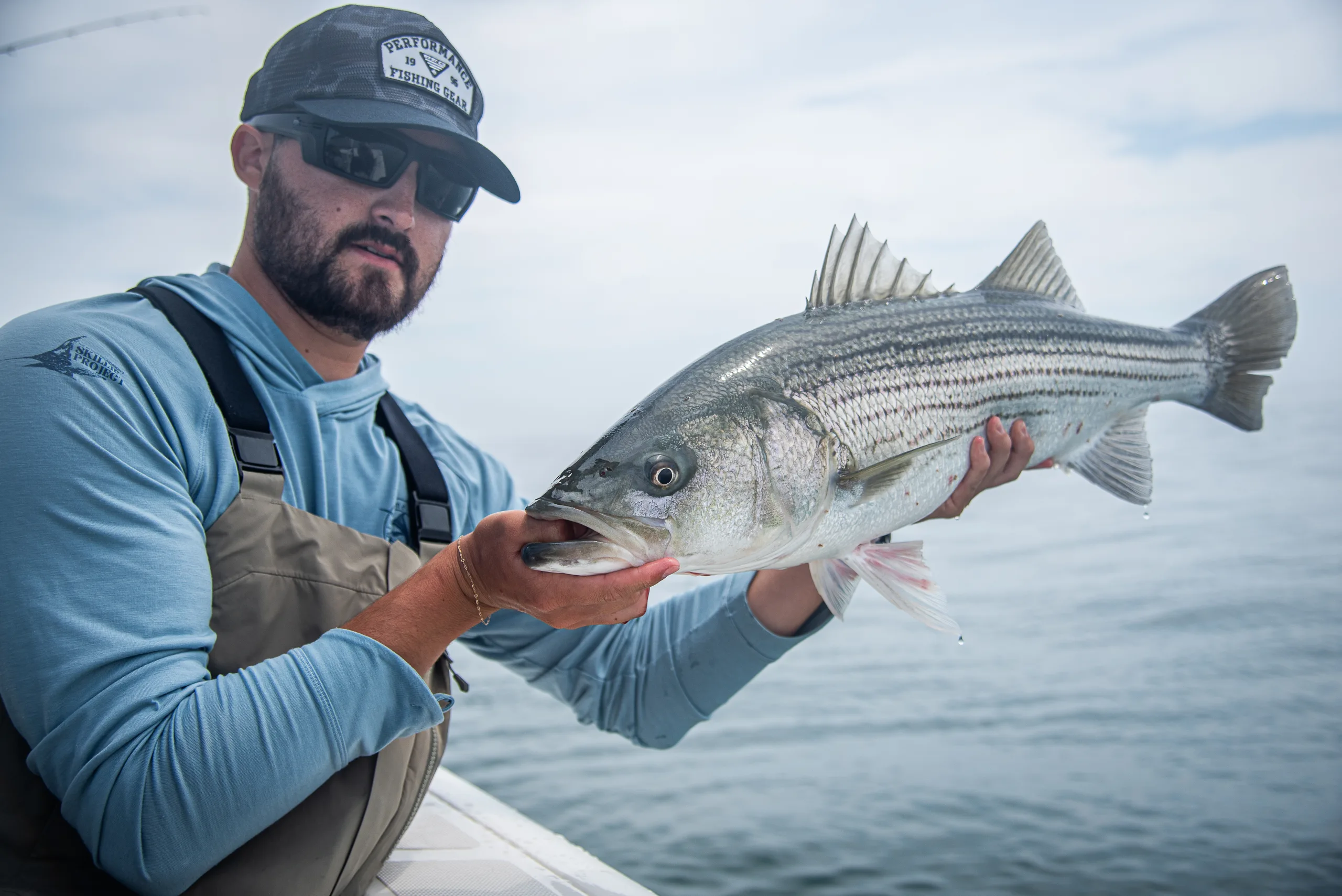
Liam O’Neill: Since short fishing films have been around, most of them are exotic tropical places where you catch fish of a lifetime while also getting a tan in perfect conditions. I could not have been more excited with the opportunity to tell a Northeast story with the saltiest captain I know. Having the privilege to showcase New England in a manner that is not just sunshine and rainbows, but finding and catching fish regardless of what the weatherman claims.
JF: Out of all the captains in the Northeast to tell this story through, why Rob Taylor?
AB: Robbie is completely consumed by fishing without becoming numb to it. He can catch 20 or 30 striped bass in a day and still react to the next eat like it’s the first fish he’s ever seen. There’s this combination of obsession, knowledge, and genuine excitement that’s hard to manufacture. After filming multiple Angling Adventures episodes with him over the years, it was a no brainer.
This film is a catalyst, to hopefully telling more genuine stories like his. Because, like you said, there are so many captains across the East Coast, all while infectious energy around their fishery.
JF: What did you know about Rob before filming, and what surprised you once the cameras were rolling?
AB: All we knew going into this film was – we had an extremely energetic individual who eats, sleeps, and breathes fishing in the Northeast. That was good enough for me!
What surprised me was how universal his relationship with fishing was. Before filming, I thought this story was going to be about a guy who was forged by Newport and Northeast saltwater fishing. Then you hear about him ice fishing in Maine or chasing bass in Florida and realize the location and species aren’t important to him. He just wants to catch fish!

LO: My first Angling Adventures shoot, and first ever OTW shoot was with Robbie. Coming from a very limited saltwater experience and my second day on the job, I was blown away by the level of detail Robbie was able to analyze the structure and fish behavior. The on-camera Robbie is the same Robbie off-camera, energetic, positive, and some slight ballbusting especially if you almost throw up on his boat.
JF: Was there a moment during filming when you felt you fully understood what drives him?
AB: Honestly, it wasn’t until we really sat down with him in the interview. He started talking about fishing becoming something he was rather than something he did. That became the title of the film: Something I Am.
That’s the distinction. He’s not continually chasing fish because he still needs to prove that he can catch them. He genuinely needs the process, the learning, the anticipation, figuring out the next problem and then sharing that moment with somebody else.
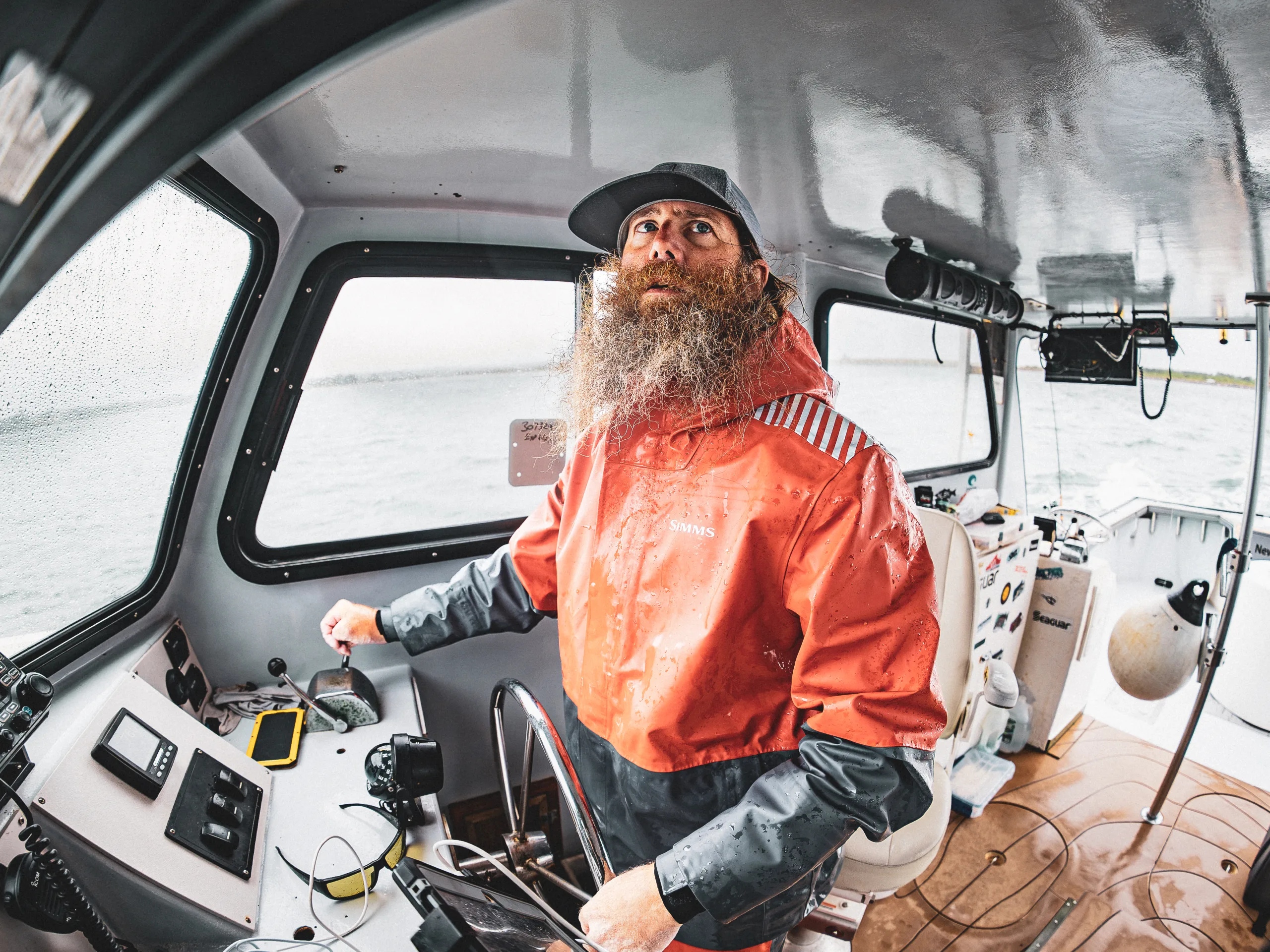
LO: Robbie called Alex to let him know that there was a stormy weather day that looked like it could produce some big fish. After hearing the conditions, Alex said that I could step in and film. Like all fishing missions, what was supposed to be a 6-hour trip turned into a 12-hour hunt for the cow bass that Robbie had found the day prior. I realized two things; Robbie will go to the ends of the earth to accomplish what he sets his mind to, and Robbie wants to understand why fish act the way they do. In his words, “You can never master fishing, it is a never-ending road of learning.”
JF: How many days of fishing did it take to get this film?
AB: The project was built around four fishing days with Robbie, with three real fishing chapters forming the backbone of it.
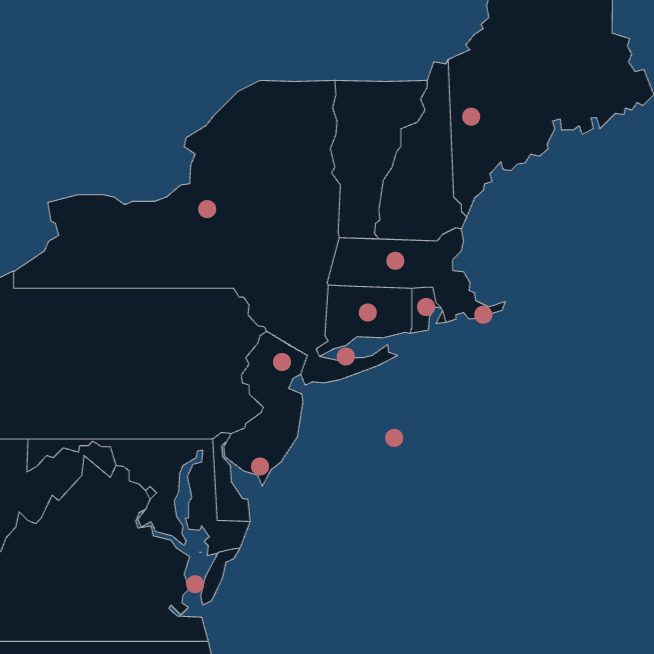
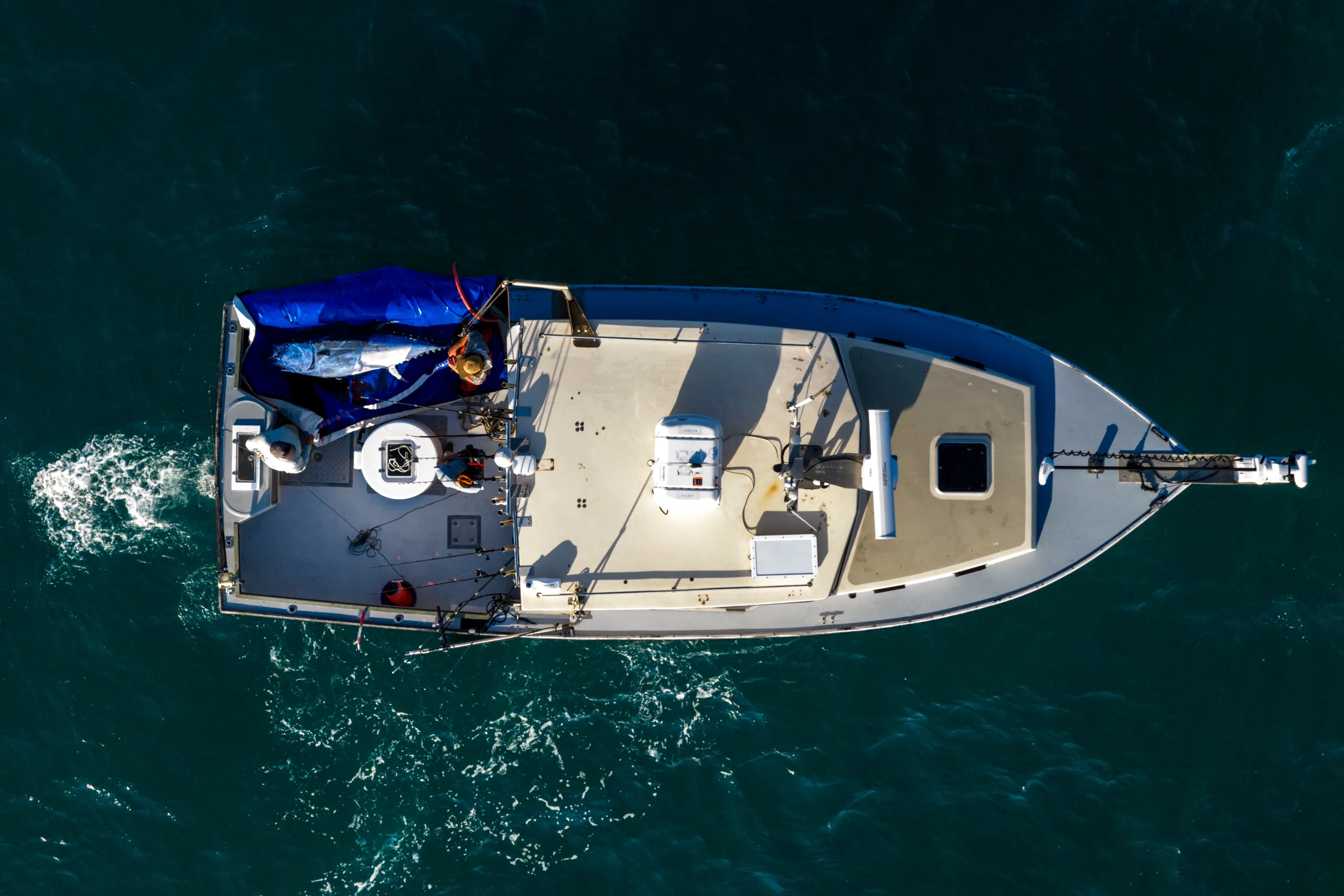
We started around Newport, fishing for striped bass along the rocky shoreline. Then we had a Block Island Day where everything really exploded, 20-plus fish, multiple hookups, and some of the most energetic footage in the film. And lastly, we went offshore for our giant bluefin portion. It was an early season, Hail-Mary, shot in the dark kind of trip that ended up paying off.
The other major production piece was our sit down interview, which was every bit as important as another fishing day because that’s what gave all of the fishing footage true meaning.
JF: What was the hardest scene to get, and what did it take?
AB: Tuna. We spent all day looking for a giant, pushing off the dock at 5 a.m., still soaking baits at 4 p.m. looking at each other doubting it was going to happen.
And sure enough, just as we started to feel a bit of doubt, the Humminbird lit up with a wolf pack of more than 60 fish. I kid you not!
A rod doubled over and it was game on.
LO: We knew that getting a giant on film was going to be a Hail Mary. Once the rod was bent, all hell broke loose. I was able to get the hook up on camera, but soon after I was clearing lines and moving rods around. After that, the stress of filming a giant is almost as intense as fighting one…almost. The creative shots you want to get help tell the story, but they can inhibit the fight and communication of the angler and captain in the moment. With this fish being our only shot, Alex and I had to move with Robbie and Adam Nelson like a dance. As the tuna was getting closer, I got on top of the boat to get the harpoon shot, trying to keep a steady shot, while keeping the fish, Robbie, and harpoon in focus…and not fall off the boat. It’s not like we could have asked the tuna to redo his pinwheels after being impaled.
JF: Is there any shot or fish you missed while filming this that you wish you could have gotten?
AB: Oh absolutely! He probably won’t love this, but on day 1 of filming, Rex Messing from Simms dropped a giant striped bass. Robbie was screaming, “That’s a fifty-pounder on your plug”.
The hole in the water that was left by that fish might have been the size of a tire. The drag was locked and it wouldn’t stop screaming. The fish went right into a shallow water reef and broke off. Showcasing a true cow like that would have been incredible.
LO: On the foul-weather filming day, there were a ton of top water eats that just were not good enough to make the cut, out of focus, not in frame, etc. Luckily the last shot before the bite died, I was able to get it and it made the cut.
JF: Filming on a moving boat in New England weather is a challenge. What were the biggest technical challenges, and what gear held up? What gear didn’t?
AB: The boat is moving, the angler is moving, the fish is moving, you’re getting bounced around and sprayed by salt water, and you don’t get to ask anybody to do it again. It’s a cameraman’s greatest opponent, all wrapped into one.
LO: The biggest challenge is trying to get the steadiest, clear, and most well composed shot while dealing with conditions that are not for a conventional filmmaker. It’s like riding a unicycle on a seesaw while juggling fragile, expensive equipment. It’s no fun watching shaky and blurry fishing videos, and it’s our job to get the best shots possible. You have to find the balance between protection of the gear and ease of use. Trying to protect the gear can get in the way of you getting the shot or getting the right shot. Our cameras have held up to some pretty foul weather so far.
JF: Was there a fish or a day on the water that became the heart of the film?
AB: The Block Island striper day became the emotional heart of the fishing for me.
There are sections where we intentionally let the interviews get out of the way and just live in it, the eats, triple hookups, laughter, fish handling, Robbie reacting. That’s Robbie in his most natural state and we had to isolate that moment for the audience. That’s what Robbie lives for. That’s what we all live for.
The bluefin section served a different purpose. Tuna revealed the analytical side of him – the patience, reading conditions, accepting failure, trying to solve something incredibly difficult. You need both to understand Robbie.
JF: How did you film the fishing so it would land with hardcore anglers and with less experienced fishermen?
AB: We never wanted to make an eight-minute fishing highlight reel.
Hardcore anglers will notice the water, conditions, decisions, technique, where the fish are positioned and all the little details that tell them this is legitimate fishing. But someone who’s never picked up a rod doesn’t necessarily care what lure is being thrown or how many pounds the fish weighs. They understand anticipation, failure, obsession, exhaustion, and watching somebody lose their mind when something finally works.
So whenever possible, we pointed the camera at the reaction instead of only the fish.
LO: Like anything in life, hard work pays off. Anglers that fish these waters will understand the triumphs and heartbreaks, relating to the never-ending curiosity. For others, it’s the the passion that makes you want to go above and beyond to chase perfection.
JF: What does Rob’s story say about what it takes to make a living as a charter captain today?
AB: That loving fishing isn’t enough.
You need an almost irrational willingness to keep going. You’re responsible for the boat, the business, the weather call, finding fish and creating an experience for somebody who may have been waiting all year for that one day.
And then you have to wake up and do it again.
That’s the burden and the reward of a charter captain!
LO: It’s the love of the game, not just chasing it for yourself but wanting to be there to share that love with others. You got to be a people person, got to be willing to take the good with the bad and be willing to do that every day all season long. Our season is so short that you cannot afford to take a day off.
JF: How did Rob react the first time he saw the finished cut?
AB: Robbie’s no stranger to seeing himself in a video – so we were working with a tough critique. He’s been featured on our Angling Adventure episodes, Costa’s Hooked on: Bluefin short film, and many more!
He simply said: “I knew you guys would crush this!” and that’s all that was needed in my eyes.
I think the best reaction was from Adam Nelson, Robbie’s longtime friend. He simply texted me; “Speechless” “One of the best films of a Northeast Captain I’ve ever seen”.
He might be a little biased.
JF: What do you hope a Northeast angler takes away from it after the credits roll?
AB: I hope it reminds them why they started fishing before all the other stuff got attached to it.
Robbie says in the film that you can never really master fishing. It’s a never-ending process of learning. I think that’s why somebody can dedicate decades of their life to this and still feel that spark.
Fish harder. Stay curious. Take it seriously without taking the joy out of it.
And when you get the opportunity, pass that feeling along to somebody else. That’s ultimately where the film ends – not on a trophy fish, but on the idea of giving somebody a story and a memory that they’ll carry with them.
JF: What did you learn while filming Rob fishing that will help you catch more stripers?
AB: Confidence comes from paying attention, not simply repeating what worked yesterday.
Robbie is constantly reading what’s happening around him and making adjustments. He’s not emotionally attached to a spot because it produced last week.
Watching somebody who spends that many days on the water – reinforce how valuable time on the water actually is, that’s the secret sauce.
Persistence.
LO: Don’t sleep, leave your family, start casting, and never look back. In all seriousness, what I took out of it is to stay curious, follow hunches, and see where the rabbit hole takes you. Every failed outing is one step closer to success.
JF: Where can our readers see it?
AB: Something I Am premiered Tuesday, October 13 at 5:00 p.m. on both Simms’ and On The Water’s YouTube channel. We hope you enjoy!