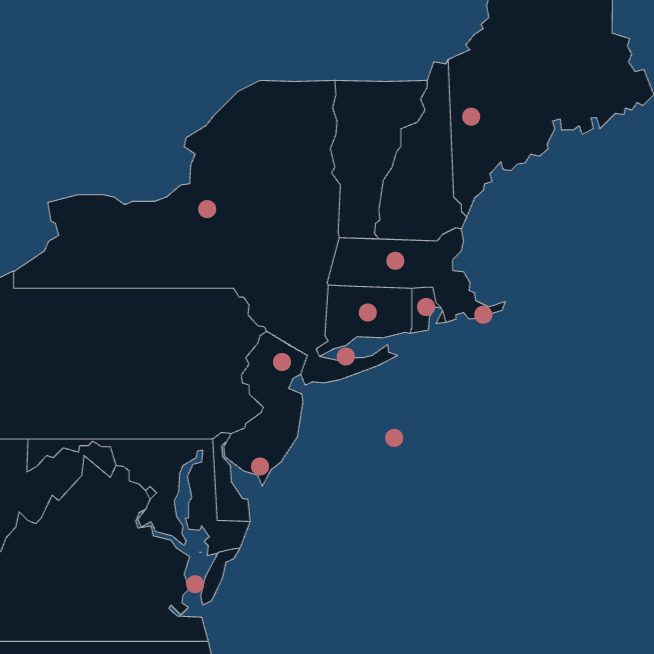

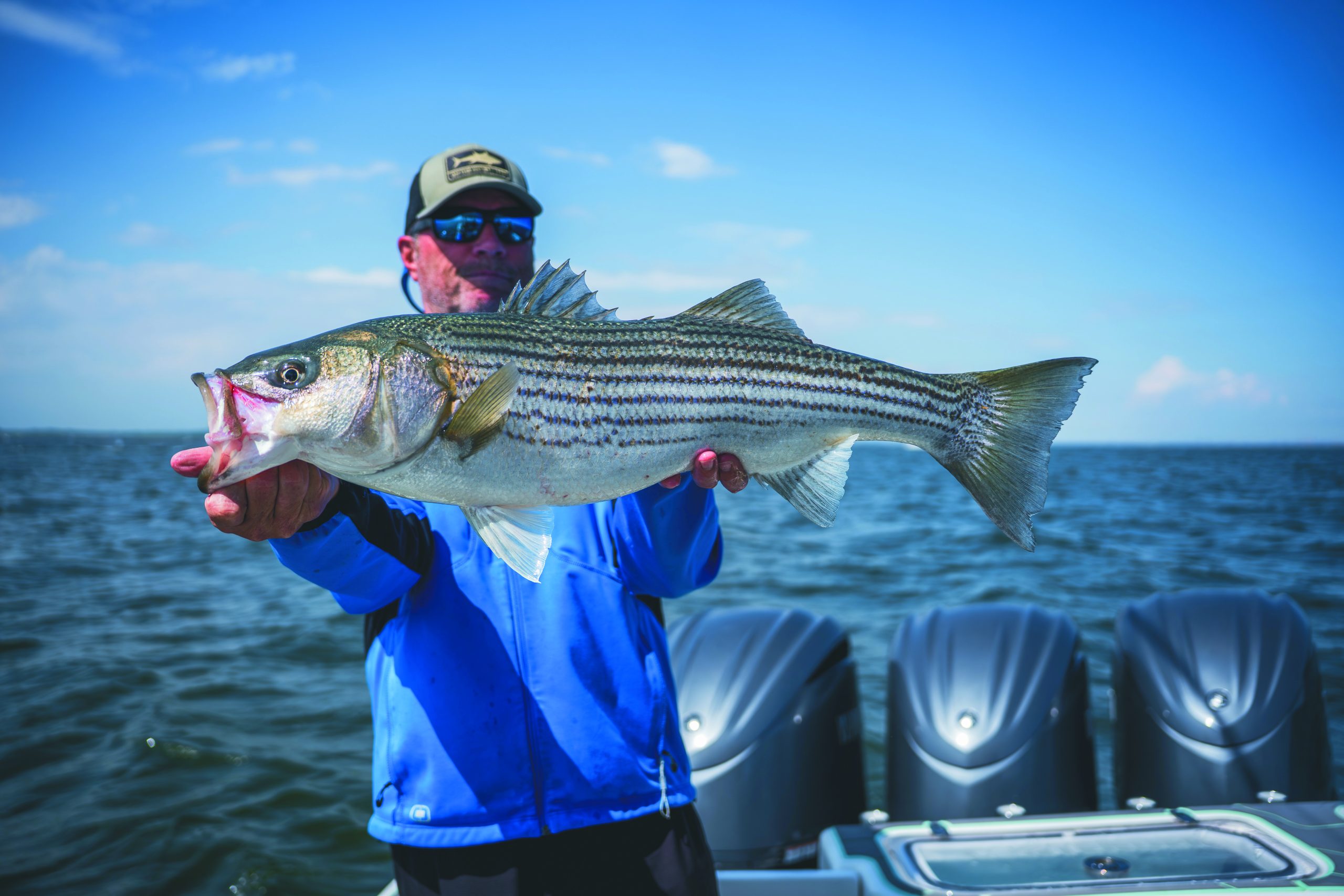
Nestled between New Jersey and Staten Island, Raritan Bay forms the western edge of the New York–New Jersey Harbor Estuary. Inflows from the Raritan, Rahway, and Hudson rivers create nutrient-rich waters that attract vast schools of menhaden and herring in the springtime, which in turn attract stripers looking to feed before continuing their migrations. The Raritan holds expansive mud flats, gradual depth contours, and channels, averaging 15 to 30 feet deep, with deeper troughs reaching 50 feet.
The Bait
With feeder creeks and rivers pumping grass shrimp, marine worms, and small baitfish into Raritan Bay, there’s no shortage of small forage for opportunistic early-arriving stripers to eat. Fishermen take advantage of this by casting gobs of clams and bloodworms over the mud flats, but the true Raritan spring run begins with the bunker. Without this key baitfish, bass don’t linger long in the bay, making for slow spring fishing.
Some bunker winter over in and around the bay, but depending on the water temperature and runoff, larger schools move in between mid-March and April. By the time schools of stripers are rounding Sandy Hook, bunker schools should be well established over the warm, nutrient-rich waters of the Jersey-side mud flats and across the bay at Staten Island’s Great Kills Harbor.
The Tactics
The expansive dark mud flats on the west side of the Raritan are the first parts of the bay to warm, and therefore the first areas to attract migrating stripers. Captain Frank Crescitelli of Fin Chaser Charters looks for a series of high sun, windless days to spark up the action. The darker mud absorbs the heat and radiates it through the surrounding water. Even a lift of a few degrees will pull in and activate early arriving stripers and baitfish. A similar situation happens on the Staten Island side of the bay. Although mostly sand over there, Frank says the dark color of it acts like the mud on the Jersey side.
But Raritan stripers can be fickle, especially at the start of the season. The best early action often happens farther up the bay, where smaller rivers pump warmer water into the system. Bass, coming in from a cold ocean, beeline for this relative warmth. Some days, finding the bass is no problem, but getting them to bite is another story.

Metal Lip Resurgence
When Captain Frank started fishing the Raritan, he said boats never left without rods rigged with big metal lip swimmers. Then the baits dropped off the radar for a long time, with fishermen focusing on other techniques. Over the last several springs, Frank has seen the metal lip rise back to the top of the anglers’ arsenals. Dragging these big, bunker-matching baits over the shallower mud flats grabs the attention of hungry bass, resulting in thunderous strikes.
Diving metal lips and “trollers” are more popular than Danny and surface-swimming plugs. The key is to get the bait down to the striper’s level, making it easy for the fish to attack. Retrieves tend to be more aggressive than you’d expect, as if you want the thumping of the plug to “wake up” the groggy spring stripers.
Rise of the Glide
Last season taught Crescitelli that the glidebait was no passing trend. He watched the bait hammer blitzing bass and he saw it turn picky fish into caught fish. The mud flats of the Raritan are a perfect place to put glidebaits to work.
One of the glidebait’s superpowers is its ability to reveal bass. So even if there’s no fish feeding on the surface and little on the fish finder, a few casts of the glidebait can reveal the presence of bass with a follow, swirl, or a bite.
Crescitelli is a big believer in the Jersey-made Stride glidebaits, but has added the new Strike King Hogfather glides to his arsenal for the 2026 season.

Reliable Rubber
The built-in action and ability to get to the bottom makes soft plastic shads the primary go-to for spring action on the Raritan. Whether fishing them in 10 feet or 40, making bottom contact is key. From there, you can either bounce the bait off the mud by yo-yo jigging or slowly swim it just off the bottom.
Timing: Late March to Late May
“Every year, there’s a big push of good fish in late March or early April,” says Crescitelli, “and every year, fishermen get excited thinking the bass are here to stay. But without fail, within two weeks, those fish are gone, and we’re back to waiting for the second wave.”
Whether those early arrivals head up the Hudson, or for other parts of New York Harbor, that initial run is usually short-lived. The more sustained action comes later in April and into May, as larger schools of Hudson-stock stripers arrive and feed before heading upriver.
By the middle of May, the Raritan is full of bass, as pre-spawn fish heading for Troy mix with post-spawn fish departing the Hudson as well as post-spawn fish from the Chesapeake looking for forage after their swim north. By this time, temperatures are stable across a wider area, spreading out the action well beyond the mud flats of the Raritan.
WATCH: Spring Fishing on New Jersey’s Bays
