

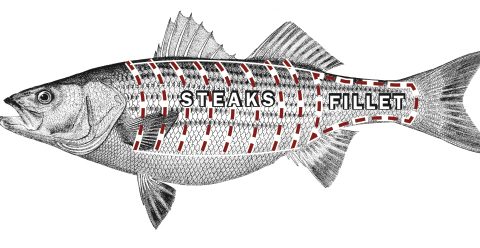
Most people are familiar with salmon steaks, yet for some reason you seldom see whole steaks from other fish in the case at the market. This is a shame! Any large fish is suitable for steaking, and it’s a nice way to mix things up when you have a large fish to prepare. Steaking up a whole fish is quite a bit more labor intensive than filleting one, but the extra effort is well worth it. There is a good amount of fat in the backbone of a large fish, and once cooked it forms a nice, sticky glaze that adds a bunch of flavor. The bones and skin will keep the meat soft and succulent, and the steaks hold together well on the grill, allowing for a good sear on the outside.
I especially like steaks from a good-sized striper. A 15- to 20-pound fish is the ideal candidate for this technique. This is also my preferred preparation for bonito, and I’m pretty sure it would work just fine with a large bluefish too. The finished steaks can be baked, broiled, sauteed or grilled in a variety of different ways.
Scale the Fish
First we’ll need to get all the scales off the striper and gut it. Striper scales are quite large, so you’ll want a sturdy knife. I’ve found that a butter knife works well. As with our sea bass, scrape the scales from the tail to the head, and make sure you get them all. Getting a mouthful of striper scale is not gourmet, and it can ruin someone’s meal. I will generally only steak the first two thirds of the fish (I fillet the tail section) so don’t sweat getting off all the scales on the tail end.
Cut it Up

Now it’s time to cut some steaks. You’ll want two good knives or this, a fillet knife and a sturdy 9-inch chef’s knife. Start by taking your fillet knife and remove the fillets from the tail of the fish. This section of the fish isn’t thick enough to yield a good steak, so filleting it is a better use of the meat. This will also allow you to get a good look at the vertebrae in the fishes spine.
A big striper has a sizeable backbone, and cutting through the bone is harder than you might think. One technique is to try to cut between the vertebrae, where it will take very little pressure to get through. With the tail fillet removed, you can get a good feel for how long each vertebra is, so starting from the tail end, space out the steaks so they will be as wide as two vertebra. This will give you a thick steak that will hold together well on the grill. Continue cutting steaks as you work towards the head. A 9-inch chef is the right tool for this job, as a fillet knife is too flexible and won’t cut the steaks nice and straight.

I recently learned another technique for cutting steaks. Take a large butcher knife and cut through the fish until you hit the spine. Then place the tip of the knife on the cutting board, and whack the top of the knife with a hammer to cut through the backbone.
Trim the Steaks
Once complete, you should end up with 8 to 10 striper steaks, some bigger than others. I like to take my time and clean them up as much as possible. There isn’t much meat on the belly flaps, so I usually cut them off to make a better presentation on the plate. You’ll also want to remove the fins from the top, as some of the steaks will end up with large spines protruding for them. A good pair of kitchen shears will come in handy for this task.
As a general rule of thumb, I always completely dry off my steaks or fillets before storing them in the refrigerator. Pat them dry with paper towels, and place them in a large Ziploc bag.
I’m not a big fan of freezing striper; I can taste a noticeable fishiness to it once its been frozen. I also stay away from the dark red meat under the skin, as it has a much stronger, fishy taste.
Fire Up The Bar-B-Cue
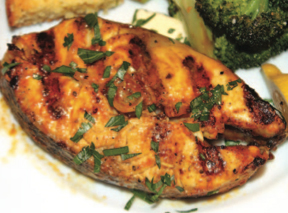
Striper steaks can be cooked in a number of different ways, but in the heat of the summer, it’s tough to resist grilling them. My all-time favorite recipe is a spicy butter and lime juice marinade. If you enjoy spicy food, you will love this marinade. If you’re not a big fan of spice, just tone down the hot sauce and add some fresh herbs.
Spicy Striper Marinade (for 2 large striper steaks)
1 stick melted butter
1/3 cup Franks Red Hot
1/4 cup lime (or lemon) juice 1/2 tsp. garlic powder
1/2 tsp. black pepper
Optional additional spices if you want to get fancy:
red pepper
turmeric (adds nice color)
paprika cumin
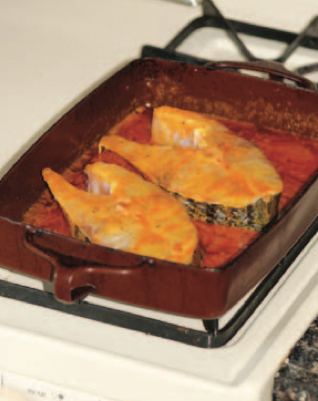
Melt the butter and add the rest of the ingredients. Because butter is the main ingredient, you’ll need to keep the marinade warm. I usually melt the butter in a metal saucepan on the stovetop, and I’ll fire up the burner on low every 10 minutes to keep it from solidifying. You don’t need to let the steaks soak for long, a half-hour is plenty.
Any time you grill fish, it’s always important to get the grill really hot before adding the fish. This helps preventing your precious dinner from sticking.
Add the steaks to the hot grill and stand back! All that butter in the marinade will start dripping into the abyss, causing big flare-ups and large flames that will help get a good sear. Keep basting the steaks as they continue to cook. You’ll want to put the pan with the marinade on top of the grill every so often to keep the butter from firming up. Grill the steaks on high heat for about 5 to 6 minutes per side. Baste them liberally with the marinade as they cook. Check for doneness before serving; they will take longer to cook than fillets.
So there you have it, two methods to improve you repertoire of fish dishes. Both make a great mid-summer meal and allow for dramatic presentations that if you don’t screw up, will surely impress your guests.
Do you remove the backbone and rib bones before cooking? Or while eating?
I get from the article that they stay in while cooking.
Thanks,
Jason,
no need to remove the bones before cooking. They add to the flavor and they are easy to remove once the fish is cooked.
Thanks a lot for the info. Now I only need to catch one big enough to get this recipe started!!!
My brother – in -law, Captain Cook, fishes in Lake Ontario for salmon and steelhead. I caught a 15 lb salmon on his boat. He said it was a small one. But it was the only one for the day. We also caught 5 8lb steelhead trout. When it came time to cut up the fish, he wanted to fillet and skin all of them. He had just gotten this enormous knife for father’s day. I resembled a machete and was unbelievably sharp. The perfect thing for cutting through fish backbone. I said I wanted to steak the salmon and the biggest steelhead. He had no idea what I was talking about. I sent him your article to educate him. I poached the first salmon meal in aluminum foil. For the next one I want to try this recipe. A change from our usual ginger-sesame marinade. Striper is not an oily fish so the butter marinade makes sense. Salmon is an oily fish, but the butter will melt off and make for a good sear. I think it will be just fine, and delicious!
I love striper steaks and for me its easier then filleting and you don’t waste any meat. I have a big, very sharp machete. I slice down to the bone then hold a pieced of wood over the back of the blade and have someone hit it with a mallet. Very easy, very fast.
[…] Cherrystone Clams 2) Grilled Whole Fish 3) Spicy Striper Steaks (you can substitute halibut) 4) Smoked Bluefish Chowder 5) Smoked […]
Help we have caught striper several years now while fishing in Arkansas. This year when I baked, broiled, or pan fried they were tough. What am I doing wrong. I still have some in the freezer
Striped bass have a firm texture that some folks find to be tough. This might especially be true for the freshwater stripers. Perhaps “undercooking” them slightly, so they are cooked through but just barely done, will keep them a little more moist/tender.
Undercooking slightly is key for moist/tenderness,stongly agree,fillet tail section,steak rest of fish using any of methods mentoned above,bigger fish over 30 lbs you can harvest another sweet piece from the cheeks…