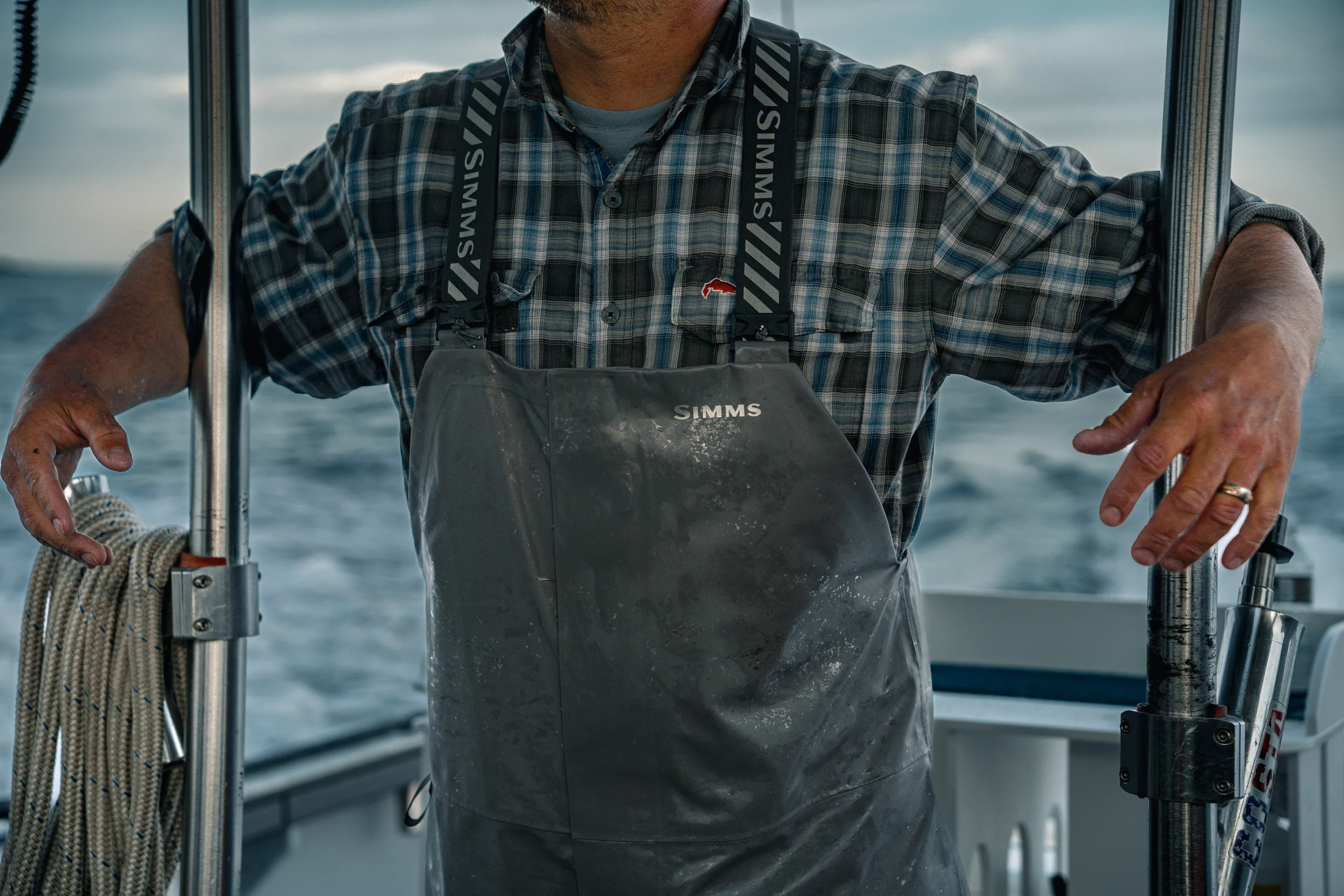

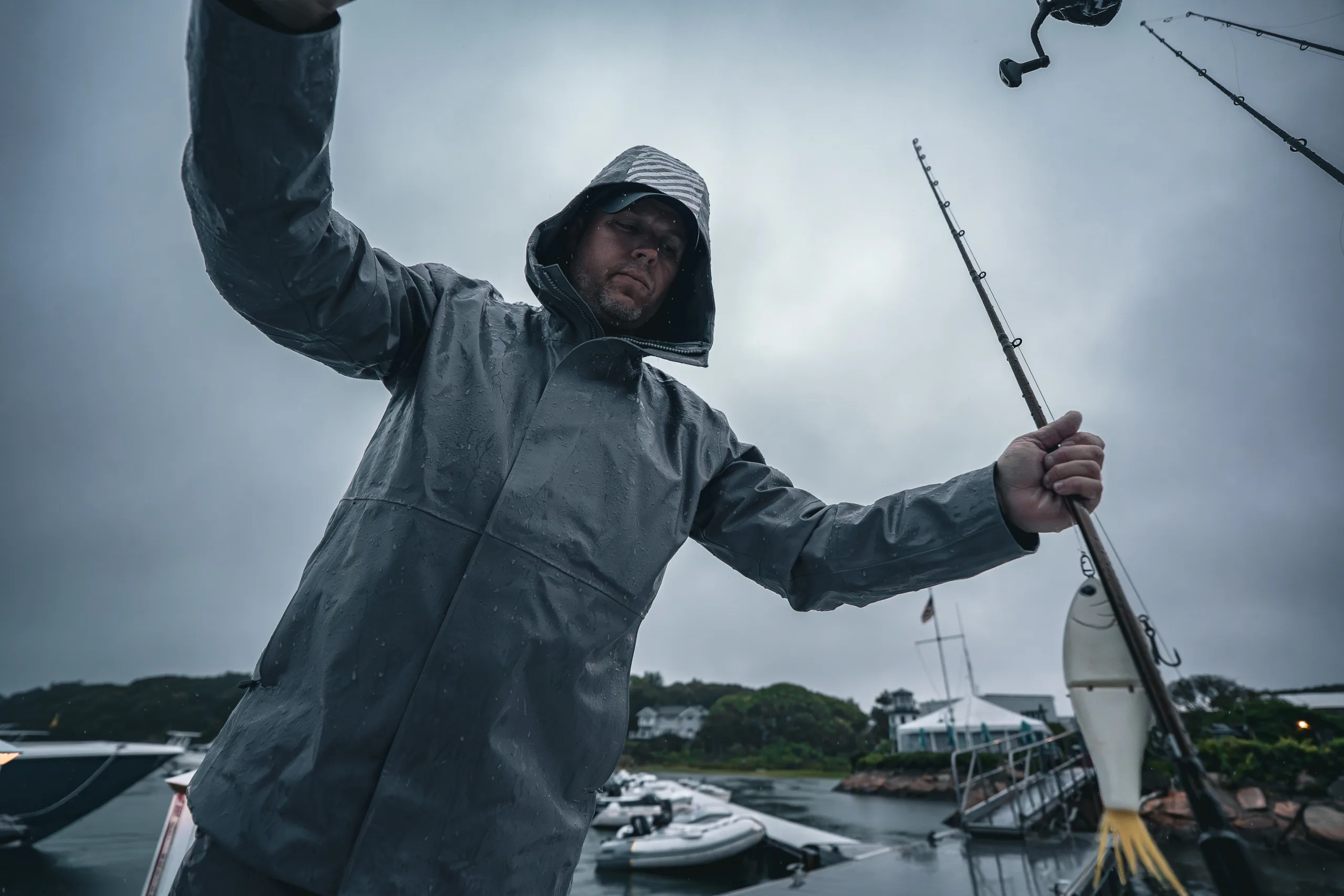
If your grandfather’s grandfather was a fisherman, he probably took to sea ensconced in old sailcloth treated with linseed oil and tar. These oilskins, though heavy and uncomfortable, helped keep the elements at bay long enough for 19th Century mariners to catch enough fish to bring to market.
Each new generation of fishermen saw improvements in the foul weather gear as it became lighter, more flexible, drier, and more purpose-built for the pursuit of saltwater fish. Today, two centuries later, Simms has introduced the most technologically advanced fishing foul weather gear I’ve ever used in the Rip Line Pro Suit.
In designing this suit, Simms asked some of the Northeast’s most hardcore captains, Rob Radlof and Rob Taylor, to put it to task on our home waters, right here from New Jersey to Massachusetts, pitting it against summer squalls, nor’easters, giant bluefin, and cow stripers. This is not freshwater foul-weather gear that might be good enough for the salt. The Rip Line was made for ocean fishing off rugged coasts for back-breaking gamefish. It was made for the Northeast.
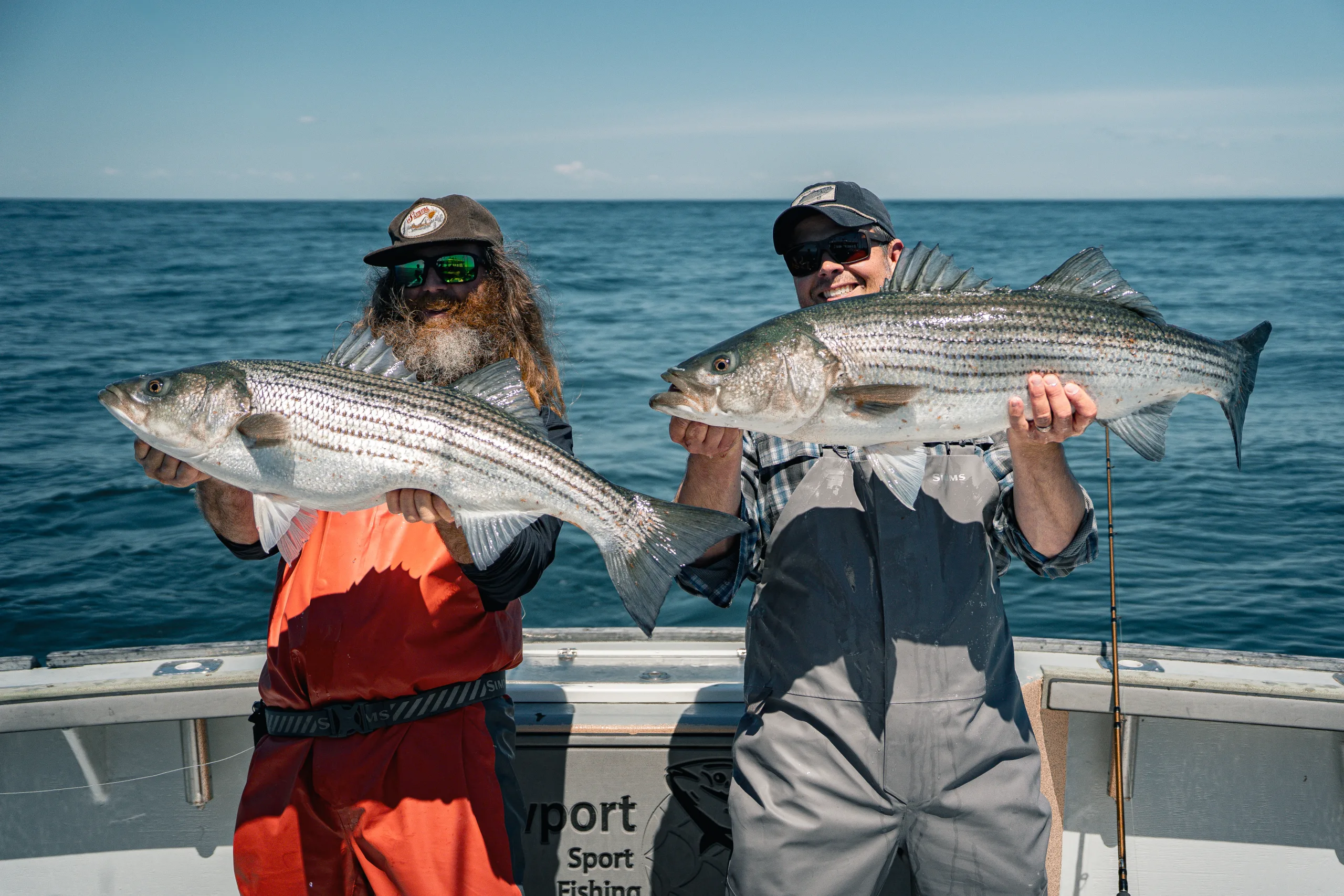
After the Robs gave the suits their stamps of approval, samples came to the OTW Office, where we got to fish them throughout the spring, summer and early fall. The difference between this suit and one made for professional bass fishermen was immediately apparent in the look and feel.
Within a classic saltwater oilskin look, the Rip Line has an impressive list of features and technology. The jacket and bib incorporate Simms’ new QuadraShed construction, a proprietary four-layer fabric system with two separate waterproof barriers. The exterior polyurethane coating is designed to shed rain and salt spray while also standing up to fish slime, blood, bait, and spilled coffee. Beneath that outer layer is a second waterproof membrane, giving the suit some redundancy when conditions get really ugly.
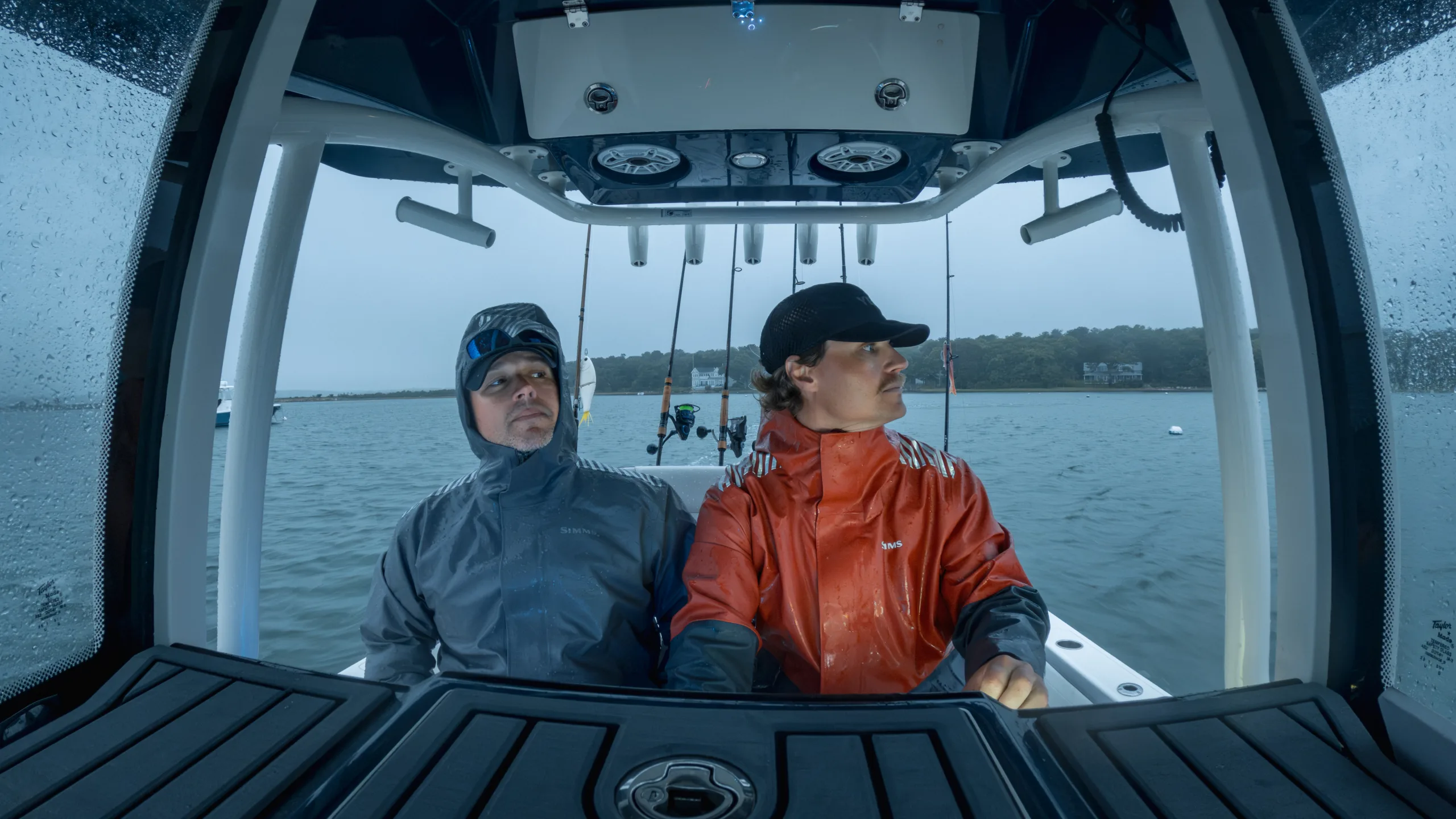
The Rip Line Pro Jacket has an articulated fit to maintain range of motion, along with a three-point adjustable storm hood, internal neoprene cuffs to keep water from running down your sleeves, fully taped seams, and a heavy-duty YKK Vislon front zipper protected by a storm flap.
The bib has a breathable spacer-mesh suspender system, adjustable belt, protected chest pocket, heavy-duty front zipper, and adjustable lower cuffs designed to pair with deck boots.
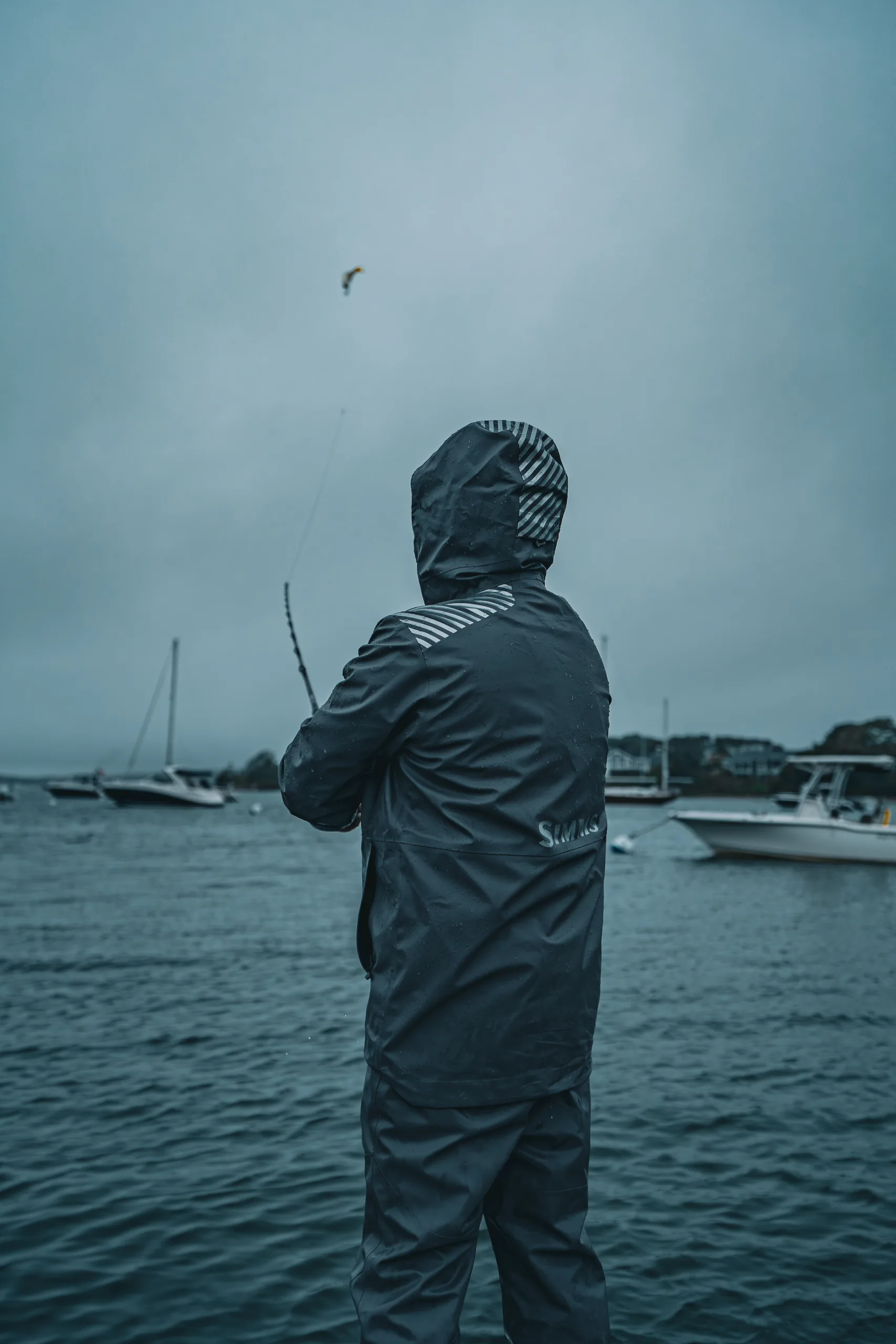
The suit kept me dry during a misty, foggy run to an epic Block Island striper bite and during a rainy day on Narragansett Bay. On a mid-June sea bass trip on Buzzards Bay, a nasty line of thunderstorms gave me plenty to worry about on one of those bat-out-of-hell rides home, but staying dry wasn’t one of them. Besides being weatherproof, I found the suit to be flexible and light enough to wear all day while barely noticing I was wearing bibs at all. It’s comfortable enough for pre-dawn summer runs and fitted perfectly to allow ample layering for winter tog trips. Based on what I’ve seen so far, the Simms Rip Line Pro Suit seems rugged enough for years of fishing through all four seasons.
The Rip Line Pro Jacket and Rip Line Pro Bib are available now with each piece priced at $500.
Check out the Rip Line Pro in action in OTW’s latest film: Something I Am