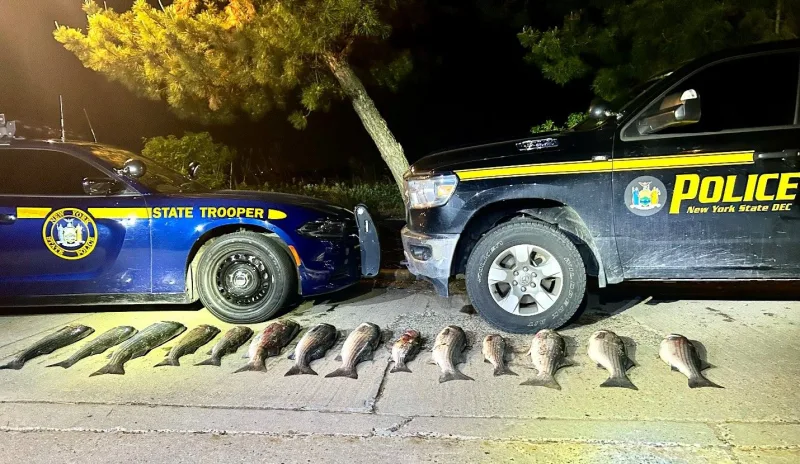

Most recreational saltwater fishermen are licensed, law-abiding citizens who recognize the fragility of our marine resources. However, there will always be a very small percentage of anglers who feel that fishing regulations either do not apply to them, or that they can consciously abuse the resource without repercussion. Earlier this month, two bottom fishermen in Rhode Island discovered the hard way that violators of state fishing regulations will be held accountable for their offenses to the fullest extent of the law.
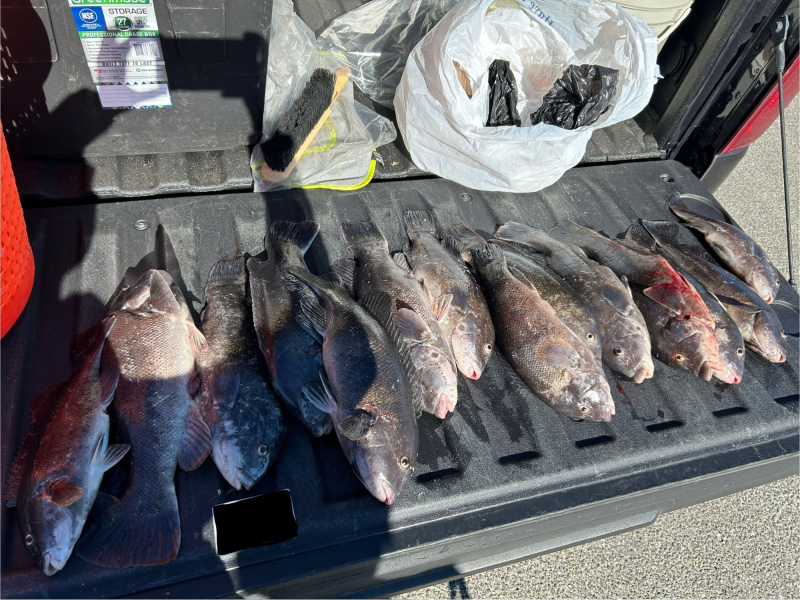
On Wednesday, October 14, the Rhode Island Environmental Police Officers Association (RIEPOA)—a non-profit that promotes conservation, education, and community support for environmental law enforcement in the Ocean State—announced that, in early October, EPOs made contact with two fishermen who were found to be in possession of over 70 tautog and black sea bass, most of which were under the minimum keeper size. Per state regulations, their legal two-man limit for the day should have totaled 12 fish: 6 sea bass, and 6 tautog.
According to the Rhode Island Department of Environmental Management (RIDEM), between August 1 and October 14, licensed recreational anglers are allowed:
- 3 tautog (16″ minimum length) per day
Between May 16 and December 31, licensed recreational anglers are allowed:
- 3 black sea bass (16″ minimum length) per day
Based on these regulations, the anglers exceeded their combined legal limit of 6 black sea bass and 6 tautog by 58 fish—nearly 5 times the legal two-man limit of sea bass and tautog,
Additionally, a majority of the fish measured under the legal 16-inch minimum size limit.
According to the post (below), the individuals were ordered to pay over $3,000 total in fines, and the fish were confiscated and donated to a local wildlife rehabilitation center.
To report violations, call the Rhode Island Environmental Police 24-hour dispatch center at (401) 222-3070.
Follow the Rhode Island Environmental Police Officers Association on Instagram and Facebook to stay in the loop with local conservation successes and violations.
READ MORE