
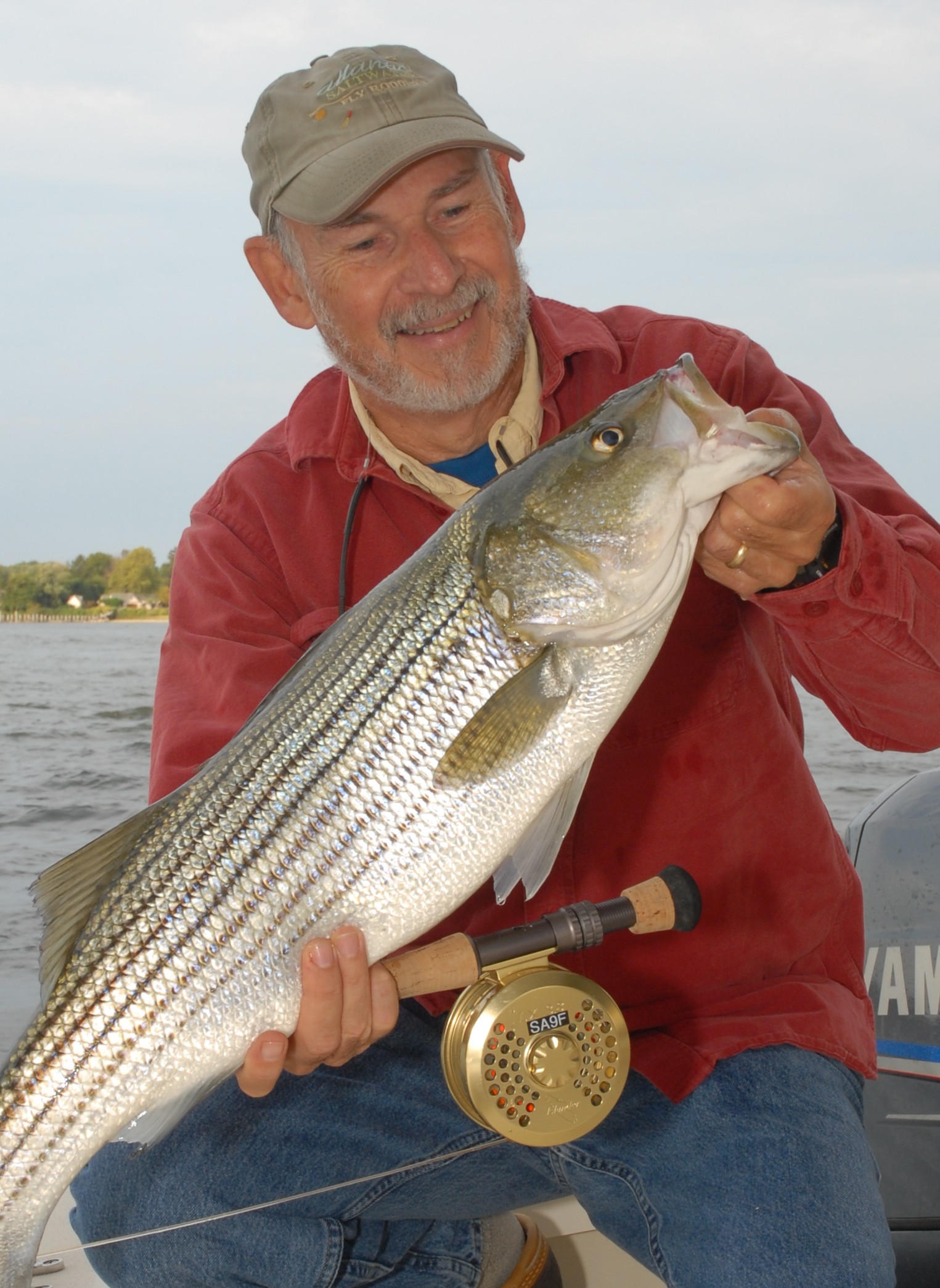
October is a magical month. Striped bass and bluefish begin their run south, the blues a few weeks ahead of the bass. Some of the toothy critters make the long journey all the way to Florida; the bass follow soon after, destined for the comfortable winter temperatures off Virginia and North Carolina. Many flyrodders start their own migration toward the sandy beaches and jetty fronts, which is just fine by those who prefer the quiet marshes and back-bay waters.
Summer’s half-pint bass depart almost daily with each dropping tide, replaced on the incoming tide with schools of teen-size migrating bass. Bluefish muscle their way in too, but as calendar pages turn toward November, striped bass will be the prime calm-water target, the blues merely an annoying interruption until next spring when they will again be welcome.
Resident bass may linger around bridges, so the opportunity for strikes is always present, but the degree of success varies with what the tide delivers. October is the “Here today, gone tomorrow” season – one night yielding a bonanza with fish seeming to strike on every cast, while the next night yields nothing. Perseverance pays off in October. Give up after two dawn patrols with no bass, and you’ll miss the third morning when they bite like mad dogs.
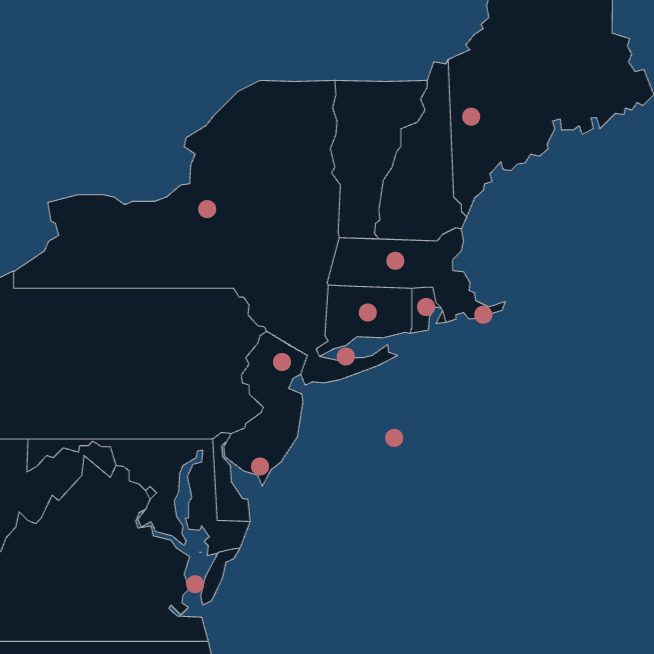
Fly tackle choices must be reconsidered for October. The light 6- and 7-weights for summer schoolies go back to the rod tubes, replaced by 9- and 10-weights that are better able to handle bigger fish. While ultra-fast actions are praised by many flyrodders, most saltwater fly guys who fish for two or three hours at a session prefer a moderate-action rod, which is less fatiguing when making hundreds of casts. Tom Baroudi of Hackensack, New Jersey, splits his time between Long Island’s South Shore and Jersey’s Sandy Hook and says, “I like my super-fast G. Loomis Cross Current for daytime albie fishing in the boat, but if I’m casting before sun up for bass in quiet water I use a Temple Fork ten-weight Professional. It’s a lot nicer to my elbow.”
Flies change too. While rainfish still dapple the water’s surface, larger bait and bigger fish may crash the party at any time. Peanut bunker and mullet haven’t been as prevalent in recent seasons, but it’s a good idea to keep a few Seaducers, Bucktail Deceivers and Siliclones in your pocket just in case. One calm morning two years ago, a buddy and I were picking away at 5-pound bass sipping surface gurglers, when a surprise appearance of teen-size bass erupted 50 feet in front of us chasing peanut bunker in a swooshing rush of silvery water. Mike quickly tied on a big fly and connected right away. I switched too and soon after got bent to a fat 34-inch bass; Mike’s was 38 inches and probably went better than 20 pounds.
Color can be important in the very clear water of the fall. Captain Robby Barradale of the Bayshore Saltwater Flyrodders prefers white patterns, especially for casting around docks in the Navesink River. For bigger bass up until December, he heads upriver to the flats where flies with a darker back and a touch of pink and yellow SF Flashblend on the flanks are favored. Captain Ray Szulczewski of Cape May likes chartreuse, especially for surface gurglers that draw strikes from October bass along the sedge banks. One of my personal favorites is a white-and-pale-blue Clouser with a yellow flank.
When they burst through the inlets like mad men, bluefish can quickly empty a fly box if you’re not ready to add a wire leader or cast flies tied far back on a long shank hook. A flyrodder I met one morning at Montauk’s Culloden Point carried two outfits; one for bass, the other stuffed down the back of his waders with a wire leader to the fly. “If the blues pop up, I’m ready!” he said. “I don’t waste time changing flies.”
Boat traffic almost always makes striped bass fishing a night game when you’re fishing near inlets, but the sun’s low angle is less intense in the fall, and the bass or blues may cooperate well into mid-morning. Jerry VanderSlade of the Atlantic Salt Water Flyrodders fishes an inlet where the boat traffic seems like an expressway at rush hour, yet he’s had mornings there where the bass action continued well past 9 a.m. despite a flotilla of boats roaring past. With just one thing on their mind – food – bass may not be easily distracted.
The most consistent action, however, will still be at dusk, through the night and toward dawn. It gets darker earlier in the evening and stays darker longer at dawn, making it easy to put in an hour or so after work or before work, a blessing for those who need sleep. One morning at the Manasquan Inlet, I watched a flyrodder casting at the end of the bulkhead railing along the north side. When the session ended, he walked to his pick-up where he doffed off his fishing jacket and rubber bibs, underneath which he was wearing a button-down shirt and tie!