

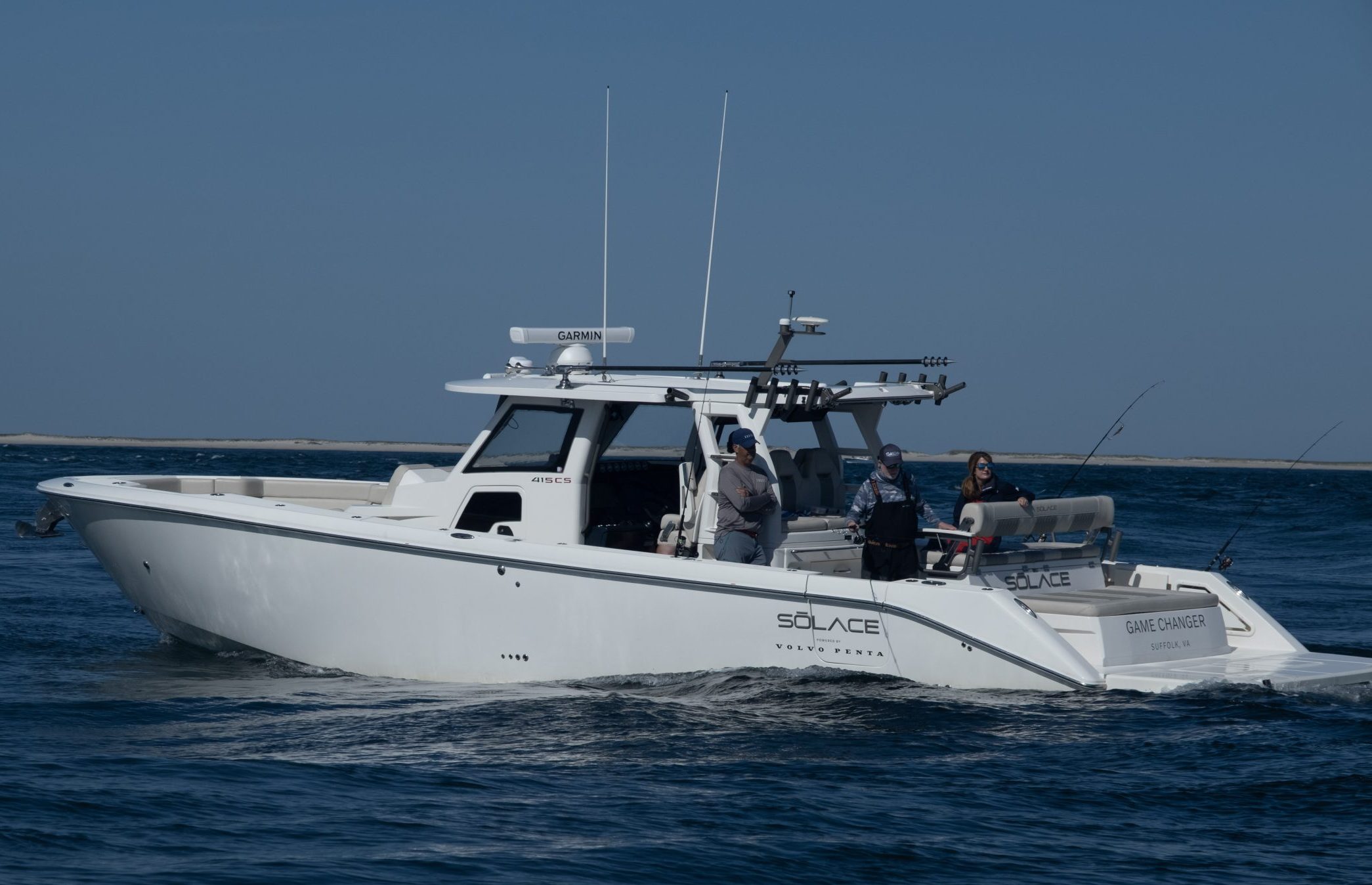
Step aboard a boat without a wall of outboards hanging off the transom, and the difference is immediate. The stern feels open. Sightlines are cleaner. The boat looks and functions like it was designed around how people actually use it. That’s where modern diesel inboard/outboard power quietly makes its case.
Beyond efficiency or performance, diesel I/O setups offer a set of layout and lifestyle advantages that are often overlooked in today’s outboard-only conversations.
360-Degree Visibility Changes Everything
Clear sightlines aren’t a luxury; they’re a safety feature. Without tall outboards blocking the view aft, the helmsman has a much better sense of what’s happening around the boat. Whether backing into a slip, maneuvering in a crowded harbor, or keeping an eye on swimmers behind the boat, that visibility builds confidence.
It’s one of those differences that feels subtle until you spend time with it, and then it’s hard to give up.

A Stern That’s Actually Usable
An unobstructed swim platform fundamentally changes how the back of the boat works. With diesel I/O power, the transom becomes functional space rather than mechanical real estate. It’s easier to bring a dinghy alongside, climb out of dive gear, land fish, or simply sit with your feet in the water.
For boaters who fish, dive, or spend a lot of time at anchor, that open stern is central to how the boat gets used.
Quiet Where It Counts
Modern diesel engines operate in a lower sound range than many gasoline alternatives, and when paired with proper soundproofing, the result is a noticeably calmer ride. At cruising speeds, engine noise often fades into the background, replaced by the sound of water moving past the hull.
That quiet matters on long runs. Less noise means less fatigue, easier conversation, and a more relaxed experience overall.

Less Time at the Fuel Dock—In More Ways Than One
Efficiency is part of the equation, but it’s not the whole story. Diesel boats often spend less time fueling not only because they burn less, but because diesel physically fills faster. That’s fewer dock lines handled, less waiting, and more time actually boating.
Over a season, those small time savings add up.
Ownership That Rewards the Long View
Diesel I/O systems are built with longevity in mind. They’re designed to run for thousands of hours, hold value over time, and deliver consistent performance season after season. Combine that durability with fuel savings and strong resale demand, and the ownership equation starts to look compelling—especially for boaters who plan to keep their boats for the long haul.
More Than an Engine Choice
Choosing modern diesel I/O power isn’t just about what’s under the hatch. It’s about how the boat feels, how the space works, and how enjoyable it is to spend full days on the water. For many boaters, space, sightlines, and silence turn out to be just as important as performance metrics—and that’s where diesel I/O quietly shines.