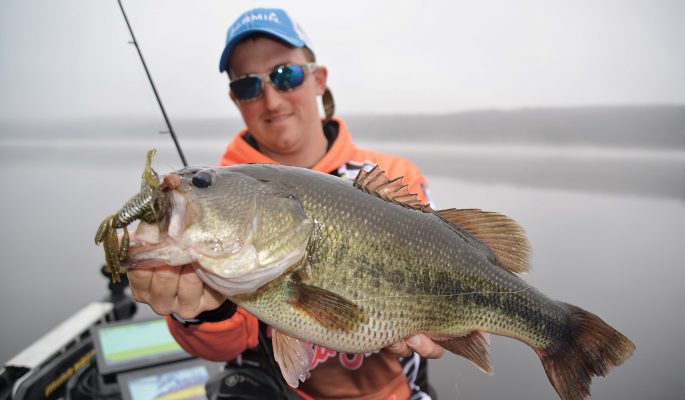
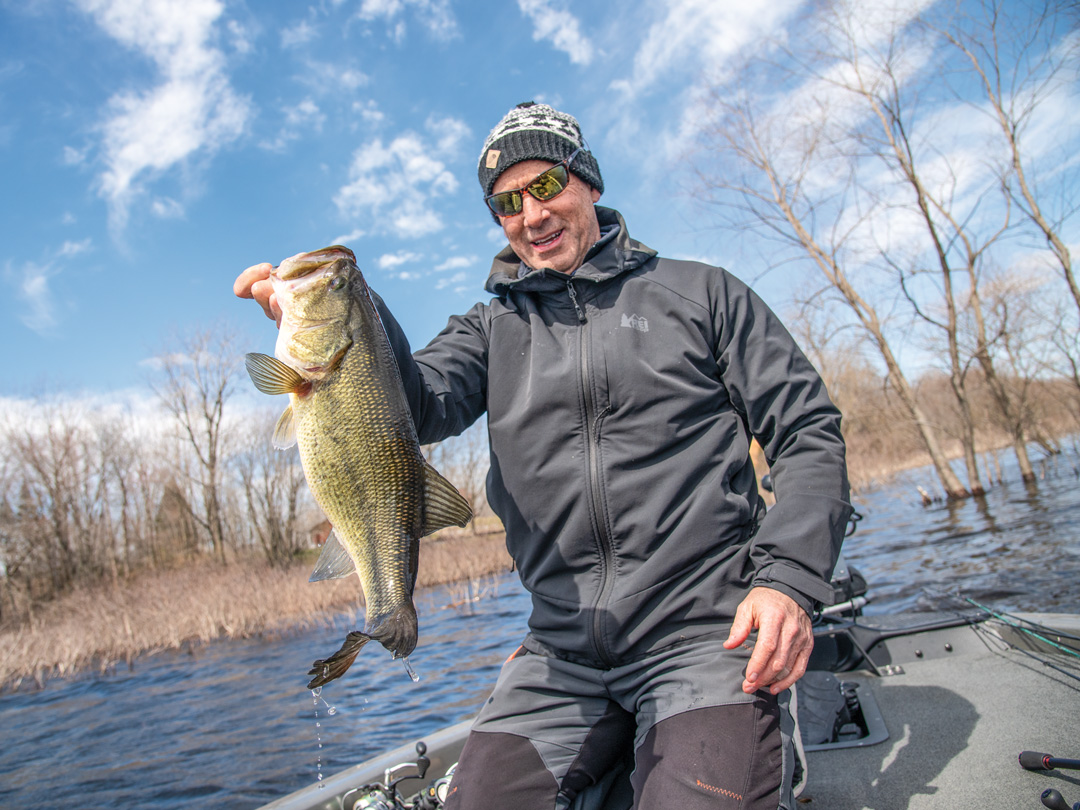
Simplicity is the name of the game with hair jigs. The less action imparted, the more bites you’ll get. A hair jig consists of a jighead, tying thread, and natural or synthetic hair material. Like fly fishermen who meticulously tie flies to match the hatch for trout, many bass fishermen do the same, crafting jigs to mimic a variety of forage to entice wary largemouth and smallmouth.
Hair jigs first became very popular for targeting big smallmouth on Dale Hollow Lake in Tennessee. There, the smallies feed on baitfish and crayfish close to the bottom when water temperatures drop below 45 degrees, and anglers discovered that a hair jig, dragged along the bottom, produced bites when nothing else did. There weren’t many other artificial baits on the market that could mimic a slow-swimming baitfish as effectively as the hair jig.
A hair jig works best in cold water—less than 45°F—when bass are finicky and hanging low, which is why it’s deserving of a spot in your early spring/ice-out rotation. (Photo by Nick Petrou)
Since then, there have been many advancements in tying hair jigs to better mimic both invertebrates and baitfish. Better jighead designs, lab-created synthetic hair material, and sharper hooks have all helped modernize the historic hair jig.
Hair Jig Anatomy with the Master
When I first started fishing bass tournaments around the tri-state area of New York, Connecticut, and New Jersey, there was always one familiar name sitting on top of the local tournament leaderboards, especially during the spring and fall months. Mike “Weensie” Iovino runs Fishing with Weensie Guide Service. Since we began fishing together, he has become one of my closest friends and cold-water fishing mentors. He knows better than anyone how to perfectly craft a hair jig that entices big largemouth and smallmouth into eating.
Mike spends his winters meticulously tying a variety of jigs in his basement. He advises that one of the most important parts is understanding your materials. “Certain materials absorb water while others wick it away, which affects their flow through the water,” Iovino says. The type of hair material and the temperature of the water dictates the jig’s action.
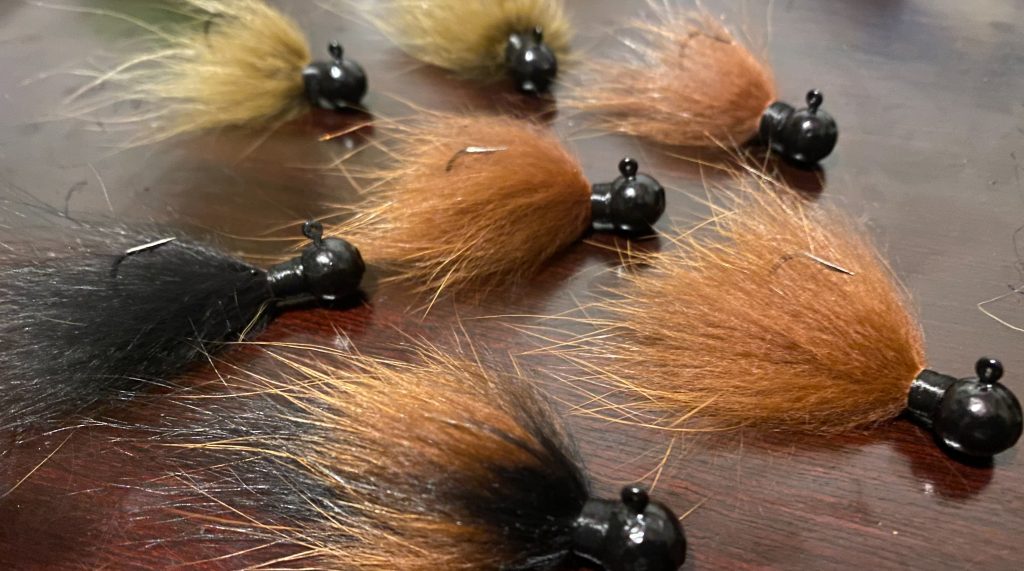
Materials like bucktail and bear hair are stiffer, creating little movement in the water. Porous materials, like marabou, have a lot of action in the water. Many fishermen look for a material that is a happy medium—with enough flow in the water but also enough movement while sitting still. Synthetic hair and fox hair have those perfect properties to make a perfect hair jig. Iovino quotes, “A quality hair jig has movement even when the angler isn’t moving the bait.”
Effective Jig Colors
Whether you are imitating bottom forage (like crawfish) or baitfish higher in the column, jigs with subtle, natural colors tend to outperform flashier, more vibrant hair jigs in cold water and high-pressure scenarios. (Photo by Nick Petrou)
The most effective hair jig colors depend on whether you are fishing them along the bottom or through the middle of the water column. Dark, natural colors like brown, rust orange and black imitate bottom forage like hellgrammites, crayfish, or gobies, while lighter colors, like yellow, white or light blue, imitate baitfish like perch and alewife.
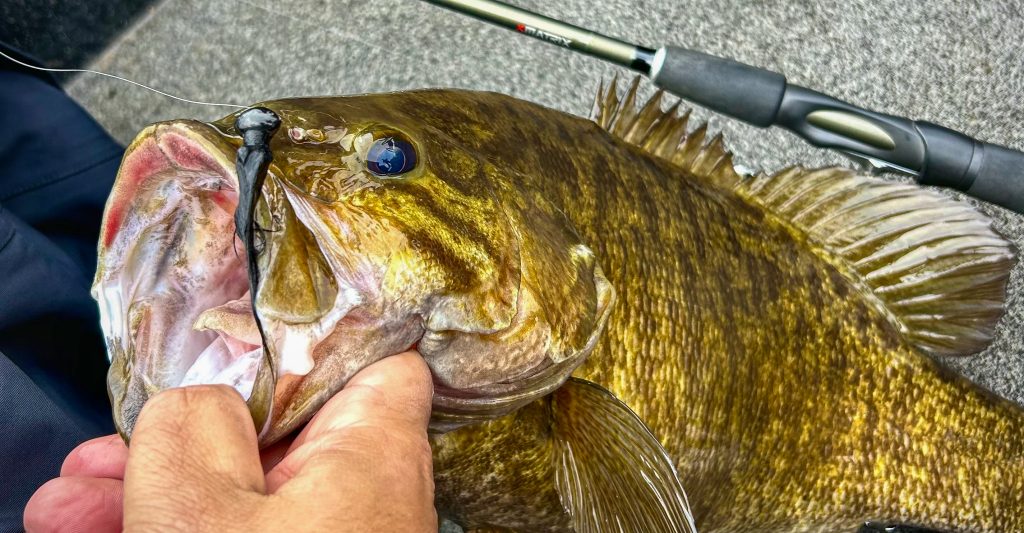
All-black hair jigs are smallmouth candy when they’re grubbing on small forage like leeches. (Photo by Nick Petrou)
Hair jigs should be subtle, naturally blending in with the surroundings, not standing out like a big, flashy spinnerbait. Water clarity can be a factor in hair jig color, but the focus should be imitating the colors and action of the forage. If it looks natural and the fish are there, they’ll find it regardless of water clarity conditions.
The jighead is the next most important item. Round-ball jigheads work fine in most situations. Around rocky structure, a football-style head works better to wiggle your bait around the rocks. Triangular or minnow-shaped hair jigs come into play when sight-fishing in shallow water or fishing under a slip float. That triangular-shaped head creates less drag and swims more naturally than round or football heads, making it the best choice for horizontal and suspended applications.
“The best jighead I’ve found for hair jigs are ones made with a light-wire hook like a 604 Gamakatsu. Since the profile needs to be small, you never want to exceed 1/0 in size.”
The area determines what size hair jig to throw. For casting at shallow, roaming fish or fishing under a slip float, use jigs less than 1/8 ounce. The lighter the jig, the more natural the presentation, the more strikes you’ll get. For dragging bottom with a hair jig, focus on the 1/8- to ¼-ounce sizes. Lighter and you won’t be able to feel bottom, heavier and the bait won’t flow naturally across the bottom.
Tristen Bauer of T’s Tackle in Theresa, New York, also makes custom-order hair jigs that ship throughout the country and have become popular among New York anglers.
Hair Jig Tackle: Light is Right
Choose an outfit that is balanced and sensitive for fishing hair jigs. Since they have a soft, light-wire hook, you need a 7-foot rod that’s light enough in power that it will not straighten the hook during the fight, so light to medium-light action are perfect.
Iovino uses three models of Douglas X Matrix spinning rods for throwing his jigs: the DXS6103F for lighter baits under 1/8 ounces, the DXS704F for an all-around rod, and a DXS744XF just in case he needs to get extra casting distance. When paired with a 2500- or 3000-size spinning reel, these rods provide balance and their sensitivity is unmatched.
Iovino usually runs straight 6-pound-test Seaguar InvizX fluorocarbon. It has enough sensitivity to feel light bites and its sinking ability allows it to keep light baits like a hair jig on the bottom for longer.
Fluorocarbon line sinks faster than monofilament while providing the sensitivity and stretch needed to play big fish with thin wire hooks and light tackle.
How and Where to Fish Hair Jigs for Bass
The first time Iovino stepped on my boat on a warm, early spring afternoon, he had only one rod and a gallon-size Zip-Loc bag filled with hair jigs. I thought he was nuts. But after watching him catch 10 smallmouth to my one (and lose about a quarter of the bag), I was a believer.
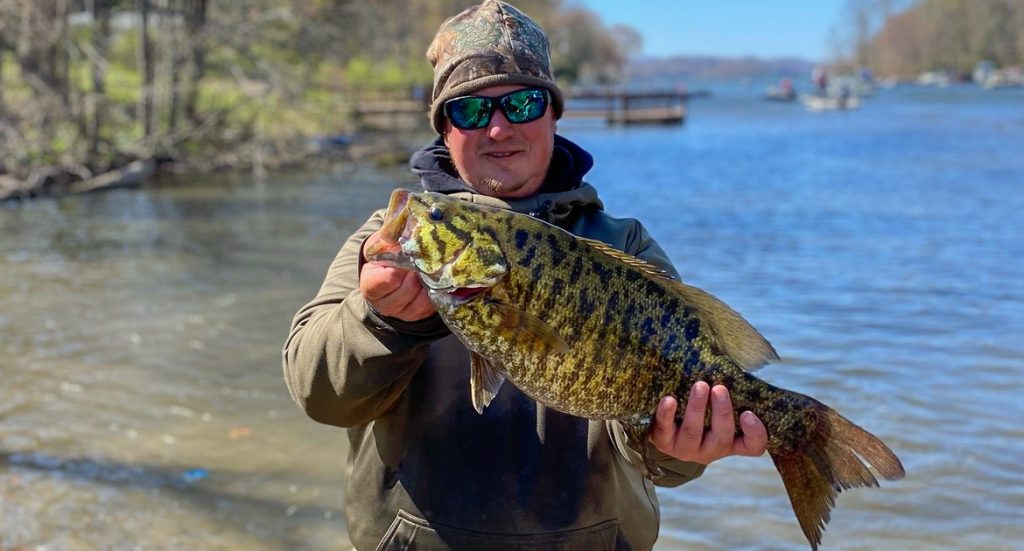
Because hair jigs are so light, they work incredibly well for smallmouth in clear or shallow water, where subtlety and finesse are key to getting bites. (Photo by Nick Petrou)
Iovino explains, “The body of water has to have the right ingredients in order to be a hair-jig lake.” He looks for lakes with little to no current and lots of rocky structure. Heavy current will not allow you to drag the hair jig effectively along the bottom. Many smallmouth and largemouth use rocky structures for warmth and forage during the colder months, as forage species gravitate to these areas. Often, when looking for rock reefs, veins, or walls with electronics, you won’t mark bass. You may get a glimpse of one or two, but the fish will be hugging the bottom so tightly that they will be hard to see. Instead, look for baitfish near the structure, and there will usually be bass in pursuit.
To fish a hair jig, start with a long cast and let the bait get down to the bottom. Avoid “over-working” the bait—when you think you’re fishing slow, slow down even further. Drag your rod off to the side, making sure the bait does not leave the bottom. Once the jig comes off the bottom, it’s going to look extremely unnatural. You want to feel every little rock, pebble, and boulder that the jig hits all the way back to the boat. When the bait falls or pulls off a rock is usually the time when the bite happens. Depending on the fish’s mood, the bite could be ferocious or just dead weight.
Not only do hair jigs drive cold-water bass crazy, but anglers at any skill level can fish them and even create their own. When you’re desperately looking for a bite between November and April, a hair jig is tough to beat.
READ MORE
Fishing with Hair Jigs for Coldwater Bass
Trigger more strikes from coldwater bass with small deer-hair jigs.
Ice Fishing with Hair Jigs for Panfish
Use a hair jig on your next ice fishing trip to imitate common panfish food choices like zooplankton and aquatic insects.
Tips to Catch More Cold Water Bass
Northeast bass anglers face cold-water conditions for nearly half the season, so you might as well learn to fish them.
Nick Petrou was introduced to fishing by his father, a commercial fisherman on Long Island, at a young age. Nick discovered bass fishing in his teenage years and hasn’t turned back since. Today, he is the owner and operator of Natural Outfitters—a fully licensed and insured multi-species charter business in the heart of the Finger Lakes Region. He is also a regular contributing author to On The Water Magazine among other major fishing publications. Follow him on Instagram @naturaloutfittersny and @bucktailnick.