
Don’t wait for winter—get in on the bottom-fishing double-feature at Coxes Ledge this fall.
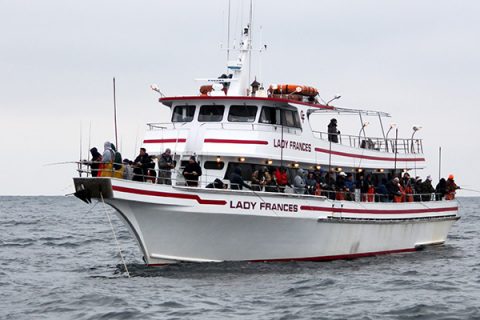
The engine buzzers sounded in sequence as the two big power plants of the Gail Frances coughed to life, adding a slight smell of diesel fumes to the already heavy salt air. It’s a fragrance that has become an acquired taste over the years, reminding me that an entire day of bottom fishing lies ahead. At this stage of my life, just sitting in traffic behind a diesel truck is enough to make me feel homesick for a day out on the salt. My fellow party boat regulars and offshore anglers know exactly what I mean!

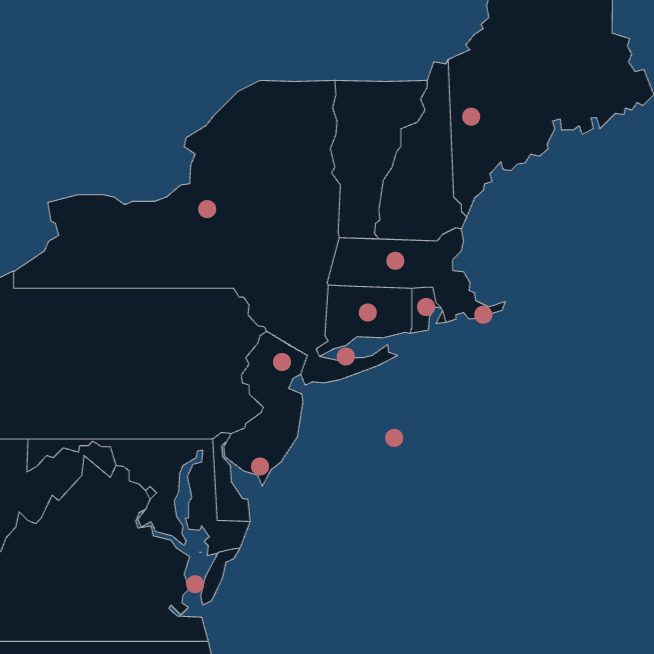
Captain Richie DeLuca eased the Gail out of her berth in Galilee, Rhode Island, and the mandatory safety message began to rattle over the intercom as we made our way through the Harbor of Refuge in the pre-dawn darkness. As is my custom on any head boat trip, after grabbing a cup of coffee from the galley I checked in with the mates for word of any recent fishing successes. This October morning, their intel confirmed my suspicions that some very respectable cod were beginning to show up in their anglers’ bags.

In the past several years, a dependable push of steaker codfish in the 15- to 30-pound range has been making an appearance in the offshore waters south and east of Block Island. While a chance for a steaker will continue into the winter season, the best numbers of quality cod to hit the deck do so in October. Anglers looking for a shot at a slob-sized cod can find boats sailing from Galilee and Snug Harbor, Rhode Island, and the New York ports of Montauk and Orient Point (both points of departure require a two-hour steam to the grounds).
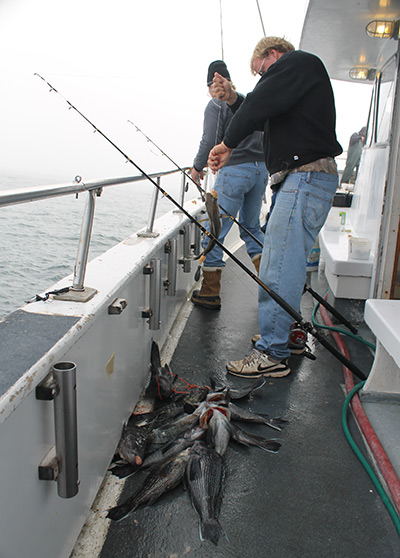
On my 2013 hunt for big baccala, I used a precious vacation day to avoid the weekend crowds—experienced party boat anglers know weekday trips are the best way to enjoy a quality fishery. While I did not know it as we made our way out to Coxes Ledge, that day’s trip would be one of those special times when the actual fishing matched my pre-trip expectations.
Tackle for fall cod fishing is pretty basic. Since braided line has a thinner diameter and less water resistance, it allows an angler to hold bottom with a lighter sinker. And, its lack of stretch transmits even the softest hit back to the angler. While most boats allow braid and most anglers use it, it can be a good idea to call ahead and ask.
A rod and reel combo for cod fishing should be capable of handling 50-pound braid. The rod should be 7 to 8 feet in length and matched to a reel with at least a 5:1 retrieve ratio so it doesn’t take too long to bring a bait up from the bottom. Level-wind reels are easier to use, but many cod fishermen prefer not to use them because the line goes out faster when dropping to the bottom with a non-levelwind reel.
Classic Combo:
ROD Ugly Stik 1180XH ($79.95)
REEL Penn Senator 113L2 ($110)
Contemporary Options:
REEL Fin-Nor Lethal LTC16 ($169.95)
ROD Fin-Nor Surge FSGC7040 ($69.95)
REEL Shimano Torium TOR16 ($179.99)
ROD Shimano Terramar NE TMCE76H ($179.99)
REEL Penn Fathom FTH25N ($219.95)
ROD Seeker East Coast Series BA COD-8’ ($238)
REEL Daiwa Saltist STTBG30H ($179.95)
ROD Lamiglas Triflex BL 7640 C ($320)
My go-to party boat rod is an 8-foot Ugly Stik with a Penn 4/0 Baja. (The Baja can be difficult to find, but the Penn Senator 113L2 is similar.) I also have a 7-foot rod with a softer tip that works well.
As for methods, if the boat will be fishing at anchor, which is generally the case in rough weather or when a full complement of patrons is aboard, it’s a good idea to begin the day fishing bait. A high-low rig with a red or chartreuse teaser up top and a plain hook below is my first approach, provided no dogfish are on the prowl. My preferred hook is the Mustad 92642 gold bait-holder in size 5/0 or 6/0. Proven on head boats for years, this hook has the strength to hold the largest cod you may encounter and will bend before it breaks, unlike some hooks I have used.
If the dogfish make an appearance, I go to a single-hook rig with no additional hardware or attractants. This keeps the bait right on the floor and really does cut down on the number of doggies you will wrestle. Don’t make the mistake of being too stubborn to listen to the recommendations of the captain and crew; when a deck hand who’s been out on the water all week gives you a suggestion, it should not be taken lightly. The crew wants you to succeed and often have valuable information. They know very quickly during a trip what is working and what isn’t because they patrol the entire boat.
Now, there will be some days when the big cod simply do not make an appearance. Fortunately, other bottom fish can be targeted in these waters and the captain may make an effort to fill coolers with sea bass, jumbo porgy and red hake. If this happens, the temptation may be to downsize your tackle in order to more effectively target these smaller species. While dropping to a 3/0 hook may be a wise move, downsizing any more is really unnecessary since most sea bass and other bottom fish found offshore are large enough representatives of their species to engulf the larger hook.

Since the typical water depth fished is around 140 feet, bring only a small assortment of 12- and 16-ounce sinkers. While a few rigs might be lost if the captain hits a wreck, you probably won’t go through a lot of terminal tackle. Since I like to travel light and bring only the equipment needed for the day, my backup plan has always been to purchase any additional sinkers I may need on the boat. All party boats carry extra sinkers and they are generally offered at fair prices. That being said, I have never had to actually buy a sinker because a handful is all you really need.

If the captain decides to fish on the drift, I like to start off with an 8-ounce diamond jig tied on a leader with a teaser about a foot above. I simply cast down-tide to maintain contact with the bottom if the boat is moving too fast to fish vertically. If your preference is pounding bottom with a Viking-style jig, a couple in 10- or 12-ounce sizes will be all you will need. Even though most of the 20-pound-plus cod I have seen caught in the fall are taken on bait, the jig is a nice option to have when there are a lot of “market” cod being caught. When these smaller cod are snapping, it does not take long to put a limit in your bag.
Anglers should remember that party and charter boat fishing is a team effort, and I am not referring to cooperation among the fishermen themselves. Rather, I am referring to cooperation between the fishermen and the captain and crew. While it is the captain’s responsibility to put his fares on fish, it is the responsibility of the anglers to put in a good effort at the rail using the right methods.

I have witnessed times when a bored angler has taken a break in the cabin, only to miss out on the day’s one opportunity to put fish in the cooler. On multiple occasions, the fisherman next to me who was having a difficult day decided to stick it out and was rewarded with a cod over 20 pounds in the last moments of the trip. When anglers are doing their part, it is more likely the captain will stay longer when fish start biting at the end of a slow trip. Having experienced this first-hand, I know how great it feels when the captain turns around a frustrating day just by prolonging the trip another 20 minutes.
The license plate “TAUTOG” on my Corolla certainly indicates that it takes a lot to get me to target other fish once summer turns to fall. But, when the king of groundfish and the king of bottom fish are both holding court out on Coxes Ledge, I clear my calendar for at least a couple of trips. While there is no guarantee which one of these two all-stars will be most prevalent on any given day, when you set up on a fish and your rod bends to the rail, you will know without a doubt that you have hooked your October steaker!