
There I was in a weathered shack on the shoulder of a road in Paspébiac, Quebec, devouring a twelve-dollar lobster roll. A middle-aged French-Canadian woman, likely having spotted my American plates, approached me with a look of curiosity. When I told her I had driven nearly a thousand miles just to fish for striped bass, she let out a hearty laugh.
“Why would you come here to fish for striped bass?!” she asked. I just smiled, thinking to myself: Where to even begin?
The obsession took root three years prior, on a crisp August night in 2022. I was in Southern Maine under a brilliant full moon, chasing 30-pound class striped bass from a kayak. As a surfcaster from Eastern Long Island, it was surreal to realize that the same striped bass I was landing in Maine would likely greet me in my home waters just a few months later. In my mind, Maine was the definitive northern frontier for reliably catching stripers.
Then came the 2023 season, and something felt different. The quantity of fish was just not there, the smaller fish that invaded our beaches in mid November were fewer and far between. The reality of several years of poor spawning recruitment in the Chesapeake Bay was finally making itself known in the surf.
I began following the American Saltwater Guides Association and was intrigued by their podcast episode titled “The History of Canadian Stripers.” In it, captain Kyle Schaefer interviewed fly fishing guide Andrew Murphy. Andrew had spent a decade pioneering a booming striper fishery in the Gaspé coast of Southern Quebec.
His descriptions felt almost mythical: endless schools of striped bass roaming saltwater flats beneath towering mountain fjords in the heart of the Canadian wilderness. These were fish that had never seen a Super Strike darter, a Clouser minnow, or even a simple bucktail. While our local populations were faltering, another was flourishing—laying the groundwork for an entirely new generation of anglers.
So that next summer in August of 2024, my friend Zack and I loaded a rental car in New York City. Armed with our surf, fly, and light-tackle gear, and we began the 17-hour journey to the shores of Bonaventure, Quebec on the Southern Gaspé peninsula.
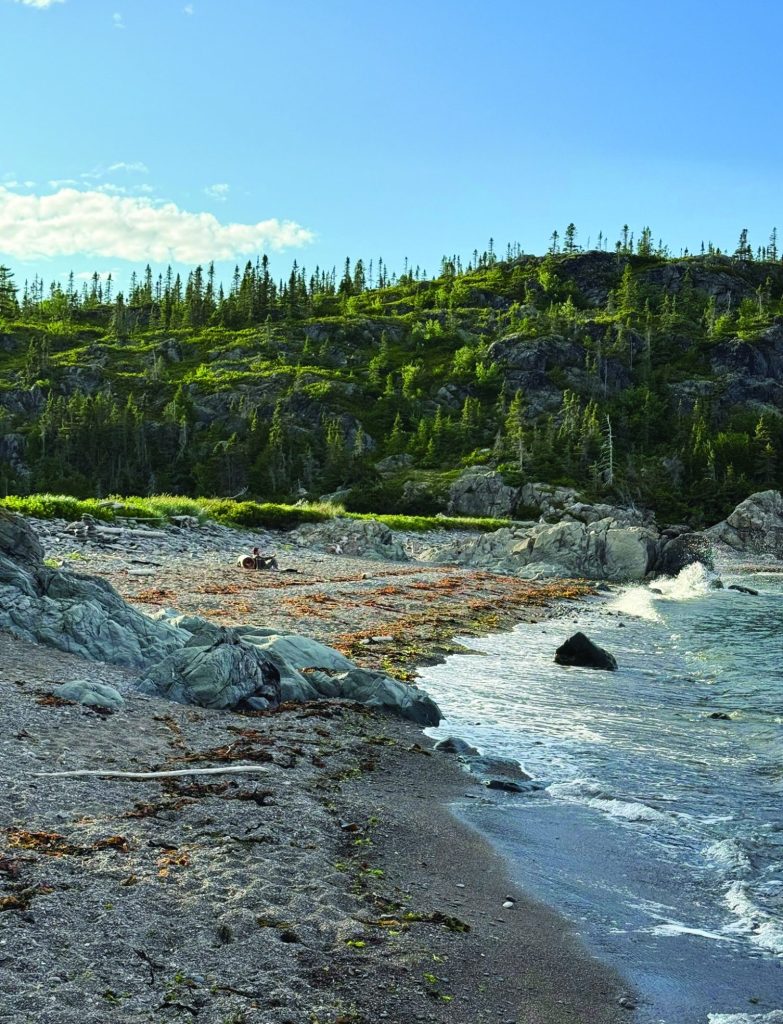
We arrived in the evening just before sunset. There was no time to waste; I walked straight to the nearest beach. With no expectations but plenty of adrenaline, I snapped on my go-to, bone-colored 4½-inch Rebel Jumpin’ Minnow and waded in.
On only my fifth cast, the water erupted. A fish absolutely annihilated the lure, its silver flanks flashing in the evening light. It was a striped bass—and the pursuit was officially on.
We spent the next two weeks exploring that vast, raw coastline, targeting stripers on surf, fly, and light tackle. It was an experience so profound that we returned the following summer, even carving out time for a pit stop on Prince Edward Island to see just how deep this Canadian striper gold mine really went.
Canadian Striped Bass: Biology and Behavior
In appearance, Canadian striped bass are identical to their U.S. cousins—shimmering silver with unmistakable dark, horizontal stripes. However, their life history and behavior tell a very different story. The Committee on the Status of Endangered Wildlife in Canada (COSEWIC) identifies three distinct populations: the Bay of Fundy, the St. Lawrence River, and the Southern Gulf of St. Lawrence. We were targeting the recently recovered Southern Gulf stock, a population that had plummeted to a mere 3,000 to 5,000 spawning fish in 1993, only to rebound so successfully that a recreational fishery was reopened in 2013.
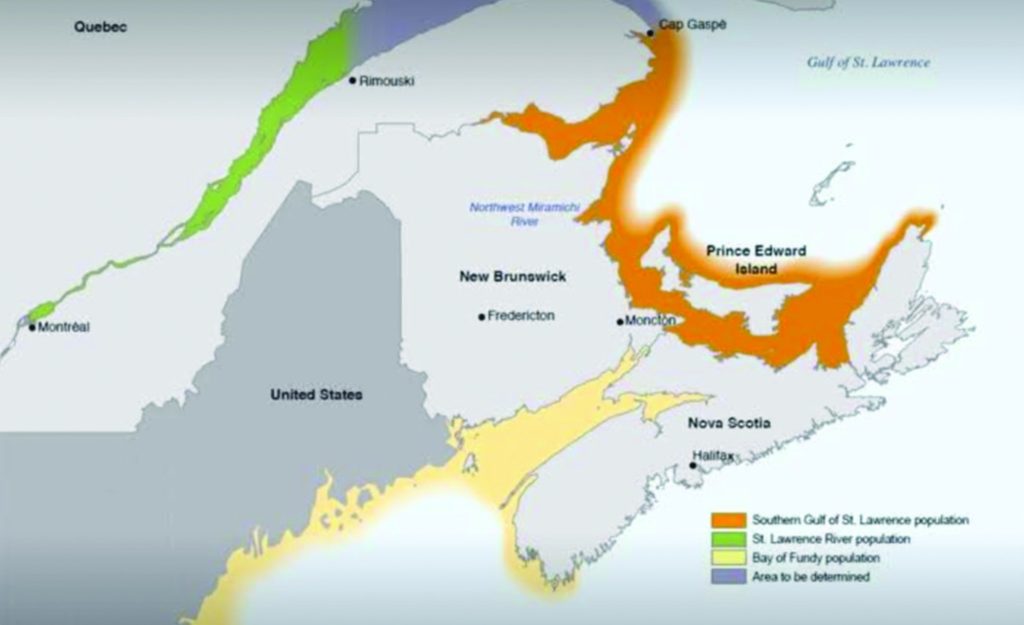
Each late May and June, these fish arrive in massive schools to spawn in New Brunswick’s Miramichi River. Afterward, they begin their annual migration. But unlike the single-directional, coast-wide migration we see in the U.S., the Canadian bass disperse. They move north, east, and south, fanning out across Cape Breton Island, Prince Edward Island, and the entire Gaspé coast. By late October, most retreat to deeper offshore overwintering zones before returning to the Miramichi in the spring.
In terms of the genetic behavior of Miramichi striped bass, here’s what Dr. Linas Kenter, a fisheries scientist from the University of New Hampshire, had this to say.
“In the US, we’ve stocked everywhere with every strain, which has caused homogenization, but those Canadian fish have remained genetically isolated. They grow slower as juveniles and adults, but they have counter-gradient variation in growth. As larvae, they grow really, really fast to reach a certain threshold size before the short northern growing season ends and winter begins…We can tell Canadian apart from Atlantic fish quite easily because they’ve been so isolated geographically.”
Perhaps most fascinating is their stress response—or lack thereof. Dr. Kenter noted that while U.S. strains show high cortisol levels when handled or transported, the Canadian fish are “complete flatlines.” You can stress a Canadian striper and it will return to feeding almost immediately. Built to be opportunistic and efficient, they simply cannot afford to miss a feeding window in their short season.
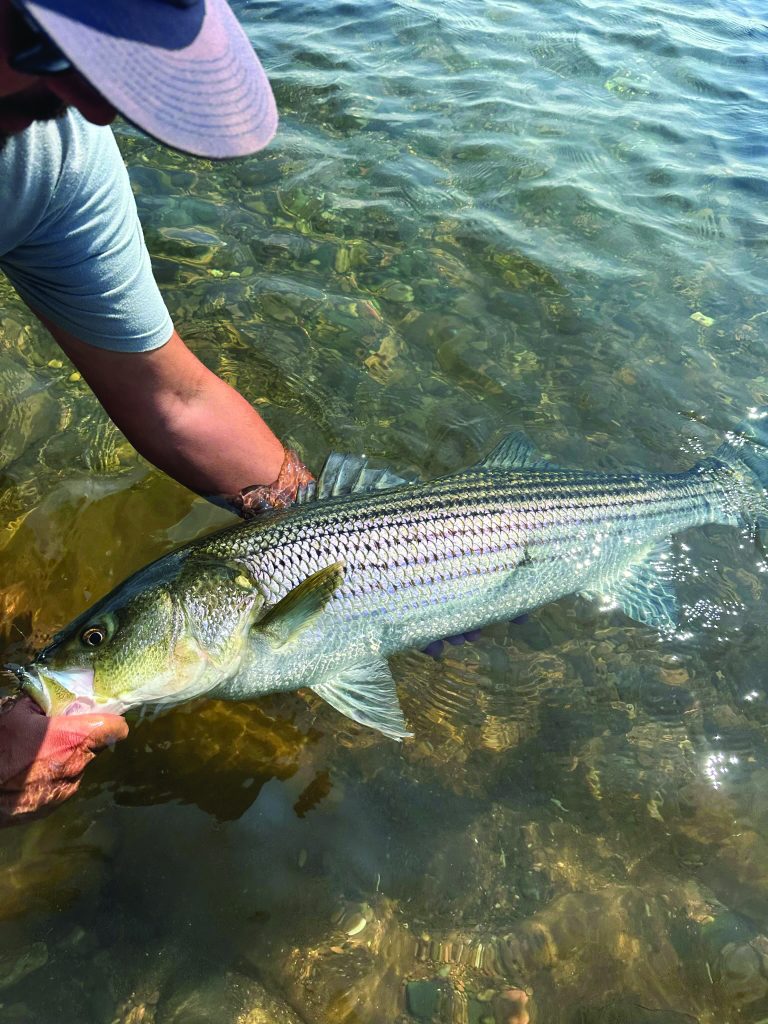
This efficiency is born out of necessity, as I noticed a striking lack of bait diversity compared to Long Island. The southern Gulf is a cold, low-productivity ecosystem where the diet is dominated by just a few key species: Rainbow smelt in the spring, sand eels in the warmer months, and various types of shrimp and other crustaceans like scuds on the flats.
By late July, massive blitzes on sand eels become a daily occurrence. Standing on a deserted beach, you might see thousands of stripers engulfing bait within casting range, much like the north side of Montauk on a crisp fall morning—except here, you won’t see another soul for miles.
As we moved south toward Prince Edward Island, we began finding more familiar forage. Schools of silversides—also known as “spearing”—pushed into the tidal flats and huddled under the shadows of bridges. In the deeper, rockier structure, we suspected the larger bass were keyed in on Atlantic mackerel.
While many of the fish we found were schoolies in the low 20-inch range, the potential for larger fish is undeniable. Local guide Alexandre St-Onge of Rats De Marees landed his first 40-inch striped bass this year—a milestone for any Gaspé angler. Though debate continues regarding the genetic size cap of this stock, Andrew Murphy believes the best is yet to come. With the fishery only reopened for twelve years, who’s to say a true Canadian behemoth isn’t lurking in the next fjord? Who’s to say you can’t get that true Canadian cow. Only time will tell…
The Witch’s Rock: Midnight in the Gaspé Surf
By nightfall on our first evening in Quebec, we met up with Alexandre. We had connected on social media months before the trip, drawn together by a shared obsession. Alex (like myself) grew up watching John Skinner videos, meticulously studying U.S. surf-fishing history and lore. But while I was fishing the hallowed stomping grounds of Skinner’s backyard, Alex was applying those same hard-won tactics in the surf a thousand miles north.
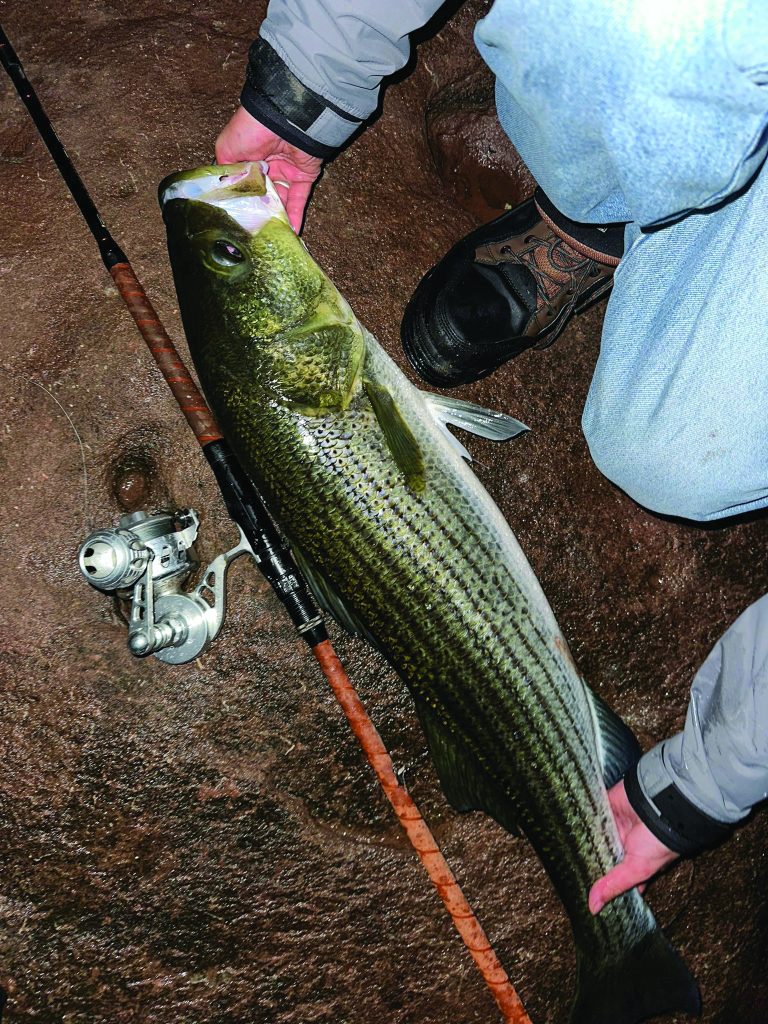
Over the last decade, he had amassed a collection of U.S. surf plugs that would rival any serious angler back home—hundreds of rare metal lips, darters, and needlefish. Milk crates filled the bed of his Toyota Tacoma, alongside a battle-worn Van Staal VS250 paired with a 10’6” Savage Gear Battletek rod. Looking at his gear, I couldn’t help but think this had to be the farthest north a Van Staal reel had ever been owned.
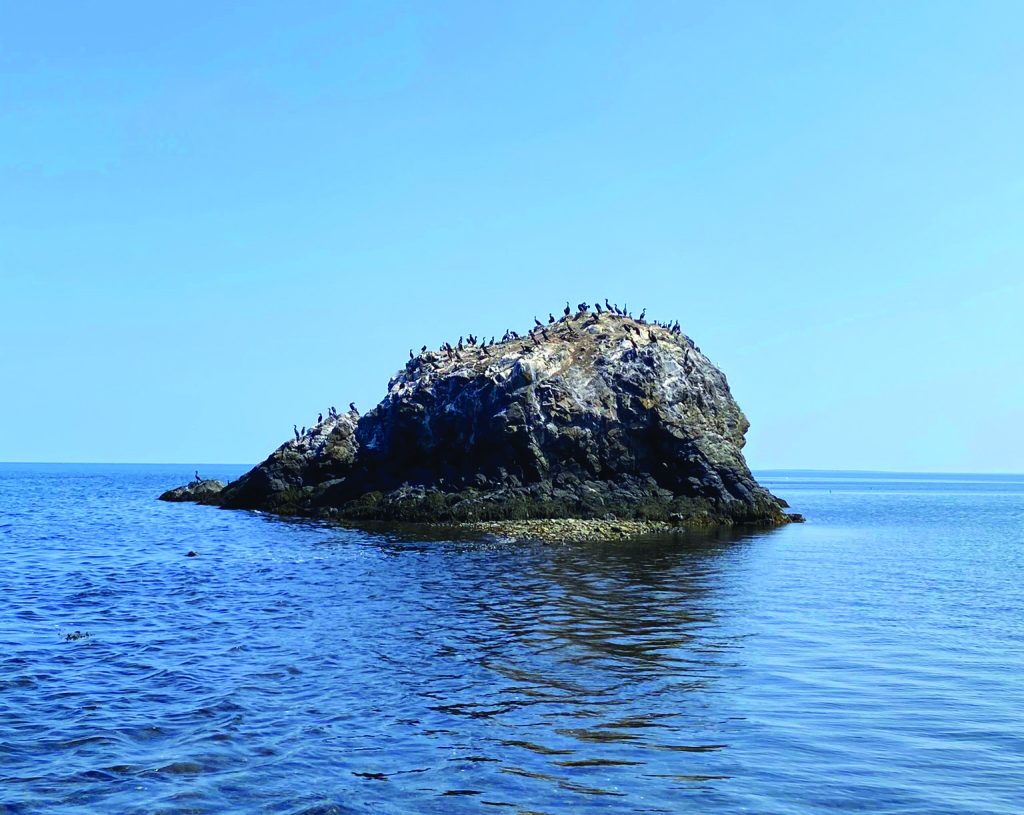
We began a twenty-minute hike toward a rocky stretch of coastline he called “The Witch’s Rock,” named for a jagged stone formation that resembled a witch’s head emerging from the cliffside. The spot was a surfcaster’s dream: a prominent point littered with submerged boulders and characterized by shallow, moving water.
We arrived just as the incoming tide began to push. Alex insisted that lower tides offered the optimal window here. The massive tide swings in this region can make many spots too deep to fish effectively at high tide, especially around the moon. After a few minutes, we were into fish—a slow but steady pick of schoolie-sized bass. A slow retrieve on Mag Darters did the trick. All of our plugs were modified with single inline hooks, as trebles are strictly prohibited in Canada for striped bass.
On the walk back to the truck, I asked Alex “What’s the point of a 10’6″ rod and VS250 if there aren’t any fourty-pounders here? Why not scale down?”
And to that he smiled and said “You never know when you might hook into the fish of your life!”
I couldn’t stop thinking about that spot, and a year later, we returned to see its full potential. We had spent the previous few days exploring new ground with Alex along the Gaspé coast. Earlier that day, we had been out on his boat and marked some large schools of bass on the side-scan, but they were incredibly finicky. We knew the fish were there; we just needed the cover of darkness to trigger them.
Alex told us about a breakthrough he’d had a few nights prior: a giant metal lip plug paired with a sand-eel teaser fly. The large plug mimicked a predator chasing a sand eel, which seemed to provoke the otherwise cautious bass into a competitive strike. If you downsized the main lure, the bite would die—the key was using a massive presentation to arouse the fish and trigger a reaction.
When we hiked back out to the point, the tide was still high, keeping the rocks we wanted to stand on submerged. As the water dropped, we moved onto the structure and finally reached the outgoing current line with our casts.
The bite turned on like a light switch. For three hours, we caught a fish on nearly every cast—schoolies on the teaser and the occasional low-30-inch fish on the main plug. Anything smaller than a Super Strike darter and the action would vanish. Anything larger, and the rods stayed bent. There we were—three friends under a sliver of Canadian moon with not another soul for miles. It was a night for the books.
The Flats of Southern Quebec
A few days later, we booked a fly-fishing charter with Andrew Murphy’s service, Gaspé Coastal. For the last several years, they have been exploring the area’s untouched saltwater flats—massive, shimmering expanses of crystal-clear water carpeted with flourishing eelgrass and framed by towering mountains and rolling green hills.
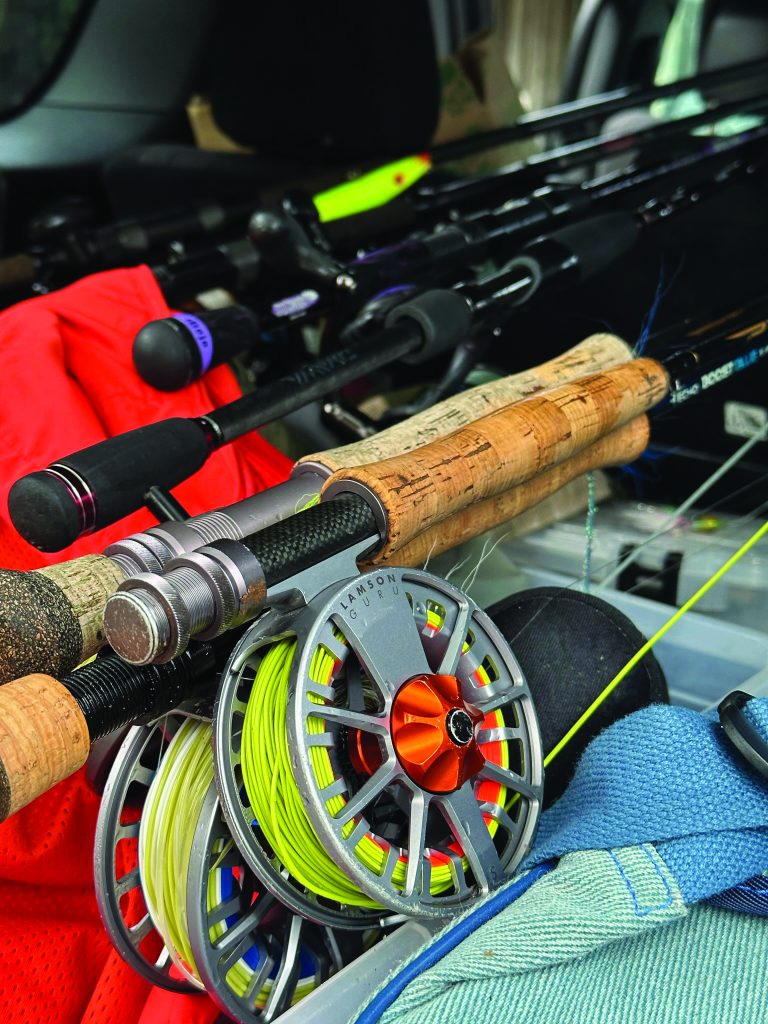
We fished with Andrew’s head guide, Andre-Philippee Losier, a local who has been pioneering these waters alongside Andrew. We met at the skiff at sunrise, and as we pulled up to the first flat at the beginning of the outgoing tide, Andre’s face lit up.
“I’ve been waiting for this all week,” he said.
Striped bass were everywhere, dimpling the surface as they fed. My partner, Zack, immediately grabbed his 9-weight and hooked into a couple of fish, but as the morning progressed, the bass became increasingly picky. The strangest part was that we couldn’t see any evidence of baitfish.
Peering into the gin-clear water, Andre pointed out the culprit: the bass were keyed in on scuds—tiny crustaceans no more than 10 millimeters long. Zack, whose background is rooted in trout fishing, was stunned to see striped bass feeding on something he was more accustomed to seeing in the Housatonic River.
As an East Coast angler, I’m no stranger to finicky backwater bass—whether they are keyed on cinder worms, spearing, or grass shrimp. I switched to my light tackle spinning rod and ran through my usual bag of tricks. Three-inch NLBN swim shads, small GT eels on worm hooks, Rapala twitch baits, topwater spooks—nothing worked, despite hundreds of bass feeding right in front of the skiff.
As a last resort, I pulled out a small Albie Snax rigged on a 1/8-ounce VMC Drop Dead 5/0 hook—a recommendation Alex had given me days earlier. Working it with a “walk the dog” retrieve just beneath the surface, the fish were on it immediately. In striped bass fishing, nothing beats the adrenaline of finding the “golden ticket” when the fish are being impossible.
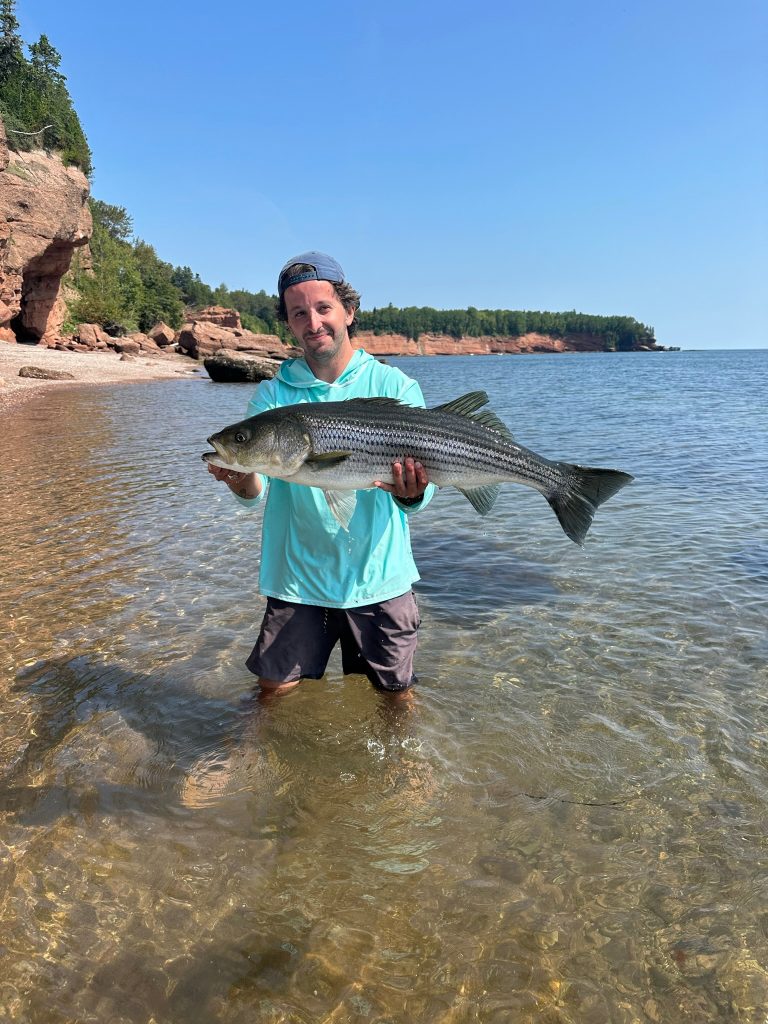
The next morning with wind a bit lighter, we made our way to another flat and the amount of fish was absolutely staggering— thousands of striped bass in tight schools meandering across shallow mudflats. After a few hours of targeting these schools as they dropped off the flats, we opted to hunt for larger fish around nearby rocky structure. I pulled out a Dark Matter Feeder Minnow spook, and eventually, a fat 36-inch fish exploded over the plug.
In true surfcaster fashion, I jumped off the boat to land the fish in the shallows. Andre stared at the fish, then back at me—it was the biggest striped bass he had ever seen in his skiff. I guess I just got lucky.
The Cliffs of Prince Edward Island
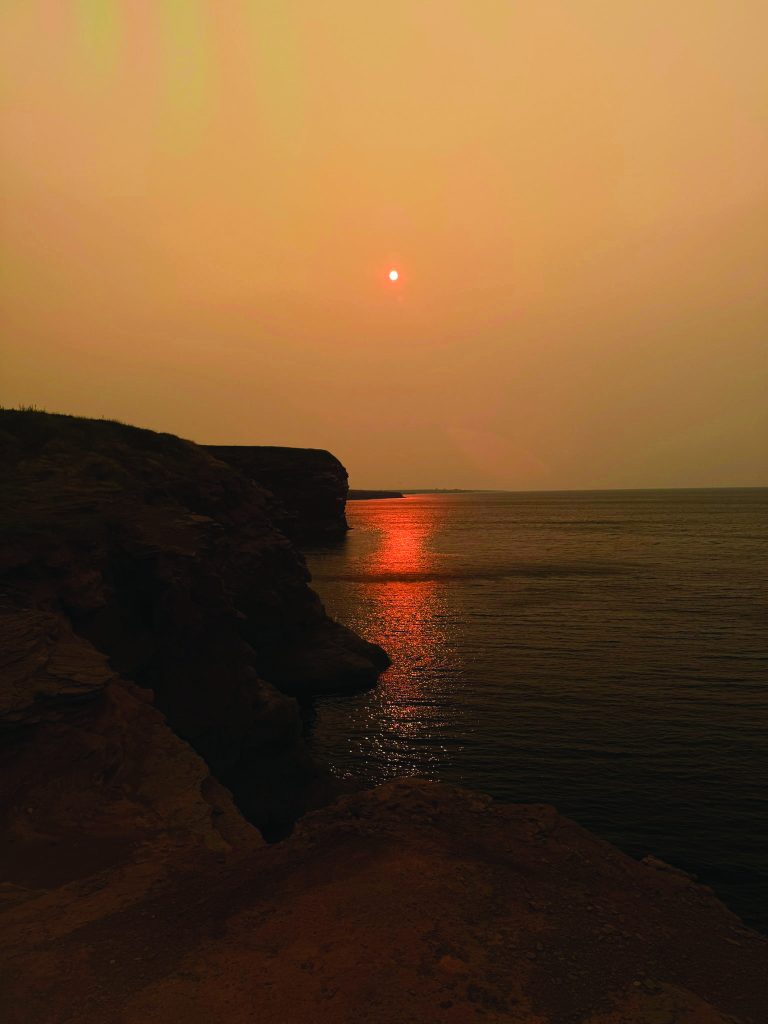
After our time in Quebec, we crossed over to Prince Edward Island and met up with local angler Mackenzie Sapier. Mackenzie grew up as a commercial lobster fisherman and has since become a pioneer of the island’s booming striped bass fishery, utilizing fly gear, light tackle, and drones to track these northern schools.
Unfortunately, we were greeted by a neap tide—effectively an all-day slack with little to no water movement. While this is a rare occurrence in my home waters, it’s a regular occurrence in PEI. We hit several inlets, flats, and outflows along the North Shore but didn’t have a touch all day.
One spot in particular stood out: it required us to plunge down a 100-foot cliff to reach a rocky point that plunged into deep, swirling water. Standing there, it felt more like the rugged coast of Ireland than the East Coast. After an hour of throwing Cotton Cordell pencils and topwater lures into the calm, lifeless water, we cut our losses, said farewell to Mackenzie and decided to instead sample PEI’s renowned local seafood.
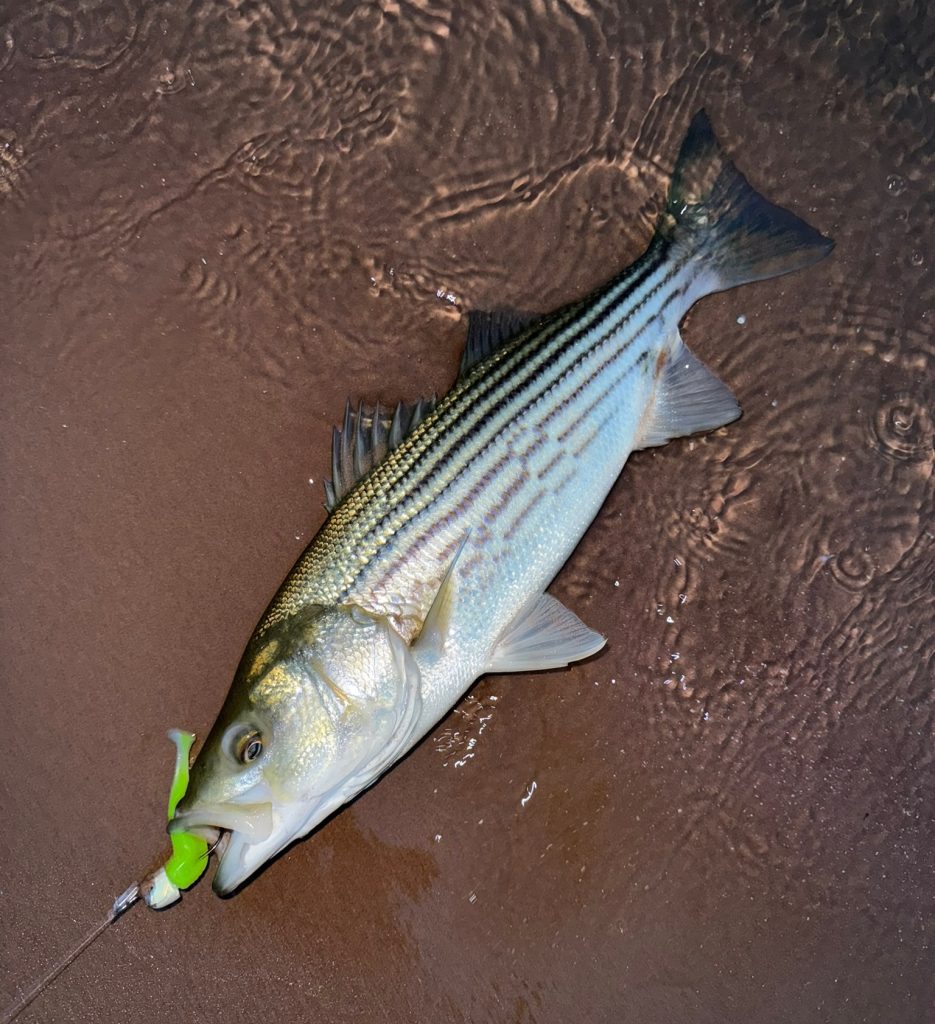
At sunset, the tide finally began to move, and we returned to a North Shore outflow. We were immediately into a steady pick of mid-20-inch fish on topwaters and paddletails. With the skunk officially washed off, it was time to break out the heavy surf rods and hunt for something bigger.
The following night, the weather shifted with a sudden 25-knot onshore north wind. We suspected that the combination of the wind and incoming tide would push bait right up onto the rocks beneath the 100-foot cliff we had scouted the day earlier.
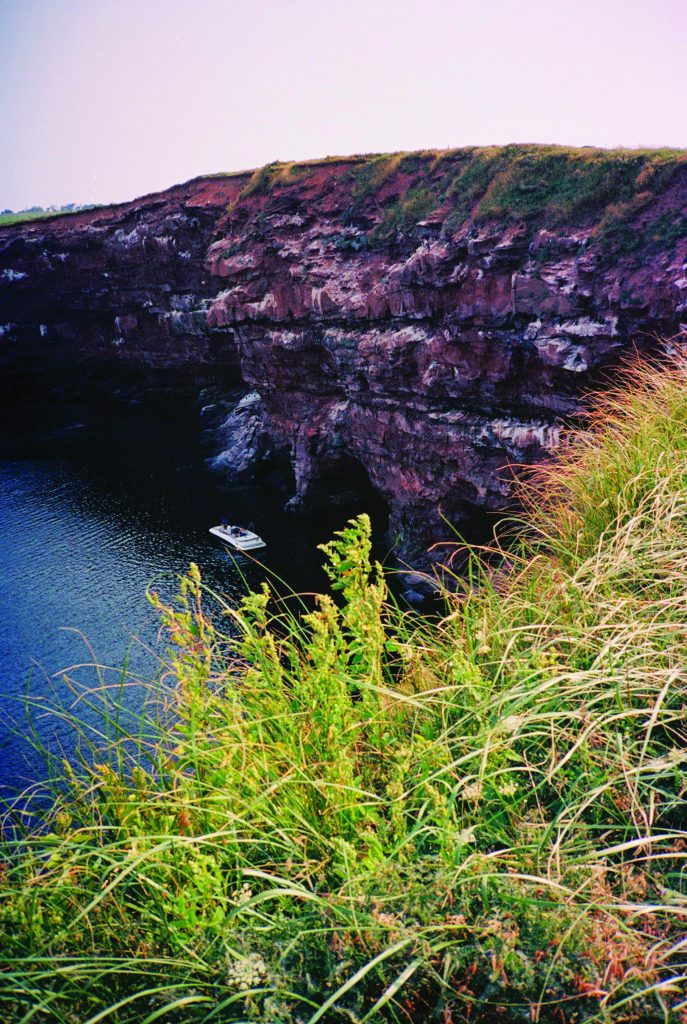
As we pulled up to the spot once again, I had that high-tension feeling when you just know a legendary night is unfolding. With our 10-foot surf rods and VS200s in hand, we climbed down the rock face once more, possibly the only anglers to ever attempt fishing this spot under the cover of darkness.
Howling wind, turbulent surf pushing up from deep water on the rock point, and four casts with a black and gold Super Strike darter was all it took to get the bite going. Once we dialed it in, it was fish in the 30-inch class almost every other cast. While other swimming plugs performed, it was the Super Strike darter and Al Gags paddletails on ¾-ounce Z-man jigheads that stole the show.
Waves of fish moved through, and I peered down in the water and envisioned hundreds of striped bass pinning Atlantic mackerel onto the rocks. Stripers in their purest, wildest form—untouched and unaffected by the modern world.
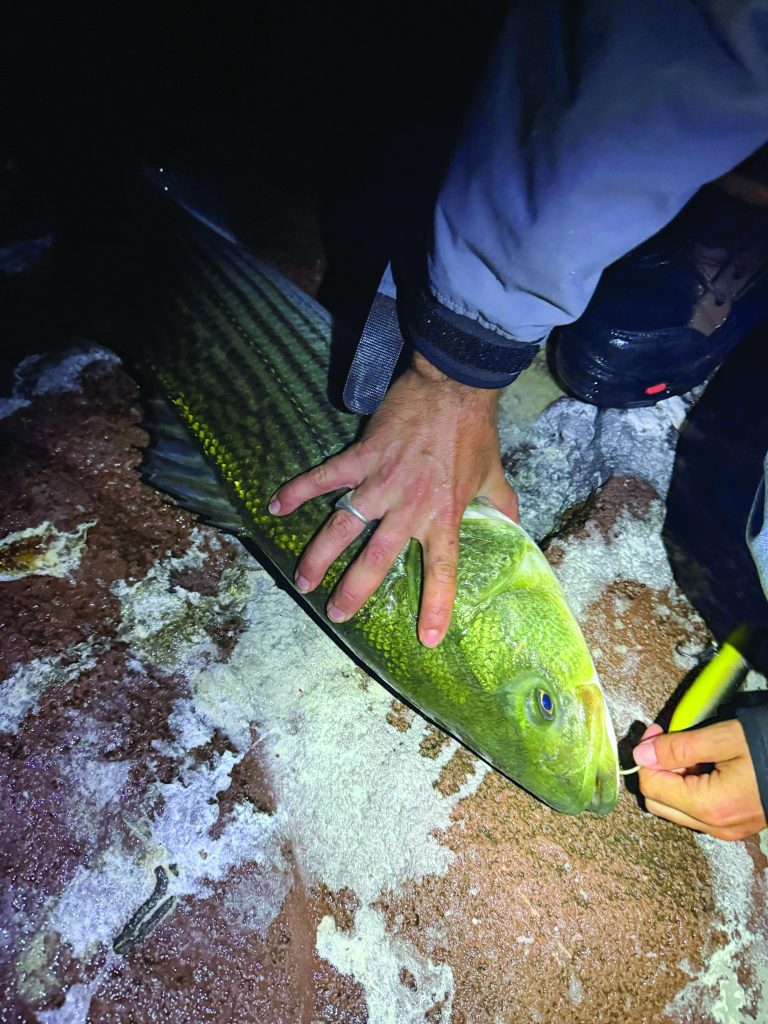
Around 2:00 a.m., as the tide began to die, I took one final cast with a chewed-up soft plastic. Just as the lure reached my feet, the drag started screaming. I immediately felt that adrenaline-fueled pit in my stomach; this was the fish I’d never forgive myself for losing. It pulled me deep into the rocks, forcing me to scramble down the point to stay level with it. After a frantic few minutes, a 37-inch striped bass lay at my feet—my new Canadian personal best.
In Eastern Canada, a fish of this size is significantly older than its U.S. counterparts, carrying the rugged character of a true survivor. This bass had likely weathered countless frigid winters and spawning cycles along this untouched coastline. A careful release, and off she swam. The next morning, we began the 15-hour haul back to New York City with permanent smiles, already counting down the days until our return next summer.
A Fragile Balance: Stripers and Salmon
The recovery of the Miramichi striped bass is a remarkable conservation success story. From a precarious low of just 3,000 to 5,000 spawning fish in 1993, the stock exploded to a peak of roughly one million fish by 2017. Even with today’s numbers stabilizing between 300,000 and 500,000, the population remains at historically healthy levels.
However, this comeback has birthed a complex and often heated controversy. Much like the striped bass is to the U.S. Northeast, the Atlantic salmon is the bedrock of Eastern Canada’s fishing identity—and they are in serious trouble. The spawning stock in the Miramichi River has plummeted by 86% since 2012, part of a broader 40% coastwide decline since the 1980s.
In September 2025, The Guardian published an article analyzing this growing conflict, noting that salmon conservation groups believe the massive spawning biomass in the Miramichi is hindering the ability of young salmon to migrate out of the river alive. These groups have called for the spawning bass population to be slashed to 100,000 fish and have even filed a lawsuit against the Canadian government, alleging that Fisheries and Oceans Canada (DFO) failed to ensure a balanced ecosystem.
In the meantime, the DFO has raised the indigenous commercial striped bass quota from 50,000 to 175,000 for New Brunswick’s Mi’kmaq communities. Many serious striper anglers I met, like Alex and Mackenzie, are concerned that this increased pressure is already degrading the quality of the fishery coastwide.
Andrew Murphy offers a more nuanced perspective, cautioning against the party line that stripers are the primary culprit of the salmon decline.
“When you talk to most fishery biologists, it’s a lot more nuanced—are striped bass helping the salmon population? No. But are they an attractive target for salmon conservation groups to label as “the devil”? Yes.
So there’s this weird underlying current where some people see them as a “trash fish” or a nuisance, even though they’re a local fish that’s been around for thousands of years. I don’t think the commercial fishing is affecting them much because they’re not even close to filling that quota. …before the striped bass population settles into a comfortable number; we’re going to see swings.”
These species have coexisted for millennia. Research suggests that salmon are struggling coastwide—even in rivers where striped bass are entirely absent—pointing to high mortality in the open ocean, far beyond the reach of coastal bass.
Despite the friction, stripers are continuing their northward march into waters once thought impossible. The St. Lawrence River population, which was completely extirpated by the late 1960s, has seen a miraculous return. Between 2002 and 2015, over 19,000 juvenile striped bass of Miramichi origin and 34 million larvae were stocked into the river to kickstart the recovery. Natural reproduction was first confirmed in 2008, and by 2011, key spawning areas were identified at the mouth of the Rivière du Sud.
Today, these fish are pushing even further; a CBC article noted striped bass being spotted as far north as Cartwright in Southern Labrador in 2017—a distance more than twice the length of the trek from New York to Quebec.
Regardless of the debate — it’s clear that striped bass are not going anywhere anytime soon. They are a fish that defined generations of anglers in the United States, and it is my hope that this new generation of Canadian anglers will learn to cherish them with that same fire. For anyone seeking a true fishing adventure, I cannot recommend this trip highly enough; there are countless miles of wild striper coast just waiting to be explored.
Special thanks to Alexandre St-Onge from Rats De Marees, Andrew Murphy & the Gaspé Coastal team, Mackenzie Sapier, Dr. Linas Kenter, and my fishing partner Zachary Kantor.
READ MORE