

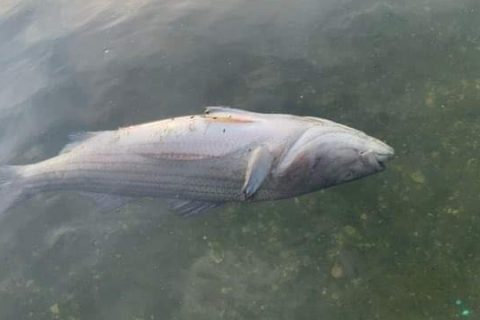
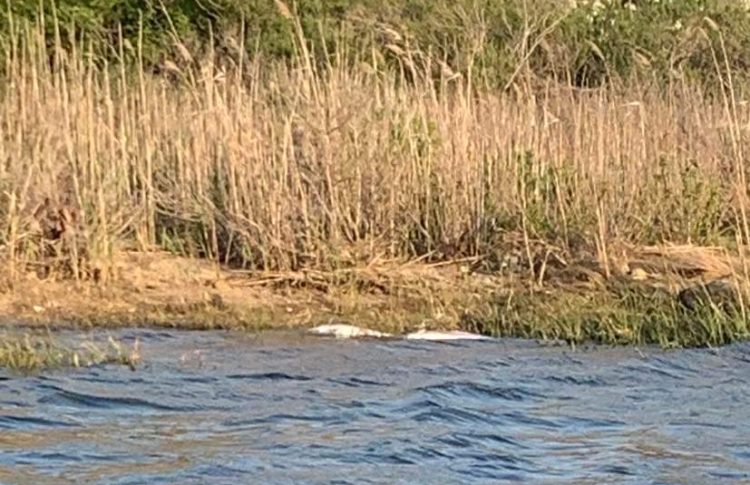
Dozens of dead striped bass washed up on the shores of Great Pond and Waquoit Bay late last week, sparking concern among fishermen and residents. Scientists from the Massachusetts Division of Marine Fisheries (DMF) have investigated and believe that the fish kill was related to a cinder worm spawning event in the area.
DMF fish biologist Benjamin Gahagan said that several days of intense feeding on the spawning worms is likely what caused the fish kill, possibly through an unknown toxic effect from consuming large quantities of the worms or from a physical effect caused by the worms clogging or injuring the stripers’ delicate gills. The dead fish the DMF observed had stomachs full of worms, and the worms were also found in the fish’s gills.
View this post on Instagram

Due to the fact that the fish kill only seemed to affect striped bass, and not any other species in the area like mummichogs, silversides, herring, or menhaden, it is not believed to be related to any water quality issues. DMF officials also looked at the fish for injuries related to fishing gear but found none.
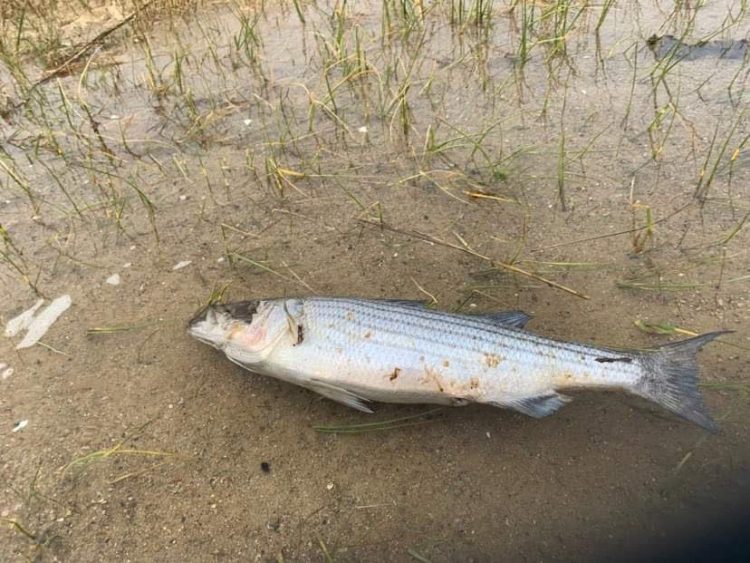
Cinder worms are small aquatic worms that live in the mud of salt ponds and estuaries. Spawning events occur in spring, attracting newly arrived striped bass that are often targeted by fishermen.
Gahagan said that it appeared to be a one-time event that is not ongoing. If fresh-dead striped bass continue to appear, they would continue their investigation.
This whole thing sounds ridiculous like an April fools joke really.
Draggers?
Location far up inside salt ponds made it unlikely the result of any dragging activity out in the sound
What i don’t understand is, you mean to tell me that this has never happened before. If not, I guess we can chalk up another one to Global Warming?
Does Mass. use gillnets in or near the salt ponds?
Not due to worms. Such BS
Fertilizer is the culprit.
Dragging not any dragging going on in salty ponds.
ive seen countless fly fishermen at work (I’m an oyster farmer) just leave the fly in an undersized and oversized striper before and I just find them at low tide intact with nothing but a fly in the throat and rotted in the sand really sad these guys eat veggie paninis over the fish they catch.
I believe a more thorough investigation would be in order to find out exactly what killed those stripers. There are worm hatches every year and stripers don’t gorge themselves to death in large numbers. There is likely a secondary cause we won’t know about because this event was not studied well enough. I understand that cinder worms were found in the gills of the dead fish. The worms might simply have tried to swim out of the fish after the fish died and got stuck in the gill plates.
The science and scientist are objective. Believe them or read the tea leaves. You decide.
The striped bass population going down a lot probably from this