
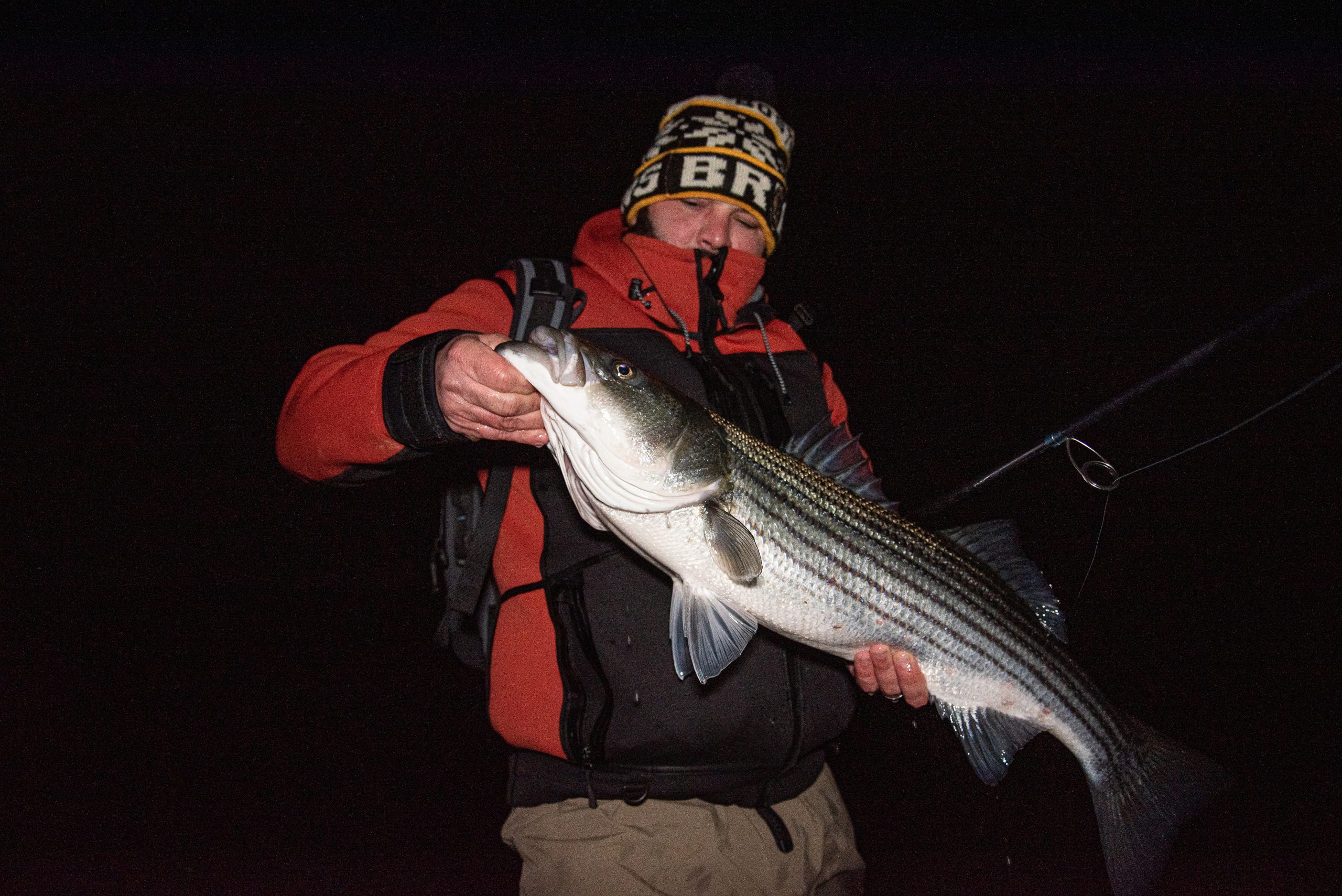
My striper season usually begins in March, whether that’s for holdovers in New England, or for the mix of resident and migratory fish in my old home waters of Northern New Jersey, the lures and strategy are pretty much the same, and have remained mostly unchanged for the past 25 years.
My striper box has the least interesting assortment of lures of the entire season. With the bass concentrated deep in bays or rivers, limiting their activity to the parts of the day (or night) when the water is a little bit warmer, there’s a small assortment of lures that can get in front of the fish, and stay there long enough to get the bite. These quieter backwaters call for small, subtle presentations that can be worked slowly and allowed to linger in the strike zone long enough to convince a chilly striper to bite.
Small Straight Tail Plastics on Light Jigheads
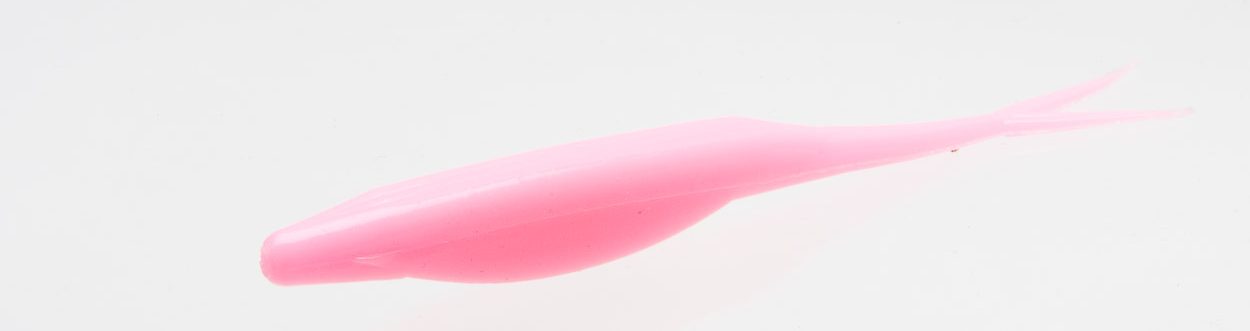
The undisputed lightweight champion of March fishing in the backwaters is a small fluke-style soft plastic on a jighead. Back in my sodbank-stalking and bridge-hopping days of the early 2000s, I fished Kalin’s jigheads with 5-inch Bass Assassins, Zoom Super Salty Flukes (always in the bubblegum color), Bass Kandy Delights, and Fin-S Fish. These days there are many more options, especially for jigheads, but the general presentation remains the same.
Depending on the depth and current speed, the best jighead size is as light as 1/4 ounce or as heavy as 3/4. For whatever reason, 3/8-ounce jigheads seem to be the sweet spot for most of my backwater striper outings.
For the plastics, 5 inches is still the perfect size, but I’ll fish 6-inch and 7-plastics–especially with skinny, eel-style baits like the Gravity Tackle GT Eel. Later in the season, when big bass are around, I’ll be using soft baits more than twice this length, but at the end of the winter, especially this winter, I just want to get some bites, and I get the most bites this month with 5-inch fluke-style plastics.
I still carry my packs of pink Zoom Super Flukes, but I fish a lot of Z-Man baits now, like the StreakZ and Jerk ShadZ, paired with TT Lures HeadlockZ Jigheads. The buoyant ElaZtech material has a lot of movement on super slow retrieves, which I think can help with bass in the cold water.
For colors, I look no further than white or pink for clean water. If spring rains or runoff have stained the rivers and bays, opt for a louder color like chartreuse. I’ve known some fishermen to dye the tails of their white plastics a bright yellow in order to help them stand out in dirty water. I’ll sometimes add a dab of scent, like Pro Cure gel, to help the bass find the bait when the water is murky.
Minnow Plugs (Modified)
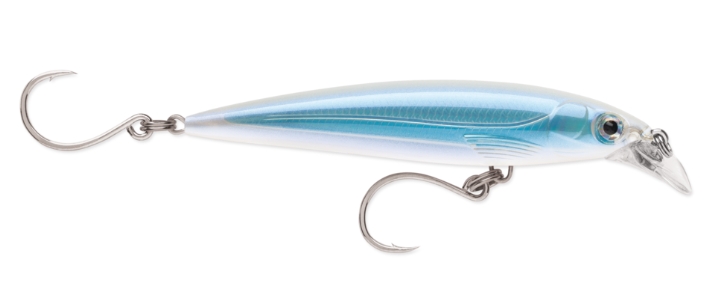
Small plastic minnows catch stripers all year, but as I learned from my friend Captain Rob Taylor, when the waters are very cold, a few minor tweaks to the plugs can make them more effective.
Most of the popular minnow plugs on the market float. They’ll dive from 3 to 5 feet below the surface and rise back up on the pause. In the very early spring, having a minnow plug that lingers in the strike zone can be a big difference. There are several slow-sinking minnows available, like the Rapala X-Rap Long Cast, that work well, but I’ve found that taking a floating minnow, and modifying it to suspend, can be even more effective.
The easiest way to turn a floating minnow into a suspending minnow is with stick-on weights like Storm Suspendots. It will take some testing and trial and error to find the right number of dots and placement. It’s also important to test the baits in or near where you want to fish, as the salinity will affect whether a bait floats, sinks, or suspends. I’ve seen Rob fish these modified minnow plugs with a similar herky-jerky retrieve like largemouth bass anglers do in freshwater, allowing the bait to pause for a few seconds, which is when he gets the bites. A slow, steady retrieve works as well, but again, some twitches and pauses worked in seem to trigger bites.
Small-ish Glidebaits
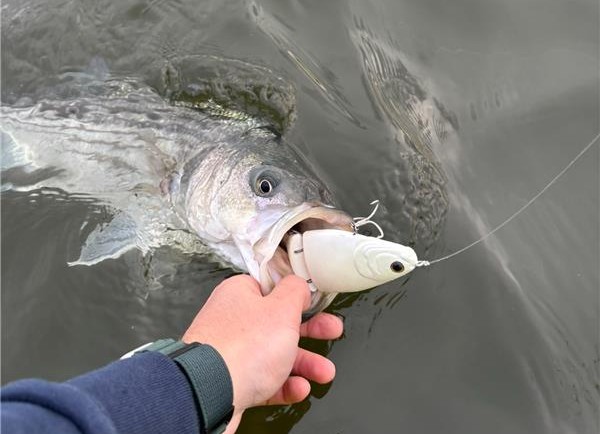
Like much of the Northeast, I, and many of my co-workers here have been swept up in the saltwater glidebait craze. While many of the most coveted baits are larger models of 8 to 12 inches long, many builders make smaller models that are perfect for fishing the backwaters. The slow sink and lazy glide activates lethargic bass, and you can fish a bait slowly enough that it stays right in front of a fish for an extended period of time. In the past couple seasons, I’ve been surprised at how large a glidebait early spring stripers will attack, but I have a couple 5- to 6-inch models I’m eager to try this spring, once all this snow and ice finally melts.
Related Stories:


Awesome giveaway! Love the gear! Count me in