
There aren’t many fish than can make a meal of a 38-inch striped bass, but bluefin tuna can.
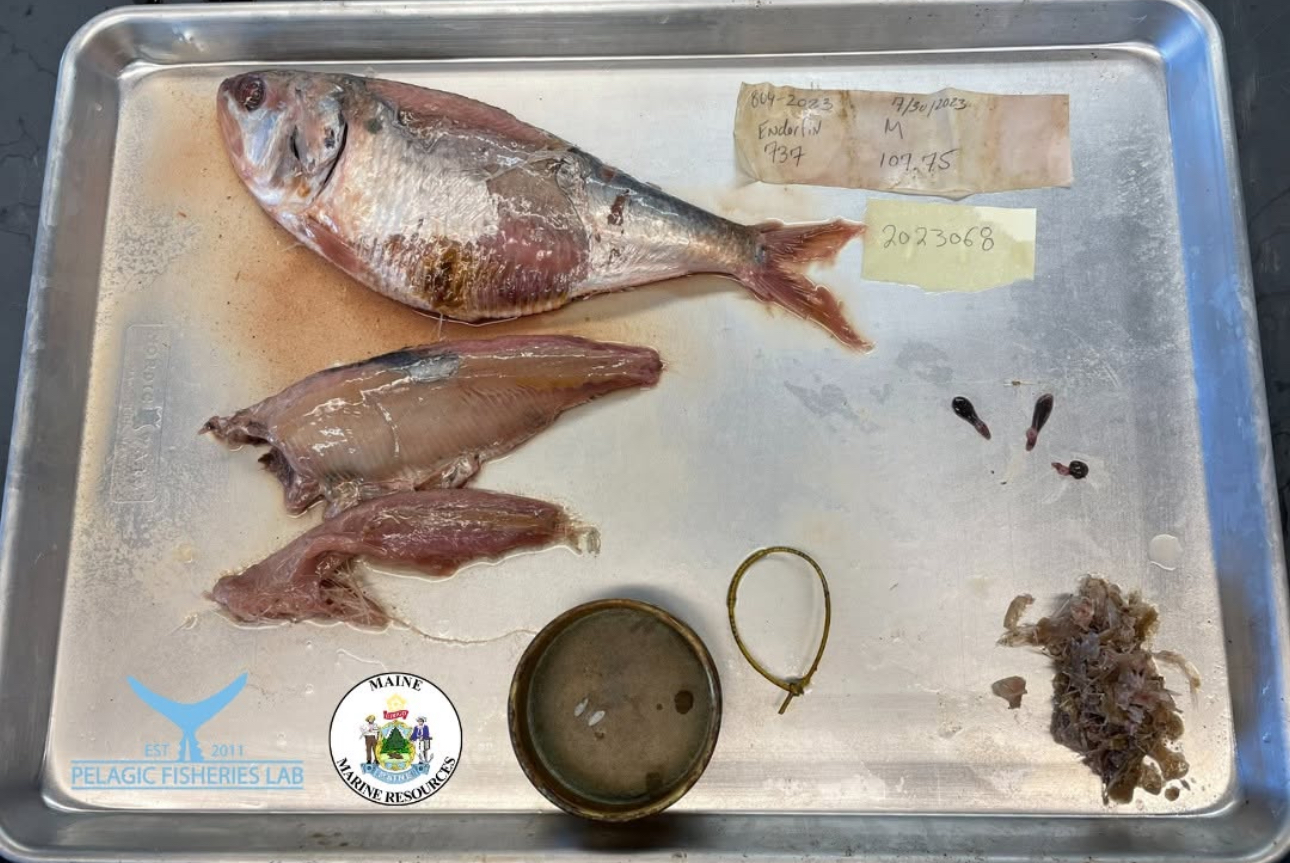
As part of a long-term study on bluefin diet, Maine Department of Marine Resources Scientist Blaise Jenner examines the stomach contents of giant bluefin tuna. One of the more interesting finds came from a 737-pound tuna caught during the Casco Bay Bluefin Bonanza on July 30, 2025. In addition to several partially digested menhaden, Jenner found an intact tag from the American Littoral Society.
Through their citizen science program, the Littoral Society distributes yellow spaghetti tags that anglers place in stripers, fluke, bluefish, and other species. Since the program began in 1965, volunteers have tagged nearly one million fish for the Littoral Society.
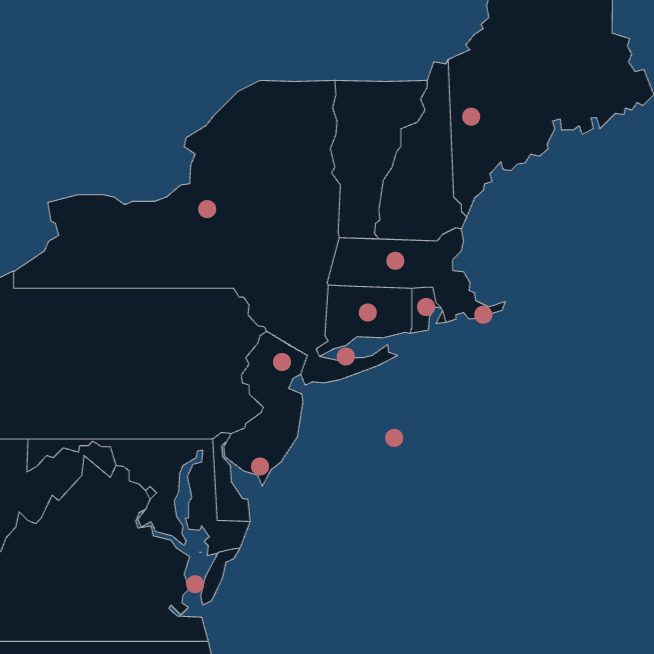
The tag found inside that tuna was originally placed in a 38-inch, 18-pound striper up the Hudson River in May 2023. It’s unclear when this striper ended up as dinner for the giant bluefin, but in a post on Instagram, the scientists from the Pelagic Fisheries Lab suggest it may have been well before July 30, since there were no traces of the striper inside the tuna’s stomach.

View this post on Instagram
To learn more about some of the work being done at the Pelagic Fisheries Lab, listen to our podcast with Dr. Walt Golet.

Thank you so much for a well-explained and understandable explanation of the historical as well as current methodology of gathering BlueFin data, better to manage the sustainability of this amazing fish stock. I understand the blending of Eastern Atlantic (Mediterranean Sea) BlueFin and the ramifications of management agencies involving and sharing with one another data, prior to policy making. What has the data shown with Western Atlantic Stock blending with Eastern stock? What is that ratio?
While doing research and using historical primary sources, I came upon many ships’ logs and seamen’s journals that described immense schools of a “fish leaping about and feeding on immense schools of smaller fish”. I made note of these records as it became clear that in the early 1700s, in the Western Atlantic, The species was very large, described as being the length of a ship’s dory, and the prey fish were much larger than what we imagine today. So interesting, especially wherein the technology was of a man and basic rudimentary fishing gear and nets versus an enormous pelagic fish that man had no knowledge of its, diet, spawning, range and feeding triggers.
Bill