This past spring was nothing out of the ordinary for me; fresh off of the pre-spawn largemouth bite, I was eager to catch my first stripes of the year. The game plan was the same as every season—use my kayak, an Old Town PDL, to find the warmest water possible in areas where bass are likely to stage before continuing their migration north. In my neighborhood, this meant locating mudflats near river mouths. The shallow, dark bottom causes water temperatures to rise much faster than in the open ocean which, paired with the last waves of river herring, make these areas striper hot spots. It’s not uncommon to find water close to 70 degrees in the first few weeks of May, especially on an outgoing tide. On a falling tide, the sun-warmed water from upriver is flushed out, and even a slight temperature change of a few degrees can make all the difference in a striper’s willingness to feed.
Until this season, my plug of choice for these conditions was the 9-inch Doc. I’d cast into areas where I knew bass would be staging and expected large blowups, but I managed only the occasional follow or swirl. The fish were clearly there, but no longer interested in eating the Doc—an issue I heard mentioned two years prior in an episode of the On The Water Podcast featuring Kevin Gould. Still, never did I think the day would come when they simply wouldn’t hit the plug at all. Had the fish lost their taste for the Doc?
There’s no denying the drawing power of the Musky Mania Doc. Striper fishermen across the East Coast have used it to entice cow bass for well over a decade, and what was once the worst kept secret is now a staple in every striper angler’s plug bag. The oversized spook still outproduces nearly every other topwater plug on the market, however, it has lost some of its magic. Any experienced angler will tell you that back when the Doc was still a “secret”, fish just couldn’t help but take a swing at it.
In recent years, those constant violent strikes from large bass seem to have dwindled. The Doc continues to call in fish as well as it has in the past, but in many instances, the aggressive surface eats have been replaced by large boils and V-wakes, as if the bass have seen the bait one too many times to commit. Have stripers wised up to the Doc? If so, it begs the question—is there a bait with equal drawing power that can take its place?
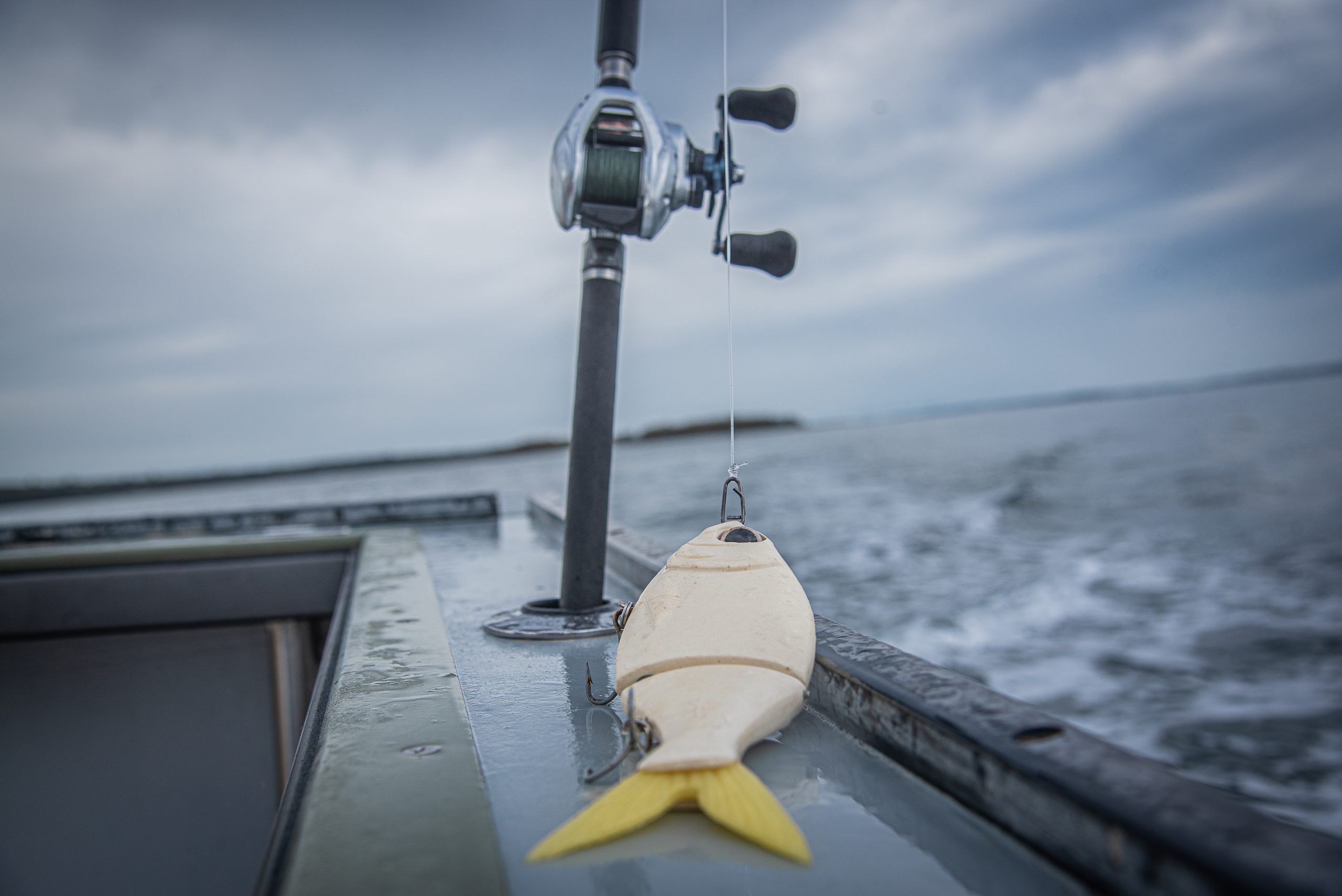
Leading up to the 2025 season, a local plug builder, Matt Carroll of Carrolls Custom Tackle and co-founder Joey Daermann, had been experimenting with a new bait he called the “Phat Boy”—a large glide bait specialized for striper fishing. Similar to largemouth bass glide baits, the Phat Boy is a two-piece bait made of resin, designed to be fished subsurface with a wide swimming action on a straight retrieve; the biggest difference from a largemouth glide bait is its size. A typical freshwater glide bait is anywhere from 5- to 8-inches long and weighs 3 ounces or more. The Phat Boy is an 11-inch bait and weighs 6.5 ounces, with beefed up hardware to withstand the power and pulling strength of large striped bass.
Matt’s initial test runs in mid April immediately yielded excellent results. Big holdover striped bass were crushing his first prototype. By early May his baits were outfishing every other traditional striper plug. I’d heard the news through his social media pages, and with it being such a difficult start to the season for me, I sent him a text and was fortunate enough to get my hands on one of his first prototypes.

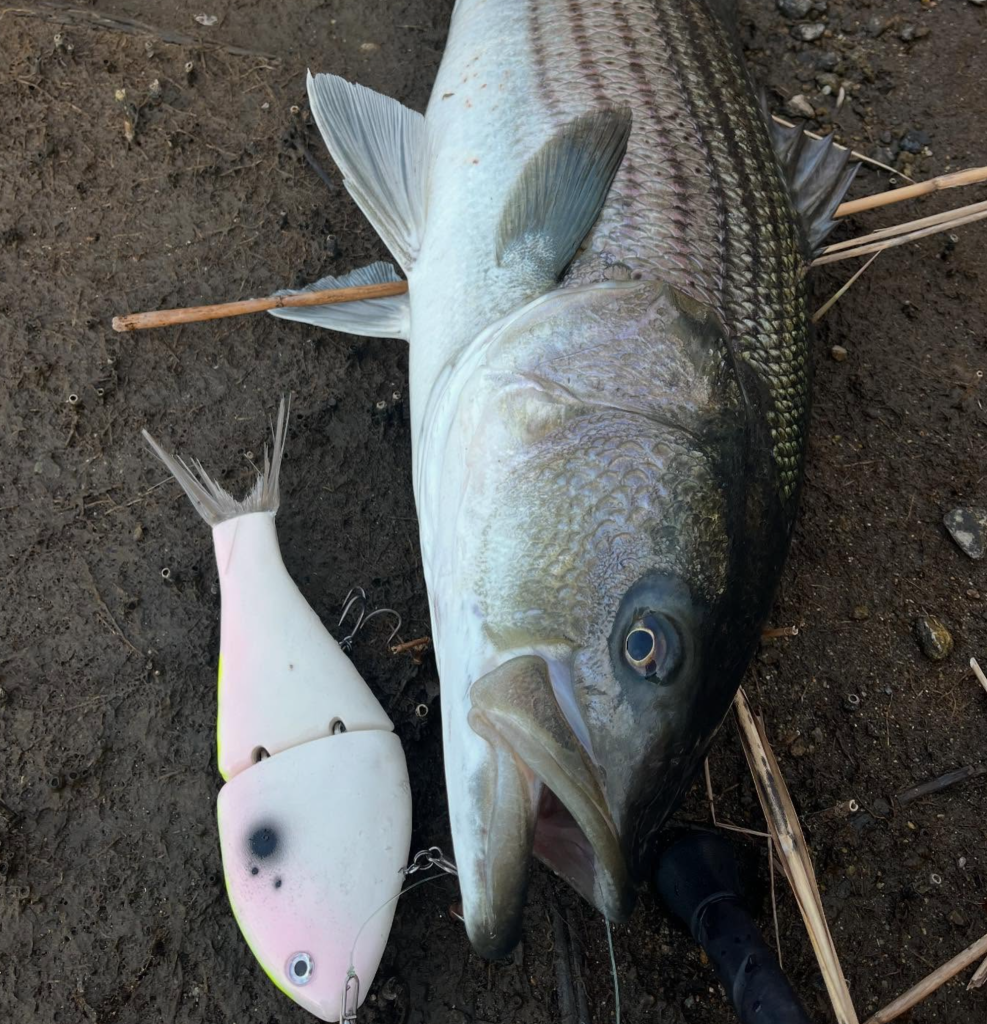
Before I received the glide bait in the third week of May, my daytime striper trips gave up only about a half dozen finicky, staging bass. These are numbers I would typically expect for just one trip. The instructions from Matt were simple: burn the bait with a fast retrieve, and try to put as much wear and tear on it as possible. Before my first outing with the Phat Boy, I’d have been content with a couple of follows, just to build some confidence that bass were interested in it. The results were far better than I anticipated, with six fish caught and all but one being over-slot sized bass, and several in the high-30 to low-40-inch range. In just one outing with the Phat Boy, it out fished the traditional plugs I had been throwing for weeks. I imagine that the first anglers who fished the Doc for stripers had a similar experience.
When designing the Phat Boy Matt had one goal in mind: to build a plug that could be burned in at a high speed, against current, without blowing out. The hard, aggressive thumping produced during a fast retrieve is extremely effective at calling in fish, which made this an exceptional search bait, similar to the Doc. During the retrieve, I found that an occasional pause can entice a fish that was just nosing the bait into striking.
Similar to other large-profile plugs, the Phat Boy is most effective during the spring run when bass are keyed in on larger forage such as river herring or adult menhaden.
Gear for Striper Glide Baits
For a bait that weighs 6.5 ounces and excels when fished on a fast retrieve, specialized gear is required for the best results.
Rod and Reel
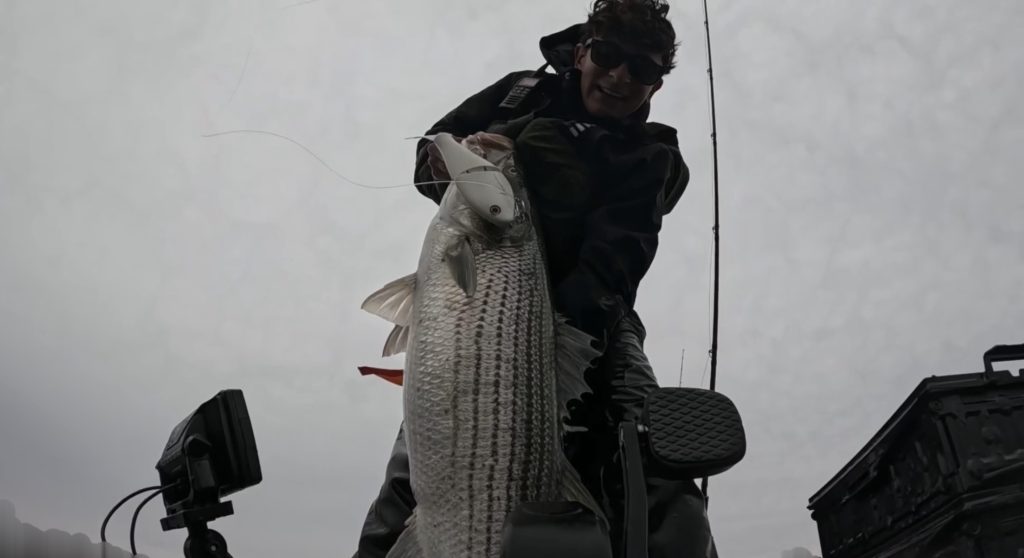
Matt has fine-tuned his gear to get the most out of the Phat Boy. He recommends a 7’10” to 8-foot rod to increase distance when lob casting such a heavy bait, which doesn’t cut through wind all too well. He wants a moderate-fast to fast action rod with a soft tip in order to help “chop” or “bounce” the bait with his reel. He prefers a rod rated for 6- to 10-ounce lures, although you can go a bit lighter. However, Matt typically fishes large boulder fields in areas with heavy current, so he needs the extra backbone to muscle big fish away from the structure. When it comes to reels, he fishes 300- or 400-size low profile casting reels. Two of his favorites are the Daiwa Lexa 300 or the Shimano Tranx 400.
Since our discussion, I’ve upgraded to a 7’6″ medium-heavy power Jigging World Retro Series Casting Rod rated for 4 to 12 ounces. The Retro Series rods offer a very moderate bend under load, which helps to keep fish pinned once hooked. I paired it with a Shimano Tranx 400B HG, which picks up 41 inches of line per crank. A reel with a higher gear ratio creates a faster retrieve speed, which is extremely helpful when burning in such a heavy plug.
Terminal Tackle
Having the correct rigging is extremely important with the oversized glide baits. The size class of fish these plugs tend to cull out, and the constant wear and tear of casting such a heavy bait requires beefed up terminal tackle. I’ve found that 65-pound, four-carrier braided line is the sweet spot; its high breaking strength will ensure your $100 plug doesn’t break off while casting, and it is still a relatively low diameter. You can fish eight-carrier braid for a slightly thinner diameter, however, the difference in casting distance is minimal. I connect my braid to a 6-foot section of 80-pound monofilament leader with a modified FG knot. The reason I use a mono leader instead of fluorocarbon is for its buoyancy, which impacts how deep the plug dives. Fluorocarbon sinks, and that makes the plug dive slightly deeper than a monofilament leader, which floats and keeps the bait just subsurface, where it is most effective.
There are a few different ways to connect the plug to the leader material. Tying direct is always an option, but you loose some action with traditional knots, and loop knots are prone to chafing. A 125-pound Tactical Anglers Power Clip is a great alternative since it eliminates chafing while still allowing the plug to articulate. However, what I’ve opted for recently is the “tuna rigging” method, which consists of a high quality barrel swivel connected to a heavy duty split ring on the nose. This method gives the plug the free swinging action of a Power Clip or loop knot, and the swivel keeps the fish from gaining leverage, meaning fewer pulled hooks.
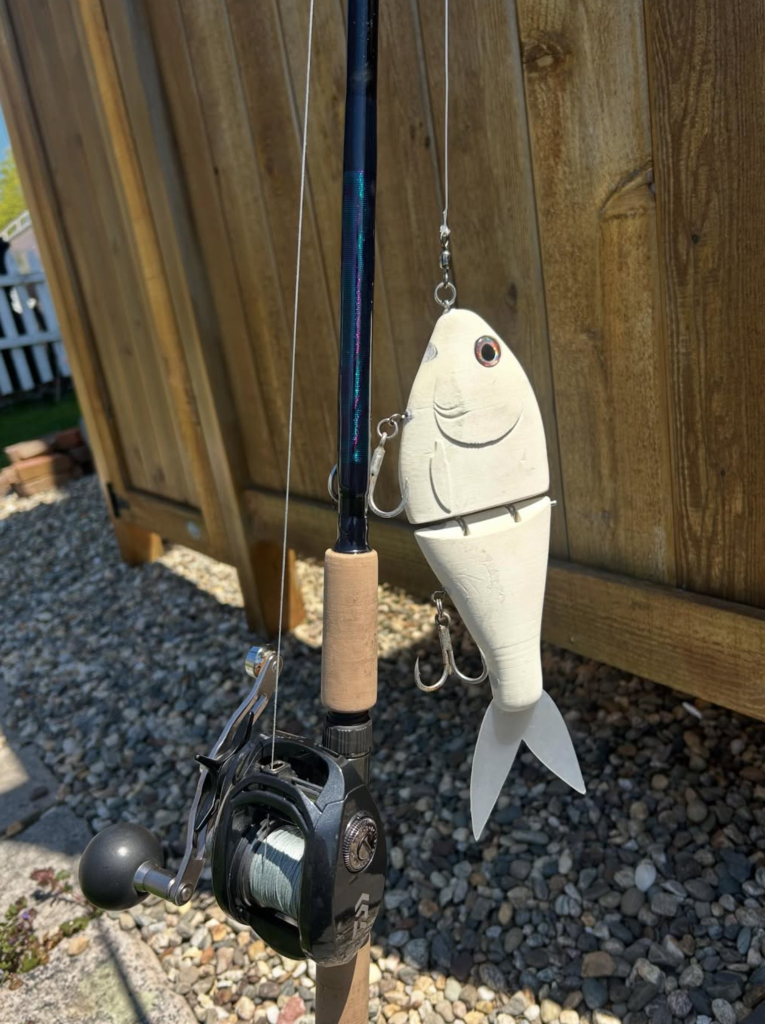
Similar to the Doc and other large plugs, bass can gain leverage on the hooks and split rings of these glide baits. The baits come stock with 2/0 BKK Raptor Z hooks and size 7 BKK split rings. The 3/0 BKK Viper 41 hooks also work well and are lighter than the Raptor Z, which gives the bait a slightly wider swimming action. Any split ring and hook combination suitable for the Doc will do just fine.
As a recent high school grad, I may have missed the heyday of fishing the Doc. However, I find myself lucky to be on the cutting edge of what looks to be the next breakthrough striper tactic. I’m sure the Doc will still catch fish for generations to come, just like the pencil popper does, but with increasing fishing pressure and nearly every serious striper angler from Jersey to Maine throwing large walk-the-dog plugs, it was bound to lose some of its magic. Lucky for us striper fishermen, we can always look to our fellow freshwater anglers for ideas on the next hot plug. Like the Musky Mania Doc, the rise in glide bait popularity has been taken right out of the freshwater angler’s handbook and might one day become just as popular as that famous 9-inch spook.
READ MORE