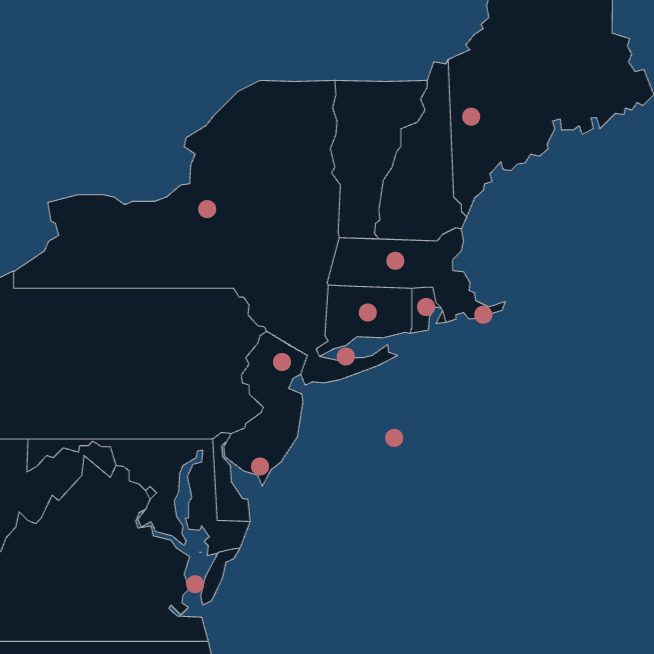

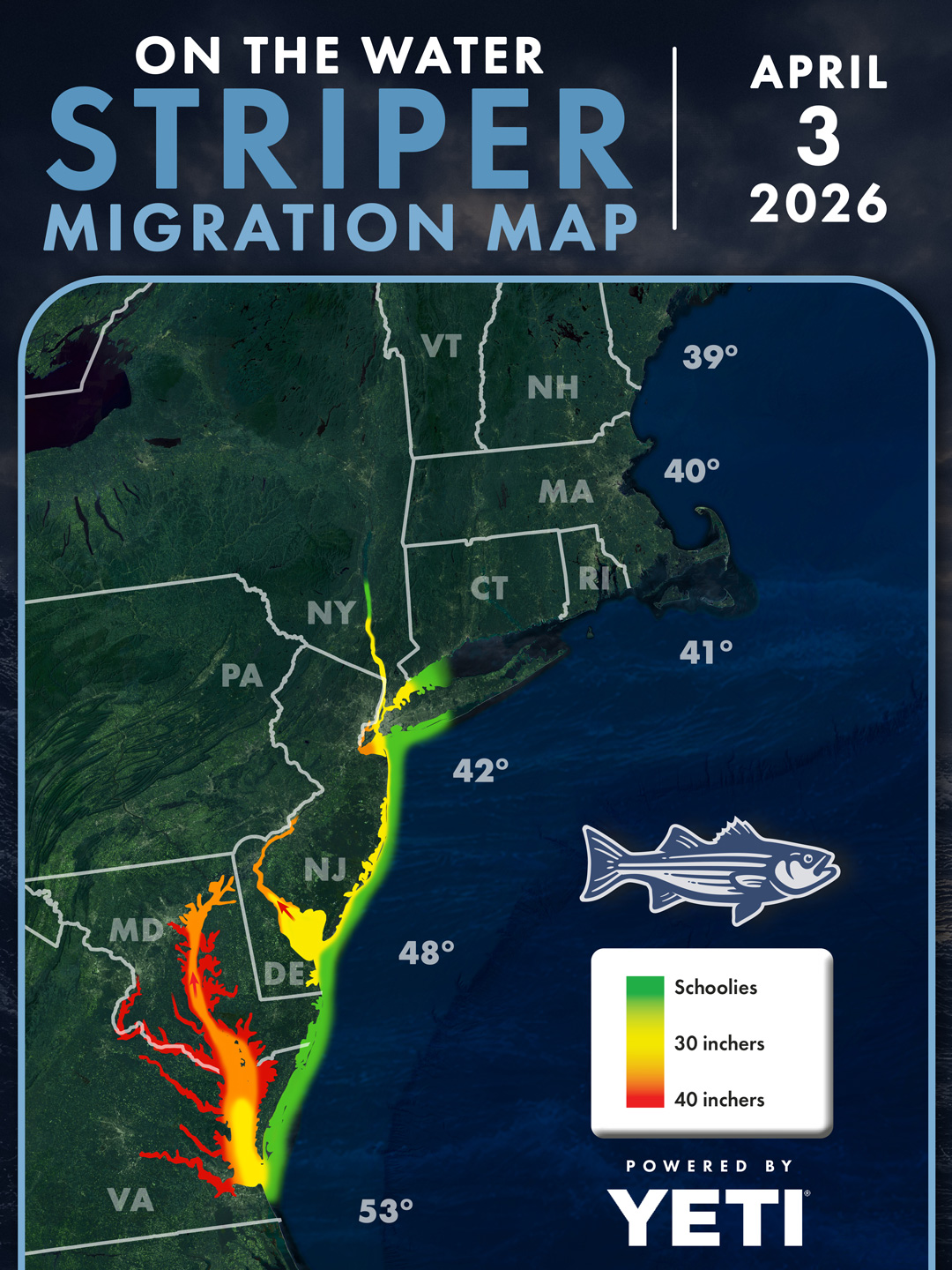
The spring run is slowly gaining momentum. Right now, much of the striper action in the Northeast is relegated to resident and holdover fish that are becoming more active as bay waters warm and baitfish arrive in larger numbers. More fish are moving into the Raritan, but the flood gates still haven’t opened. The Chesapeake fish haven’t yet spawned, but that should be happening soon, followed by the northward migration of those large fish.
Catch. Photo. WIN! Sign up for the Striper Cup today, and you’ll receive a Striper box loaded with fishing gear – a Rapala lure, VMC Hooks, striped bass hat, Columbia PFG fishing shirt, and MORE! Submit up to 3 fish per week for a chance at prizes across shore, boat, kayak and youth (under-18) division. You could even win a boat – NO CATCH REQUIRED!
Maryland/Chesapeake Bay Striper Fishing Report
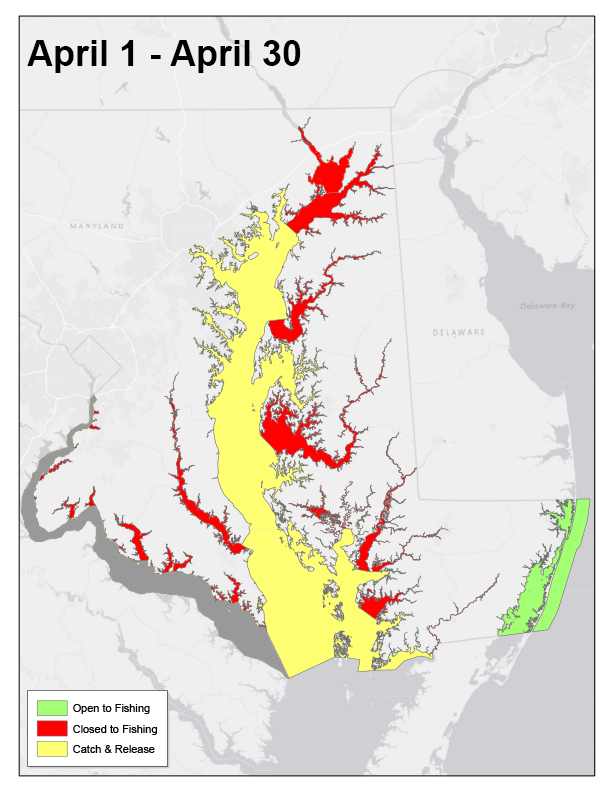
The lower Chesapeake Bay holds the best opportunity for anglers looking to catch and release stripers, as any fish still heading for the spawning grounds are passing through the area, mostly along the channel edges.
While catch and releasing fishing is open this month in the open bay, the large female fish still in the legal fishing areas are pre-spawn right now, and should be handled carefully (ideally left in the water) to ensure they can spawn successfully.
The Maryland Department of Natural Resources reports that stripers are heading for the low-salinity areas of the bay and tidal rivers to spawn, but as of this week, the DNR had not observed any spawning activity.

New Jersey Striper Fishing Report
Striped bass fishing continues to improve throughout New Jersey, with the most consistent action centered in the backwaters, rivers, and bays. Bloodworms, small plugs, and soft plastics are producing steady catches of schoolie bass, particularly around sod banks, bridges, and tidal rivers where fish are staging early in the season.
In the southern part of the state, the bite remains primarily a back-bay fishery, but warming water temperatures and increasing bait presence have activity trending upward.
Further north, the tidal rivers feeding Barnegat and Raritan bays are producing, with resident bass feeding actively as conditions improve.
The bigger development this week is the arrival of bunker in increasing numbers along the coast and into the bays, signaling that the first big wave of migratory stripers is not far behind.
New York Striper Report
The warmer weather and full moon this week had more fish moving around New York and western Long Island this week, both resident fish and fresh arrivals. Bunker are moving in, and signs point to the potential for fishing to break wide open soon.
View this post on Instagram
Connecticut/Rhode Island Striper Report
Holdover fishing remains the only story across Connecticut and Rhode Island, but the seasonal shift is underway. In Connecticut, river systems continue to produce steady catches, with herring runs beginning to build and drawing in larger holdover bass. This bait presence is a key indicator that fresh fish are close behind.
Rhode Island is still in the pre-migration phase, with no widespread reports of new arrivals yet. However, active holdover fishing is keeping striper fishermen busy for now.
Cape Cod/Massachusetts Striper Report
Alewives are filling into the runs from the South Coast, Cape, and South Shore. The first migratory stripers are still a couple weeks away.
Squid off the bridges in RI…Tight Lines and Happy Easter all!