

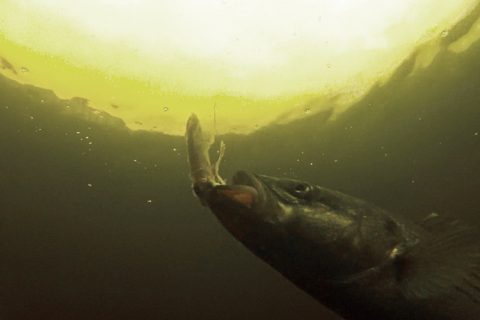

When Massachusetts banned the possession of river herring a few years back, it threw me for a major loop. Spring fishing used to be easy: net a herring, run to the end of the jetty, and toss it out. It was automatic, and life was good. When the ban went into effect, I was forced to do some major problem solving.
I knew where the fish were, but they were being uncooperative. At first I tried a variety of artificials, but none even came close to the real deal. Next I switched over to live eels, but just as I had expected, they weren’t effective early in the season. I eventually resorted to some desperate measures, experimenting with different cut baits such as white perch, mackerel and quahogs. At one point, I even considered live-lining a rainbow trout. The stripers laughed at me, but I kept on trying new techniques – I was determined not to be outsmarted by an animal with a brain the size of a marble. There had to be an alternative bait that the stripers wouldn’t reject.
I began looking back at everything that I had learned by fishing the mouths of herring runs over the years. One lesson I learned was that fishing chunks of herring was just as effective as fishing whole live ones. Ultimately I stopped caring about the labor-intensive process of keeping my precious herring alive; it was too much extra work, and I would catch just as many fish by cutting a fresh herring into thirds and throwing a chunk out. The hook-up ratio was much greater, and the larger bass had no hesitations about scavenging a chunk of bait off the bottom.
That’s when it dawned on me. One night several years earlier while live-lining a herring, I kept feeling small taps. These taps were too big to be caused by the bait but not big enough to be the telltale sign of a striper whacking the bait. I kept the bait swimming for a while, and the taps kept coming. Eventually I retrieved the bait and took a good look at it. To my amazement, there were a half-dozen small, circular bites taken out of the side of the fish. It took a few minutes, but finally I comprehended that stripers weren’t the only things hanging around the herring runs; the outflows were also attracting squid. That night, the culprit was a large squid, attacking the immobilized herring and eating it alive. If there’s one thing a striper won’t turn down, it’s a squid.

I had always been a big fan of jigging squid in early May, but for the most part I caught them for appetizers, not for bait. I would always freeze some if I had a good night of jigging, but those precious local squid would be reserved for targeting fluke rather than stripers. Two years ago, I made the switch and began using those freshly caught squid for targeting spring stripers, and the results were better than I had hoped.
Across the globe, squid is perhaps the most utilized bait for saltwater fishing. It seems that just about every game fish, from the lowly scup to the giant bluefin tuna, has a hard time resisting a fresh squid. They are a major building block in the food chains of all oceans, and as a grizzled old charter captain once told me, “If you can’t catch a fish with a piece of squid, it’s time to go home.”
Every spring, from late April through mid-May, anglers in my home waters of Vineyard Sound are blessed with a pilgrimage of millions of squid, all coming to our area to feed and to spawn. For the most part, the spawning squid in our area are quite large; we’ve caught specimens that were close to 20 inches long. The squid tend to congregate in vast schools and will cruise around like a pack of wolves in search of prey. If you’ve never watched a school of hunting squid, you are in for quite a surprise. These animals are quite aggressive, and they are competent predators. They are also smarter than you would think.
When most people think of squid for bait, the first thing that comes to their mind are those small, pale, soft (and sometimes mushy) specimens found frozen in blocks at the local tackle shop with the dubious label of “calamari” printed on the side of the box. These are OK if you plan on bottom-dunking for scup, fluke or sea bass, but it’s best to avoid them if it’s big stripers you’re looking to fool. Store-bought squid is quite soft and tends to fall off the hook in no time at all. In contrast, the squid we jig up from local waters are much firmer and seem to be much juicier, and the stripers have honed in on their unique smell and flavor.
It might be the river herring that lure the first schools of large stripers in close to our beaches, but the other largest source of nutrition at this time of the year comes from squid. Interestingly, most squid die soon after they spawn, creating a buffet of forage for hungry striped bass. The stripers have learned to seek out these easy meals, and a good portion of their diet is supplemented by scavenging. By using fresh squid as bait, you are taking advantage of this unique situation.
Early in the season, I will spend most of my time fishing close to the many herring runs that flow into Vineyard Sound. Once you figure out when the herring are moving, you can count on the fact that there will be a few hungry stripers lurking nearby. I’ve spent a number of years fishing the beaches of Falmouth, Massachusetts, and most of that time I have been perched like an osprey, quiet and stealthy, watching the river herring as they exited the big ocean and began their spawning runs upstream. This strategy has taught me a great deal about the habits of our local herring, and I’ve caught on to the key factors that will get the fish moving. A dropping tide at night with a light southwest breeze is usually the ticket to get large schools of herring moving.

I can somewhat predict when and where the herring will be running, and this information will almost always lead me to a school of adult stripers. During the past two years, I’ve had a lot of success targeting these areas with fresh squid for bait. It might be the off-limits herring that are bringing the bass within my range, but once they are there, these hungry predators have a hard time passing up a free meal of fresh squid.
I tend to use the same tactics that I used to use when chunking herring. I tie simple leaders consisting of a barrel swivel, 2 feet of 50-pound-test monofilament, and a size 7/0 Gamakatsu Live Bait hook. I use a J-hook because I like to keep the rod in my hands and stay in constant contact with my bait, but if you plan on leaving your rod in a sand spike, go with a size 8/0 wide-gap circle hook to avoid gut-hooking your fish. I like to keep my bait moving, so I tend to avoid heavy bank sinkers in favor of ¼- to 3/4-ounce rubber-core sinkers, which I attach to the leader close to the swivel. I like to use just enough weight to hold bottom. Every few minutes I will move the bait a foot or two, which draws attention to it and often triggers a strike. It also keeps me in touch with my bait, so I know if it has become fouled in weeds or lodged in among some rocks. Moving the bait slowly also allows you to cover more ground, and after a while, you will begin to notice hot-spots that produce more action.
There are times and conditions when you will need 3 to 4 ounces of weight to hold bottom, such as when you are fishing an outflow with a lot of running water, or along a beach on a strong tide. When this is the case, I will attach a fishfinder rig above my leader and snap on an appropriately sized bank sinker. I still like to go as light as possible, however, and I will still keep the bait moving.
One thing that I’ve noticed while targeting early-season stripers is that they tend to hang out pretty close to shore. There’s no need for long-range casting, as the fish will be in a lot closer than you might think. I took a friend out fishing last year at one of the herring runs, and I landed five fish before he even had a hit. He was using a 3-ounce sinker and casting it out as far as possible, while I, on the other hand, was flipping out chunks with a ¼-ounce rubber-core sinker, casting just a few feet out in front of the run.
I’ve never been a big fan of spiking the rod; as I stated earlier, I like to stay in constant contact with my bait. A quality graphite rod is a big advantage with this style of fishing because of their sensitivity. Sometimes big fish have subtle hits, and if you give them too much time, they will sense that something’s not right. As soon as I feel a strike, I put the reel in free spool, allow the fish to run for four or five seconds, then reel in the slack and set the hook.
As for the bait itself, I will generally cut a whole squid into three or four chunks, depending on its size. Fresh squid is quite firm and stays on the hook rather well. It does, however, lose its scent over time, so if you’ve soaked a chunk for more than 20 minutes, consider re-baiting. As with any bait, fresh is best. You can store fresh squid packed on ice for three to four days before it will start getting ripe. I did have good result last year with frozen squid, but it was grade-A frozen, not the stuff buried in the freezer at the bait shop. If you find yourself blessed with an overabundance of fresh squid, take the time to pack and freeze them within a day of their harvest. I like to vacuum-seal them in packs of three. If you’ve yet to invest in a vacuum food sealer, consider saving up some money for one – they are a valuable tool for serious fishermen.
A three-pack of squid will yield approximately 10 to 12 cut baits, which is generally enough for a few hours of fishing after work. I like to bring along a few extra packs (just in case!), which I store in a soft-pack cooler. Frozen squid thaw out pretty quickly – just throw a package into a bucket of water and it will be ready to go in about 10 minutes. Put any unopened packages back into the freezer at the end of the night, as refreezing them doesn’t seem to take away from their fish-catching abilities.
While most of the fishing I do in early May is a shore-bound activity, last season I had the opportunity to try a few new squid-bait tactics from the boat. In June 2007, I was presented with an interesting mission: a writer and a photographer from the Boston Herald were coming down to the Cape to write an article about On The Water columnist Dave “Pops” Masch, and they were determined to get a few photos of Pops holding a fish. I arranged to take them out on my friend Mike Hogan’s 28-foot Carolina Classic, but we were greeted at the Falmouth docks with strong northeast winds and heavy rains. The large and sturdy fishing vessel afforded enough peace of mind for us to give it a shot, but the weather was far from ideal. In order to make things quick and easy, we decided to take a stab at bottom-fishing and see if we couldn’t pick up a few sea bass. The strong winds killed our drift, however, and we only managed to land a few embarrassingly small sea bass. Luckily, I had a three-pack of frozen squid tucked away with the hundreds of other fishing-related items I had toted along in case the going got tough.

We decided on one last-ditch attempt at fooling a big fish, and headed to the deep-water rips just off of Nobska Point. The tide was running full-bore right into the wind, and our guests looked at us in shock as we pulled the boat right into the middle of the white water. I recall someone saying, “I feel like I’m in a washing machine,” which I thought was a fair analogy.
I opened the pack of squid and rigged up a whole one on a rig I had pre-tied the night before. It consisted of a large treble hook with a stinger hook tied 5 inches behind it. I tied the rig on a long fluorocarbon leader behind a 5-ounce egg sinker, then threaded two hooks from the treble into the top of the squid and set the stinger hook through its eyes. I lowered the rig to the bottom, reeled up a few cranks, and passed the rod off to Pops. Just as he was about to take hold of it, a fish hit, and it was solid. Pops proceeded to bring the 34-inch bass to the boat. Our mission was over, photos were taken, and a squid had saved the day!
Great article Andy! I guess it’s time to stock up on some squid!
When will the squid be up in the New Hampshire sea coast region?
Hi,
I’ll be using my Daughter’s rental house in Sagamore Beach in Sept. and Oct. for striper fishing and will try squid. How are they caught and is there anything to be careful of when handling them? The house is near Phillips Road.
Dave
Male Karen ! Lol
They may spit black ink in your face!