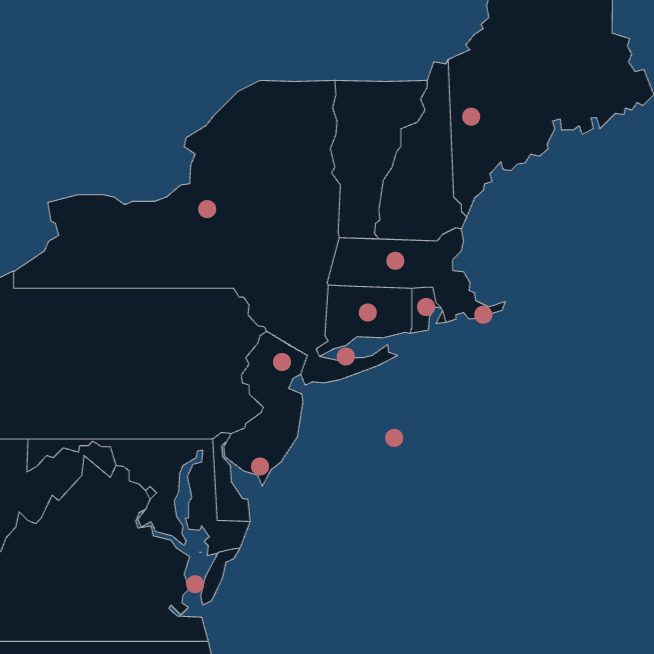


No matter where you are in New England, September is a great time to chase big stripers, and for those of us in the plastic navy, this month may be one of our last shots at a large fish for the season. With hurricanes and tropical storms brewing down south, conditions aren’t always perfect in the last part of our saltwater season, but the southern migration of stripers gives us a great opportunity to get out and find some large bass. So when you have a good weather window, now is the time to get out.
Everyone may have a different definition of big bass. For some it might be the first legal fish of the season, for others it may be a “personal best” fish. Whatever your definition is, there are a variety of tactics that work for bigger fish, and over most of our coastline, hungry, migrating bass will be eating their way south. This time of year, stripers change their behavior, feeding more aggressively, and in many areas, bigger fish move back in to shore to feed on the schools of bait that have blossomed during the summer. The best part of this season is that stripers aren’t stuck in one pattern; they may be chasing bait in current rips, grubbing in the rocks, or chasing down big baitfish.
As kayakers, we can reach fish that shore-bound folks can’t. Maybe we can’t keep up with the boaters, but our stealthy boats allow us to sneak up on fish that motor boats would spook in a heartbeat. We need to use the advantages that kayaks offer to give us the best shot at bigger fish.
There are several tactics that regularly produce good-sized striped bass for the kayak crowd. Bait fishermen should consider the tube-and-worm, eels, and live pogies or scup. Those who stick to artificials will find that big soft-plastic baits and big plugs or swimmers are very effective.
Tube-and-worm rigs are popular among kayak fishermen, mostly because they work! In fact, the kayak is the perfect tool for trolling the tube because we can regulate our speed so closely and go much slower than boats. Use your speed to adjust the placement of your tube in the water column, keeping it near the bottom as you troll. Not only does the tube catch fish, it catches big ones. Trolling around structure is the usual tactic for tube-and-worm trollers, but as fish break away from structure to chase bait, don’t be afraid to move around schools of breaking fish. Bigger fish tend to hang down-current and below the breaking fish; by working these areas with the tube, you may find a whopper on the end of your line.
Fishing live eels at night is a time-tested tactic, and it doesn’t get much simpler than hitting the water with your kayak, some hooks, and a bag of eels. Eel fishing is where kayaks really shine; our ability to go slow and be quiet in skinny water gives us access to fish that no one else can get to. Slow-trolling eels through rocks and flats is the standard way to fish them. Usually no extra weight is needed unless you are fishing water of 15 feet or more, then you might consider slipping on a small egg sinker before you tie on your hook. On windy nights, you might not even need to paddle. Instead, let the wind drift you over your chosen structure and control your drift with your paddle. Trolling isn’t the only tactic to use with eels. There are nights when bass respond to the slap of the bait on the water. Casting and reeling can be very effective. Work the eel slowly, but fish it as a lure. If you fish from a Hobie pedal-driven kayak, consider holding the rod so you can respond to the hits by dropping back for a second before setting the hook. If you are paddling, a circle hook can give you an effective hook-up just by continuing to paddle after you get hit. Eels are one of the easiest big-fish baits to fish from the kayak.
During the daytime, it is hard to beat a big live bait. Depending on where you fish, you may have access to big baits like scup or pogies. Check your local regulations before fishing live scup, as they must be legal-sized to be used for bait. Luckily, a legal-sized scup is the prime size bait for an outsized bass. Scup are a great live bait for fishing around reefs and rock piles, all you have to do is keep your bait from swimming into the weeds and rocks.
Pogies can be tough to find, but when you do find them, they may already have bass on them. Snagging and dropping is a classic technique, but the drawback of this technique is that you hook the bait, and subsequently the bass, with a treble hook. By keeping your reel in gear for the hit and setting the hook by tightening the line rather than the sharp snap of the rod, you can mouth-hook the majority of the fish. When you find pogies without bass on them, snagging a few and keeping them alive in a bait well or tube then live-lining around the rocks works very well. When you are fishing big baits and your bait dies, try chunking the bait. Sometimes bass are less active and will be willing to eat a tasty chunk drifting by when they are not willing to chase a live fish. Using these large baits guarantees a good-sized fish, as not too many small fish are caught on baits that weigh a pound or more!
My favorite big bass baits are big plastics. Baits in the 9-inch to 14-inch range are easily fished from the kayak and can be very effective on big bass. Bigger baits attract bigger bass. When targeting large bass, fish the largest baits with confidence, because when you find the fish, they will eat your offering. My favorite plastic bait for big bass is the 13-inch Jigging Hogy rigged on a jighead appropriate for the depth I’ m fishing. One advantage of plastic baits is that they are usually fished with a jighead or single hook, and when handling big fish in a kayak, it is safest to use single hooks. Plastics work night and day. The general rule is to use dark colors at night and light colors during the day, but there are plenty of exceptions to this rule, so don’t get stuck on color. At night, working boulder fields with dark colors is a good way to find bass grubbing for crabs and lobsters. Rips can be good day or night, and if there are schools of baitfish present in the rips, the bass may be near the surface, so fish the whole water column. September often brings blitzes. Plastics are perfect for fishing blitzes because you can drop them below the blitz to search for bigger fish or work them on top where the fish are feeding most actively. When there are too many bluefish around, substitute a bucktail for plastics and use the same techniques.
Big plugs and swimmers are not usually considered kayak baits because they have so many treble hooks, but there are efficient ways to fish them from the kayak and they are proven big fish weapons. Carrying a lip-gripper tool will make landing a fish with a mouthful of trebles easier and safer. When big bass are spread out, trolling a lipped swimmer is a great way to cover water. In the kayak, keeping the speed between 1.5 and 3 mph is easy to do. Varying the speed and sticking in rip lines or staying on structure will produce fish. Metal-lipped swimmers in the 4-ounce range present a large target for big bass, and big targets drive big bass crazy! Don’t forget about swimmers either, the popular Sebile Magic Swimmer is a great bait to use day or night when you find schools of baitfish. Don’t be too concerned about matching the hatch when you are targeting big fish, as presenting a large lure in a school of small baitfish is a good way to draw the attention of bigger fish.
For many of us, with dropping temperatures and uncertain weather, September marks the end of the kayaking season. Don’t let this month pass without making a serious attempt to catch your biggest bass of the season!
Great article Slappy….,
Is in effective to use a tube with live bait at the end? I am new to kayak fishing and often have success live lining Mackerel. Do people combine the live lining Macks and tube?
It’s not common at all to use live vait with an eel rig. Just dead stick or drift makeral chunks or livd lined. Tubes generally imitate a sand eel and have special hooks to give them swimming action