

 |
  |
Every boater has a launch routine. Some are calm and methodical. Some involve yelling across the ramp, forgetting the dock lines, and backing down with all the confidence of a man defusing a bomb with a butter knife.
Either way, the most important safety decisions happen before the boat ever leaves the dock — not ten miles out, not when the fog rolls in, not when the bilge alarm starts screaming. Before.
Here are six quick checks worth making every single time.
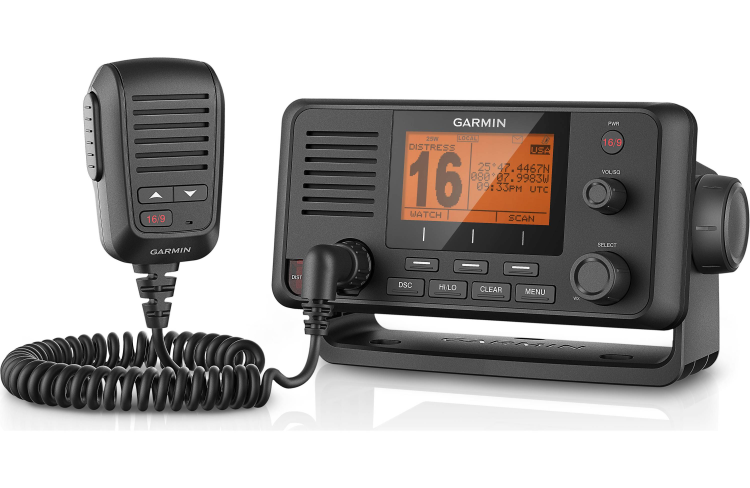
Turn on the VHF before you leave
A handheld VHF does little good if it’s dead, buried, or still sitting on the kitchen counter next to the coffee you also forgot. Power it on at the dock. Check the battery. If you carry a fixed-mount, make sure it transmits. If you carry a handheld backup, make sure it’s charged and reachable — not wedged under the console behind three rods and a dry bag.
Cell phones are useful. They’re not a safety plan. They die, lose service, and somehow always end up face-down in a puddle when you need them most.
Dock check: Power it on, confirm the battery, confirm it transmits, keep it within reach.
Shop: VHF Radios at West Marine
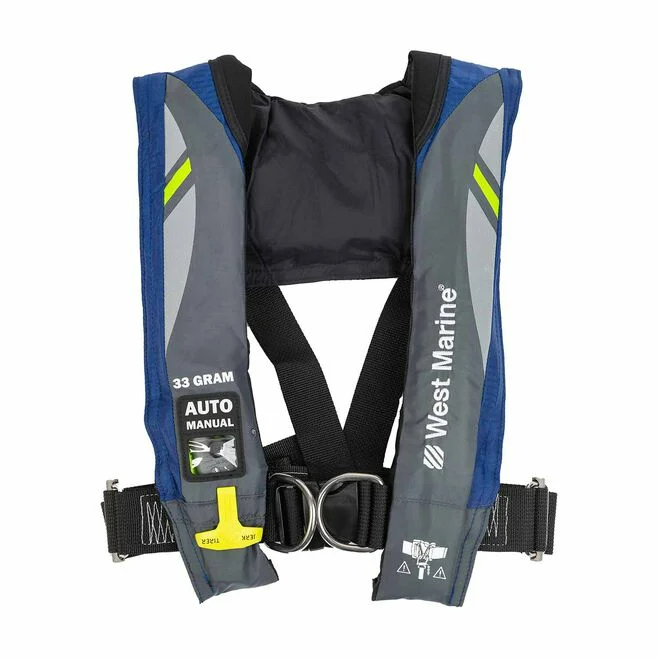
Count the PFDs — then actually look at them
“Somewhere onboard” isn’t the same as ready.
Count them. Make sure there’s one for every person. If kids are coming, check the sizes. If you’re running inflatables, check the status indicators — the cartridge doesn’t last forever, and it’s been a while since you looked at it.
PFDs are treated like legal equipment rather than life-saving equipment, and that’s usually where the problem starts. If yours is buried under a beanbag or covered in mildew, it’s not ready.
Dock check: One properly fitted PFD per person, visible and accessible before you leave.
Shop: Lifejackets and PFDs at West Marine
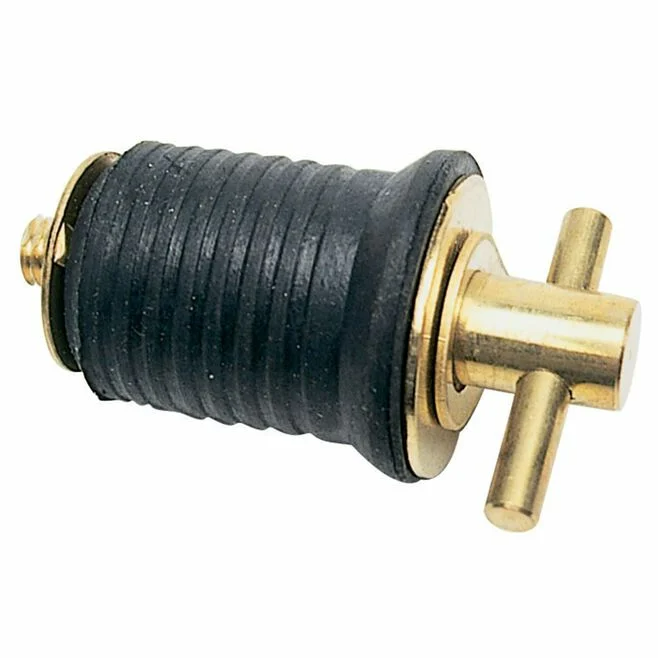
Check the drain plug
There’s almost no sound more humbling than realizing water is coming into the boat because you forgot a piece of metal the size of a C battery.
It happens to good boaters. It happens to experienced boaters. It happens to boaters who will deny it forever. Before the trailer backs down, before the lines come off, before anyone starts debating where the fish are — check the plug. Then say it out loud. “Plug is in.” Yes, it feels ridiculous. That’s fine. Feeling ridiculous at the ramp beats feeling ridiculous while your boat fills up.
Keep a spare onboard. It takes up no space and solves a very real problem.
Dock check: Plug in. Spare onboard. Ego in the truck.
Shop: Drain Plugs at West Marine

Test the bilge pump
Most boaters don’t think about the bilge pump until they hear it running. That’s backwards.
Flip the switch at the dock. If your boat has an automatic float switch, test that too. Water gets into boats — spray, rain, livewell overflow, a leaky fitting, the guy who insists on opening hatches in a downpour. A working bilge pump buys you time. A dead one gives you a story you’ll hate telling.
Dock check: Hit the switch and confirm it pumps. If nothing happens, don’t “keep an eye on it.” Fix it.
Shop: Bilge Pumps at West Marine

Check your lights, horn, and one backup light
Boaters love to assume they’ll be back before dark. That assumption has aged poorly for a lot of people.
Check your nav lights, anchor light, and horn before you leave — especially for early launches, late returns, fog, or any day when the plan changes because the fishing got good. Keep a waterproof flashlight or headlamp in the boat. Your phone flashlight doesn’t count; phones are slippery and always at 11% when you actually need them.
Dock check: Nav lights on, tap the horn, make sure one real light works.
Shop: Marine Horns & Whistles at West Marine
Shop: Marine Flashlights & Headlamps at West Marine
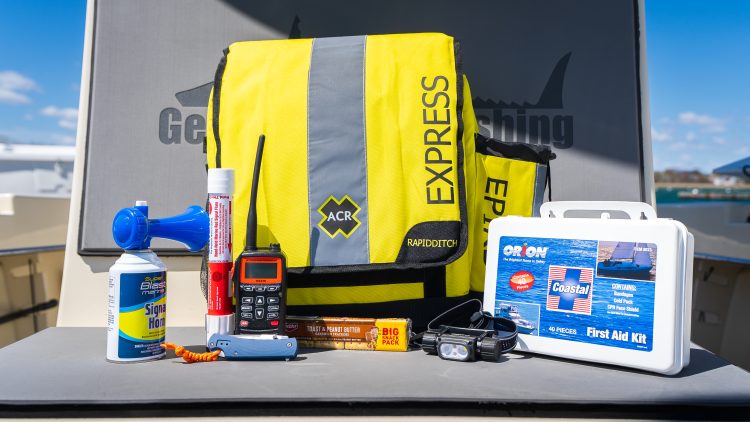
Open the safety bag
Don’t assume it’s fine. Open it.
That one move prevents many problems from becoming real issues. You’ll know if the flares have expired, the first-aid kit is half empty, the batteries are dead, or the handheld VHF somehow ended up in the garage over winter. A safety bag isn’t a mystery box — it should include signaling gear, first aid, a light, spare batteries, a cutting tool, a whistle, and a communication backup. For longer runs, build it out more seriously.
The important part is that it’s stocked, dry, current, and easy to grab.
Dock check: Open the bag. Replace anything missing, expired, or sketchy.
Shop: First-Aid Kits at West Marine
Bottom line
Turn on the radio. Count the PFDs. Check the plug. Test the bilge. Tap the horn. Open the safety bag.
None of it is hard. None of it takes long. But the one thing you skip has a funny way of being the thing you need. Before your next trip, take two minutes at the dock and get your safety gear dialed in. If something is missing, expired, dead, rusted, soaked, or sketchy, replace it before the season gets busy.
Build your pre-departure safety setup at West Marine.