
The story of Island Beach State Park (IBSP) is, fundamentally, one of preservation triumphing over development. As detailed in a history published on The Judges Shack website, the modern narrative began in the 1920s when Henry Phipps, a former partner of Andrew Carnegie, purchased the expansive, nearly untouched strip of coast. Phipps envisioned a grand seaside resort to rival Miami Beach. However, the plan failed following the crippling economic blows of the Great Depression, and after his death in 1930, the estate was managed by Francis Parkman Freeman.
Briefly serving as a small, secluded borough until the 1950s, the land even played a critical role in World War II when the United States Navy used a section of the coast for anti-aircraft missile testing, culminating in the world’s first successful supersonic Ramjet flight in 1945.
The park’s future was sealed in 1953 when concerned citizens, led by Richard Pough of the American Museum of Natural History, successfully petitioned for its preservation. The State of New Jersey purchased the land, and in 1959, the newly designated Island Beach State Park opened to the public. It remains today one of the last undeveloped beach properties on the Atlantic coast—a priceless nature sanctuary dedicated to conservation.
This history and commitment to keeping the beach unspoiled is precisely what makes the current controversy so alarming.
The shoreline of Island Beach State Park (IBSP) is more than just sand and surf to Rick Ziarnowski. At 77, he considers those seven miles of shoreline his home away from home, a place he’s navigated in his 4×4 for over fifty consecutive years. That long standing tradition, anchored by the Mobile Sportfishing Vehicle (MSV) permit, was a guarantee: access exclusively for the purpose of active sportfishing.
But the half-century run came to an end on the day that the new permit lottery system was established.
Ziarnowski is now one of countless veteran anglers suddenly locked out of the coastal gem they helped define as a sport fishing mecca. As one frustrated New Jersey resident, a dedicated permit-holder for fifty consecutive years, explained, he “lost out last year because of the new system,” a failure that he believes demands state residents be given priority access.
The frustration is not confined within New Jersey’s borders. The father of one Pennsylvania resident, who had held a permit every year since 1979, was also shut out by this new system. What was once a reliable tradition has been replaced by a discouraging roll of the dice.
The crux of the issue is the fumbling of the transition. The reliable, verified application process has been replaced with a chaotic online scramble and an impersonal lottery. And yet, for anglers like Ray Powanda, the problems run deeper than bad masterminding; they run to the purpose of the Mobile Sport Fishing Permit itself. “I think the real issue is the misuse of the pass,” Powanda explains. “For years fishermen have been frustrated with the amount of people utilizing the pass to do what seems like everything else but fish. It wasn’t a problem before because fishermen were still able to get their pass to fish. Now that there is a lottery, guys who have been properly using the pass for, in some cases, decades, are not able to fish their spots.” Powanda then posed the central question driving the community’s frustration: “If you do not fish the beach, then the pass has no value to you. So why is the pass in such high demand? The answer is simple. The vast majority of people obtaining the passes are not using them to fish and are just taking advantage of the ability it gives you to get your truck on the beach.”
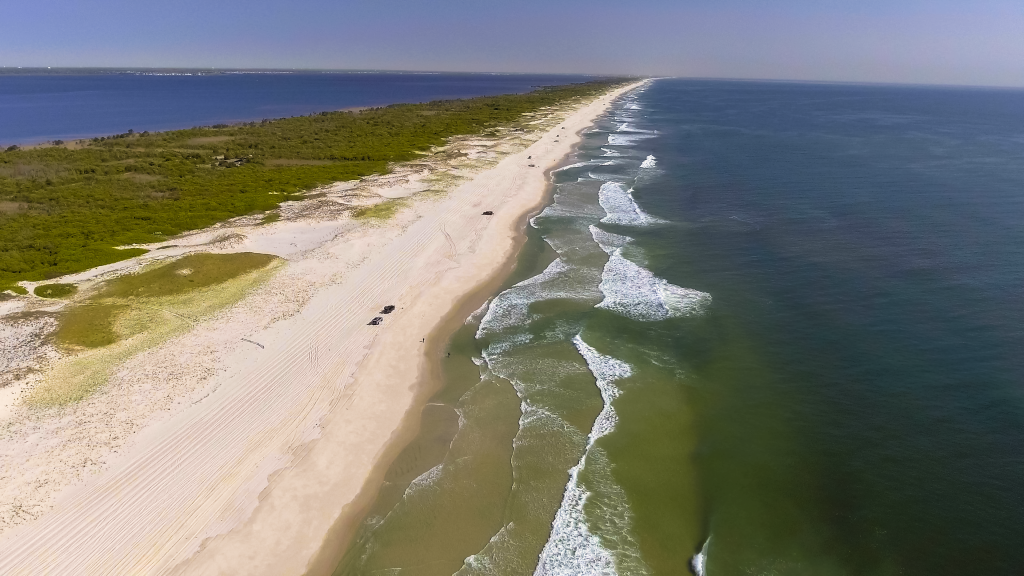
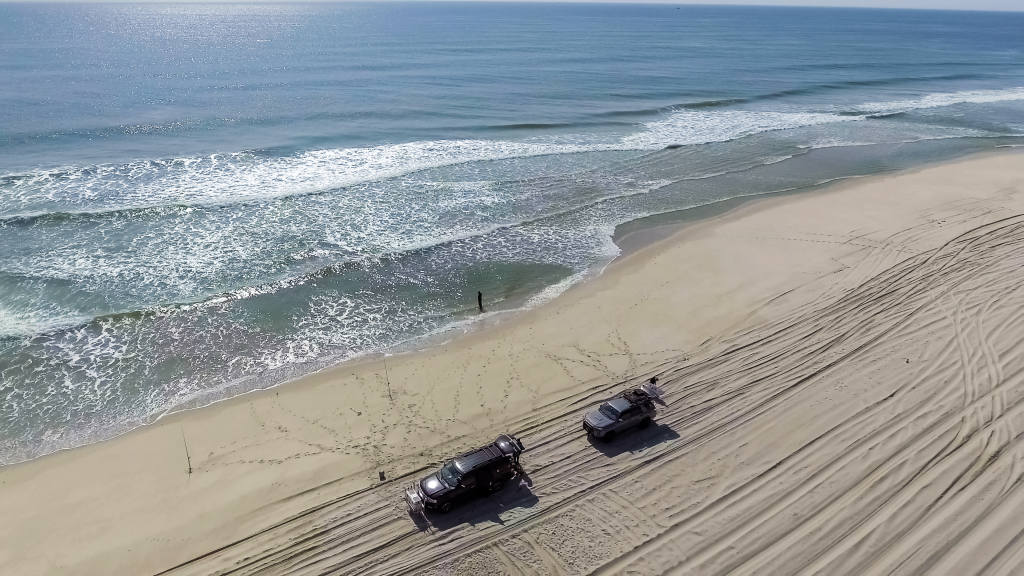
The Mobile Sportfishing Vehicle (MSV) permit is not a general beach pass; it is a specialized privilege that grants 4×4 vehicular access to the shoreline of Island Beach State Park solely for active surf fishing. For decades, this access was granted under strict conditions designed to protect the fragile environment and enforce the fishing-only mandate. Applicants were required to possess a four-wheel-drive vehicle and prove they carried an extensive inventory of safety and recovery gear, including a shovel, a jack with a support board, and a tow strap. Crucially, permit holders and all passengers were mandated to be actively engaged in fishing at all times. In the old system, this permit was reliable: annual passes, available year-round, had no annual cap, and had to be purchased by mail or physically at the park gatehouse or office, and the flexible 3-Day Permit offered short-term access. This ensured that locals and dedicated regulars could obtain or renew their pass with minimal hassle and required an element of personal verification.
The new system has turned reliability on its head. The shift from a verified, in-person process to the exclusive online purchase eliminated the personal scrutiny of applicants and replaced it with a limited-entry computer lottery. The once-flexible 3-Day Permit has been discontinued and replaced with the less-convenient “weekday annual pass.” While the park maintains a fee structure that charges non-residents more ($225 vs. $195 for residents), both groups must now compete equally for the limited number of passes.
The widespread anger among anglers stems from the feeling that the state is not only failing to enforce its own rules but is now actively rewarding rule-breakers by making access a matter of pure chance.
For anglers, the misuse of the beach for what amounts to “joyriding” and “beach partying” was an annoyance in the old system; it has become a larger threat in the new. Others voiced frustration that individuals who do not fish are receiving passes while dedicated fishermen are excluded. As one commenter put it, permits are being issued to “summer ‘googans’ who don’t fish at all,” pushing out those who rely on the permit for responsible, year-round sportfishing.
The feeling of injustice is compounded by the perceived insufficient enforcement. Dedicated anglers who play by the rules are forced to compete with individuals who treat the permit as an all-access beach pass, something often documented in photos of large groups and barbecues circulating on the protected sand. The lackadaisical nature of all this fuels the question of why the MSV pass, which offers no value to non-anglers, is in such enormous demand.
Many surfcasters are sympathetic to the park’s staff, but insist the situation demands better solutions. Ray Powanda offers a critical analysis of why enforcement struggles:
“I feel that it is not good enough but no fault of the park police,” Powanda notes. “There are simply too many people for them to police in the summer months. They have to worry about the bathing beaches with first aid calls, swimmers in distress, and general calls for service.”
Powanda believes that the solution lies not just in better patrolling, but in fundamentally restoring the integrity of the application process itself. “I think the only thing that could rectify this issue is in person pick-ups of the pass and a real vehicle inspection upon issuing the mobile sport fishing permit as well as a period of time for NJ residents to obtain the permit before it opens up online to everyone else.”
This policy’s demand for a return to firm, in-person verification and a priority window for New Jersey residents is what has prompted action in Trenton, bringing the debate to the state capital.
The core of the political fight is fairness. Anglers note that while the state maintains a higher price tag for non-residents ($225 vs. the $195 resident fee), the lottery system forces all participants, regardless of state or decades of loyalty, to compete equally for the limited number of passes. This lack of any preference for tax-paying New Jersey residents or established permit holders is seen by many as hypocritical resource management.
The frustration is now formalizing into legislative action. Glen Feldman, Chief of Staff for the NJ 10th Legislative District, confirmed to On The Water that legislation is currently being drafted to address this imbalance. This proposed law seeks to grant New Jersey residents a dedicated priority purchasing period, allowing them the opportunity to secure their annual passes before the sale is opened to non-residents. This political drive directly supports the policy solutions advocated by fishermen like Ray Powanda, who see a residency preference as key to restoring fairness.
However, any change faces institutional resistance. The New Jersey Department of Environmental Protection (DEP) has historically maintained a neutral stance on the matter. When asked about potential favoritism, the DEP has consistently stated in public communications that permit sales are offered on an “equal-opportunity basis,” and New Jersey residents are not prioritized in the selection process. This policy, designed to prevent discrimination, is now seen by many local constituents as actively damaging to the very community the park serves.
The outcome of the legislative debate will determine whether the MSV permit system continues to be driven by chance, or if the state will implement a process that formally rewards the historical commitment of its own dedicated surfcasting community.
Speaking of which, I won the lottery, got a permit, and it never came in the mail! Under litigation?
Although I haven’t been a long time pass holder like some of the fishermen mentioned in this article, for the last 5 years since retiring to the IBSP area I have purchased either an annual pass or a weekday pass. I’ve used it expressly for the purpose of surf fishing and being retired I now had the time to enjoy fishing and learning where to fish. Bought all of the required equipment and then. This year I was shut out and was really disappointed so I can imagine how the long time folks feel. My observations during the last 5 years is that the park doesn’t give a hoot who gets a pass and how it’s being used as long as they collect the fees. I’ve even seen folks plant a few rod holders in the sand put fresh water rods in them while park rangers cruise on by!
It is amazing that rather than enforcing existing rules, new laws are created. It’s my opinion that strictly enforcing fishing requirements, handing out the fines, and suspending/revoking permits for repeated violators would at least improve the situation. I’m out of state fisherman holding MSV permit for fishing purposes only. Proposed new law giving priority to NJ residents will not do anything but put as all on the slippery slope. Should PA limit deer hunting to PA residents only? Should RI allow NJ residents to fish for Tog only after RI residents get their limits? Should parking at Cape Cod Canal be limited to Mass residents only? If NJ gives priority to their residents, why other States not do the same for their fisherman?.
As to out of state fisherman not paying their fair share, and local residents should receive preferential treatment, I’m going to disagree again. We do pay taxes in NJ! We buy gas during our visits, eat at the restaurants, stay in the motels, rent houses, and buy lures and bait at the tackle shops. We support local economy which generates taxes, and provides jobs to local residents. Most importantly NJ receives federal founding for many wildlife and clan water projects, that probably directly benefit BISP. That’s my tax money! One might say it’s “Taxation Without Representation”. Isn’t it?
As fisherman, we are constantly fighting for access, regardless where we live. The saddest part is, that instead banding together, lobbing for enforcement of the existing rules, going after the violators, NJ takes the easy rout, and tries to limit access to fishing for other fisherman.
Dumb move by the state. With today’s technology, have the guard gate scan stickers coming into the park, when truck 500 hits, that’s it for the day. State could make a lot more money selling unlimited passes. Also, they should have one officer checking fishing compliance as his only job. You must be registered to salt water fish, or no pass. With updated technology today there is no excuse for a system like this. Even a large board showing if access is available at the gate as trucks come out would work. Let’s get some thinkers on board to solve this issue.