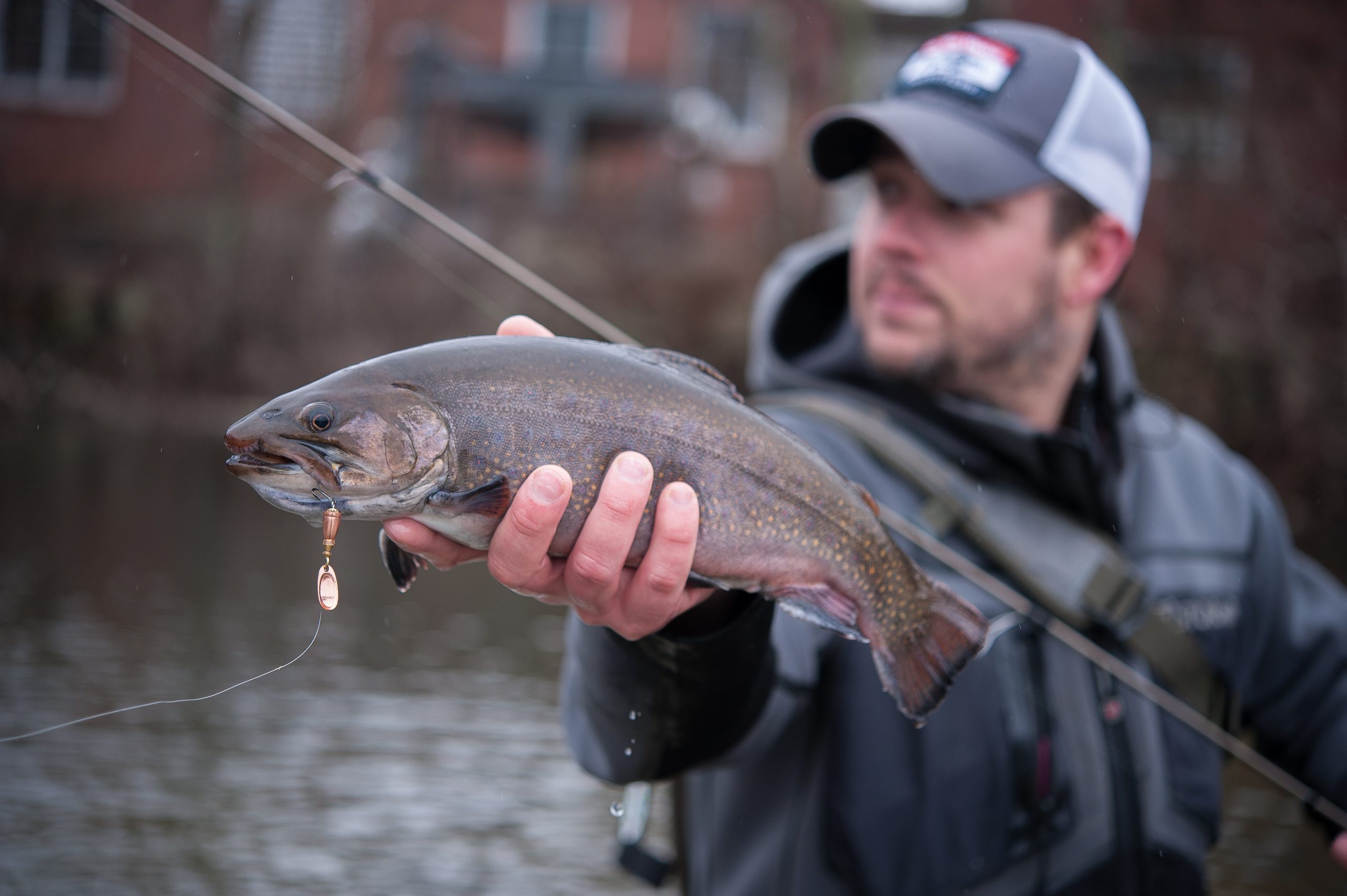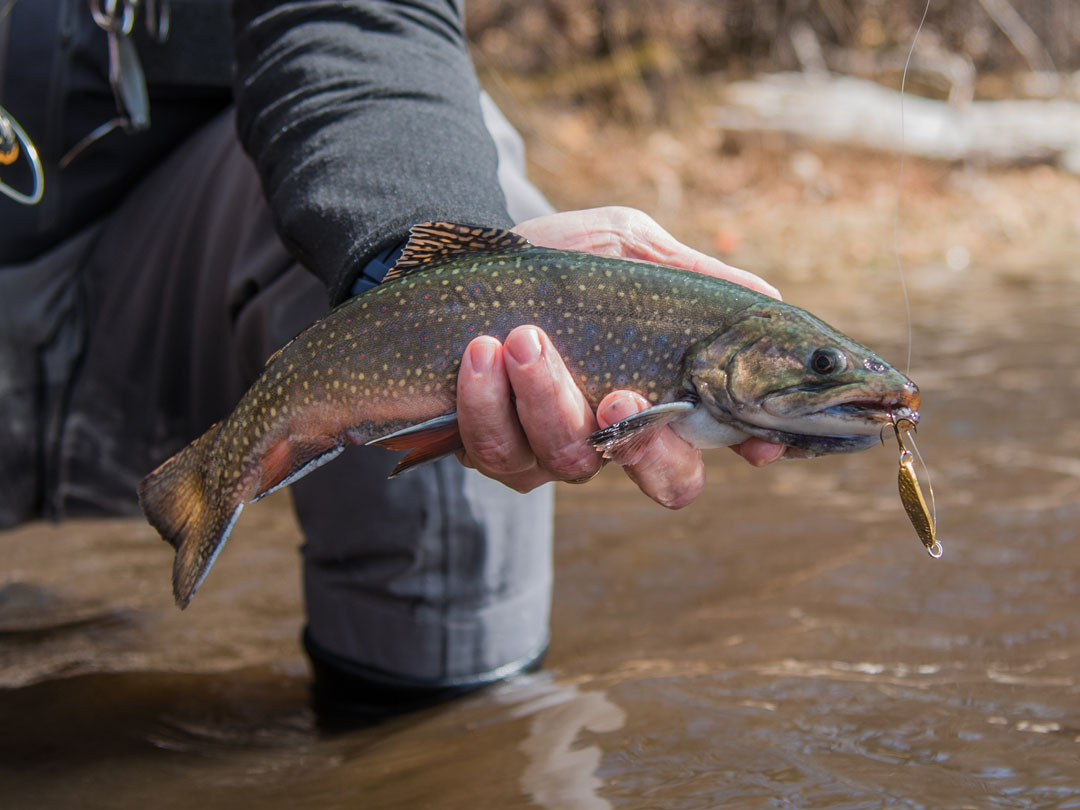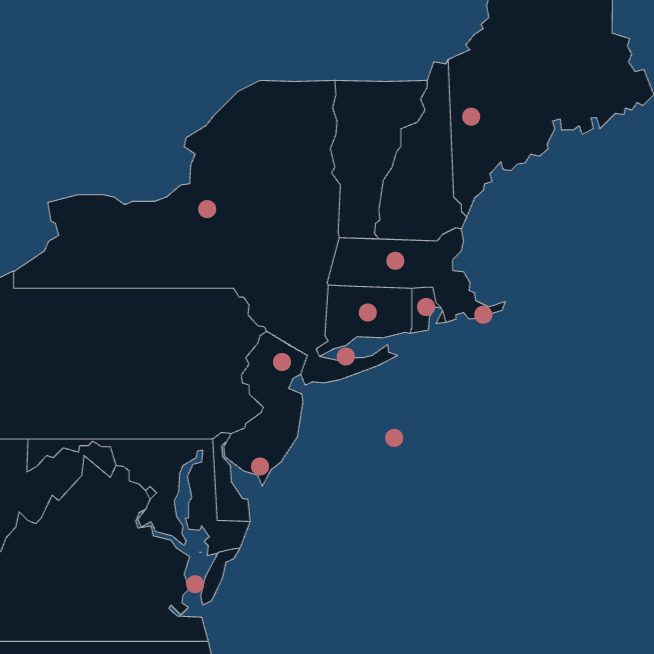

Garden State anglers may be envious of fishermen in Montana and even Pennsylvania, with the wide-open streams and wild fish populations. Jersey waters once teeming with wild brookies are now covered by three-story homes and strip malls. Development notwithstanding, New Jersey is no slouch when it comes to trout. With a dedicated stocking program since the late 1870s, New Jersey has made great strides in bringing back a fishery crucial to jump-starting the fishing season.
The History Trout Stocking in New Jersey
New Jersey’s trout-stocking program has been in place since the late 1800s, according to New Jersey’s Cold Water Fisheries Management Plan. It began with the humble brook trout, New Jersey’s only native salmonid and its designated state fish. Brook trout numbers began to decline rapidly due to a multitude of factors, namely environmental. The drought of 1875 caused the New Jersey Fish Commission (now the Fish and Game Council) to act. Starting in 1879, the state started stocking fingerling brook trout. Successful stockings from 1879 to 1882 with brook trout led the state to add rainbows to New Jersey waters beginning in 1882.
After years of purchasing eggs and fingerlings from out of state, New Jersey took the necessary steps to build its own facility. The State Fish Hatchery at Hackettstown began producing fingering brook trout in 1912. By 1914, the Garden State was rearing its own rainbow, brook, and brown trout. A half-million fish were raised by 1932, meeting the need for resident anglers statewide.
In 1950, the Federal Aid in Sport Fish Restoration (the Dingell-Johnson Act) was passed, causing the state to implement a 10% tax on recreational fishing equipment. Three years later, the first trout stamp was introduced to raise funds to supplement the states trout-stocking efforts. The original cost was $1.

Between 1960 and 1989, trout stocking began to shift. Factors such as pollution, land development, overfishing, and human encroachment left vulnerable trout species exposed. In 1964, the first water-quality standards were adopted, according to the Management Plan. This included a special provision for trout waters. The Bureau of Fisheries conducted surveys from 1968 to 1972 to “develop a stream classification system.” With the creation of the Department of Environmental Protection in 1970, New Jersey saw a further need to protect its natural resources. By 1981, the state had refined what its trout waters were and adopted the Surface Water Quality Standards. However, New Jersey had already started construction on its newest state-run hatchery in 1980, which is where the story of trout fishing gets serious.
The Pequest Trout Hatchery
The Pequest Trout Hatchery, located near Oxford, New Jersey, was completed in 1982. Since then, millions of trout have been released into the state’s waters where eager anglers cast flies and rooster tails. The hatchery was built on top of seven artesian wells, full of oxygen-rich water more than capable of sustaining trout. With a constant year-round temperature of 52 degrees, and the ability to pump up to 7,000 gallons of water per minute, the staff raise trout from egg to breeding adults year-round.

Life begins for hatchery trout in the months of August and September. Broodstock trout, mature fish raised at the facility for breeding, are sorted into male and female. Males, with their distended lower jaw known as a kype, are kept separate from females. Females are checked weekly for ripe eggs until they are ready to be harvested. The eggs are then stripped from the female and combined with milt from male trout. Fertilized eggs are then disinfected before they incubate in jars for a little over a month.
Once trout are hatched, they spend their first few months being carefully raised inside the facility’s nursery. In late March, the fish are moved to what’s called a “raceway,” a 10-foot-wide, 100-foot-long concrete enclosure outside. Pequest has 64 raceways where the trout are raised on a specific diet of animal and vegetable feed.
It takes 18 to 24 months to raise stock-worthy trout. By then, they are an average size of 10.5 inches. Once the trout are released into New Jersey waters, the whole process starts again. Larger trout are selected for the broodstock program, where they can spend another 12 to 18 months producing viable eggs and sperm for future trout generations.
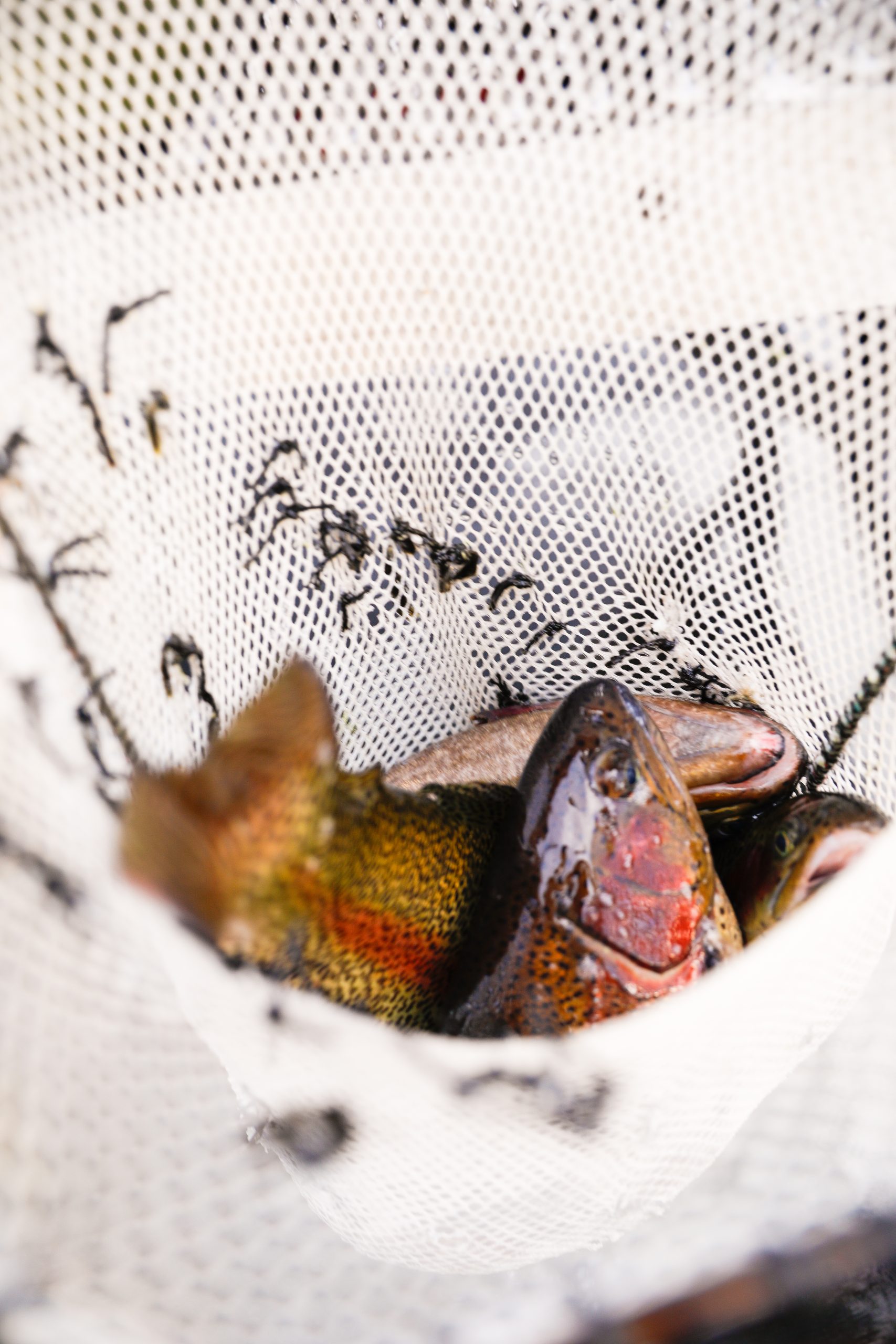
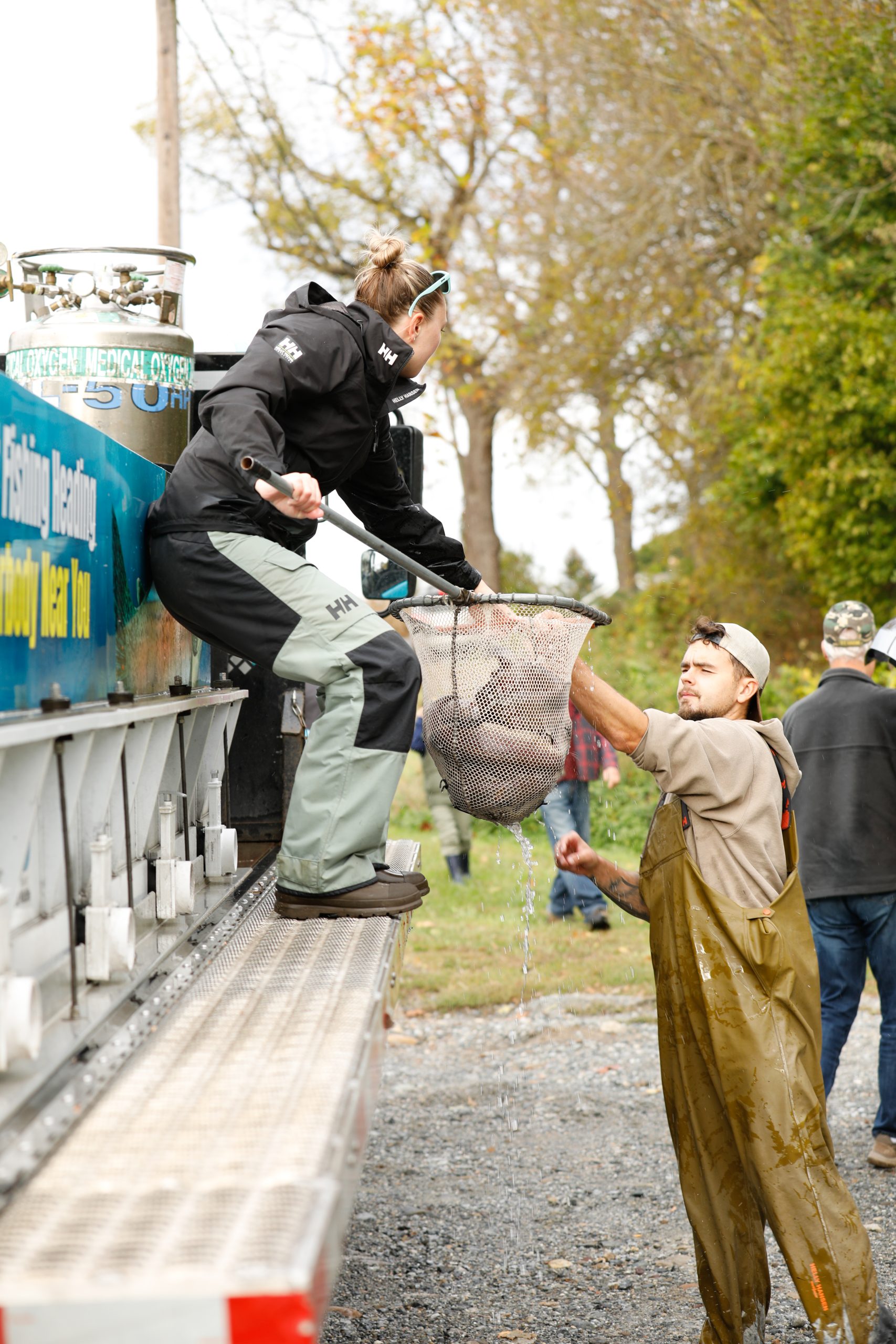
The process of getting trout from the hatchery to your favorite stream or lake seems straightforward, but it takes an experienced team of workers to do it right during each stocking. Teams walk a meshed screen from one end of the raceway to the other, corralling fish to a pumping system. Fish are then pulled into the pump as carefully as possible to be loaded into a small truck, which delivers them to a larger transport truck. By using a two-vehicle system, the hatchery can limit the amount of cross contamination, keeping the facility itself as clean as possible. The fish are then unloaded by hand in mesh nets to the larger transport truck, which then departs to the final destinations. These are the light blue-and-white trucks most anglers see on the road with on-board liquid oxygen tanks to keep the fish alive.
In speaking about the 2026 trout season, Ed Conley, Superintendent of the Pequest Trout Hatchery, said, “We do the same number each year. We have a 570,000-fish baseline. We usually meet or exceed that number.” Conley praised the staff at Pequest, who maintain the facility 365 days a year. “The staff works tirelessly each season to bring these fish to the public. It’s a 24/7 operation. We enjoy raising them for people to catch.”
So many anglers are introduced to fishing by hooking a rainbow on opening day, a fishing tradition made possible by Conley and his staff at the Pequest Trout Hatchery. Without it, public-water trout fishing in New Jersey would barely exist.
Stocked Trout and the Environment
Most of the New Jersey’s trout stocking revolves around the rainbow trout, which isn’t native to New Jersey waters. In fact, of the four trout species stocked in New Jersey, only the brook trout occurred naturally here. Rainbows and lake trout were introduced from out-of-state stocks and brown trout are considered an exotic species because of its European ancestry.
The non-native fish have impacted the waters in numerous ways. Although the rainbow trout is a success story, due to its high rate of survivability and popularity among sport fisherman, its presences has changed the natural composition of the environment. Warmer waters, loss of habitat, and overdevelopment of land created the need for trout stocking many years ago, but what does trout stocking do to the naturally occurring trout populations?
Mark Taylor, Eastern Communications Director for Trout Unlimited (TU), recently spoke about his organization’s perspective on trout stocking. “Our position on stocking is that it’s fine in certain places. We’re an organization that focuses on native and wild trout.” Taylor, who has worked for TU for 11 years, said his organization has local chapters who assist with state agencies’ stocking efforts. “We prefer it when the habitat is good enough for wild trout and native trout; that’s our focus,” said Taylor, “but we also know that not every place where people want to fish for trout can support those fish year-round. Honestly, it can be a gateway to trout fishing, as a lot of TU members got their start fishing for stocked trout. I’m one of them.”
“We like to work on the habitat so that the environment can then support wild fish,” Taylor continued. “The reason we have wild rainbows and wild brown trout in the East is because those fish were stocked and a few of those fish spawned. There are wild trout that came from a long-ago stocking. Some of those fish survive.”
Shawn Rummel, Senior Manager and Science Advisor to Northeast Coldwater Habitat Program of Trout Unlimited, recently spoke about the positives of trout stocking. “It certainly has its place. The upside is providing the recreational opportunity—getting folks out into the water. That’s their first introduction to fishing. When you look at some of the statewide stocking programs, they provide the chance to fish, for trout in particular, to areas that may not have a lot of wild, naturally reproducing trout. On the management side, it can have benefits, as well, in terms of bolstering struggling populations of wild fish.”
Rummel, who has been with Trout Unlimited for 15 years, also spoke about the downside of stocking. “The negative side of it primarily stems from stocking on top of already good populations of fish that are naturally reproducing and doing well on their own. It adds a level of angling pressure on those fish, plus you get into increased competition for food and resources, space, and habitat.” Rummel said it can also affect the genetics of a wild fish population by the interbreeding and mingling of wild and farm-raised trout.
When asked about possible diseases being introduced from farm-raised trout, Rummel spoke about gill lice, tiny parasites that can attach themselves to the gills, mouth, and fins of fish. “We’ve seen it in numerous streams; Wisconsin’s had a lot of it. Pennsylvania has had a fair amount that we’ve seen in the wild brook trout populations. It’s often traced back to a hatchery.”
Rummel added that the gill lice infestations where he works in Pennsylvania were traced back to a couple of private hatcheries and noted that state hatcheries have more rigid standards for keeping the stocked fish clean of disease.
Regardless of how trout is raised in New Jersey, it’s vital for anglers to realize how much effort and resources go into these fish. Whether it’s a hatchery-raised rainbow designed to be caught or a naturally occurring wild brook trout, it takes a lot of work to have a sustainable fishery.
“It’s important for anglers to recognize and appreciate wild-trout fisheries for what they are,” said Rummel. “They can use their voices as anglers because it’s their angling dollars at work. Be vocal about protecting those wild resources.”
2026 Proposed Changes
New Jersey anglers may see some changes when the 2026 trout season comes around.
According to the New Jersey Department of Fish and Wildlife, Bureau of Freshwater Fisheries, anglers will see some slight modifications. “Opening Day” is now being defined as the second Saturday in April. The state is considering the removal of Pre-Season Closure on all stocked lakes and ponds. The Summer/Fall/Winter creel limit will be reduced from 4 fish to 2 fish per day. The state is also proposing to combine the winter and fall trout-stocking seasons.
The addition of 23 “small ponds” will be added to the stocking program. The exact locations of those bodies of water was not provided at the time of printing, but they will be posted on the state’s website. Two bodies of water will be eliminated from the spring stocking: Colonial Lake and Neldon Brook due to “low angler satisfaction,” according to the DEP website.
Catching a trout, no matter its lineage, is a gift many of us should treasure. It’s not often you can find a wild trout stream with naturally reproducing trout. If you find one and can catch one of these prized fish, consider yourself blessed, but even if you don’t, New Jersey will continue to provide trout-fishing opportunities for both new anglers and stewards for our waters.
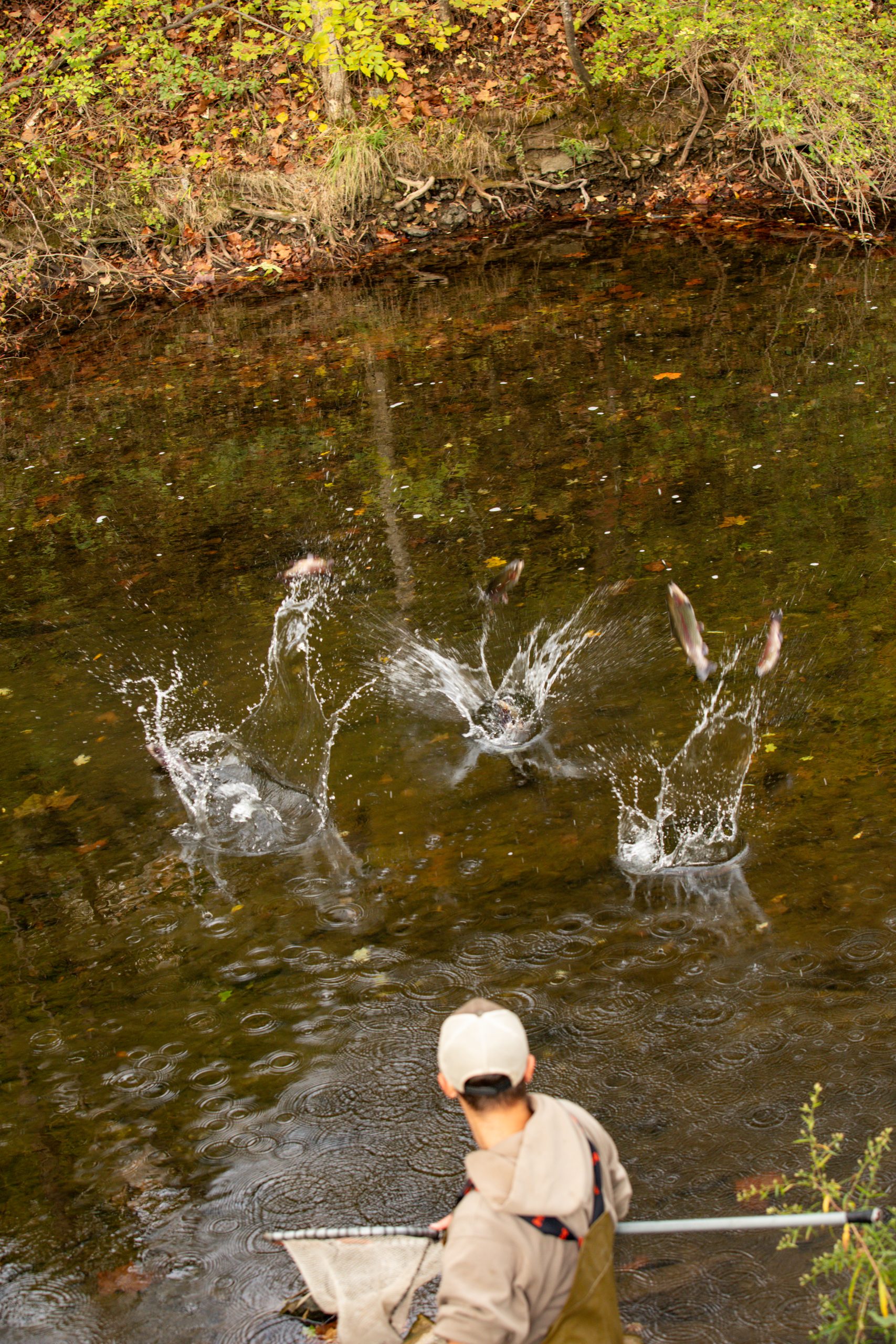
New Jersey trout fishing is not optimal the whole year. Whether it’s winter freezes on lakes, rivers, and streams or poor water quality, New Jersey anglers can have a hard time finding open, fishable areas where trout can be caught. That’s where efforts from local trout organizations and state stocking can balance the scales. By effectively stocking fish and taking care of classified trout waters, anglers can enjoy this resource without impacting what nature has provided.
Related Stories