
10° of Blitzes
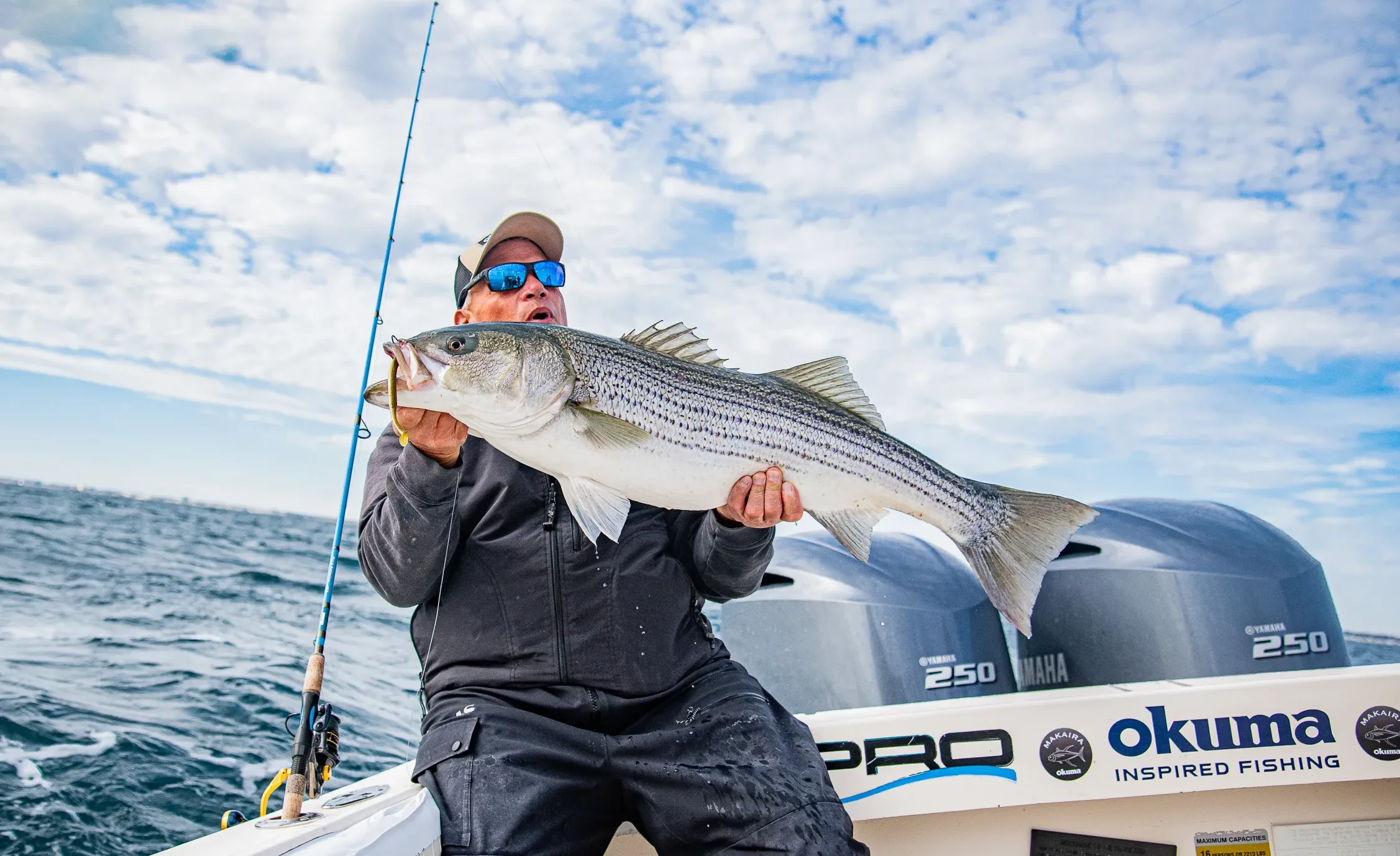
The “10 degrees of blitzes” is how I refer to November during the heart of the Jersey Shore fall run. It starts in September with our annual mullet run and culminates in late December with our sea herring migration, and peaks in November when dropping water temperatures have migratory striped bass gorging on bait. Barring any Arctic sub-freezing cold fronts, the 10-degree temperature drop that gets the blitzes going starts the first week in November and ends the first week of December. During this time the ocean temperature drops about two degrees a week under normal weather conditions, going from 58 to 48 degrees.
This month-long drop in temperature will draw in sand eels from offshore. These are the same sand eels that we see on the bottom in the 90- to 180-foot depths while tuna fishing in the summer. Sand eels are a cold-water bait, and in the summer, these bottom depths are the same as our November ocean temperatures. So, as inshore temperatures drop the sand eels move west to remain in their comfort zone.
Boaters can easily recognize these baits as they will appear as tightly packed red masses on the fish finder, usually in the bottom third of the water column. At first light, however, sand eels will be dispersed throughout the water column, up to the surface with gulls and gannets giving away their location. So when a client asks if they can sleep in and leave the dock at normal working hours the answer is always no. Being at the spot by first light gives us the best chance to find stripers feeding on the surface.
The “Sand Diver”
The sand eel, also called the sand lance, is an inshore species not related to the common eel. Its scientific name “Ammodytes americanus” literally means sand diver, a typical response of the sand eel when fleeing from a predator or resting. Sand eels are recognized by their slender body with a pointed snout. They have a long dorsal and anal fins and are deep blue green to bronze on their back with a white belly. They can grow as long as 9 inches but are commonly found in the 4- to 6-inch range. The sand eel is found in shallow waters less than three hundred feet with a sandy composition and comprises one of the most important staple foods for the striped bass.

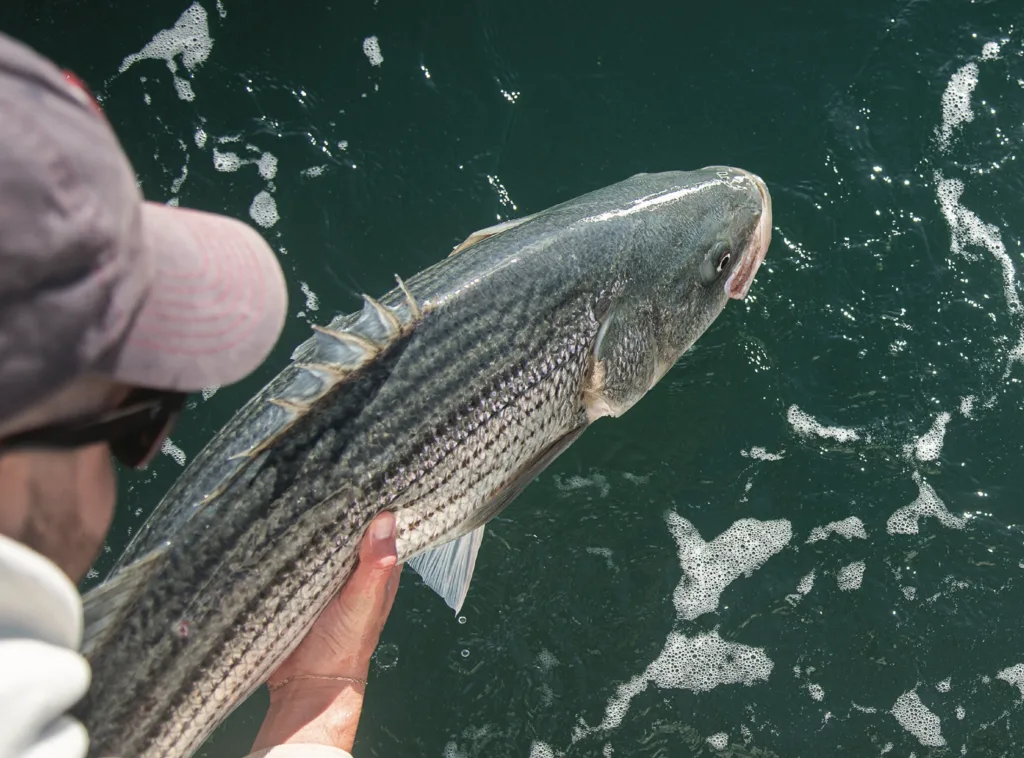
When a good sand eel migration takes place in November we will have bass schooled up by the hundreds under the boat and each drop of a soft plastic or jig results in a hook up. It is not uncommon to have every angler hooked up on the boat at one time with a lot of fun and mayhem going on. Days like these are certainly memorable for clients as will be their sore arms by the end of the day.
Tackle for the Sand Eel Run
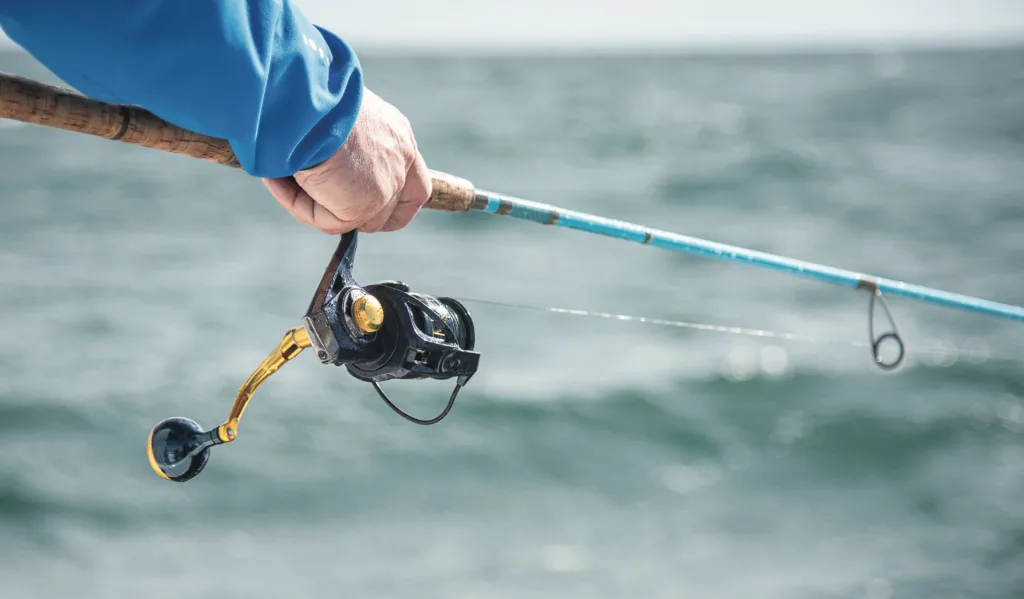
From the boat I like to use a 7-foot, 6-inch rod like the Okuma Silver Slayer paired with a heavy-duty spinning reel like the Okuma Tesoro 6000XA spinning reel. The reel is filled with 65-pound braid that is connected to a 40 pound fluorocarbon leader via an FG knot. A 175-pound Tactical Anglers clip is tied to the other end with an improved clinch knot. The TA clip makes it very easy to quickly change artificials. I like to use a fluorocarbon leader instead of monofilament because of its superior abrasion resistance, as it holds up better when the leader is pulled across the bass or comes in contact with the boat. It is not because it is less visible in the water. At this time of year the bass are not line shy.
There is a wide variety of artificials that can be used to imitate sand eels. My top producers are 6-inch Fish Lab Mad Eel, 6-inch RonZ, and the Tsunami Holographic Weighted Sand Eel, but a wide range of slender soft plastics will fool stripers eating sand eels.
To work these lures, cast them out from the boat and give them plenty of time to sink to the bottom. Retrieve with an erratic, up-and-down motion. If the wind is up and the drift is fast, I switch to casting and jigging metals.
For metals the choice is also virtually endless. I use 80- to 120-gram Nomad Streaker Jigs, Ava 27s and 47s with green, red, or black tails, and Deadly Dick #4L and #3L. I can cast these metals very far into a stiff wind and get plenty of distance away from the boat before retrieving them back at an angle from the boat with a stop-and-drop motion.

I also vertically jig these metals by snap-jigging. I drop them to the bottom and lift the rod tip quickly straight up and then quickly lower the rod, repeating the motion over and over hitting the bottom each time. When the jig hits the bottom it will puff the sand that catches the eye of the bass as it resembles a fleeing sand eel. Most of the time the bass will hit the jig on the drop so make sure you do not have too much slack in your line or you will miss their characteristic bump and the hook set.
Dead-Sticking Soft Plastics

A very effective technique to get additional baits in the water is to dead-stick your soft plastic sand eel imitations. When two or three anglers are on board this technique will allow you to double your number of rods. To do this cast out your soft bait as far as you can and then scope out line until it hits the bottom. When it does let out another ten to twenty yards of line then simply place the rod in the rod holder. With a 10- to 15-knot wind pushing the boat, this bait will jig up and down every time the boat rocks. I tell my anglers to be ready to put down the rod down they are currently jigging as soon as the dead-stick rod doubles over.
Fly Fishing the Sand Eel Run
For the fly fisher, the sand eel run is an exciting time of year as it is, without a doubt, the easiest time to catch a striped bass on the fly. The fly fishing method I use involves using a 10-weight rod, disc-drag reel, and a quick sinking line like the RIO 350- to 450-grain InTouch Striper Sink Tip lines. These are 100-foot fly lines with a 44-foot head that sinks at 8 to 9 inches per second. The head is integrated into an intermediate running line with a cold-water core that has no memory and will not tangle. My leader is six to eight feet of 40-pound fluorocarbon looped to the welded loop of the fly line.
My method of fishing these sinking lines involves a little more than just casting out, letting the line sink, and then retrieving. Instead my method involves casting out and then stack mending all the remaining fly line on top of itself into the water. This is done by sweeping the rod from side to side as the line comes off the deck of the boat, which is your giant stripping basket. Allow the line to sink with no resistance as if you were dropping weight in free spool on a conventional reel. Now as the boat drifts away from the line it will continue to sink and eventually pull tight. Once the line comes completely tight the line will not sink anymore but rather start to come up in the water column so this is when you begin to strip.
On calm windless days this method will not work as it uses the drift of the boat to put the fly well away from the boat by the time you start stripping. The sinking rate of the fly line, the speed of the wind, the size of the boat, and how fast you are drifting will all calculate in as to how far down your fly can get. On my 28-foot Parker Sport Cabin with a 10- to 15-mph wind pushing my boat, my fly will usually get down about 30 feet before the line comes completely tight. Strips should be about a yard long with a one-second pause in between. When the bass hits strip strike to the side with the rod imparting two forceful strikes that will put a deep bend in the rod. Do not strip strike by lifting the rod up. This upward motion will drive the fly into the hard bony palate of the bass that it can easily shake out. The other problem with the up strike is that after you lift your rod up you then must drop the rod down which will put slack in the line. A few vigorous head shakes by the bass on the drop will shake the hook out. A sideward strip strike will drive the fly into the fleshy corner of the bass’s mouth and always keep a tight line to the hookset. Crushing the barbs down on your hooks will also deliver better penetration and aid in easier removal of the hook.
For flies, a long slender, slim profile fly will work best. Popovics’ Jiggies, Stick Candies, and Keel Eel, are my number one choice to emulate the sand eel’s slender profile. Clousers and Half and Halfs also work well as the weighted heads of these flies will help to put these flies deeper in the water column. Also try Farrar’s Silly Skin Sand Eel, Flat Wings, and Tube Flies.
READ MORE


